
Why is 3D lifestyle rendering important for driving your company’s sales? First, some ground rules. We’re not here to bash silo (white background) rendering in any way, shape, or form. The fact that anybody can produce 3D modeling of a product and render it into high-quality imagery, albeit against the backdrop of absolutely nothing at all, is commendable in and of itself. Creating a 3D model from scratch is hard, and that’s why many people choose to buy ready-made assets. But buying isn’t always a feasible option, especially if your product comes with a lot of new features and has a peculiar enough shape that you can’t find anything even remotely close to it in the marketplace.
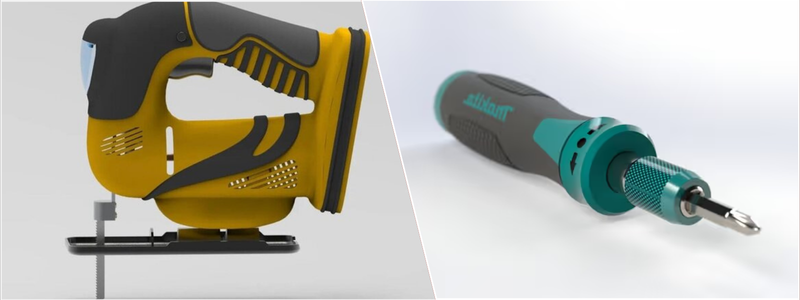
So you spend hours and days clicking every little icon in the CAD software to build the model. After a lot of complaining and likely some procrastinating now and then, the model is finally ready, and you generate a silo rendering of it to see the product in all its digital beauty. As promised, we won’t say silo rendering is bad. Silo rendering has its place in marketing, such as for straightforward diagrams, simple cutaway views, feature callouts, and the like. And then you realize that you can also do all of that, and then some, with lifestyle 3D rendering services. Instead of just putting the product in the image, you use complementary objects to fill the space.
The idea is to place the product (the main object) within a curated yet realistic scene where it naturally belongs. For example, if your product is a claw hammer, the lifestyle rendering may also include other hand tools neatly arranged on a workbench. In general, lifestyle rendering aims to simulate an environment that both the product and the user may find agreeable. It doesn’t make much sense to depict a claw hammer being inside a fish tank or sitting on a nightstand, does it? Unless, of course, you’re recreating a scene from CSI.
RELATED: Top 51 3D Product Rendering Design & Best 3D Visualization Services Companies in the US
Mind you that because you may have anywhere from two to dozens of objects in the scene, the lighting work of a lifestyle rendering tends to be much more tedious than what you’d typically see in the silo kind. But will it be worth the extra effort? We’d argue yes, it very much will be, considering the sheer number of potential benefits you get from it. And even more so if you manage to hire an experienced 3D artist for the job at an affordable rate. You’d think that a specialist charging a wallet-friendly fee is hard to come by these days, in which case you’re only “mostly” correct.
If affordability is a must but you also need it done right the first time, a freelancing platform is a safe bet to strike a good balance between affordability, speed, and quality. Still, like everything else in the world, not every platform is created equal. And when it comes to 3D modeling, high fidelity rendering, and product visualization in general, nothing comes close to Cad Crowd. Positioning itself as a niche freelancing platform focused on product design and development, it has become home to thousands of talented 3D modelers and render artists with impressive portfolios. No matter the product, there’s always an experienced professional ready to take on even the most complex lifestyle rendering project any day of the week.
What you can get from a 3D lifestyle rendering
Give or take, with very few exceptions noted by the police, you can buy just about every kind of product online. This means relying solely on product pictures on the webpage to at least get an idea of what you’re buying. Some sellers use actual product photographs, which they take using the cameras built into the back of their fancy phones, while the smart ones let 3D lifestyle rendering do all the persuasion. Admittedly, a rendering is quite a lot more expensive than taking a simple snapshot, but it’s also quite a lot more versatile, so you can frame the final image any way you want.
RELATED: 3D Product Rendering Styles that Elevate Marketing with Design Companies & Freelance Services
Because a rendering doesn’t need a physical object at all, it’s almost wizardry to know that you can come up with a perfectly good imagery of a product, along with all other stuff around it, without staging a cumbersome photo op. There’s no camera involved, or unwieldy lighting umbrellas, chaotic cables on the floor, and props. All you need is a laptop to render a product. Sometimes, and we do have to whisper it, you can render a product even when it’s not yet produced or prototyped as a form of early marketing. Had somebody produced a rendering of an intricate clock 500 years ago, he would’ve been called Da Vinci.
But you don’t have to go back centuries in time and change your name to Leonardo to make a rendering of a product or perhaps just a concept of it. Product design companies today use lifestyle renderings as product images on online marketplaces, for social media campaigns, and, maybe, in brochures if there’s still such a thing. While many people assume, correctly, that the main purpose of computer-generated imagery is to make a product look better than it really is, marketing departments everywhere use lifestyle rendering for some other very good reasons as well.
Visualization with a context
Let’s refer back to our previous example of a claw hammer. When you see a visualization of a claw hammer on a webpage, there’s little question about what the product is for. It’s a hammer. You hit a nail squarely on the head with it, and sometimes pull a nail out with the claw. But then comes a question about how big it is, or whether the handle’s color looks fashionable as it hangs from the hammer loop of carpenter jeans. The easiest way to do this is to annotate the image with dimension callouts, including text that explains the product’s size and weight.
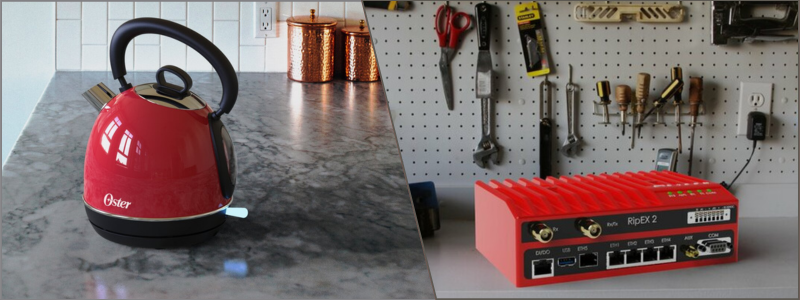
Although this makes the visualization informative indeed, it’s also not very interesting to look at. We don’t say that you shouldn’t add annotations; it’s just that there might be a better approach to achieve the same result. A lifestyle rendering places the claw hammer, amongst other products, in the same product category: workshop tools. The claw hammer is the main object, the focal point of the 3D visualization. Still, you can also see some complementary objects all around it, such as a bench vice, a monkey wrench, a power drill, a tape measure, a pair of pliers, screwdrivers, a handsaw, some chisels, spanners, and probably some more hammers.
RELATED: Freelance 3D Rendering Or Photography For Architecture: Which Is Better?
What makes the visualization even more convincing is that everything appears to have been thrown carelessly on a workbench in the corner of a garage. This gives the image a context and easy reference points for product dimensions. Lifestyle rendering doesn’t just present the product; it also conveys the product’s value. It shows you that the product looks good sitting in its intended environment.
Storytelling without words
Not every picture is worth a thousand words, but in the case of a product lifestyle rendering from a professional rendering artist, you can really tell a story without saying much at all. Imagine a picture of a claw hammer with its filthy rubber handle lying on the floor next to a half-done coffee table in a basement. There are some bar clamps and a few bottles of wood glue in the background, where you also see a jumble of 2x4s in varying lengths next to the stairs. So, what does such an image tell you? Everybody has a subjective opinion, and so what comes to your mind when you see the image might be completely different from what the next person thinks.
But one thing is certain: the hammer has been busy at work, perhaps in the hands of an enthusiastic DIYer who’s not exactly good at carpentry. Still, the claw hammer puts up with all the mistakes and soldier on despite incorrect measurements and user frustrations. This DIY person blames the tools all the time, but the hammer is such a good product that it withstands every single random blow to the head in good spirits. Although the user is an amateur, your claw hammer is a true professional. The claw hammer understands nobody wants to admit that they’re a terrible carpenter, so it just tries to do what it does best: hammer everything in sight.
The point is that a lifestyle rendering lets you craft an “imagined” situation where everyone can connect on an emotional level. As a 3D visualization designer, you’re in complete control of this digital environment. You get to decide what objects are visible on the frame and where they’re positioned in the scene. Selling a hammer is pretty difficult. Everyone already has one, and there’s only so much redesign you can do to make it functionally better than it already is.
And this is true for many other products, like paperclips, teapots, barbed wire, bubble wrap, spoons, and a whole range of hand tools. However, 3D lifestyle rendering opens the door to aspirational marketing, in which you sell not just a hammer, but the idea of using it and the excitement of working on a weekend carpentry project that never gets done.
RELATED: How To Visualize Consumer Products Using 3D Rendering Services For Your Company and Firm
Bulk marketing
If you’re selling a claw hammer, chances are you also sell other tools, from cutters and circular saws to butt chisels and electric hand planers. You might even sell rubber mallets and dead blow hammers, too. The good thing about lifestyle rendering is that the product rendering artist can place multiple products in the same scene without them stealing each other’s spotlight. It only makes perfect sense if a claw hammer is displayed on a pegboard alongside pliers, screwdrivers, a power drill, and a level.
Despite being full of product placements, the visualization doesn’t seem peculiar, as it is a common sight in a typical workshop. It appears so organic and realistic that it offers an excellent opportunity for an obvious yet stealthy bulk marketing. Rather than saying “Every customer who purchased a claw hammer also ordered some spanners and a toolbox to keep them” on an annoying pop-up on the webpage, the lifestyle rendering carries a set of “frequently bought together” items in a much more visually pleasing format.
Showcasing a collection of products from the same lineup in a cohesive aesthetic might encourage customers to spend more per transaction, boosting AOV (Average Order Value). Even if they don’t buy multiple products right away, with a lifestyle rendering the rendering 3D designer can at least give them an idea of how good their pegboards would look with a whole set of tools from the same brand. When all the tools have the same design language, colors, and logos, they can then tell every visiting neighbor that they’re card-carrying members of your company’s fan club. It might even persuade the neighbor to jump on the bandwagon.
RELATED: 10 Tips to Improve Photorealistic 3D Renderings for Design Companies & Freelance 3D Artists
Keeping up with the seasons
Any season except the snowy winter is perfect for outdoor activities, including perhaps light woodworking in the backyard. Regardless of the season, however, the only thing on your mind is to sell some more hammers and spanners. Being an experienced seller, you understand that people love to see a marketing effort that’s relevant to current events. For example, a lifestyle rendering of tools on a backyard bench looks good on a warm summer evening in July, but not on a snowy winter day before Christmas. Thankfully, a rendering doesn’t really care what season it is today, tomorrow, or next month.
You can have the product visualized to match any season, any day of the week. Seasonal product image is a nightmare in the world of traditional photography. Of course, a photographer can use fake snow for a Christmas marketing campaign or maybe a camera lens filter to mimic the orange sunset for an autumn sale. It’s at least a cumbersome job that involves a lot of props and studio equipment, not to mention being expensive. Photorealistic rendering services don’t need any of that. A professional render artist can generate any product image of any visual style to match any seasonal marketing campaign without even touching a camera or a prop of any sort.
It doesn’t really matter if you want to depict the hammer and spanner in a pouring rain near a fence of a cabin in the middle of a jungle, next to a frozen hose bib in the winter, inside a cozy garage full of Christmas decoration, in a toolbox at a construction site, underwater at SpongeBob’s house, hanging from Batman’s belt, or used by an astronaut fixing the Hubble telescope.
Nothing is impossible with lifestyle rendering. People are more likely to purchase a product when the imagery feels enticing, imaginative, and sometimes excessively exaggerated. With a creative product rendering designer on your side, you can help customers remember your product and give them a reason to keep coming back for more, to see if you have something new in store.
RELATED: Best 50 Sites to Hire Freelance 3D Modeling Experts and Remote 3D Designers for Companies
Put a stop to the scroll
We don’t know for sure if the average person today has a shorter attention span than a goldfish, but it’s probably safe to say they do. This assumption has everything to do with people’s tendency to give themselves a constant bombardment of short, endless, unimportant information from social media through their smartphones. People just keep scrolling through images and videos, they know they will forget within the next 10 seconds or so. That said, social media marketing is essential for establishing an online presence, launching targeted marketing campaigns, and gaining new customers.
A standard product photo shot in a small box with overly bright lighting would just be another drop of water in an ocean of ads on Facebook, YouTube, X, and whatever other platforms you use. A properly done lifestyle rendering, meaning one that’s made by a real 3D design professional rather than a sloppy AI, stands a good chance of being a scroll-stopper for one good reason: it looks more like real content rather than a typical ad. Two points need to be made here. First, everyone hates ads and is more likely to skip them as soon as they appear in a social media feed. It’s actually quite impressive how people can recognize an ad almost instantly each time they see one.
Second, we’re living in an attention economy where “human attention to product marketing” is a scarce commodity. In other words, if you want to drive sales, the right thing to do is to make people pay more attention to what you’re selling. Quality rendering appears on screen like high-end photography. It looks so realistic, with its precise geometry and lighting, that people think your hammer is the right tool to fix a space telescope. One thing to remember is that even if the storytelling is way over the top, the product imagery itself has to remain accurate in all its aspects, including materials, colors, dimensions, textures, etc.
When people stop scrolling to take a closer look at the rendering, they reward your effort with those invaluable seconds of attention, leading to increased engagement (comments, shares, or likes). This will then tell the algorithm that your content is worth greater exposure on the platform. Although it doesn’t immediately mean a boost in sales numbers, the additional exposure opens the door to better brand recognition.
RELATED: 3D Modeling vs. 3D Rendering Services
Easy localization and personalization
Say you’re selling the hammer not only in the United States, but also in other countries as well. In every country where the product is available, it has a distinctive mark that depicts a national flag. For instance, the hammer sold in the US has the Star-Spangled Banner laser-etched on the head, the UK version features the Union Jack, the Japan model comes with the Flag of the Sun, and so forth. You have two typical options here: hire a photographer to shoot every version, or have everything rendered by a 3D product designer. The former might seem like the obvious, easy choice, but the latter certainly is the smarter thing to do.
The problem is that you don’t want just a product image with only a hammer on it. What you need is true, localized imagery, with cultural touches that match each country. For the visualization aimed at American buyers, you might want the imagery to depict a bald eagle carrying a hammer in its massive talons while eating an apple pie. At the same time, the lifestyle rendering for Japanese customers includes a bladesmith forging a katana using your hammer while cooking ramen. In any case, the hammer looks crisp with a clear view of a national flag on it. Are those images realistic?
Probably not in the strictest sense of the word, but the hallmark of a good rendering is “photorealistic,” meaning it needs to look as if it is a photograph. The scenario depicted in the lifestyle rendering doesn’t have to be plausible. It just has to look like a photograph. And not just location-based visualization. The specific target demographic also matters. A hammer isn’t a tool exclusive to carpentry. A wide variety of trades need a claw hammer on the job, such as blacksmiths, bricklayers, roofers, electricians, and even auto mechanics, especially the less skilled ones.
Digital visualization makes it easy to do lifestyle rendering for every target demographic. A photorealistic render artist can put the hammer together with the most common tools of a specific trade to appeal to a certain target consumer. The problem is not that photography cannot achieve the same result. It’s just that lifestyle rendering makes the process much more practical.
RELATED: 3D Product Visualization: Elevating Your Online Shopping Experience and Service for Modern Consumers
Wrapping it up
Making the switch from traditional photography and white background visualization to 3D lifestyle rendering isn’t merely about following a marketing trend. Creative lifestyle rendering has become a fundamental necessity today to differentiate your product from competitors and create a memorable campaign in a world where customers are quick to forget. Professional photography is expensive and impractical, whereas silo rendering can appear too generic to most people. Lifestyle rendering, on the other hand, helps you produce high-fidelity photography-like imagery without the limitation of props and equipment. You can create any atmosphere you want and deliver storytelling most imaginatively, while keeping costs down.
How Cad Crowd can help
The only real challenge with lifestyle rendering is finding the right person to do it in the first place. At Cad Crowd, we have thousands and thousands of the world’s most talented render artists who offer their services at competitive rates. The vast majority of the freelancers on the platform have quite the experience working with clients, big and small, from all over the world, on a broad range of product visualization projects, from simple all-mechanical toys and household appliances to complex electronics and sophisticated engineering marvels. Contact us for a free quote!



