

Todays post focuses on designing environmentally friendly products with design services companies and firms. Environmental awareness has been on the rise for the last several decades, and consumers’ demand for eco-friendly products across all industries in almost every region in the world keeps getting bigger. We’ve seen the rise of electric cars, laptops, and smartphones with good repairability, all for the sake of being environmentally friendly. It’s good to see how designers and manufacturers respond to the demand with a positive attitude, by translating the environmental awareness into product development practices.
We’re not talking only about big-name design service companies or established product development firms out there; freelance designers and startups will also play a key role in fulfilling consumers’ desire to go environment-friendly despite our traditionally consumptive behavior. Freelancers on popular platforms like the leading agency Cad Crowd have demonstrated their abilities to implement eco-friendly design principles in their workflow.
With over 94,000 3D design professionals, design experts, and architects, Cad Crowd can help you connect with these people who can guide you, your team, and your company in achieving any goal you had in mind to see tangible results. While every designer has their own unique approach to the development process, most of them use more or less the same general design requirements to make sure that their products generate the least negative impacts on nature without sacrificing quality.
RELATED: What Are the Benefits of Sustainable Manufacturing?
The design requirements
The internet has covered a lot of details on product development processes in relation to environmental issues, so it might be a good idea to avoid delving too deeply into the matter. With that in mind, we’ll try to talk about the matter from a slightly different angle and focus on the design requirements rather than the typical product development workflow. The ultimate goal of a design project is for the product designer to bring an idea or concept of a product into reality. Because each product serves a specific purpose, the design requirements can be different for each project.
In the vast majority of product developments, the most important requirement is functionality; user-friendliness and aesthetic might be among the priorities, but they won’t do much of anything if the product has no practical function in the first place. Now that you bring eco-friendliness into the equation, the design requirements must reflect that objective as well.
Think of the design requirements as the multiple stops you need to make along the way before you arrive at the destination, or traits that make up the whole characteristic. You have to make each and every stop. Otherwise, the product may fail to achieve its eventual goal. Because the target characteristic is eco-friendliness, the design process has to yield a product that displays the following traits.
RELATED: Open Innovation for More Sustainable Products
Durable
When a product is built to be durable, it’s supposed to have a long useful life, at least years, if not decades, withstanding wear and environmental degradation before it gets to its eventual end. With consumer product design services a durable product should remain functional and satisfy customer needs over an extended period. A toy that’s kept in the original box and stowed away in a locked storage should still look as good as new, but it’s not a sign of durability because a toy is for playing, not preserving. A hammer is durable, but unfortunately, not every product can be as simple as a weighted head fixed to a handle.
If anybody asks you how to design an environmentally-friendly product, the easy answer is to make the product as durable as possible. A product that can stay functional for years prevents you from buying a new one because the old one is broken, hence, minimum waste. There are two compelling arguments about product durability in relation to eco-friendliness:
- Increased durability often means higher resource use in the manufacturing process. For example, if you want a plastic toy to be more durable, you should use more plastic in the manufacturing process to make the parts thicker and stronger.
- Higher resource use should be acceptable because a durable product is still much more eco-friendly than two or three fragile ones. In other words, the environmental impacts of using more resources are outweighed by the benefits of durability.
RELATED: Sustainable Product Design Tips for a Healthy World
An effective way to make sure if the increased resource actually delivers better durability is to compare your design with an existing (or competing) product from another manufacturer. There can be various methods to try, such as a drop test or a stress test using a computer simulation to analyze material degradation over an extended amount of time which might be useful, too.
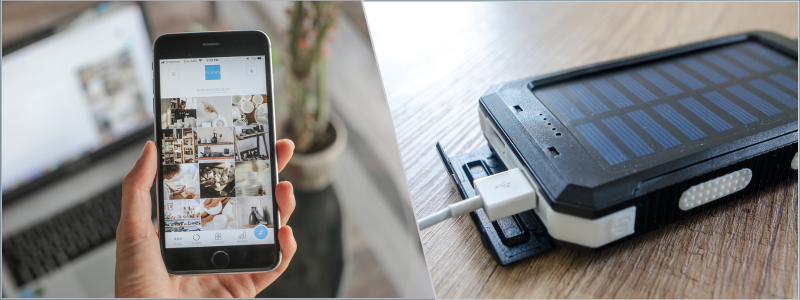
But durability isn’t always the be-all and end-all in environmentally-friendly product design. Thanks to the rapidly changing technology, certain products are meant to be obsolete after several years of usage. Case in point: smartphones and computer parts or peripherals. For example, older flash disks are based on the “Hi-Speed” USB 2.0 technology. Although they’re still perfectly functional, many people are now using the newer and faster “SuperSpeed” USB 3.x option.
As a result, a lot of those previous-generation flash disks are now sitting unused. The same thing applies to older smartphones. In this case, the durability gained from the use of materials that resist decay will end up increasing waste; this means designing a product to be more durable than it should be can be pointless. Even so, it’s easy to see why consumers generally associate durability with high quality. For instance, a smartphone with a reinforced metal enclosure is often regarded as a premium product and is associated with a high price tag.
During its expectedly short useful life, the durability factor for electronics design services might be a selling point, and yet it’s bad for the environment due to its higher resource use in the manufacturing process. Smartphone products are based on rapidly changing technology, and they might not be the right candidate for enhanced durability. For mechanical products, durability is always welcome. A kitchen knife forged from high-carbon steel is expensive, but it’s cheaper in the long run because it will take many years before you need to replace it.
A product design firm seems to be under pressure to embrace durability in every single project for the sake of eco-friendliness. But considering how tons of e-waste, big and small, have ended up in landfills and become potentially hazardous, every product designer needs to understand the nature of the product (how it will be used and its expected useful life) before grabbing the drawing board. Designers may have to avoid using unnecessarily durable materials for products that have temporary functions.
Reliable
Just because a product is durable doesn’t mean it’s also reliable. A durable product can withstand its physical shape, material integrity, and structural strength despite prolonged and frequent use over an extended period of time. A reliable product from 3D product rendering experts promises consistent performance and predictability. If a product is said to be unreliable, it means the users have to deal with inconvenience due to unexpected issues that hinder the product’s functionality.
RELATED: Company Beauty and Cosmetic Packaging Designs that are Designed for Sustainability
A lot of cars are pretty durable products, but many are not as reliable as you want them to be; refillable ink pens are great examples of durable products, but they can leak and clog if you don’t handle them properly. Reliability can be defined as the degree of probability that a product/design/system works as intended. In other words, a product is reliable when it just seems to work every time you use it. From the perspective of product development, the typical approach to improving reliability is to keep everything as simple as possible.
An effective method to achieve simplicity is by reducing the number of components as much as the design allows. For instance, it’s easier to design a reliable hand tool such as screwdriver or an adjustable wrench than a power tool like a miter saw or a router, because the former has fewer components. This is not to say that a power drill is always less reliable than a race and bit–it’s just that fewer components give you less likelihood of something going wrong with the product.
Simpler designs from 3D product modeling designers are usually easier to service, and they have better manufacturability as well. Another benefit of simplified designs or parts reduction is the minimized use of resources and generated waste. Furthermore, fewer parts can help save money on production costs, and the customers get to purchase a reliable product at a more affordable price. However, making a design simple or reducing parts isn’t always the key to reliability. Certain products can use some kind of redundant system to make them more reliable.
RELATED: Sustainable Product Design and Product Development Principles for Firms to Consider
For example, an Uninterruptible Power Supply (UPS) contains batteries to deliver backup power to connected equipment such as a computer in the event of a power outage, flashlights have a dual power system, including a built-in rechargeable pack and external batteries. The downside of redundancy is that it uses more resources and increases production cost, so it must be balanced out by other design requirements.
Adaptable
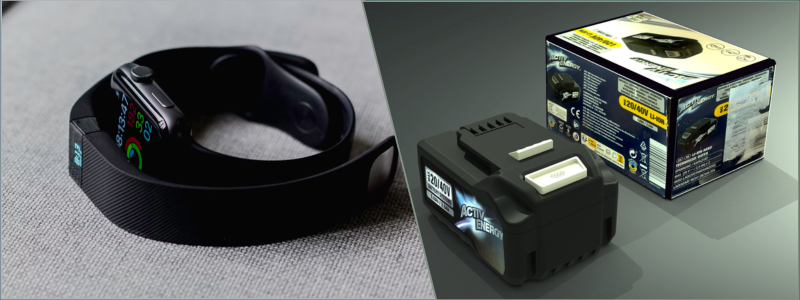
One of the most important characteristics of an adaptable design is the interchangeable parts. This means any product built from two or more individual parts should make for a great candidate for an adaptable design. An easy example here is a ballpoint pen that can use standard refills such as D1 or Japan-style cartridges. Say the external case parts (barrel, clip, and plunger) are made of durable metal materials that should last for years before they even show notable signs of wear and tear.
But no matter how durable the external case is designed by the 3D modeling design artist, the ink in the cartridge will run out after weeks of heavy handwriting. Instead of buying an entire pen, the user can purchase only the refill cartridge. That way, a sufficient portion of the ballpoint pen remains usable through many instances of cartridge replacements. You can even buy a different colored-ink cartridge for the same pen, therefore demonstrating adaptability.
RELATED: Sustainable Packing Design Tips for New Products at Your Firm
It’s the same case with safety razors, as they’re designed to be compatible with all standard double-edged blades. Although the blades are disposable and actually recyclable, the safety razors are as durable and reliable as they come, given proper maintenance. Some safety razors are designed to have detachable and replaceable handles with a simple screw down mechanism, too.
Repairable
The use of standard and interchangeable components also determines if the product can be easily repaired by replacing the problematic components. An effective way for the product designer to accomplish interchangeability is to have the parts produced by the same manufacturer; for instance, if your smartphone comes with a removable battery, you should be able to purchase a replacement battery from the same company as well. And then there is standardization, which takes the repairability scale a notch higher.
In this case, standardization means you can purchase a replacement battery made by other manufacturers and use it in your phone without any issues because all connections and power ratings are identical to the built-in one. The same rule applies to the screen, the speakers, the microphone, and so forth. Just because a specific part of a product is broken, it doesn’t mean you have to throw it all away. When a design for manufacturing and assembly firm aims to build a repairable product, the team should determine who will (or can) perform the repair.
RELATED: Impacts of BIM Design on Reducing Carbon Footprint for Architectural Firms & CAD Companies
Most companies will say that any repair should be performed by an approved technician, which is actually a good idea, except when it also comes with a hefty markup for the services. For example, replacing the battery of a smartphone should be a simple enough process that even a self-taught handyperson can do at a much more affordable rate. If the service is too expensive or the replacement parts are too hard to come by, the consumer has little incentive to send the product for repair. Simple procedures to repair a product are always an advantage.
A good supply of replacement parts and the use of standard tools to perform the repair must be taken into account. And referring back to the previous point, a simpler design is usually easier to repair. One good example of a repairable product is a car. Many car parts are standardized, including transmissions, brakes, steering systems, tires, wheels, fasteners, and even crucial components in engines. Safety systems such as seatbelts, airbags, and lighting are standardized as well.
Although most automotive designers and car manufacturers would recommend having your car repaired at an authorized shop, there are plenty of independent mechanics capable of performing thorough maintenance and major repairs, too. This is why you still see plenty of decades-old cars on the streets today. Without standardized parts and relatively easy repair, most of them would probably end up in landfills, releasing toxic substances to the environment.
RELATED: How 3D Modeling, Rendering, and CAD Design Helps Architects Create Sustainable Construction

Reusable
A product is defined as reusable if you can utilize it for other purposes once it’s retired from its original function. For instance, you can drive the same car every day for many years, but it doesn’t mean the car is a reusable product, not even after changes in ownership. Once the vehicle is discarded, some of its parts might be recovered for reuse.
Metal and glass materials can be recycled, tires might be repurposed for DIY projects, water pumps can be harvested for remanufacturing, and so forth. Be that as it may, the term “reusable” is nowadays used in a purely comparative context. Any water bottle, just as long as it’s not single-use, might be referred to as reusable; the same thing applies to reusable straws, glass jars, and travel cutlery.
Re-manufacturable
Lastly, a design requirement for an environmentally friendly product by a prototype design expert is that it must be re-manufacturable. What we commonly call “remanufacturing” refers to an industrial process where worn products are restored to “like-new” condition. The process involves disassembling a retired product and salvaging the usable parts. A new product is assembled from both old and new parts, creating a unit that is comparable in quality and performance to the original one.
RELATED: 6 Sustainable Design Solutions Your Architectural Design Services Should Use
Remanufacturing is a common practice for industrial equipment or other complex, expensive products not subject to rapid design changes, such as office furniture, car engines, railcars, etc. That said, remanufacturing is only possible if there is an available trade-in business model, enough volumes of old units that may require storage infrastructure, and affordable collection costs.
Conclusion
An environment-friendly design is the mark of a responsible product development. In general, every manufactured product has multiple environmental impacts. For one, a product might be made of renewable and non-renewable resources; either way, it takes energy to collect the materials and turn them into usable parts. Depending on how the energy is generated, the process may release harmful emissions.
Once the product is at the end of its useful life, it might be discarded into landfills or end up in the ocean, polluting the environment even more. However, not every product harms the environment in the same way and to the same extent. A designer or design firm should understand the range of impacts possibly caused by the product may cause to be able to approach the development process from an eco-friendly perspective.
How Cad Crowd can help?
Environment-friendly product development is no longer a new concept. Most design firms and companies today are pretty well-versed in the issues and willing to go the extra mile to make sure that their products satisfy all the requirements of an eco-friendly design.
Many independent product designers at freelancing platforms like Cad Crowd are more than knowledgeable enough to embrace and execute a similar approach, regardless of the product you want to build, from simple housewares to complex IoT devices, and everything in between. And as a bonus, most freelancers are willing to provide their services at affordable rates. Don’t hesitate to contact Cad Crowd to get your FREE quote NOW!



