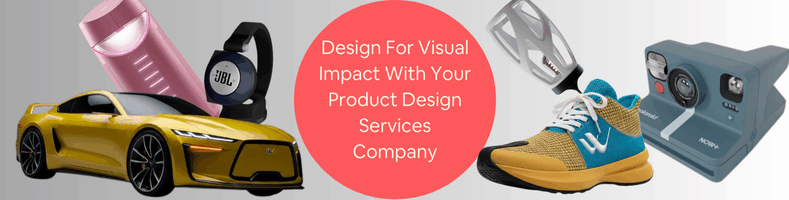
How do you design for visualo impact as a product design services company? The aesthetic aspect of a product might not seem to be the most important thing to consider in the development process, but it doesn’t mean the designers should ignore it entirely. While aesthetics is often a complementary element in a design workflow that prioritizes function, the appearance of a product (and the packaging) has a massive impact on how it is recognized, identified, and classified by potential buyers. Although the design principle of “function over form” is applicable to most products, it remains true that there’s a complex interplay between aesthetic factors and user perception (which leads to either sales or avoidance).
Even subtle changes in aesthetic design have the potential to affect customers’ purchase decisions, which determines success. People tend to associate somebody’s appearance with certain characteristics; the well-dressed are seen as serious and professional, while the casually outfitted ones are often regarded as laid-back. And it’s pretty much the same with objects, in the sense that everybody projects certain qualities onto products based on their form. For example, a sports car is associated with the sense of speed, performance, and in many cases, wealth; a station wagon, on the other hand, may be linked to family life where practicality triumphs.
RELATED: 15 Engineering Design Constraints that Product Design Companies & Engineering Firms Can’t Avoid
All these personalities emerge in the buyers’ perspective almost immediately after the first visual contact. It’s safe to say that aesthetic design plays an important role in 3D product rendering services, shaping the emotional connection between people and the products they see. And this is why designing for visual impact matters a lot. It’s not just about making a product as aesthetically pleasing as possible, but ensuring that the design or form of a physical object complements its functions and contributes to a positive visual impact on buyers.
To some extent, the form itself must be treated as an important feature that represents the product’s characteristics and the brand’s identity at the same time. The realm of physical product design traditionally falls within the scope of work of an industrial designer. Cad Crowd is home to hundreds of talented industrial designers experienced in creating physical products that are not only purposeful and functional but also carry an effective visual impact on buyers.
Communication through form
While the aesthetic of a product appears to be superficial at a glance, it actually holds a much more important role in consumer product design services than many people seem to think. Buyers’ perception of a product is a complex, if not abstract, concept triggered by a number of factors such as price, popularity, and brand reputation. Before all those factors register in their mind, however, the visuals of a product design create the first impression.
RELATED: Best 50 Platforms to Hire Freelance Mechanical Designers, Engineers & 3D CAD Modeling Experts
A product’s aesthetics build the first layer of that complex perception. You can think of the aesthetic design as a language with which the product expresses itself. Attributes of aesthetic design, such as shape, height, curvature, color scheme, materials, button layout, and so forth, should act as meaningful symbols that represent the product’s quality and characteristics. These attributes play significant roles in influencing how consumers perceive the product, associate it with any particular trait, and make the purchase decision.
Product aesthetic as brand identity
As far as visual impact is concerned, one of the most challenging tasks of an industrial designer is to infuse a symbolic language into a product’s aesthetic in such a way that it communicates brand identity. To add to the complexity of that matter, the communication cannot be one-sided. Consumers must be able to understand the symbolic meaning; otherwise, the aesthetic design fails to speak for the brand.
Strategic use of materials, geometry, texture, shape, form, colors, and even smell can stimulate specific emotions, which eventually evoke a perception about a product, and by extension, the brand. This perception may create an intangible yet perceivable value that makes a product stand out from the crowd in the market. By emphasizing the importance of visual impact across all touchpoints, including the packaging and interface, a product designer should be able to strengthen brand identity and recognition.
RELATED: Top 35 CATIA Design Companies & Engineering Services for Product Design & 3D Modeling
User experience and visual impact
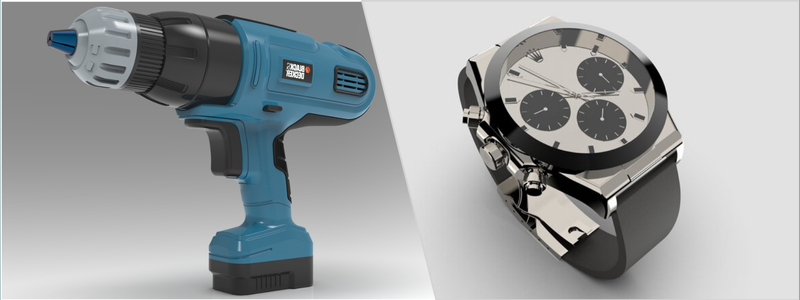
The big idea of proper product development is to create something that looks good and works effectively. No matter what product you want to make, the ultimate goal is to make sure that it ticks all the boxes, in terms of both aesthetic and functionality. This requires a seamless integration between form and function, rather than prioritizing one over another. An industrial designer knows all too well that every interaction with a product can contribute to brand image, and therefore, it’s entirely possible to create a visual impact that reinforces user experience.
Even from the earliest stages of development, the 3D design firm should consider how a typical user will interact with the product. It’s a question of ergonomics and aesthetics, about how the product can be used safely, comfortably, and effectively while still delivering good visual impacts with its appearance. It’s undeniable that the product remains functional without losing the ability to evoke positive emotional responses through its aesthetic appeal. This is how an industrial designer can tailor a product to better suit the users’ needs with effective functionality and their preferences for good aesthetics. Such an attention to detail likely results in a product design that’s not only visually appealing but also functional for a satisfying user experience.
Balanced form and function formula
Striking a proper balance between form and function has always been a monumental challenge for any product designer, regardless of the product. If the focus tilts heavily toward the “form” or aesthetic, the final product might be only superficially good; it’s eye candy with skin-deep beauty. On the other hand, placing too much emphasis on function while having little regard for visual impact risks making the product unattractive. In this case, even if the product actually works, the lack of positive visual impact leads to poor user experience at best and perhaps complete avoidance at worst.
RELATED: Important Benefits of Industrial Product Design – Using Industrial Product Design Services
The “function over form” approach has always been a guiding principle in industrial design. But in today’s increasingly competitive market for consumer products, product design companies just cannot afford to lose sight of how aesthetics play an influential role that affects sales.In a physical product, every element of functionality contributes to the aesthetic aspect. For instance, the design of ballpoint pens uses pretty much the same basic idea. It has a plunger at the top, a clip directly below, followed by a barrel, and finally the tip. The mechanism inside is also relatively simple, consisting of a back spring and a front spring to slide the ink cartridge up and down to reveal or hide the actual ball point.
Every single one of those parts serves a specific purpose, and it’s almost universal how they’re put together into a functioning instrument. But then again, ballpoint pens come in numerous models and variations – each carries a different visual impact, so it may stand out and improve the handwriting experience. All the components of a physical product can be designed to deliver as much visual impact as possible. In the case of a ballpoint pen, an product design and development designer can fabricate such parts as the plunger, clip, barrel, and tip from materials like metals, plastic, carbon fiber, wood, or any combination of those in a unique way. There are probably countless combinations because the materials also offer a broad range of selections.
Metals can be aluminum, stainless steel, tungsten, titanium, magnesium, and alloys. Plastics also have a wide variety of options, including ABS, PMMA, PVS, and so forth. The finishing layer also has multiple options, like the use of colors, coating, polishing, and engraving, to add to the aesthetics. And then there’s the shape itself, which arguably is the biggest and most important ingredient to build visual impact. It acts as the foundation of the form and might be composed of a combination of easily visible elements such as lines, curves, angles, sizes, and the relationships between them.
RELATED: How to Make a Prototype for Your New Product Design
Achieving a balanced formula for function and form would require a thorough evaluation by the new product design professional of all aspects of product design to make sure that each element can contribute to good aesthetics while maintaining flawless functionality. The delicate blend of appearance and usability happens when well-made product parts assemble into a functioning design that also captures consumers’ admiration, both when sitting still and in use.
Materials and finishes
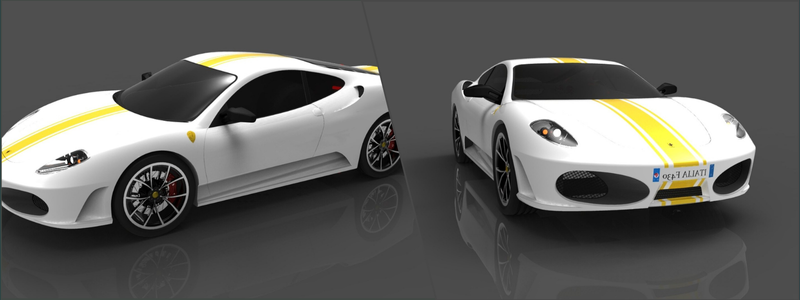
While it’s true that “beauty is in the eye of the beholder,” there might be a consensus as to what specific design elements make a physical product objectively beautiful, namely, materials and finishes. Referring back to the previous example about a ballpoint pen, industrial designers are spoiled with an abundance of material options. Apart from metals and plastics, they can also use unusual choices like carbon fiber, bamboo, wood, and more. Just about every part of a ballpoint pen can be fabricated from any of those materials; of course, each has its own characteristics and properties such as tensile strength, durability, corrosion resistance, reflectiveness, etc.
That being said, whichever material ends up being the barrel or a clip of a ballpoint pen, it’s not just about a matter of usability and practicality, but also aesthetics and visual impact as a whole. And this is where “finishes” come in. When the product modeling expert chooses the right finish, like polished, brushed, textured, glossy, or matte, it can further enhance the look and feel of the pen. But because the purpose is to improve the user experience through good aesthetics, the finish itself needs to serve a specific purpose rather than merely beautifying.
RELATED: How Are Product Design vs. Industrial Design Services Different?
A designer might choose a textured surface on the barrel to improve grip, polished steel for easy cleaning, matte finish because it hides fingerprint smudges, engraved bamboo/wood as it’s biodegradable, and so forth. The point is, even the aesthetic element must be purposeful to achieve a good balance between form and function.
Ergonomics for visual impact
Say you’re holding a well-designed ballpoint pen that somehow fits perfectly in your hand, with nice lines and curves placed exactly where your fingers naturally reside. It also has a textured grip made from high-quality rubber that cushions the tip of your fingers while maintaining good resistance for a comfortable handwriting experience. It has a clip made of high-quality material with a spring mechanism that holds the pen firmly upright inside your pocket. The plunger produces a nice, unobtrusive sound of a click when you press it down, and the actual ball points glide with consistent smoothness across the paper. And the overall pen has a nice weight; it’s neither too hefty nor too light that it doesn’t give you discomfort even during a long note-taking session.
Furthermore, the pen doesn’t just look good lying still on a desk; it still appears visually pleasing when you’re actually using the product for its intended purpose. This is because the natural positions of your hand and fingers never really negate the aesthetics. It’s safe to say the ballpoint pen is the result of a design process that takes both ergonomics and visual impact into account. When a product is easy and comfortable to use, the design tells consumers that the company cares about their needs and preferences as well, creating a positive brand perception.
RELATED: Trends Shaping the Future of Product Design for Industrial Design Services
The role of colors in physical product design
There are several ways in which colors can influence how an industrial design works:
- Brand identity: think about some of the world’s most iconic brands. Coca-Cola has its signature red, black, and white palette. Tiffany & Co. is always associated with a bright shade of blue so specific that the color is now often referred to simply as Tiffany blue. There are also Caterpillar’s yellow, Cadbury’s purple, and more. All those brands have consistently used the same color palette across their products as a way to establish brand identity. Consistent visuals make the brand easily recognizable everywhere.
- Emotional connection: Based on popular belief, colors do affect emotions. For example, red is often associated with excitement, energy, love, and even danger, while green is regarded as a shade that represents peacefulness, sustainability, safety, and relaxation. Other colors like blue, orange, yellow, black, and white also have their own implicit connotations and meanings. In short, colors can evoke certain feelings, and brands utilize this connection to communicate with consumers. It’s worth noting that different cultures have different perceptions of the meaning of colors. Graphic designers should consider such cultural nuances when implementing colors to a product or brand logo.
- Visual hierarchy: Colors are effective tools to highlight the best features and functionality of a product. Thoughtful use of contrasting shades of colors can help guide consumers’ eyes to all the highlight-worthy elements of a product with minimal effort. If used strategically, colors may even improve usability. For example, the design of a ballpoint pen may use different shades of colors for the barrel and the tip to break down the otherwise continuous line. Apart from being an aesthetic choice, the colors also mark the positions users should hold when opening the tip to replace the ink cartridge.
RELATED: How You Benefit from a 3D Graphic Designer Creating Your Company’s 3D Logo
Colors have always been important aspects of industrial or mechanical engineering services as they can really make or break the product’s aesthetics. Proper use of colors and finishes may transform an otherwise typical, ordinary object into something exquisite to behold. Most people would think of colors as nothing more than simple embellishment, but a professional industrial designer should understand how shades and hues can be made into integral parts of a product’s usability that also evoke positive emotions through efficient visual impacts. An industrial designer has what it takes to harness the power of colors and utilize them to their full potential to shape a product’s visual narrative, leaving a long-lasting impression on consumers.
Takeaway
The form and aesthetics of a physical product play key roles in creating emotional connections with consumers. Because elements like materials, shape, textures, and colors affect not only how a product looks but also the way it feels in the hands of users, they contribute to both the appearance and usability of the product. In fact, those elements can also tell stories about their perceived characteristics and target market. For example, a ballpoint pen of which the external components are made entirely out of polished metal with a textured finish might appeal to consumers looking for luxurious aesthetics; meanwhile, a similar product that features warm colors and soft curves is often seen as an image of practicality.
RELATEDE: Using 3D Visualization Services to Communicate Design Intent to Clients and Firms
With that in mind, a 3D visualization designer can use those elements to create visual impacts that trigger specific emotional responses from the right consumers. It’s also possible for a brand to establish a bond with consumers through this kind of visual interaction. A product’s aesthetic can actually influence consumers’ perception of quality, but this is not to say that an industrial designer should use visuals to deceive buyers. Quite the contrary, consumers should be able to make an informed judgment about the products’ overall quality, reliability, and performance by paying attention to the aesthetic details.
How Cad Crowd can help
In a product designed to have a well-balanced combination of function and form, the visual impacts delivered by the “form” must be indicative of its performance and functionality. In a highly saturated market for consumer products, you need nothing short of experienced industrial designers capable of creating powerful visual impacts to reinforce a positive emotional connection with consumers. When it comes to hiring expert industrial designers, Cad Crowd comes at the top of the recommended list thanks to its rigorous freelancer vetting process, IP protection services, and affordability. Contact us for a free quote.