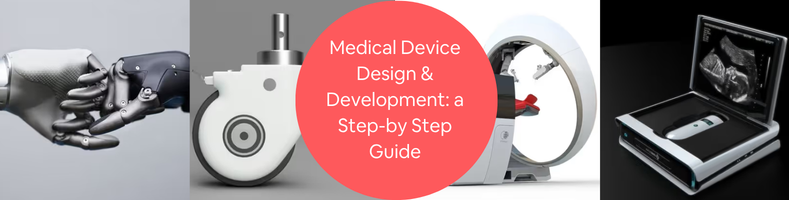
One challenge in medical device design development is that it has to comply with strict FDA regulations, which serves as the regulatory backbone for every medical device. Its compliance with FDA requirements, following design controls for a structured process, makes it more complex to develop and produce than a typical consumer product in 2026
In this guide, you will be familiarized with the elements under 21 CFR 820.30, the 2026 QMSR harmonization with ISO 13485, device classification, and the 510(k)/De Novo/PMA pathways. For owners who wants to develop a medical device, Cad Crowd can help in connecting with vetted medical device designers who can help produce compliant medical device design.
Disclaimer: This article is for educational content, not regulatory or legal advice. FDA design control and QMSR requirements are detailed and specifically factual. It is always best and encouraged to seek advices from a qualified regulatory consultant or professional before making compliance decisions for a certain medical device.
Overview: the 9 design control elements
| # | Element | 21 CFR 820.30 | ISO 13485:2016 Clause | Core Question Answered |
| 1 | Design & Development Planning | (b) | 7.3.2 | How will the design activities be organized, documented and tracked? |
| 2 | Design Input | (c) | 7.3.3 | What’s the device functionality and usage? |
| 3 | Design Output | (d) | 7.3.4 | What did we actually design? |
| 4 | Design Review | (e) | 7.3.5 | Has the design been formally evaluated? |
| 5 | Design Verification | (f) | 7.3.6 | Did we build it right, meaning the output meets input? |
| 6 | Design Validation | (g) | 7.3.7 | Did we build the right thing, meaning it meets user needs? |
| 7 | Design Transfer | (h) | 7.3.8 | Can production correctly reproduce the design? |
| 8 | Design Changes | (i) | 7.3.9 | Was this change controlled before implementation? |
| 9 | Design History File (DHF) | (j) | (compiled record) | Can we prove the design followed the plan? |
Note: Based on QMSR, which was effective since February 2, 2026, ISO 13485:2016 Clause 7.3 is incorporated by reference and it now serves as the operative source for requirements. This is as per FDA’s Federal Register final rule and AAMI TIR102:2019 mapping guidance.
RELATED: How to Design Medical Products that People Actually Want
Need engineering support for your design history file?
Have a design in mind and opting to hire a medical designer? Browse Cad Crowd to help you connect with one who can help in CAD models, fabrication drawings, or any DHF-ready documentation.
Where design controls begin: feasibility vs. formal design
Do design controls apply to early prototypes?
The common founder confusion
Founders often mistaken the first concept design to already apply FDA design controls. It’s actually not. Concept sketches, rough drafts, technology research and concept prototypes are actually part of feasibility work. These are outside the scope of formal design control. This stage is just to ensure that the product idea is realistic and worth pursuing. It does not necessarily mean that it should prove compliance early. It’s important to be aware of this and know the distinction since it can affect the financial decisions. Applying full design control documentation over the early research and product concept design would just add more overhead costs and incur unnecessary time, effort and costs. It would definitely impact exploration and testing of ideas. Formal design controls start once the concept has been clearly designed and is on the structured product development stage.
When design controls formally begin
Once the device concept idea has been defined and it has transitioned from feasibility stage to formal development, FDA design control officially starts. Its trigger is an approved design and development plan. This outlines the product’s objectives, responsibilities, timeline and the development’s processes and activities. In here, the focus has shifted from the objective “should we build this product” to “How will we build it the way it is compliant?”. It is important to take note and be aware of the thoughts behind every stage in order to come up with an informed decision. It also allows founders and the internal product design team to stay aligned with their objectives.
Why getting this wrong is costly both directions
Starting to apply design control should be timed and planned correctly. Starting early does not mean being ahead. It would just add unnecessary costs. Applying it too early would mean spending a significant amount of time, effort and money preparing for compliance documents and processes to design concepts that are not yet final. Applying design concepts late would leave other parts of the process undocumented. It could create gaps that may become a risk or a problem later on. A practical approach is to create an organized and structured engineering records. This includes test results, design notes and other logs during feasibility stage. Once the design is formalized and decided, the formal design control will commence.
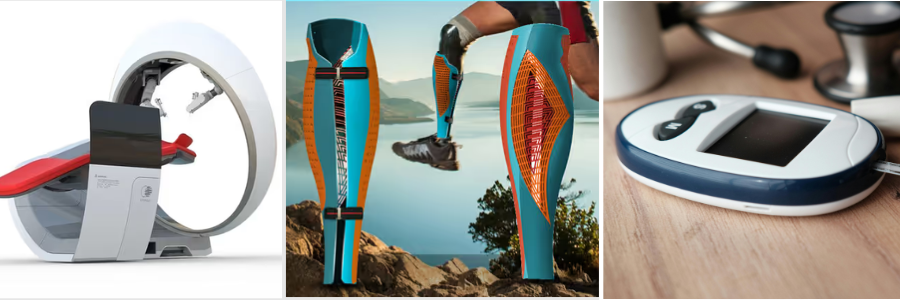
Device classification: class I, II, and III
What are the FDA device classes and how do they affect design controls?
Class I: Low risk, general controls
Class I category is defined as low risk and subject to basic FDA requirements (general controls). It involves manufacturer registration, product listing and other listing or reporting of safety-related issues. The most common examples of Class I products are surgical gloves and manual wheelchairs. This class does not necessarily require premarket approval and is also exempted from FDA design control requirements. While this is the case, it’s not always applicable to every Class I product. There are still devices with greater potential risks. Devices with a certain software or specialized medical products are still required to follow a full FDA design control. It is important to still assess and not be complacent. Verifying an applicable regulatory requirement would still be the best and practical approach before beginning the product development process.
Class II: Moderate risk, special controls
A Class II medical device falls under moderate-risk products. These products have to comply with both general and special controls established by FDA. The special controls may include additional performance standards, labeling requirements, testing and other post-market monitoring. This is to help ensure that the device is safe and effective. Products under this category include surgical drapes, infusion pumps and other diagnostic or monitoring products. Most Class II products should obtain an FDA 518(k) clearance before releasing it to the market. Most medical products fall under Class II category, which is why it is important to understand FDA Design controls. Manufacturering companies are expected to follow a structured development process, showing proper documentation, testing and other validation processes to meet regulatory requirements.
Class III: High risk, premarket approval
Class III medical devices and products are considered high-risk. These products and devices are often used to support or sustain life. Also, these products are usually used for internal implants for patients. Products that fall under this category are pacemakers and artificial heart valves. These products must undergo FDA’s Premarket Approval (PMA) process, which would require rigorous and expensive evidence to show safety and effectiveness. Compared to any other products in Class I and Class II, products in Class III must comply with full FDA design control throughout the development process. It is expected that the manufacturers have proper documentation and a compliant Quality Management System.
RELATED: How Design Firms Use Prototypes to Develop Critical New Medical Devices
The 510(k), De Novo, and PMA pathways
What is the difference between 510(k), De Novo, and PMA?
510(k): Premarket notification via substantial equivalence
One of the most common FDA approval routes is 510(k) pathway. This is mostly applicable for Class II medical devices. In here, instead of trying to prove a product is new and innovative, product designers would just show that the device is substantially equivalent to another existing product that is FDA-cleared. This just proves that the predicate device has the same use and technology as proposed. An FDA review would typically take around two to three months and the timeline depends on the quality of the submission. If there’s a need to submit more evidences and documentation, it may take longer than the usual timeline. When successfully approved, the manufacturers can market their devices in the United States, all while demonstrating compliance with FDA regulations.
De Novo: a pathway for novel, lower-risk devices
The De Novo pathway exists and is designed for new medical devices under low to moderate risks, and does not have any predicate FDA-approved products. This makes them ineligible to use 510(k) process since there’s no product reference. In here, the manufacturers must demonstrate and provide proof or evidences that the device is safe and effective enough to establish a new FDA device classification. Once it gets approved, this new device can now be used as a predicate product for 510(k) submissions. The De Novo process can be longer than the 510(k) submissions. It averages 174 days and is less expensive and demanding compared to Premarket approval pathway.
PMA: the most rigorous pathway
The strictest and the most rigorous pathway is the PMA. This is primarily reserved for Class III devices. It is also the most extensive process and would definitely require a lot of effort and resources to get approval. In here, the product engineering professionals should provide and submit strong scientific evidence to prove that their device is indeed safe and effective as intended. This often includes clinical trials. Since it requires high evidentiary standards, the PMA submissions would take longer to review. It could be around 181 days or even more depending on the completeness of the submissions or the complexity of the product. The process is also less predictable, making it high-risk. It could be strict and extensive to go through but it just ensures that the device is safe before it reaches patients.
Choosing the right pathway
Choosing the right pathway is not about preference or which is the easiest, it is about following the device classification. This is why it is important to know the product’s classification first to know what pathway is required for it. The guide has given clear and simple parameters in identifying the correct pathway for the founders to know their next steps. For a new medical device design that has a predicate product, an existing FDA-cleared product, 10(k) pathway is usually appropriate. For a low- to moderate-risk new product with no existing FDA-cleared product or device, it can use De Novo pathway. All high-risk products and devices would have to require PMA. Whenever uncertain for what classification their products and devices are, the companies can submit a pre-submission meeting (Q-Sub) with the FDA.
The nine elements of FDA design controls (21 CFR 820.30)
What are the nine elements of FDA design controls?
Element 1: Design and development planning
The design and development is considered as the first and foundational step in FDA design controls. This is because it establishes how the design activities will be organized and who is responsible for each designated task. It clearly defines how the entire development process will be managed and the product design and development teams it will be coordinated with. It acts as a roadmap about how the device will be produced and built in a more controlled way. This documentation is not a one-time update. It should be updated every now and as the project evolves. It should be updated whenever there are changes in scope, timeline and team delegations or responsibilities. It is important that the plan is aligned with the actual developmental activities or it can pose risks during audits
RELATED: All You Need To Know About Medical Prototype Design Factors for Companies: Costs, Rates, and Pricing
Element 2: Design input
Design inputs are the clear and measurable requirements used to define the medical device’s functional features and performance characteristics. The inputs could be from the user needs, intended use, safety standards and regulatory requirements. They are considered as parameters or rules of the device, meaning it has to be followed before it is actually built. This is important in every development process since it ensures that the final product meets its intended purpose. It keeps the product aligned to the original intent and functions. It reduces user dissatisfaction with the product. For instance, one of its end goals is that it is comfortable to use but the device does not have an easy grip.
Element 3: Design output
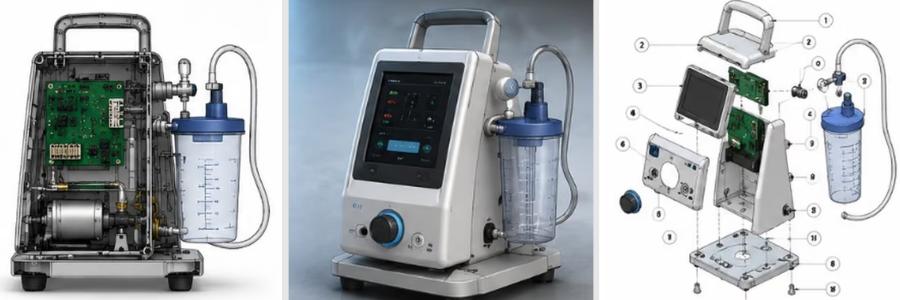
Design outputs are defined as the concrete results of the design effort for each stage. This includes drawings, specifications, software codes and other technical documents. It comprises all the “rules” and parameters set for the product. These are what was produced when the requirements were to be turned to real products. The design outputs should be clearly written and detailed in a way that it can be verified and checked against the design inputs. Doing this will make it easier to see if there are any differences or discrepancies.
For medical devices, the design outputs include CAD models, mechanical engineering drawing services and material specifications. These documents are mainly used for manufacturing and compliance verification. The quality of these documents are based on the skill and accuracy of the design and engineering team. It is important that it should be strong enough to be reviewed against FDA requirements.
Element 4: Design review
Design reviews refer to a structured, formal and documented checkpoints in evaluating the design. The stages to be reviewed and checked has to be appropriate and significant in a way that it represents design functions. These checkpoints are done to ensure that it meets the requirements and aligned with the intent. The review has to be done by different representatives from all relevant functions, plus one independent person who was not directly involved with the 3D design team. This review structure allows them to conduct an evaluation objectively. The updated QMSR (aligned with ISO 13485:2016) does not require or mandate independence requirements but FDA expects it to be followed. These design reviews and checkpoints are important since it can help in catching issues early, reducing costly reworks.
Element 5: Design verification
Design verification confirms whether the design output meets the defined design input requirements. This means that it has to be ensured that the product or the device was built in accordance with its defined specifications. It has to answer the question “Did we design this right?”. This encourages objective checking. In this stage, testing, analysis and inspections were done to ensure that the requirement was met. An example of this is how a part was measured to confirm and ensure if it matches the engineering tolerances required. The FDA regulations require verification activities to be properly documented and stored in the DHF or Design History File. This stage does not necessarily check if the product can solve a problem, it’s just for verification whether the design inputs are aligned with the design outputs.
RELATED: Manufacturing Materials for Medical Devices
Element 6: Design validation
Since the design verification is only for aligning design input to design output, design validations are for ensuring that the produced device can solve the needs and problems of the user. In here, the design engineer checks if the product can perform the way it is intended. This objectively answers the question “Did we build the right thing?”. Design validation checks whether the device matches its specifications and if it can solve the user’s problems. As per FDA regulations, the design validation checks must be performed under a clear and defined operating conditions. It should typically use initial production units or equivalent samples.
Element 7: Design transfer
Design transfer is the step wherein the finished device design is now formally handed over from the engineering team to manufacturing. It should be ensured that the drawings, specifications materials and instructions are correctly understood and interpreted by the factory. This stage serves as the bridge between product development and mass production. It is important that the designs made are manufacturing-ready. This means that the device can be produced in the manufacturing facility without problems or issues. To ensure this, Design for Manufacturing or DFM services are encouraged throughout the engineering phase. This allows the team to do check-ins rather than doing costly reworks.
Element 8: Design changes
A design change refers to any update made to a medical device after it has been initially developed. It should follow a strict and documented process. In here, the documentation should be able to review its impact and record it accordingly. The change should be identified along with its validation and verification before it can be implemented. Simply put, every change to be made shouldn’t be done casually. It has to be thought-over. Every small modification and alteration must be controlled and undergo approval to ensure that the product is still safe and compliant. The product, after change, should be cleared and approved by the FDA.
Element 9: Design history file (DHF)
The Design History File or DHF refers to the complete compiled record of the device’s development. It shows what the device went through for it to be approved. It should be in accordance with the Design and Development Plan and FDA design control requirements. This makes it an evidentiary support folder that proves every step of the design and development process. It’s not just one document but rather a compiled structure collection of all records relevant to design control elements. This includes inputs, outputs, reviews, verification, validation, transfers and changes, DHF are used in tracking and tracing the entire development history of the device from concept up to the final design.
QMSR and ISO 13485: What changed in 2026
How does the new FDA QMSR relate to ISO 13485?
The QMSR is now in effect
The FDA’s Quality Management System Regulation or QMSR has become officially effective February 2, 2026. It superseded the older Quality Management System or QSR under 21 CFF Part 820. The change is more than just a name update, it also represents a huge transition on how medical device quality systems are structured and inspected in the United States. One of its major change is replacing QSIT inspection method and using an approach that is more aligned with QMSR. QMSR has also brought US regulations to international standard ISO 13485. This means it helps in aligning global medical device quality systems. The manufacturers were given two years as transition period after the finalized rule to prepare for the compliance. From here on, compliance with QMSR is officially mandatory.
Incorporation by reference: how the QMSR works
In application and practice under QMSA framework, the FDA did not really fully rewrite its quality system rules. It just incorporated ISO 13485:2016 by reference. This means that the ISO standard is now effectively a part of US regulatory requirements and not just optional or voluntary. Simply, the manufacturers have to follow ISO 13485 requirements as their main structure for quality management. The FDA would just add other modifications if necessary. Now, the 21 CFR Part 820 is significantly shorter since there aren’t as many requirements as it used to. It only now has detailed rules pointing to relevant ISO 13485 clauses.
What did NOT change: FDA inspections remain independent
Although there’s a significant shift to the QMSR and ISO 13485 integration, there’s one thing that hasn’t changed and that is how FSA still conducts its own independent inspections. This means that the agency does not require companies to obtain ISO 13485 certification. Also, having a certification and third-party auditor does not exempt a design for manufacturing and assembly company from FDA review. Simply put, ISO compliance alone does not equate to FDA acceptance. It’s not guaranteed. The FDA don’t just rely on external audits like Medical Device Single Audit Program when it does its inspections. With ISO 134885, the structural foundation of quality systems, the FDA can still apply other additional US-specific requirements during inspections.
Key areas where QMSR adds to ISO 13485
QSMR is not solely based on ISO 13485:2016, it also includes several additional FDA-specific requirements. The manufacturers should take note of this and still follow it. This includes detailed and structured rules for complaint handling and recordkeeping, including documenting adverse event reports and maintaining Unique Device Identification. Labeling and packaging controls are also stricter under FDA. Moreover, QMSR has expanded traceability requirements beyond implantable devices. They include products that can support or sustain life. This allows manufacturers to better track these devices all throughout its lifecycles. Generally, the manufacturer shouldn’t just rely on complying only with ISO 13485 but also ensure they review FDA-specific provisions as well.
FDA clause mapping: 21 CFR 820 to ISO 13485 Clause 7.3
The introduction of QMSR has made the former 21 CR 820.30 design control requirements more aligned with ISO 13485:2016 Clause 7.3 (Design and Development). Its application and practice focus on the usage of ISO 13485 Clause 7.3 as the primary framework for meeting FDA design control requirements. The overall control process remains the same, but the basis and regulatory reference has significantly shifted. It has become an internationally recognized ISO standard. In order to help manufacturers with this transition, it is recommended to use AAMI TIR102:2019. This will provide a more detailed cross-reference between the legacy 21 CFR requirements and the corresponding ISO 13485 clauses.
Human factors, risk management, and software considerations
How do human factors and risk management fit into design controls?
Human factors engineering as a design input source
Human Factors focuses on how real users interact with the medical devices and helps in identifying potential errors early during the design process. Instead of having to assume that the potential users can operate the device exactly as intended, this study allows us to see and observe how humans really interact with it in real-world setting. The findings would provide a better design inputs in making a device that’s easier and safer to use. For medical devices, it is important that errors be found early before it can affect the patient’s safety. Early formative usability studies can help in improving the design by being able to spot and identify problems. Summative usability studies is for near-end development confirmations of how the product or device can be used safely under real-world situation.
Risk management runs through every design control element
Under the FDA’s QMSR and ISO 14971, risk management starts during design planning. It helps in defining how design inputs influences design outputs by incorporating safety features. Risk management is important and a core part of medical device development since it integrates every stage of design control process. Its purpose is to spot hazards and potential risks and come up with measures to eliminate them. Incorporating all stages of design control ensures safety is considered all throughout the product’s lifecycle. It focuses on how risks are treated, gaps are identified, and how hazards are overlooked.. Doing this helps the engineering design professional in making early amendments and fixes, essential for developing safe and effective devices.
Software as a medical device (SaMD) considerations
There are medical devices with built-in software. It could be embedded firmware or standalone software. Any of these options would still be required to follow FDA design controls even if it’s only Class I devices. Software plays a crucial role in device safety and performance and that’s why it has its own validation process on top of hardware testing. Manufacturers would have to verify that the software functions correctly and reliably under intended conditions. The FDA encourages a risk-based approach through Computer Software Assurance (CSA). When hardware and software are combined, it also has to be documented structurally within the Design History File or DCF. This helps in demonstrating that the system complies with regulatory requirements.
RELATED: New Medical Device Development Life Cycle
Prototyping within a design-controlled process
How Does medical device prototyping differ from consumer product prototyping?
Prototyping stages map to design control maturity
Medical device prototype design services have become more structured as the project progresses through FDA design controls. During early stages of prototyping, it could be simple and low-cost since the main focus and idea is to explore ideas and confirm the basis of functionality. There’s not much investment to be done. But once design controls are incorporated and design inputs are finalized, every prototype should now be linked to specific requirements. It has to be built with clear testing purposes. Its focus is not just for improving functionality but on supporting regulatory documentations.
Verification testing uses engineering prototypes
Design verification is typically done and performed through prototyping. Engineering prototypes are done and built to resemble final products in terms of its materials, components and manufacturing methods. Its goal and focus is to verify and confirm if the device meets all documented design inputs. It should answer the objective “Was the device built according to its specifications?”. It actually resembled the EVT or Engineering Validation Test, wherein functional performance is evaluated before it moves forward to the next stage. The only difference is that medical devices would need a significant level of documentation. This means that every verification process done has to be recorded and stored in DHF as evidence that the device has followed compliance requirements.
Practical application and building a compliant team
How should a medical device startup build a design control-ready team?
Engaging a QMS consultant early
It is more beneficial for medical device startups to involve a QMS Consultant or a regulatory expert early in the project. Doing so can minimize time, cost and possible reworks later on. Instead of waiting until the product design is complete, the product development experts and consultants can help in assessing and determining the most appropriate FDA approval pathway. This includes identifying if it’s 510(k), De Novo, or PMA. The consultants can also help in key compliance requirements including DHF. They help in defining formal design controls and building compliance quality systems. This helps startups to avoid costly regulatory issues and reduce delays.
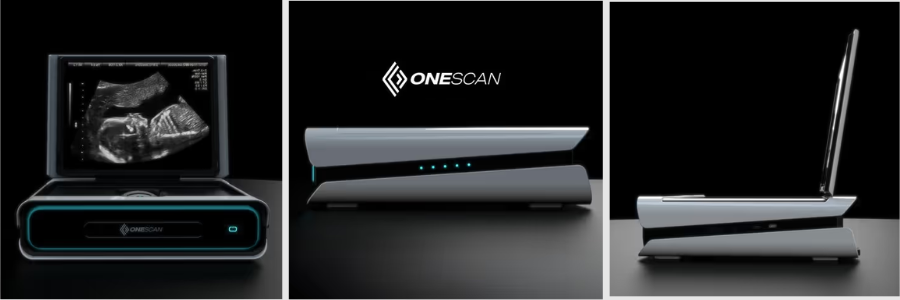
What engineering deliverables need to support
Engineering deliverables include CAD models, fabrication drawings, metal specifications and material specifications as well as instructions. These help in defining the device design and concept. These need to support regulatory compliance by ensuring they’re well-organized, stored and traceable. In practice, every document should have clear revision control, showing its address. This helps in proper alignment with DHF.
Working with freelance specialists within a client’s QMS
Medical device companies can expand and engage with freelance CAD designers, mechanical and electrial engineers for specific stages. The key is to not outsource blindly. It is important to hire a specialist for a specific stage. This approach is a more strategic and efficient way in utilizing resources. It has to be ensured as well that the specialists know how to follow the company’s existing Quality Management System. This makes the work consistent and compliant with FDA design control requirements.
RELATED: How Cutting-Edge Medical Prototyping Design Services Help Your Firm Design New Products
Pathway comparison
510(k) vs. De Novo vs. PMA: side-by-side
| Factor | 510(k) | De Novo | PMA |
| Typical device class | Class I/II | Novel Class I/II (no predicate) | Class III (high-risk) |
| Predicate device required | Yes | No | No |
| Average FDA review timeline | 82 days (NCBI) | 174 days (NCBI) | 181 days (NCBI) |
| Approx. clearance rate | ~90% (GAO, Class I/II) | Case-by-case | ~78% (GAO, original PMAs) |
| Share of marketed devices | ~95–98% (QualySec) | Smaller, growing category | ~9–10% of devices (NectarPD) |
| Clinical data typically required | Often not required | Sometimes required | Typically required |
Frequently asked questions
Do early medical device prototypes need to follow FDA design controls?
Not really. Early feasibility prototypes are used not subject for formal FDA design controls because it has not yet entered the developmental phase, meaning it is still in the exploration and concept testing phase.
What is the difference between design verification and design validation?
Design verification confirms if the device was built correctly as intended and per specifications, while design validation confirms if it meets user needs in real-world settings. Both are important and required steps under 21 CFR 820.30.
What changed when the FDA QMSR took effect in 2026?
The QMSR, which was formally effective on February 2, 2026, has superseded most of the FDA’s legacy 21 CFR Part 820 requirements by incorporating ISO 13485:2016 by reference. It aligns the US quality systems to global standards, while still retaining independent FDA inspections. It also means ISO certification does not equate as a substitute for FDA compliance.
How Cad Crowd can assist
FDA design controls are not just made to make the design development process tedious and costly. These compliances and requirements are done to ensure that all medical devices and products are safe and effective before it reaches the patients. Understanding FDA design controls, QMS and alignment to ISO 13485 helps manufacturers to know and follow regulations without possible risks of rework and disapproval. Regulatory consultants and experts are still important, especially for startups to support them. In helping medical companies, Cad Crowd is here to connect with vetted CAD design professionals who can produce DHF-ready CAD models, drawings, and documentation. Contact us for a free quote.