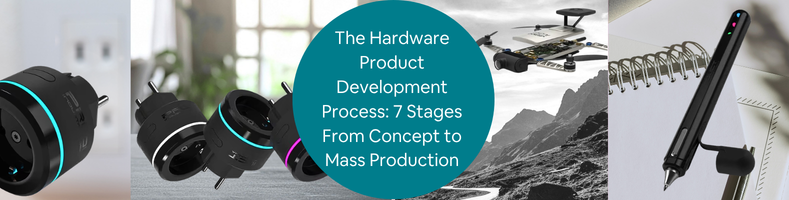
Every hardware product goes through several planned and configurable stages before it reaches the market to ensure it works as intended. Ideally, it moves through seven stages starting from ideation, market research, requirement documentation such as PRD, concept and industrial design services, detailed engineering using CAD, PCB, and firmware. The prototyping, iteration, and validation using Engineering Validation Test, Design Validation Test, and Production Validation Test are also part of the process as they help launch mass production.
The planning-to-production process may take 9 to 18 months depending on the hardware’s complexity and the number of validations. If you are ready to assemble a team to advance production, Cad Crowd can help connect you with vetted designers and engineers who are tailored to your project goals. ect goals. This guide will help you through the seven key stages, common milestones, and validation in creating a hardware product development.
The 7 stages at a glance:
| Stage | Deliverables/Outputs | Typical timeline | Expected cost range |
| 1. Ideation & market research | Problem statement, concept sketches, feasibility check | 2 – 6 weeks | $3,000 – $15,000 |
| 2. Requirements / PRD | Locked product requirements document | 1 – 3 weeks | $2,000 – $10,000 |
| 3. Concept & industrial design | Surface model, CMF spec, selected concept | 4 – 8 weeks | $8,000 – $30,000 |
| 4. Detailed engineering | Solid CAD model, PCB layout, firmware architecture | 6 – 14 weeks | $20,000 – $100,000+ |
| 5. Prototyping & iteration | Looks-like and works-like prototypes (multiple rounds) | 4 – 12 weeks | $5,000 – $40,000 |
| 6. Validation (EVT→DVT→PVT) | Certified, production-validated design and process | 3 – 9 months | $30,000 – $250,000+ |
| 7. Mass production & launch | Shipped product at full manufacturing volume | Ongoing | Varies by volume |
Need help running one of these stages?
Whether you’re in need of a designer to start your concept design for stage 1 or an industrial engineer for stage 3, or even a professional to assign EVT build, you can rely on Cad Crowd for connecting with vetted professionals. Start now without all that overhead cost commitment!
RELATED: Design Agency vs. End-to-End Product Development Partner for Successful Products
🚀 Table of contents
Stage 1: Ideation and market research
What happens in the ideation and market research stage?
Defining the problem before the product
Anyone can come up with a design, but not all can create an intentional and marketable design. The initial stages of hardware development are more focused on brainstorming to form a solution for the project. It begins with understanding the problem. In here, the team focuses on who the user is, the issues they’re struggling with, and the possible resolutions for them. CB Insights research cited by Titoma has found that 97% of new products fail after launching because they do not have a clear market fit. Identifying the problem gives the product a proper direction to the team designing and creating it. It ensures that the product has a real demand in the market before investing resources in it.
Market and competitive research
It is important to understand the market environment before committing to developing any hardware or product. In this stage, market research is conducted to study existing products and how they are built. This can help in revealing the materials, processes, manufacturing costs, and other key benchmarks needed. It gives a realistic overview of how the competitors manage their products. Doing this helps in strategizing. It can directly help in influencing the pricing and materials to be used. When this step is overlooked, the product may lead to having unrealistic prices that are either too high or too low.
Early concept sketches and mood boards
Ideas and concepts are created through a series of mood boards and rough sketches. Designers often explore ideas and solidify the direction of the design using simple sketches services. It is expected to be rough and flexible since it does not necessarily have to be detailed. It is meant to test ideas without spending much time and effort.
The focus is more on exploring ideas as much as possible until it narrows down to an idea that best fits the concept. A few strong ideas will be forwarded to present and submit for approval and development.
Fasibility assessment
This is a part of the stage wherein the ideas are checked and verified to see if they can be realistically built. This allows the designers to know if the concept is workable and within the expected budget, timeline, and manufacturing methods. It helps in determining if the concept is worth the investment. This is important to do since it’s not just about the final numbers. It also helps in checking if the product costs are practical and the materials needed are readily available. So that the team can decide if the idea should be pushed through or redesigned.
Stage 2: Requirements and the PRD
What goes into a hardware product requirements document (PRD)?
A Product Requirements Document (PRD) is basically a guide in product development that answers “what and why”. It’s about knowing what the product can do and who it is for. It also includes its performance expectations and any regulatory or certification requirements. It’s also important to identify uncertainties or questions that aren’t yet cleared up. This helps in flagging it early so that the design team wouldn’t have to guess or assume. The product requirement development (PRD) services keeps everyone aligned, giving direction to decide the best technical solution.
RELATED: Why Design for Manufacturability (DfM) is Essential for Product Success When Hiring a Design Firm
Why the PRD gets locked before engineering begins
Hardware development works in a different way compared to software. In software, updates can be made quickly, while PRD is usually locked in hardware development before engineering starts to avoid costly changes. In practice, the changes made during EVT stages may require redesigning parts, retooling manufacturing, and even restarting testing. All these adjustments are costly during the product requirement document (PRD) stage. This is why locking is critical. It does not necessarily mean that it can never be changed again. It just means that any change that has to be made needs approval and a formal review process. It keeps everything stable and controlled.
Functional requirements vs. performance requirements
Functional Requirements and performance requirements are often mistaken as similar, but they serve different purposes. Functional requirements tell what the product is supposed to do. It could involve connecting to wi-fi, or measuring weight and temperature, or lasting for five to eight hours on a single charge. Performance requirements are about how well the product must perform those functions. It can be done through measurable keys such as wi-fi coverage, battery life, and sensors. This means that describing the product as durable or functional is too vague. A better requirement can give clear targets so that the quality teams know how to rate the product’s performance during testing.
Regulatory and certification requirements
Physical projects, like hardware development services, may often need to meet specific requirements and standards before they can be manufactured or released. This means that requirements like certifications for electrical safety, battery transportation, or any industry-specific products may be needed. It would be helpful to add this in the PRD from the beginning. It is important that these requirements are not overlooked, as it could lead to redesign. The late changes and adjustments are costs and may delay production as well as the product launch. This stage answers the question “Will this product meet the standards and regulations needed to be sold?”
RELATED: How CAD Modernizes Product Concept Design at Industrial Design Services Companies
Assumptions, constraints, and open questions
Not all product developments have all the answers from the start. This is why a good PRD includes assumptions, constraints, and open questions. Assumptions are things that the team has expected but aren’t confirmed yet. Constraints are the fixed limits, including budget, product size, or timeline. Open questions are important aspects or information that are yet to be resolved before development starts. It is important to document everything, even though they are still uncertain. The uncertainties have to be addressed and solved within a deadline to keep things in order. This way, everyone is accountable, leaving nothing overlooked.
Stage 3: Concept and industrial design
What does the industrial design stage produce?
Translating requirements into form

In the industrial design stage services, the product begins to take on its physical appearance. Using the approved requirements from the PRD, the designers will then decide the product’s physical attributes such as its size, shape, materials, and how the users will interact with it. The goal is to come up with a design that is not only visually appealing but also comfortable, practical, and functional. The designers would need to balance several factors in the design so that the product can still convey the brand’s identity. In here, designers also define the product’s CMF (Color, material, and finish). It helps in establishing the product’s appearance and quality. A realist concept of the product can be evaluated through concept renderings and 3D mockups.
Concept selection and stakeholder review
Once the designs are done and developed, the design team selects whichever meets the product’s goals or intent. There are decision factors that influence the approval. The stakeholders evaluate the design against defined PRD requirements. This includes its cost, manufacturability, user experience, brand identity, and feedback. The physical attributes or visual appeal are not the thing that has to be factored. In order to make it more objective, the teams and stakeholders would have to agree on a scoring system to compare concept designs. This can help ensure the chosen design is not biased.
RELATED: Trends Shaping the Future of Product Design for Industrial Design Services
Surface modeling and CMF specification
Once the design concept is approved, it is then refined and transformed into a digital model that can accurately represent the product’s final visuals, defining its Color, Material, and Finish (CMF). It includes paint colors, plastic/metal types, and finishes. These details aren’t just for aesthetics; it is essential that the materials and finishes are practical and aligned with the design vision. The CMF specification should be complete and provided in order to reduce inconsistencies that could affect the product’s appearance, quality and manufacturing process.
Human factors and ergonomic testing
The product’s design should also consider human factors and ergonomics. This allows it to be comfortable, easy, and safe to use. During this stage, the designers develop a mockup like foam or 3D-printed models to test how the product feels in a user’s hands. The mockups don’t have to be functional; human grip just needs to be evaluated. This includes reach, grip, button placement, and comfort. This is important to test in order to find ergonomic issues early. This way, a significant amount of time and money can be saved. Once the designers have evaluated, they can apply changes and come up with the final internal layout and manufacturing details.
Stage 4: Detailed engineering
What disciplines are involved in detailed engineering?
Mechanical CAD: from surface to solid
In the Mechanical CAD stage, the visual design is transformed into a detailed engineering model that can be manufactured and developed. The mechanical engineers will have to take the approved model and add the necessary technical details. This includes wall thickness, internal supports, fastening methods, mounting points, and other manufacturing features. The models are done in CAD software like SOLIDWORKS, Creo, or Fusion. This stage can influence decision-making regarding the product’s manufacturing costs and materials. Based on evaluation or observations, mechanical engineers can alter the design to make it easier to manufacture or lower product production costs.
RELATED: 38 Top Tips for Outsourcing Physical Product Development with US Product Design Firms
PCB Design and Electrical Engineering
PCB design and electrical engineering experts focus more on building the brain of the hardware products. Here, the electrical engineers create printed circuit boards or PCBs and design the system to fulfill functional requirements. Electronic components are also chosen along the way to complete the design layout. The process starts with a schematic design. This is a blueprint that shows electrical connections. Through this, engineers choose components based on their cost, performance, and availability. It is important that the electrical and mechanical engineers coordinate closely to ensure there is no conflict in the ports and connectors.
Firmware and embedded software architecture
Firmware and embedded software are considered an important part of the product development process since they can allow the hardware to perform as intended. The firmware is specialized software. It runs on a product’s microcontroller, and it can control tasks and manage power consumption while handling communication between components. Developing firmware usually starts after the printed circuit board (PCB) is designed. But it does not necessarily mean that the planning layout starts there. It is important that early decisions involve communication protocols and features that can affect the firmware interaction.
Design for manufacturing (DFM) review
Design for Manufacturing (DFM) Review process is a stage in the development of hardware products that ensures that a product can be manufactured efficiently at a more reasonable cost and timeline. This is where the engineers would have to review and evaluate the CAD models and PCB layouts to check for anything that could be difficult to manufacture. Most of the time, it can be done and conducted in collaboration with manufacturers who will produce that specific product. This helps in sharing practical experiences and issues faced during production. Their feedback can influence the design in order to avoid possible conflicts and problems.
RELATED: How to Save Money On New Product Design and Development Services for Company Prototypes
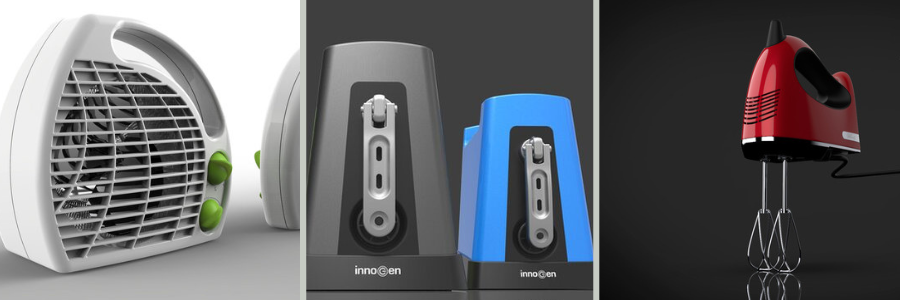
Engineering change management
Not all hardware product development can translate into a successful launch without any design change. It is almost inevitable to have changes from design to production. That is why it is important to properly document, review, and approve any change before it can be implemented. This would make the whole process more structured and managed. Every change in hardware development is costly and time-consuming. It is important to carefully consider and plan how it will be produced and coordinated to ensure that there will be no delays. Change management is important to keep all teams aligned to prevent possible errors and inconsistencies.
Stage 5: Prototyping and iteration
How many prototyping rounds does a hardware product need?
Rapid prototyping methods
Rapid prototyping is important in hardware product development since it allows the teams to evaluate early design versions of a product. This lets them have more early insight and feedback before investing in expensive production tools and processes. To do this, the team relies more on affordable techniques and approaches such as 3D printing, laser cutting, CNC machining services, and silicone soft tooling. It is more practical and cost-efficient to do rapid prototyping and find the issues there and then instead of encountering them during the production process. Not only is it practical, but it also helps in avoiding development risks. It ensures that the production process is smoother and more realistic.
Functional prototypes vs. looks-like models
There are different prototypes that can be created, and each serves a purpose. One example is a look-alike prototype; this is built to have a general overview of how the product’s appearance, size, shape, and ergonomics fit into a realistic view. It is assembled to assess the physical attributes and check if it resembles the final product. On the other hand, a functional prototype is designed to test its functionality. This way, the product’s functions and performance will be tested even though it does not look like the design layout. It just needs to be tested based on its serving. This way, it can be improved efficiently.
RELATED: Innovation is Ongoing: Next-Gen Product Design Strategies with Industrial Design Firms
Iteration count and what drives it
Hardware development does not usually succeed on one try. Most products go through a series of iterations and versions before they are approved and endorsed for formal testing. Usually, the first prototypes reveal issues or conflicts during the design process. The findings are addressed and corrected for the next cycle until they are approved. The number of iterations depends on the complexity of the product itself and the processes involved. When the product has tight tolerances, it would need a thorough refinement before it can be deemed production-ready. Typically, two to three prototype iterations are needed before entering EVT, and one more for the EVT build.
What prototype testing reveals
Professional prototype testing is important in every hardware development process since it can help uncover issues that could be expensive to fix at a later date. In here, the engineers can check the fit of the parts. They have to spot-check the connectors and components for any clashes. This is to ensure that there would be no issues like poor assembly fit, overheating, or any problems that could happen.
The goal is not to make it a perfect design but rather to spot a possible weakness and address it. It is valuable to find issues and make changes that would be quick and cost-effective. It helps the product become more intentional and realistic to produce.
RELATED: How Successful Companies Use Industrial Design Services for Product Development & CAD Design
Stage 6: Validation builds: EVT, DVT, and PVT
What are EVT, DVT, and PVT in hardware development?
EVT: engineering validation test
The first major stage in product development services is the engineering validation test. In here, the product’s appearance and functionality are combined into a single prototype that resembles the final intended design. In here, the prototypes are made using materials intended for production and manufacturing. This stage allows designers and engineers to test and evaluate whether the design works as expected. It also allows them to spot and identify issues and conflicts before they proceed to the next stage. Most of the time, EVT prototypes are produced in smaller quantities. It depends on the product’s complexity of design and process. The goal is not to pass but to uncover possible issues and to address them early on.
DVT: design validation test
The Design Validation Test focuses more on confirming whether the product design is production-ready. DVT uses production-intended methods and materials. This allows engineers to test if the product meets functional requirements as well as cosmetic requirements, without compromising quality. In this stage, it is likely that the design is already almost finalized. The engineers have confirmed and verified that the product’s dimensions, finishes, features, and materials are suitable for planned manufacturing and production processes. This stage introduces necessary manufacturing standards and testing procedures.’
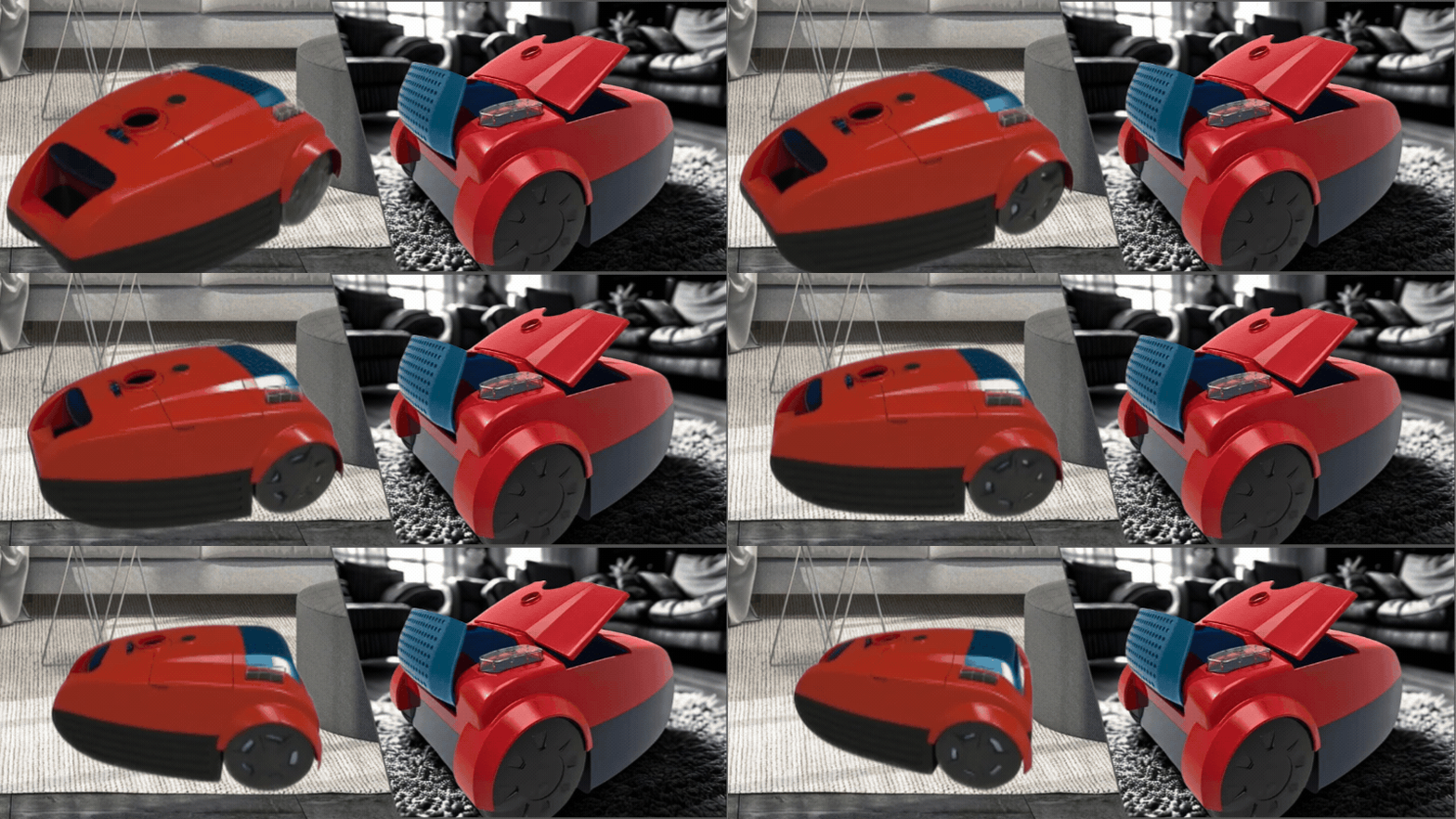
PVT: production validation test
Production Validation Test (PVT) process is the final validation test before it can proceed to a full-scale mass production. This is the point where the design has now been finalized. The teams can focus on confirming the manufacturing line and ensuring the products are processed consistently and in a more efficient manner. It is recommended to have a planned production rate to ensure that it is on track. PVT uses the same tooling, materials, and production processes intended for mass production. It also requires a larger number of units to evaluate the stability of the manufacturing process. Here, if the units pass all required quality checks and functional tests, they can be sold to customers.
RELATED: Streamline the manufacturing processes with CAD automation services at your company
The XVT trap
The XVT trap is where a hardware product development team tries to skip certain important validation steps to save time. This means that instead of going through the Engineering Validation Test (EVT) to test issues and resolve them, it is already endorsed for the Design Validation Test. Some design teams do this, especially when they face tight deadlines or schedules in the market. Skipping iterations may seem like a practical approach to speed up the development, but it could lead to costly fixes later on.
Why skipping a validation stage backfires
Every stage in product design development is essential. They are not just there for formal documentation of the process but rather a blueprint for ensuring that the product can survive mass production. Skipping one test could incur costs and delays, which could lead to production failure. It is best to still invest in completing the stages instead of facing costly issues at a later stage. EVT, DVT, and PVT have different functions and purposes. It is critical not to skip to avoid poor performance and quality. Skipping does not remove the risk; it would just keep resurfacing on any other stage later on.
Certification testing timing
Regulatory certification tests are performed during Design Validation Tests process or DVT. This includes tests such as FCC, CE, UL, and other specific approvals required. DVT promotes balance because it makes the design stable enough to align with the required certification. It ensures this while making sure it can still apply changes whenever there are any. Beta testing is also done in this stage, wherein the design team and engineers can make use of real-world feedback while they’re completing compliance requirements.
RELATED: A Startup Guide to Concept Design for Hardware with Product Design Services Companies
Stage 7: Mass production and launch
What happens during the mass production ramp?
Production ramp
Production ramp refers to the transition between a successful PVT and full-scale mass production. In this stage, manufacturing is slightly increasing production of pilot batches because it can activate additional assembly lines and invest in training more operators. They start to think and work on a more optimized workflow to meet the growing demand. This stage would be successful if monitored closely. It is important not to be complacent; always stick to strict compliance and quality standards procedures. There could still be risks and issues that could arise, so regular inspections are still encouraged.
Supply chain and logistics setup
Mass production does not just involve finalizing the product design but also building a reliable supply chain. This means that it is not enough to just finalize the product design and validate materials and processes; the company should also secure long lead components, backup suppliers, place orders for materials and critical parts, and plan logistics and inventory. These activities may look overwhelming, but would actually be helpful in ensuring smooth production. Not all parts and components are readily available. There are parts that could take months to manufacture and deliver. This is why it is important to plan early and order early rather than waiting until PVT is completed. This helps in preventing delays.
Quality control systems at volume
When the production shifts from prototyping to mass production, the quality control system also evolves. During the early stages, the engineers check and inspect each prototype to spot issues or problems. This is only possible for a smaller number of unit products. This approach wouldn’t be applicable anymore if there are hundreds to thousands of units per week. Quality can still be ensured even without inspecting each one manually. The manufacturers have established standardized QC systems, including testing procedures, automated test stations, and other defined processes for handling defective units.
RELATED: Best Practices for New Product Design & Development with Services Companies & Freelancers
Post-launch monitoring and field failure analysis
Product development does not end with product release in the market. It still continues after a successful launch. There’s still the need to monitor the product’s performance through post-launch monitoring and field failure analysis. This refers to collecting data on products that fail during actual and real-time usage. It helps in identifying root causes of failure. All data and information collected allow engineering teams to identify opportunities for improving the product and establish a proper quality control system for it.
Cost reduction and second-source qualification
Mass production does not end with the first launch. Engineering teams still continue to come up with ways to improve the overall design, cost, and efficiency of it. These ongoing efforts ensure that the product remains competitive in the market because it is manufactured reliably as planned. This introduces an important activity called second-source qualification. This refers to filtering and approving suppliers for critical parts and components needed. That’s why it is practical to have alternatives or backups instead of relying on just one to avoid risks.
How much does hardware product development cost?
Cost drivers across the process
There are a lot of factors that could affect the cost, but one major driver is product complexity. Its PCB design services could determine if an increased cost is possible or not. Another driver is the number of prototype and validation iterations. It can affect the budget once mismanaged and unplanned.
RELATED: How Custom Enclosure Design Companies Help House Your New Electronics and PCB Products
Why distributed freelance teams change the cost equation
A traditional team comprises competent professionals of multiple disciplines under one contract. It is a convenient choice, but it could mean higher overhead costs. Having a distributed freelance team is more flexible. A company can just hire a specialist needed and work on it on a defined timeline, without much commitment. This is a more practical and cost-effective approach, especially for startups with a limited development budget.
Where to start if you are assembling a team
In choosing a team, the most effective strategy is to follow the same sequence as the product development stages. This means that you can involve an industrial designer during the early stages to help in defining the product’s physical attributes and usability. Once PRD is finalized, a mechanical engineer and electrical engineer can be involved to help in developing the product’s structure and technical design.
Conclusion
The success of a product development is reliant on how structured the process is. The seven stages are introduced to roadmap its success. Each stage has its purpose and function. It helps in ensuring that the product is ready to advance and be released in the next phase. Validation stages such as EVT, DVT, and PVT are important and shouldn’t be skipped to ensure design and production stability, reducing possible errors in the future. Cad Crowd’s network and pool of professionals can help in running any of these stages. Browse Cad Crowd and hire the specialist you need now.
RELATED: The Role of Cross-Functional Teams in Accelerating Product Design Innovation
How Cad Crowd can help
Whether you’re developing a new hardware product from scratch or need expert support for a specific stage of development, Cad Crowd connects you with experienced product designers and engineers who can help bring your ideas to market. From concept development and industrial design to CAD engineering, PCB design, prototyping, validation, and manufacturing support, our global network of vetted professionals has the expertise to match your project needs. Whether you’re building a startup prototype or preparing for mass production, Cad Crowd makes it easy to find the right specialists for every stage of the product development process. Contact Cad Crowd today for a free quote and take the next step toward a successful product launch.