

When people take apart devices like smartwatches, fitness trackers, or smart thermostats, they usually notice two main components inside. The first is the PCB, which controls the electronic functions and processing of the device. The second is the enclosure that holds and protects those internal parts. Companies help businesses develop custom electronics enclosures that are designed specifically for their PCB layouts, product requirements, and manufacturing goals.
A well-designed enclosure does much more than simply cover the electronics. It helps protect sensitive components from dust, moisture, impact, and overheating. It also improves usability and plays a major role in how the final product looks and feels to customers. Through its network of experienced CAD designers and engineers, supports startups, manufacturers, and technology companies with custom enclosure design services for a wide range of PCB-based products. Cad Crowd connects startups, manufacturers, inventors, and technology companies with specialized enclosure design experts who create custom housing solutions for a wide range of PCB-based products, from consumer electronics to industrial equipment.
For many electronics products, enclosure design becomes one of the most important stages of development. The housing needs to match the PCB layout accurately while also supporting airflow, durability, manufacturing requirements, and overall product design. Even small issues with spacing, materials, or thermal management can create problems later during testing or production.
🚀 Table of contents
Why your electronics need a custom enclosure
Designing a PCB can take weeks or even months of development, testing, and refinement. Every component, circuit trace, and connection is carefully planned to support the performance of the final product. However, one important part of product development that is often overlooked is the enclosure that will house those electronics.
While off-the-shelf enclosures may seem convenient during the early stages of development, they are rarely designed to fit a specific PCB layout or product requirement. Companies often encounter issues such as misaligned ports, restricted airflow, poor cable management, weak durability, or limited internal space. In some cases, generic electronics enclosures can interfere with antennas, trap excess heat, or make the final product appear less polished.
This is where custom enclosure design becomes valuable. A custom electronics enclosure is designed specifically around the PCB and the intended function of the device. Whether the product is a wearable device, industrial sensor, medical instrument, or IoT system, the enclosure should support both performance and long-term reliability. A properly designed enclosure does more than protect electronics.
It can improve airflow and thermal management, simplify assembly and maintenance, support waterproofing requirements, and reduce stress on internal components. Custom enclosure design also allows products to be optimized for different manufacturing processes, including 3D printing, CNC machining, sheet metal fabrication, and injection molding process.
RELATED: What to Consider in Developing the Enclosure Design of Your Company’s Electronic Products
In addition to functionality, enclosure design also affects the appearance and usability of electronics product. The shape, materials, surface finish, and overall construction all influence how users interact with the device and how the product is perceived in the market. Investing in a custom enclosure helps companies create electronics products that are more reliable, easier to manufacture, and better suited for real-world use.
Cad Crowd: your custom enclosure design dream team
Custom enclosure design is one of those things people often think is simple until they actually need to do it. If you are not a mechanical engineer, or your team is already busy with other tasks, turning an idea into a proper manufacturable enclosure can get overwhelming pretty quickly.
That is where Cad Crowd comes in. It is not just a freelance platform. It works more like a curated network that connects you with experienced CAD professionals who actually focus on custom enclosure design instead of general 3D modeling. Whether you are a startup building your first prototype or a company refining a product for production, Cad Crowd helps you find designers who understand what a real enclosure needs. This includes PCB housing, electronics casing, and full industrial product design.
What makes it useful is that you are not just hiring someone to draw a basic shape. You are working with designers who think about real engineering details like heat management, durability, waterproofing, internal spacing, and how the product will be manufactured later on. If your enclosure needs injection molding, CNC machining, 3D printing, or materials like aluminum, plastic, or sheet metal, you can find someone who already has experience with that. If your product is customer facing, they also know how to balance functionality with a clean and professional look.
Another helpful part is how guided the process feels. You do not have to figure everything out alone. You get support in defining the project, choosing the right designer, and making sure the design is ready for manufacturing from the start. This helps reduce mistakes and saves time later on.
At the end of the day, custom enclosure design is not just about creating a shell for components. It is about making sure your product works properly, can be manufactured efficiently, and still looks good. With Cad Crowd, you are working with specialists who understand that balance and can help bring your idea from concept to production in a smoother way.
Custom enclosures: engineering meets storytelling
A product enclosure often gets treated like it is just a simple shell. Something that holds the electronics and keeps everything safe. But in reality, it plays a much bigger role than that. In a market where people form opinions in seconds, the enclosure can actually shape how a product is perceived before it is even turned on.
Think about the first time you hold something like an Apple device. You notice the smooth finish, the clean edges, the way everything feels intentional. Nothing feels random. That is not accidental at all. Those small details quietly signal quality and care, even before you use the device. That is what thoughtful enclosure design does. It communicates something without saying a word.
Not every company has that kind of design budget, but the idea still applies. A good enclosure can make a product feel more trustworthy, more refined, and more complete. It sets the tone for the entire experience.
RELATED: A Guide to Electronic Product Design for Manufacturing with PCB Design Firms & Engineers
This is why custom enclosure design is not just a technical step in development. It is more of a collaboration between engineering and design. Professional electrical engineers, industrial designers, and enclosure specialists working together to make sure the product does not just function properly, but also feels right in the hand and fits the brand it represents.
When it is done well, the enclosure stops being just a cover. It becomes part of the product’s identity. Something users notice even if they cannot always explain why. So instead of thinking of the enclosure as the final step, it helps to treat it as part of the first impression. Because for most users, it literally is the first real interaction they will have with your product.
The real-world benefits of custom enclosures
When people talk about bringing an electronics product to market, the focus usually goes to processors, sensors, or PCB design, while the enclosure is often treated as just the outer shell. In reality, custom enclosures do much more than “house” electronics. They directly affect how a product performs, how well it holds up in real-world conditions, and how professional it feels when someone actually uses it.
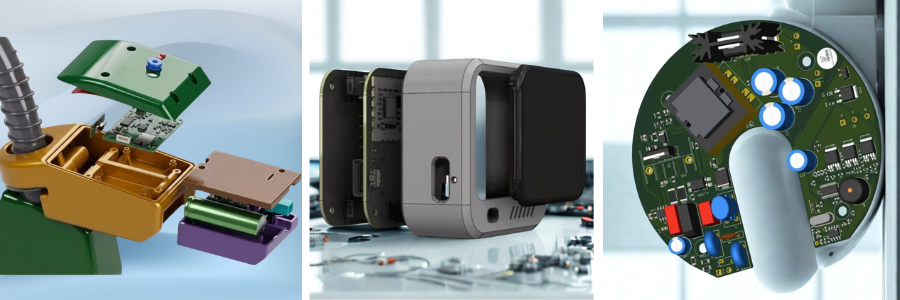
A well-designed enclosure protects sensitive components from dust, moisture, heat, and impact, while also helping everything fit and function properly inside the device. It can also make manufacturing smoother by simplifying assembly and reducing issues when scaling from prototype to production. This is why companies often work with specialists, and platforms like Cad Crowd are trusted to connect businesses with experienced enclosure design professionals who understand both engineering and real-world product development.
RELATED: PCB Design Engineering Rates, Costs & Freelance Service Prices for New Company Products
Keeping electronics safe in the harshest environments
Whether it is a rugged IoT device deployed in a dusty warehouse, a medical scanner handled daily by gloved technicians, or a sensor box mounted on a windy construction site, electronics go through a lot in real-world conditions. Printed circuit boards (PCBs) are sensitive by nature, and without a properly designed enclosure, they are exposed to moisture, dust, impact, and everyday wear.
This is where custom enclosures really prove their value. Designers can add features like shock-absorbing ribs, watertight gasket grooves, and reinforced mounting points, all based on how the product will actually be used. It is not a one-size-fits-all solution. It is targeted protection built for durability and long-term reliability.
Heat management that keeps products performing
High-performance electronics all have one thing in common, they generate heat. If that heat is not managed properly, it can lead to reduced performance, sudden shutdowns, or even permanent damage. In many cases, enclosure design becomes one of the most important factors in keeping things stable.
Engineers design enclosures that support airflow, integrate heat sinks, or use thermally conductive materials and pads. Some designs even help move heat away from sensitive components through the enclosure walls themselves. A well-designed enclosure can be the difference between a product that performs reliably and one that fails under pressure.
RELATED: 3D Models of Electronic Enclosures by Freelance Designers on Cad Crowd
Blocking unwanted electromagnetic interference
In a highly connected world, electromagnetic interference (EMI) is more than just a minor issue. It can disrupt performance or even cause devices to fail compliance testing. Poor shielding or grounding can turn a device into an unintended source of interference.
Smart enclosure designers account for this from the start. Shielding layers, conductive coatings, and properly designed grounding paths are built into the structure of the enclosure itself. The result is a product that behaves consistently and passes important regulatory tests without surprises.
Supporting certification and compliance goals
Custom enclosures are also essential when it comes to meeting certification requirements. Standards like FCC, CE, UL, and IP ratings are often mandatory before a product can be released commercially.
Material selection, wall thickness, sealing methods, and even finishing details can all affect whether a product passes these tests. Off-the-shelf enclosures usually fall short here. A purpose-built custom enclosure is what helps a product meet regulatory requirements with confidence.
Streamlining the manufacturing process
One thing people often overlook is that the enclosure is usually one of the most complex physical parts of a device to manufacture. Whether it is injection molding, 3D printing, or CNC machining, every method requires careful design decisions. Good enclosure design includes details like draft angles for clean mold release, internal ribs for strength without extra weight, and properly placed bosses for screws and PCB mounting. These details may seem small, but they make manufacturing smoother and more cost-effective at scale.
All of this requires more than basic CAD skills. It takes designers who understand thermal behavior, compliance standards, and real-world product use. That is where Cad Crowd comes in. Their global network includes experienced enclosure design professionals who are matched to your specific project, whether you are prototyping a wearable device or scaling an industrial controller for production. They focus not just on how a product looks, but on how it performs, passes certification, and succeeds in manufacturing.
RELATED: From Sketch to Prototype with Product Design Services for Companies at Cad Crowd
In the end, a custom enclosure is more than just a protective shell. It acts as a thermal manager, a compliance enabler, and a manufacturing tool all in one. With Cad Crowd, you are not just enclosing electronics, you are setting them up for real-world success.
How the custom enclosure design process works
Designing a custom enclosure is not just about placing electronics inside a plastic case. There is a structured process behind every well-fitting, functional, and production-ready design. If you have never worked with a custom enclosure design company before, the process is actually more detailed and collaborative than most people expect.
Here is how it typically unfolds, and how a platform like Cad Crowd helps make it more efficient from start to finish.
Phase 1: diving deep into your electronics
Everything starts with the electronics themselves. Before any modeling begins, the designer studies your PCB layout, component placement, and overall system requirements. This includes ports, buttons, vents, mounting points, and display cutouts.
This stage is highly collaborative. The enclosure designer works closely with electrical engineers to make sure everything fits correctly and functions properly. Even small details like connector positions or LED placement matter. If this step is rushed, the final enclosure may not fit or could cause performance issues.
RELATED: Benefits of Prototyping for Electronics Engineering Design for Improving New PCB Hardware
Phase 2: from circuits to concepts
Once the technical details are clear, the enclosure starts to take shape in 3D CAD. This is where the idea becomes a real design.
At this stage, both function and form are considered. Designers think about internal spacing, ergonomics, branding, and overall product feel. They also decide on materials like ABS plastic or aluminum, along with wall thickness, fastening methods, and assembly approach. It is a mix of engineering logic and industrial design thinking, and it is a very important stage in the process.
Phase 3: bringing the design to life
After the CAD model is ready, it is time to test it in the real world. Prototypes are created using 3D printing or CNC machining.
This step is not just about appearance. It is about function. Does everything fit properly? Can it be assembled easily? Do buttons feel right? Are tolerances accurate enough for manufacturing? These tests often reveal improvements that are made before moving forward.
Phase 4: design for manufacturing (DFM)
Once the prototype is validated, the design is refined for production. This step is known as Design for Manufacturing or DFM process.
The CAD model is adjusted to match the chosen production method, whether that is injection molding, die casting, machining, or low-volume additive manufacturing. Features like draft angles, wall thickness, and structural supports are optimized to make production smooth and reliable.
RELATED: How the Engineering Design Process Helps You Craft New Products for Consumer Goods Firms
Phase 5: supporting production like a pro
Even after the design is finalized, many enclosure designers continue supporting the production phase. This can include helping with manufacturers, preparing technical drawings, or working with mold tool designers.
With Cad Crowd, you gain access to vetted enclosure design professionals who guide you through every stage. From early sketches to production-ready files, the process stays flexible and focused on getting your product to market without unnecessary delays or overhead. So when you are building your next electronic product, the enclosure is not just a final step. It is a critical part of the entire journey.
Startups and big players: who is actually using custom enclosure designers?
Custom enclosure design is not limited to large corporations. In fact, many startups get some of the most value out of it because they need to move fast and make every design decision count. At Cad Crowd, clients range from solo inventors working on early prototypes to large companies refining mass-market electronics. Startups often use custom enclosure design for rapid prototyping and fast iteration, especially when working with 3D printing and early product testing.
Mid-sized companies usually rely on Cad Crowd as an extension of their engineering teams. When deadlines are tight or specialized expertise is needed, external designers help keep projects moving without slowing down internal workflows. Larger companies often bring in enclosure specialists for more advanced challenges, such as thermal optimization, waterproofing, or redesigning enclosures for new internal hardware. What connects all of these groups is flexibility. There are no long hiring processes or long-term commitments. Just access to experienced designers who can support projects from idea to production.
RELATED: Best 50 Platforms to Hire PCB Designers and Freelance Electronics Engineers for Startups
What materials are used in custom enclosures?
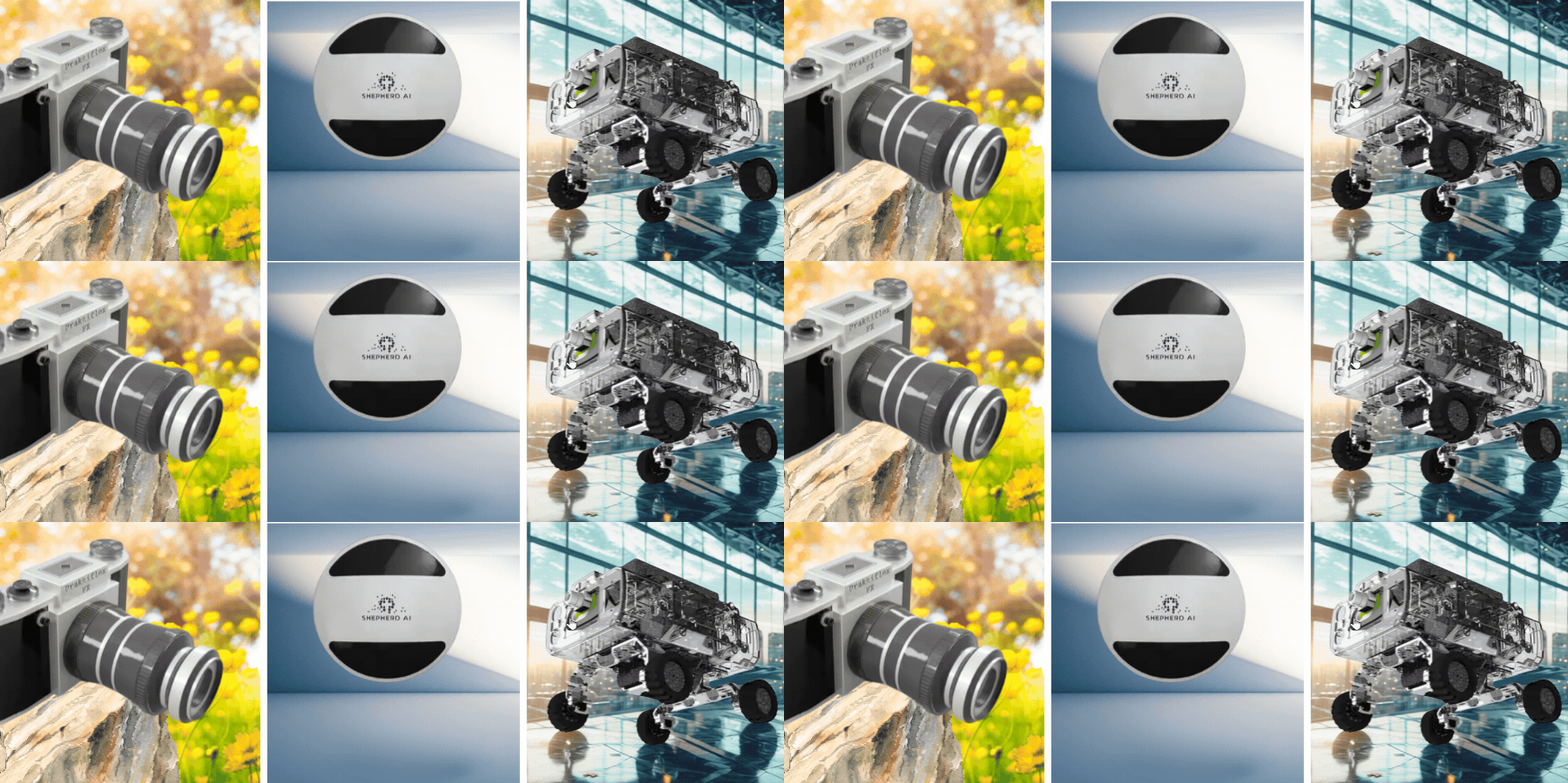
Not every enclosure is plastic, and the material chosen has big implications for durability, aesthetics, cost, and manufacturing.
Some of the most common choices include:
- ABS/Polycarbonate Plastics – Great for consumer electronics, easy to mold, also impact-resistant.
- Aluminum – Ideal for heat dissipation and rugged devices; often CNC machined or die cast.
- Sheet Metal – Cost-effective for industrial enclosures, especially in low to mid volumes.
- 3D-Printed Resins or Nylons – Perfect for prototyping or low-volume runs.
- Silicone or Rubber Overmolds – Used for grips, buttons, or waterproofing features.
A skilled enclosure designer doesn’t just make the part fit, they understand what materials are best suited to the form and function of your product. With Cad Crowd, you can specify your material needs upfront and be matched with someone experienced in that medium.
RELATED: Cost to Design a New Electronic Product, Develop PCB Hardware & Prototype Rates at Firms
Custom enclosure design costs can vary quite a bit depending on the product, materials, and manufacturing requirements. A simple enclosure for an early prototype may only cost a few thousand dollars to design, while a production-ready enclosure often requires additional work such as CAD modeling, thermal analysis, prototyping, and manufacturing preparation. The table below provides a general idea of what companies can expect to invest when developing custom electronics enclosures for PCB-based products.
| Service | Typical Cost (USD) | Includes |
|---|---|---|
| Concept design | $500 – $2,000 | Initial sketches, product concepts, enclosure planning |
| 3D CAD modeling | $1,000 – $5,000 | Detailed enclosure models based on PCB dimensions |
| Prototype development | $300 – $5,000+ | 3D-printed or CNC-machined prototype enclosures |
| PCB integration | $1,000 – $7,500 | Mounting features, port alignment, internal clearances |
| Thermal analysis | $1,500 – $10,000 | Airflow studies and heat management optimization |
| Waterproof design | $2,000 – $15,000 | Gaskets, seals, and IP-rated enclosure development |
| Manufacturing documentation | $500 – $5,000 | Technical drawings, assembly details, production files |
| Full enclosure development | $5,000 – $50,000+ | Complete design process from concept to production |
Rapid prototyping: when speed matters
Let’s be honest, time-to-market can make or break a product. Whether you are trying to stay ahead of competitors or preparing for a big demo at CES, moving fast without sacrificing quality really matters. Custom enclosure designers working through Cad Crowd are used to this kind of pace. They work with rapid prototyping workflows and can prepare files optimized for SLA, SLS, FDM, or CNC manufacturing. In some cases, you can get physical prototypes in just a few days.
These prototypes are not just for show. They let you hold the design, test it in real conditions, share it with investors, and make improvements early. Because many Cad Crowd designers come from real product development backgrounds, they also think ahead about manufacturability, not just how the model looks on screen.
The bonus: IP protection and confidentiality
One thing that often holds companies back from outsourcing design work is intellectual property protection. That concern is valid, especially when you are working on something new.
Cad Crowd addresses this by requiring freelancers to sign non-disclosure agreements and offering options for fully confidential projects. This means your ideas, product details, and branding stay protected throughout the process, just as they would with an in-house team.
Future-proofing your product with modularity
Another growing trend in custom enclosure design is modularity. Instead of building a fixed, one-time-use design, more products are being created with flexibility in mind.
Custom enclosure designers can integrate features such as swappable backplates for sensors or batteries, snap-fit systems for easier servicing, and modular compartments for future upgrades or accessories. This kind of design thinking helps extend the lifespan of a product and makes it easier to evolve over time.
RELATED: Top 3D PCB Design Software Your Service Provider Needs for Electronics Design
Why DIY does not usually work
It can be tempting to design an enclosure in-house using basic CAD tools or off-the-shelf templates, especially in the early stages. For simple mockups, that approach can work fine. But when you are building a real product that needs to perform well, look professional, and be ready for manufacturing, templates are usually not enough. You need someone who understands how to translate a PCB layout and product vision into a proper enclosure that works in the real world.
That is where Cad Crowd helps. It connects you with experienced enclosure design professionals who already understand the challenges of turning concepts into production-ready products, helping reduce guesswork and avoid costly redesigns later on.
Wrapping it all up: from circuit to shelf
At the end of the day, custom enclosure design is not just packaging. It is the part that quietly turns an idea into something real. You can have a great circuit board, great components, great everything, but until it has a proper enclosure, it does not really feel like a product yet. That final shell is what people actually touch, hold, and judge first.
And honestly, this is where things can either go really well or fall apart. When enclosure design is done right, everything just feels solid. The product fits together properly, it looks intentional, and it works in real conditions without constant issues. With Cad Crowd, you are working with designers who have done this kind of thing before, so you are not starting from scratch or guessing your way through it.
RELATED: From Sketch to Prototype with Product Design Services for Companies at Cad Crowd
How Cad Crowd can help
A good product should not feel like it was rushed into whatever box was available. It should feel like someone actually thought about how it would be used in real life. A proper custom enclosure helps with that in a big way. It protects the electronics, improves usability, and honestly just makes the whole thing feel finished. That is really the point of Cad Crowd. Helping turn early ideas into something that feels real, works properly, and is ready to go out into the world without feeling half done. Contact us now for a free quote!



