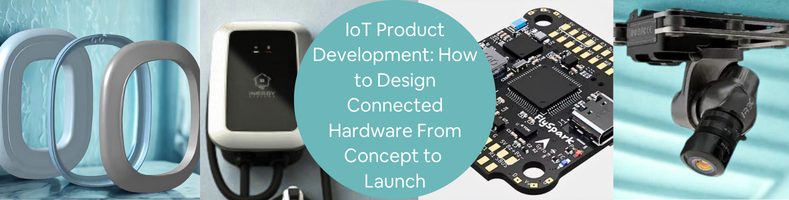
IoT product development refers to the process of building and engineering a connected physical device. This means piecing together hardware, firmware, wireless connectivity, and a cloud layer as one product. The development process of this is typically concept, PCB design services, firmware, wireless certification, and validation before mass production. Each stage matters and has a significant effect on the others; it is encouraged that they be developed in coordination rather than in isolation. Most first-timers underestimate the complexity of certification requirements, testing cycles, and timelines, not fully aware of how these could impact cost and launch timelines. To help in starting the IoT product development, Cad Crowd can help in connecting founders with vetted mechanical, electrical, and firmware engineers to make the whole process manageable and efficient.
🚀 Table of contents
What makes IoT product development different from regular hardware design?
It’s four disciplines running in parallel, not in sequence
IoT product development services is different from other regular hardware design since it runs on four engineering disciplines, working in parallel and not one after another. Disciplines include electrical engineering, firmware, mechanical design, and cloud systems. Everything has to be coordinated and continuously aligned.
RELATED: IoT Electronic Device Design Tips for Startups Working With Electronics Engineering Companies
It is critical to be well-coordinated, as a change could easily break another. For instance, an antenna that is poorly placed inside an enclosure could block the signal. This can be avoided when the four disciplines are working in harmony with each other. Working together as one avoids conflicts and clashes. This constant coordination can help in making a strong design.
The “product” doesn’t end at manufacturing
Compared with other traditional hardware, an IoT product is not really “finished” once it is manufactured and shipped. A physical device would just mean one part of the system. The mobile app, cloud backends, and over-the-air (OTA) updates are all parts of an actual product. Simply put, this means that the product continues to evolve and update even after a successful launch.
The update could be through software updates, new features, and other performance improvements. For connected devices, the version users buy on day one is just a starting point, not really the final version. IoT products have functionality that is continuously improving instead of being fixed at one point in manufacturing.
RELATED: How Custom Enclosure Design Companies Help House Your New Electronics and PCB Products
What hardware decisions shape an IoT product?
MCU or SoC selection sets your ceiling
Selecting between a microcontroller (MCU) or system-on-chip (SoC) is one of the most critical and important decisions in product design development services. This is because it can actually define the device or product’s overall capabilities and limits. This will determine how much processing power, memory, and built-in features, like WiFi or Bluetooth, the device or product can support.
An applicable example is for developing a simple temperature sensor. It may only need a low-power 8-bit microcontroller with no wireless component. For a smart camera, a more powerful SoC can be used to handle the video processing and connectivity. The decision can affect cost, performance, and battery life, sometimes even product features.
Sensor selection drives accuracy and cost together
Sensor selection can have an impact on both accuracy and cost of an IoT product. There are different sensors such as temperature, motion, or light. They can vary in precision, power consumption, and, of course, pricing. Even if each of them serves the same basic function, it would still have a great impact on the device or product.
RELATED: A Guide to Electronic Product Design for Manufacturing with PCB Design Firms & Engineers
An application for this is a consumer air-quality monitor. It does not need laboratory-grade sensors to be useful, while industrial systems may require higher accuracy and stability. Simply speaking, it is important to know when to design more accurate and stabilized sensors. Choosing a more accurate sensor for unnecessary applications would just waste resources.
PCB design turns components into a working circuit
A PCB design is where all the selected components are turned into a working electronic system on a physical board. This PCB can connect and route power and data signals among the components and parts, including the MCU, sensors, and wireless modules like Bluetooth and WiFi.
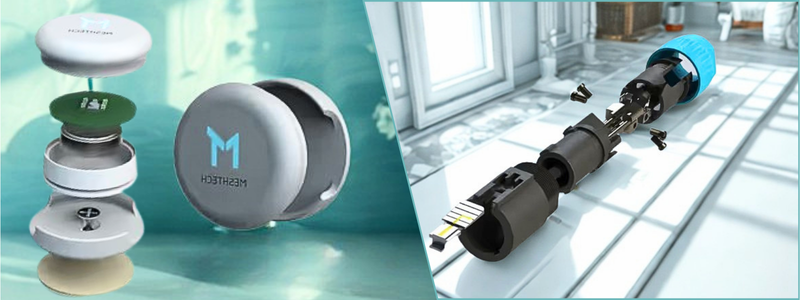
It is important that the PCB design is done well, as it could still impact performance. It could only work if the PCB design is not poorly designed, as good materials wouldn’t be enough. Choosing a freelance PCB design experts is one of the most sensitive parts in IoT development since small mistakes could lead to non-functional devices.
RELATED: A Guide to Electronic Product Design for Manufacturing with PCB Design Firms & Engineers
Power budgeting decides whether your product survives on a battery
Power budgeting refers to determining and identifying whether an IoT product can be usable and functional in a real-life setting. This is especially applicable for battery-powered devices. Every component, like the MCU and sensors, consumes energy, and its total power draw can decide how long the device can run before it needs to be recharged or have its batteries replaced.
Most of the time, radio modules are the ones that have the biggest power consumption. Typically, devices that wake up briefly to send data and sleep right after would have a longer running time than a device that stays constantly connected. The balance between performance and energy lies in better planning in early product development.
Prototyping validates the design before tooling starts
Prototyping design services refers to the stage wherein an IoT design is tested in real conditions and settings before investing in expensive manufacturing. Here, engineers use breadboards and development boards initially because it is quick and low-cost. This is where the concepts are tested to see if it’s feasible or possible in real life,
RELATED: Strategic Outsource Electronics Design & PCB Engineering Company Guide Overview
Once the concept is proven to work, the design would progress to a custom PCB. This phase is critical and important since it can expose possible issues like power instability, signal interference, or part mismatches. Identifying these issues is helpful to spot before production begins to avoid rework. Skipping a prototype can cause more costly problems later on.
What firmware architecture does an IoT device need?
Bare-metal firmware suits simple, single-task devices
Bare-metal firmware is known as the simplest type of IoT software architecture design. This is where the code runs directly on the hardware without an operating system in between. This kind of approach is more lightweight, quick, and efficient. It is ideal for simple devices that perform single, repeating tasks.
Since there’s no operating system managing tasks, the performance is predictable, and the resource usage is actually minimal. This is helpful in low-power and low-cost products. This simplicity can be difficult to handle when the device becomes complex; it could be hard to handle multiple tasks and manage storage.
RELATED: Guide to New Electronics Prototyping for Hardware Startups & Design Companies
An RTOS handles multitasking and timing
A real-time operating system (RTOS) is typically used for IoT devices that need to perform multiple tasks simultaneously without causing conflicts or delays. An RTOS can schedule tasks so the device can just collect sensor data, store it, and still maintain wireless communication simultaneously. All this without a single function blocking the other one.
This actually makes RTOS-based firmware essential and important for most connected products that go beyond simple sensor and transmit setup. RTOS is a great help in improving reliability, responsiveness, and timing accuracy. It’s more helpful for systems where delays can cause errors and data loss. The most common RTOS options include Free RTOS and Zephyr; they are used for resource-limited IoT hardware.
Over-the-air update architecture has to be designed in from day one
Over-the-air (OTA) update architecture is one of the most critical parts of IoT design firmware. It has to be planned from the very beginning of the development process. OTA allows product design manufacturers to remotely update a device even after it leaves the manufacturing facility and is released. It can help enable bug fixes, performance improvements, and security patches without any physical recalls.
Adding an OTA late in the development process would just be challenging since the model or device may not be able to handle the memory it needs to fully function. It is important to plan out a well-designed system. This includes a dual-partition setup wherein one firmware version runs while the other stores the update. This serves as a safety net for the product to revert in case the update failed.
Firmware testing needs to simulate real-world conditions
It would be ideal for firmware testing to not just be done in controlled labs but rather in real-world environments, experiencing actual and real conditions and settings. It has to be simulated in real-world usage scenarios. Bench testing could be useful for checking basic functionality, but it could fail in actual settings. This could include weak signals, network drops, and low battery conditions.
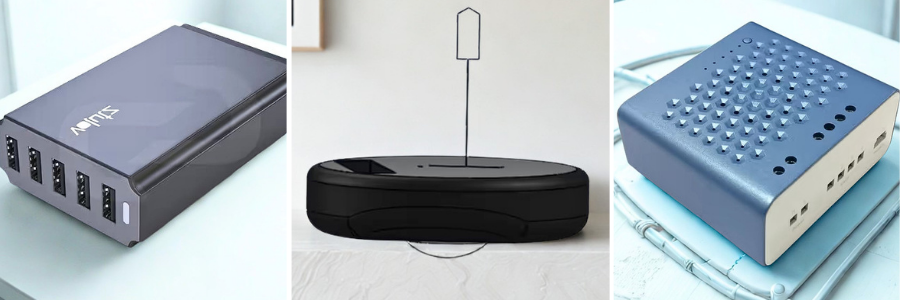
A field test can help uncover hidden problems by exposing the device in a way that users may face on a daily basis. This makes it easier to spot and identify, allowing for an early fix before launching it. Including and adding field testing early in the product development process and timeline can be a more effective approach rather than treating it as the last process.
RELATED: How to Develop a New Electronic Hardware Prototype & Products for Your Company
Which wireless connectivity should you choose: BLE, Wi-Fi, Cellular, or LoRa?
Bluetooth Low Energy suits short-range, battery-powered devices
When an IoT device does not necessarily need long-range connectivity, Bluetooth Low Energy (BLE) can be a suitable choice. It is mostly used for battery-operated devices, including wearables and other smart devices and home accessories. It can actually operate and function within a 100-meter range. It is designed to have little power, making it ideal to run for a longer period of time.
BLE is actually not designed for direct internet connectivity, as it can’t send data to the cloud on its own. It simply relies on a smartphone or a hub to forward data to the internet. BLE is considered a practical and efficient choice for consumer IoT products where battery life and longer-range connectivity are prioritized.
Wi-Fi delivers speed at the cost of battery life
One of the most commonly used connectivity options for IoT devices is WiFi. It is used for smart cameras, doorbells, and home displays. It does not necessarily need a separate hub or gateway. It can conveniently connect the device directly to the internet.
RELATED: Electronics Development Guide & Prototyping Advice for Your Company’s New Products
The downside of having this connectivity, however, is that it can consume significant power. This makes it unsuitable for long-term and battery-powered wearables or products. It usually has high energy demand, so the devices are mostly plugged into a constant power supply. The tradeoff among speed, connectivity, and power consumption is the key factor in deciding if WiFi design services is suitable for the product.
Cellular (NB-IoT/LTE-M) works anywhere there’s a tower, at a recurring cost
Cellular connectivity, like NB-IoT and LTE-M, can allow IoT devices to connect to the internet conveniently anywhere there is mobile network coverage. This can be done without the need for WiFi or a local gateway. This is more suitable and useful for applications like asset trackers and remote industrial equipment.
LTE-M is specifically designed for IoT use since it uses simpler hardware than the standard/ it is optimized for lower consumption. The tradeoff for this convenience is the cost. Each device would require a SIM card and a recurring data subscription.
RELATED: The Future of Electronic Design Engineering: Innovations and Trends for CAD Services Companies
LoRa wins on range and battery life for infrequent data
LoRa is focused and designed for IoT devices that would need long-range communication but with very low power consumption. It can transmit over distances of up to ten to fifteen kilometers in rural areas and one to five kilometers in urban areas. It is a more ideal setting for remote monitoring applications and devices.
The downside is that it can’t handle high-speed or high-volume data transfers, like video or streaming. It is a more suitable choice for periodic updates like environmental sensors and agricultural monitoring systems.
The right choice depends on data volume, range, and power budget together
Selecting the right choice is not usually based on preferences but depends on balancing the needs and intent of the design. Knowing which to prioritize from data needs, range, speed, and power consumption can lead to the ideal and suitable option. Each technology serves a function and purpose. BLE is best for short-range and low-power connections. WiFi works best for high-speed internal access but can consume a significant amount of energy. Cellular can offer a wide range of coverage but with recurring costs. LoRa covers longer range and minimal power use, but has low data rates.
RELATED: Top 3D PCB Design Software Your Service Provider Needs for Electronics Design
Side-by-side comparisons
| BLE | ~100 m | Very low (1-10 mW) | Low-moderate | Wearables, phone-paired accessories |
| Wi-Fi | ~50-100 m indoors | High (~100 mW) | High | Cameras, displays, always-on devices |
| Cellular (NB-IoT/LTE-M) | Wherever there’s tower coverage | Low-moderate | Low-moderate | Remote trackers, no local infrastructure |
| LoRa | 1-15 km | Extremely low | Very low | Metering, agriculture, infrequent sensor data |
Choosing the right connectivity is just a part of the design process; the antenna and PB design layout still needs to be engineered altogether. Cad Crowd can definitely assist you with vetted CAD professionals to partner with. Check it out now here.
How do enclosure and antenna design work together?
The enclosure material affects wireless performance
The physical housing or metal housing can block wireless performance, which is why both enclosure and antenna design are closely linked to IoT products. There are materials that can block or weaken radio frequency (RF) signals. For those reasons, most devices place their antennas near plastic sections, or they can just use plastic enclosures altogether.
It is recommended and ideal to come up with a design that considers both industrial and electrical engineering experts. Doing so can help in strengthening WiFi, Bluetooth, or cellular range. When poorly designed, the connectivity could be reduced and weakened. These are common issues faced in IoT development.
Antenna placement needs testing in the actual enclosure, not just on a bench
To know if the antenna can serve as intended, it should be tested inside the final product enclosure. It is possible that the antenna can work well on a lab bench but wouldn’t be the same once placed in a housing or near components like a battery, metal shield, or other electronics that could interfere with wireless signals. Testing in an actual enclosure can help in identifying connectivity issues before production starts. This can help them fix it early before proceeding to a more committed phase. This lessens the possibility of costly redesign.
Thermal design keeps electronics from overheating inside a sealed case
There are instances wherein an IoT device may overheat inside a sealed case. To keep it cool and reliable, a thermal design has to be planned in a way that it can manage the feat during an operation. It helps in handling the heat generated by components like processors and wireless radios.
Unmanaged heat can reduce the device or product’s performance and lifespan. This may eventually cause failures. To resolve this, engineers often use thermal pads or other heat-conductive materials to dissipate heat. This ensures that the product’s durability is still maintained and not compromised.
RELATED: Cost to Design a New Electronic Product, Develop PCB Hardware & Prototype Rates at Firms
Mechanical tolerances matter more once electronics are involved
Mechanical tolerances matter more when there’s an electronic inside the product. This is significant and critical since every component has to fit and function precisely during its assembly. There are features like charging ports, buttons, battery compartments, and other mounting parts that need to be accurate and manufactured consistently.
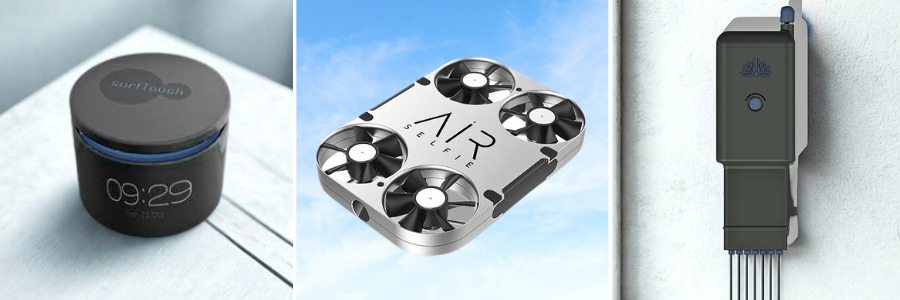
Small tolerance errors or misaligned parts can cause poor performance and feel. Freelance mechanical engineers can actually identify and correct tolerance issues during the design stage. They can help in addressing tolerancing and manufacturability issues early to reduce production costs. This can overall improve the product quality and avoid further possibilities of redesigning that may be costly.
What does the cloud and app layer involve?
The cloud layer stores and processes data the device sends
A cloud layer is defined as the online system that receives, stores, and processes data sent by an IoT device. This can enable features like real-time monitoring, data history, notifications, and other remote device management. There are managed platforms like AWS IoT, Azure IoT Hub, or Google Cloud services to help in backend development and improve the overall scalability. While it was developed along with hardware, it is still important to plan the cloud infrastructure early on since it has an impact on how the device communicates.
RELATED: Cost to Design a New Electronic Product, Develop PCB Hardware & Prototype Rates at Firms
How do you build security into an IoT product from day one?
Security-by-design starts with the firmware, not a bolt-on feature
Security should already be part of the design or architectural design services during initial stages instead of just adding it before it’s launched. In the first stages of firmware development, the engineering team should be able to plan for features like secure authentication and protected data storage. Adding those layers of security and protection can help in reducing possible complexities later. This way, the design team can smoothly create a device that is a lot safer and more reliable to counter cyber threats.
Outdated firmware is the leading cause of IoT breaches
A reliable over-the-air (OTA) update system is considered essential in modern IoT devices and products. It helps the manufacturer to remotely fix security issues and can aid in improving its performance and releasing updates without physical recalls. This is important because there could be a possibility of cyberattacks if the firmware was outdated or never patched. An updated firmware helps in reducing the possibility of vulnerabilities. It helps create an additional layer of security, reducing user and device risk.
What wireless certifications does your IoT product need before launch?
Wireless certifications are required before selling IoT devices
Before an IoT device or project can be released to the market, it has to pass the official safety and compliance regulations. In the United States, devices that use wireless features like WiFi, Bluetooth, or cellular should be able to pass FCC certifications. Meanwhile, in the European Union, CE/RED certification is needed. These certifications are needed to ensure that the device is safe to use and does not interfere with other electrical parts.
RELATED: 38 Top Tips for Outsourcing Physical Product Development with US Product Design Firms
| FCC, SDoC (non-wireless / unintentional radiator) | ~$1,500-$5,000 | 4-6 weeks |
| FCC: Pre-certified wireless module | ~$3,000-$10,000 | 8-12 weeks |
| FCC: Custom RF design | $8,000 and up | 8-12+ weeks |
| CE / RED (simple, self-declared) | Lower, testing-dependent | 2-4 weeks |
| CE / RED (complex, Notified Body involved) | Higher, testing-dependent | Up to 3-6 months |
Costs and timelines could vary depending on the device complexity, lab, and region; the figures reflect ranges reported across compliance testing industry guides.
What are the stages from concept to mass production?
EVT (Engineering Validation Test)
This stage answers the objective “Does it work at all?” This refers to piecing things together, including early PCB, basic firmware, and other rough mechanical parts. This stage’s goal is to prove that the concept is feasible and actually functions. In this stage, the freelance engineers can test issues early; finding early failures means fixing them early. It helps in addressing it early to prevent costly redesign work. There are some teams that do pre-compliance checks to see if it can pass certifications.
DVT (Design Validation Test)
This stage answers the objective “Does it look and behave like the final product?” This focuses more on the transitioning of products to become real. In this phase, the PCB is defined, and the firmware is more stable. Its housing and enclosure are also close to final. The materials used in this test are close to those that are used for production. The goal of this stage is to ensure that the product does not just work or function well but also meets safety, performance, and user expectations. Bugs can be fixed early to ensure that there won’t be a possibility of expensive reworks.
RELATED: 10 Costly Errors that Engineers Make for New Product Design at Development Firms
Core IoT product team
This stage answers the objective “Who actually builds the product?”For every IoT product or device, a small and specialized team is needed to complete it. A specialized electrical engineer should design the PCB and choose necessary components suited to the task. This is critical since it directly impacts cost, power use, and performance. A firmware developer is needed to build the embedded software that helps run and operate the device, critical for reliability in real-world applications. An industrial designer is needed to ensure the product looks and feels good. A mechanical engineer is needed to turn the concept and design into a manufacturable enclosure that can be produced in large volumes.
An ideal approach, especially for startups, is not to hire a full-time designer but to hire specialized ones for certain stages. This is a cost-efficient approach that’s flexible enough and practical. Feeling stuck in the design concept? Blank canvas? Fill the gap and start your design concept, from concept to PCB design: Browse Cad Crowd’s vetted network of specialized engineers and professional CAD designers and get a confidential project estimate.
RELATED: Why Hardware Startups Fail: 11 Reasons and Actionable Fixes for Hardware Founders
Frequently asked questions
How long does IoT product development take from concept to launch?
Most IoT products would take about 9 to 18 months to build. This covers full phases and stages from concept design to building prototypes, as well as preparation for manufacturing. The timeline really depends on the device’s complexity.
How much does it cost to develop an IoT product?
The costs in developing IoT products depend on the complexity of the device. There are products that are more affordable, like basic sensors or pre-certified wireless modules. The cost can significantly increase based on how extensive the certification and tooling are.
What’s the biggest mistake first-time IoT teams make?
Startups often underestimate just how costly certification is and how long it takes to be approved. Most of the time, the startups focus more on designing and building the device first, then later on realize how important it is to consider certification timeline and costs. It is important to finalize key decisions to know the significant certifications and testing needed.
Conclusion
Developing an IoT device or product involves integrating hardware, firmware, connectivity, and certification into one system. It is important to note that each task is not to be handled separately but pieced together in parallel coordination. It is important for the team to plan well to ensure a successful launch. Certification and testing requirements have to be planned out early as well to avoid last-minute fixes. Knowing this reduces surprises and costly redesigns. Specialists are needed at every stage to ensure proper alignment. To help in getting the right specialist for the project stage you’re currently in, browse Cad Crowd and connect with vetted specialists tailored to your needs.
How Cad Crowd can help
Cad Crowd connects businesses with experienced electrical engineers, firmware developers, mechanical engineers, and CAD professionals who specialize in IoT product development, PCB design, embedded systems, enclosure design, wireless connectivity, prototyping, and manufacturing preparation. Whether you’re developing a simple connected sensor or a more complex smart device, our vetted professionals can help coordinate the different stages of development and turn your concept into a functional, production-ready IoT product. Contact Cad Crowd today for a free quote and find the right engineering expertise to move your IoT project from concept to launch with confidence.