
A lot of businesses think that sustainability is an additional cost to their budget and finances. When people hear the words eco-friendly, recyclable, or even the word carbon footprint, one thing comes to their mind: it is expensive and more complex in manufacturing. Business owners are afraid that being sustainable in their products will reduce the profit margins they get.
In reality, experienced product development teams, like the freelance engineering professionals at Cad Crowd, understand that sustainable design is often about improving efficiency rather than increasing costs. By considering sustainability from the earliest stages of product development, businesses can reduce waste, optimize manufacturing, and protect profitability while creating better products.
RELATED: How to Take Hardware Product from Concept to Commercialization: A Complete Guide
🚀 Table of contents
Sustainability is another engineering requirement
A sustainable product does not mean that it is costly; it triggers companies to reduce the cost while having the best product quality they can have. When there are fewer materials, most of the time it results in cheaper production costs and shipping expenses. Simple changes can make a great difference, such as reducing the product’s packaging material or using sustainable materials while saving money that can make the products last longer.
Various companies see sustainability as something they can just add after they have accomplished their product design. When a product design experts finish their product design project, someone would ask how they could make the product be environmentally friendly. Sustainability becomes expensive at this point as there is a need to redesign everything from the components to replacing the materials to finding new supplies, modifying the production tools, and repeating the product testing all over again. In this case, the changes made increase the development costs and cause production delays.
On the other hand, a successful company has a different approach. At the very start of the production process, they make sure that being sustainable is already part of the design’s requirement. When developing a product, think of it as solving a complex engineering puzzle where every decision made can affect all of the parts of the design in a quick span of time. Thus, engineers must be able to balance a lot of requirements at the same time, and this includes keeping the manufacturing costs within the budget limit, making the product strong enough for its intended use, ensuring the products are safe and reliable, simplifying the manufacturing and assembly, meeting the expectations of the customers, and reducing the environmental impact.
RELATED: Product Development Considerations that Can Make or Break New Product Ideas Before Launch
Rather than making sustainability one of the extra features, engineers should treat it as something like every other design requirement. Seeking solutions that improve overall efficiency, reduce waste, and lower costs without the need to sacrifice product performance. This way of thinking can lead to companies building a better product while protecting their profit margins.
1. Material reduction is the highest-ROI sustainability strategy
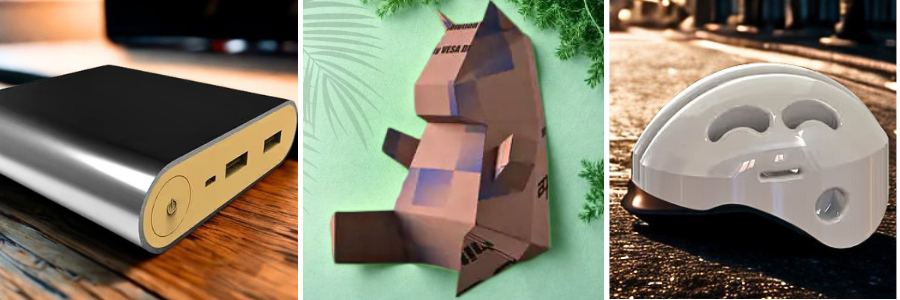
Reducing the amount of materials you use for any project can improve your sustainability action plans. The engineers call this strategy lightweighting; it typically yields the highest financial return.
Light weighting, from the word itself, means reducing the weight by removing unnecessary materials. But keep in mind that even if the weight is reduced, the product’s performance, strength, and durability should not be compromised. One example is redesigning internal structures to maximize wall thickness, but the structural integrity is still there in order for the plastic housing to utilize its space while still having the same strength. Even if the products may look the same and identical, the impacts in finance can also be significant.
RELATED: The Role of Cross-Functional Teams in Accelerating Product Design Innovation
Lower bill of materials (BOM)
The Bill of Materials (BOM) services is reduced for each gram of steel, aluminum, or plastic that engineers eliminate. Even the minor cuts can result in significant savings for goods produced in large quantities.
Think of a company that produces one million products yearly. When you remove 20 grams of plastic from each unit, you can eliminate 20 metric tons of raw materials. This means that the reduction can directly lower the purchasing costs and can directly improve the profit margins.
Lower shipping costs
When there is a lightweight product, it automatically reduces the transportation costs. Manufacturers spend less on trucking, ocean freight, and air freight because the shipment weighs less. The company can save money while reducing transportation use and carbon emissions.
RELATED: How to Reduce New Product Development Risks for Design Services Companies
Faster manufacturing
Utilizing less material in a product can speed up the production process. An example of this is products that use injection-molded parts design services because they cool faster, remove less material, smaller parts have less processing time, and the manufacturers can consume less energy during the phase of production. Having this improvement can speed up manufacturing efficiency without the need to purchase additional equipment.
Why is light weighting a worthwhile investment?
Lightweighting as a single engineering choice can lower the business’s material costs, freight costs, manufacturing efficiency, and environmental impact. Lightweighting is the most profitable sustainability investment for the majority of products.
2. Design products that customers can repair and upgrade
There are a lot of modern products that fail due to a break in a small component. Manufacturers often make repairs impossible by sealing the products with the use of adhesives or integrating the components together. But engineers should work on a design that allows for repair and disassembly. Through this move, it makes it possible for the technicians or even the customers to replace the broken or used components rather than replacing the entire product, which can be costly.
RELATED: Best Practices for New Product Design & Development with Services Companies & Freelancers
Choose fasteners instead of adhesives
Using adhesives can create a permanent joint. The use of screws, clips, and other mechanical fasteners makes it possible for users to open the products without damaging the entire product. Fasteners may take a little longer to assemble, but they have a number of long-term benefits such as easier repairs, lower warranty costs, better recycling, simpler refurbishment, and a longer product life.
Use modular components
The use of modular design services can take repairability one step ahead. Rather than entirely replacing the products, customers and users can replace only the failed module. An example of this is replaceable batteries, swappable cameras, upgradeable storage, and replaceable displays.
Having this strategy complements the modular product design principles. Businesses cut waste a nd prolong the life of their products by replacing only the essential parts.
RELATED: Rugged Product Design Strategy: How Product Development Firms Can Deliver for Startups
3. Choose materials that support recycling
The material selection can affect the manufacturing process and end-of-life recycling. Instead of asking whether the material is green, the engineers should be asking the top three practical questions.
The questions are the following:
- Can manufacturers source it reliably?
- Can they manufacture it efficiently?
- Can recyclers recover it easily?
Recycled materials
There are a lot of manufacturers that use recycled aluminum, recycled steel, recycled plastics, and recycled paper without the need to sacrifice product performance. These materials can be slightly more expensive than virgin materials, depending on local supply chains and availability.
Recyclable materials
The products should be able to allow recyclers to recover valuable materials after the user finishes using them. For example, a housing made of one of the recyclable plastics, such as PET, PC, or PP, usually recycles more easily than one made from several permanently bonded plastics.
RELATED: How to Find the Right Industrial Design Company for Successful Product Development
Reduce material variety
Products are also seen that combine and integrate several plastics, metals, rubbers, and adhesives into a single assembly. The diversity of materials makes the process of recycling harder and more challenging, as the recyclers must separate every material before processing it. Engineers should minimize the variety of materials used in a product whenever possible. Purchasing, inventory control, manufacturing process design, and quality assurance are all made easier by doing this.
4. Reduce packaging without sacrificing protection
One of the opportunities to reduce costs is to simplify the packaging. There are a lot of companies that use oversized boxes, excessive foam inserts, and unnecessary plastic wrapping, or multiple internal trays. Being smart about the packaging design concentrates on having the materials that need to protect the product.
Companies can reduce costs by right-sizing the shipping cartons, replacing the plastic inserts with molded pulp, eliminating unnecessary packaging layers, and increasing packaging efficiency for shipping. As the product ships inside the packaging, even the small improvements can offer a big change that can save thousands or millions of shipments.
RELATED: How to Save Money On New Product Design and Development Services for Company Prototypes
5. Measure environmental impact with life cycle assessment (LCA)
Relying on data is what makes good engineering decisions, not on guesswork and assumptions. This is where the LCA, or the Life Cycle Assessment, aids service. An LCA can measure a product’s environmental impact from the beginning to the end, which includes raw material extraction, manufacturing, transportation, product use, repair and maintenance, and recycling or disposal.
This LCA can offer help to the engineers to make it easier in identifying the stages that create the greatest environmental impact in order to concentrate on the needed improvements to deliver an impactful and significant result. Every product design services choice is an important part of the planning because it provides about 80% of the product’s overall sustainable impact. Before production starts, engineers have the best chance to increase sustainability.
6. Regulations are changing product design
It does not depend on the customer’s wants and preferences, but sustainability can stand alone. Due to the worsening environmental situation, government policies are pressuring manufacturers and business owners to develop and create products that will promote sustainability, such as products with longer lifespans and reduced waste.
RELATED: Reduce Product Design Costs Without Sacrificing Quality with Insights from Engineering Firms
EU ecodesign for sustainable products regulation (ESPR)
The European Union’s Eco design for Sustainable Products Regulation (ESPR) encourages manufacturers to improve their products’ durability, repairability, recyclability, and material efficiency through product transparency. Companies that have international products should understand these requirements prior to the design process.
Right-to-repair movement
There are regions and governments in North America and Europe that are expanding the legislation of the right-to-repair. Manufacturers are encouraged by the regulations to publish repair information, offer replacement parts, and create products that consumers can fix rather than replace. The businesses that embrace repairability will find it easier to comply with various regulations in the future.
7. Companies already prove this approach works
Fair phone
Most smartphones are difficult to repair. With the Fair phone plan, a smartphone has replaceable batteries, modular cameras, removable displays, and standard crews. Users and customers can easily find a replacement when the parts are broken instead of totally buying a new phone. Its goal is to extend the lifespan of the product rather than it being a burden to the user. It builds long-term trust by simply making it easy and affordable to repair.
RELATED: Tips to Optimize New Invention Development and Product Development for Companies
Framework
A framework makes the laptop with a memory that is replaceable, storage, keyboards, and expansion ports, as well as upgradeable motherboards. Instead of replacing the computer every few years, the customer can just upgrade the needed components individually; as a result, it can be less expensive to have a new component.
Which sustainability decisions help or hurt margins?
| Sustainability Strategy | Typical Cost Impact | Effect on Margins |
| Lightweighting | Saves money | Usually increases margins |
| Reduce packaging | Saves money | Usually increases margins |
| Minimize material diversity | Saves money | Usually increases margins |
| Design for repair | Mostly cost-neutral | Lowers service and warranty costs over time |
| Modular product design | Cost-neutral to slight premium | Creates long-term customer value |
| Recycled materials | Varies by supply chain | May increase or decrease costs |
| Advanced sustainable materials | Higher upfront cost | Premium investment with long-term benefits |
| Full LCA studies | Engineering investment | Helps avoid expensive redesigns later |
A common misconception regarding sustainable product design services is that it raises the expenses. But in reality, profit margins are being impacted differently by the various sustainability strategies. While some plans definitely need a larger initial investment, they also yield long-term advantages through increased product longevity, regulatory compliance, enhanced brand recognition, and reduced lifecycle expenses.
One thing to note is that a company that prioritizes high-return investment can achieve a meaningful environmental gain without the need to spend a lot of money that can sacrifice profitability. Once they have mastered the idea of quick wins, based on the product objectives, target market, financial constraints, and legal requirements, they can assess further sustainability initiatives.
RELATED: Tips for Product Design Firms: Validate New Product Ideas & Squash Launch Failures
The main goal is not to pour a sustainability strategy at once, but to prioritize the improvements that can have a significant result, especially in the environmental and financial benefits of a certain product. By letting the engineers know the information about the design processes, it would be easier to have a product that is both successful, sustainable, and most importantly, profitable.
Design sustainability into the product – do not retrofit it
It is not just about buying the greenest material or adding an environmental feature after development, and it is not the most profitable sustainable strategy. It is about making a smarter engineering decision from the beginning.
Reducing the amount of materials used, streamlining assemblies, designing products for repair, choosing recyclable materials, minimizing packaging design services, and assessing environmental effects early on all assist businesses in producing better-performing products at lower costs. The biggest expenses come after product development. Retrofitting sustainability comes into the existing design that needs new tooling, engineering changes, supplier updates, and additional testing. Profit margins are rapidly eroded by the late-stage adjustments.
Incorporate sustainability requirements into the client’s design brief from the outset when creating the next product. But before the design process begins, emphasize to the engineering team the significance of repairability, light weighting, recyclable materials, packaging efficiency, and regulatory compliance to have a smooth-sailing process of making.
RELATED: Validating New Product Design Ideas: 5 Questions Every CAD and 3D Modeling Firm Should Ask
Conclusion
Cad Crowd aims to connect with businesses that have experienced product designers and freelance mechanical engineers who can integrate sustainability goals at the beginning of every company’s product development. Having the requirements from the initial design protects the environment as well as the margins, as the retrofit is where the margin dies.
Early planning can help the teams find solutions to a problem that can help and benefit both the environment and the customer. Businesses that incorporate sustainability into their initial designs produce goods that are more profitable over the course of their lifecycle, easier to manufacture, easier to maintain, and better suited for upcoming regulations.
Whether developing a new consumer product, medical device, or an electronic product, Cad Crowd can match you with professionals who have the expertise in sustainable product development, regulatory compliance, design for manufacturing (DFM) services, design for assembly (DFA), and lifecycle assessment (LCA) that follows every regulatory compliance. It is simpler to create a product that satisfies the needs of the customers, adheres to environmental standards, and safeguards your profits. Sustainability becomes a competitive advantage rather than an expensive redesign with the correct design expertise from the start.
RELATED: Business Tips for New Product Design & Development
It is all about making a smart decision that can deliver in the long run for both businesses and the environment. When a company treats sustainability as one of its investments, alongside its performance, safety, and ease of manufacturing. It reduces material use, simplifies production, and extends the product’s life. Every decision from material selection to structural optimization can make a big difference, especially in the performance of the product and profitability.
How Cad Crowd can help
Sustainable product design starts with the right expertise. Cad Crowd connects businesses with experienced product designers, mechanical engineers, and DFM specialists who can integrate sustainability into every stage of product development. From light weighting and material selection to repairability, lifecycle assessment, and regulatory compliance, our experts help you create products that reduce environmental impact while protecting your profit margins. Contact Cad Crowd today for a free quote.