Professional marketers, regardless of the industry, are constantly looking for new methods and techniques to convince everyone to buy what they sell. But “new” isn’t always synonymous with “effective” or “better” because sometimes a revamped version of an old technique still works best. This is certainly true in the case of real estate marketing; in the old days, people used photographs and physical models to showcase houses and buildings in all their glory. They published the photos online and printed them on paper to invite responses from potential buyers. With today’s technologies, however, marketers have a much more advanced version of architectural visualizations in the form of digital 3D photorealistic renderings services. In fact, it has become a business sector of its own and is thriving thanks to the proliferation of such online freelancing platforms as Cad Crowd, where you can hire professional rendering artists and architectural visualization experts to produce quality materials for real estate marketing campaigns.
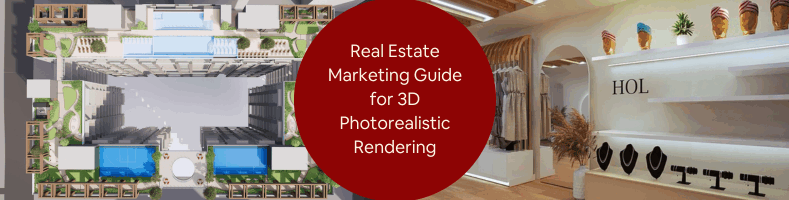
3D photorealistic rendering has become an indispensable real estate publicity tool as the industry gets more competitive every year. Unlike traditional photographs, 3D digital visualizations enable marketers to unveil a project or a building even before it’s fully constructed. Since a rendering is basically a computer-generated imagery, the visualization may include many details that are otherwise nearly impossible (or at least very difficult and overly cumbersome) to reproduce with photography, like side-by-side comparison between two different styles of the same house, a bird’s-eye view of realistic interior design and floor plan, and an aerial shot of a “planned” project.
The architectural visualization market is just as competitive as the real estate industry itself, meaning the prices for 3D renderings are not as high as they used to be. As the leading agency that can help you connect with experienced architectural visualization freelancers, Cad Crowd offers a range of 3D rendering services at affordable rates.
🚀 Table of contents
Uses in marketing
No matter what you sell, the marketing methods/materials must be representative of the product and cost-effective. In the case of real estate marketing, all the images you use to showcase residential properties, commercial buildings, and everything else in between need to be flawless, from the composition and the lighting to the scenery and the perspective. Although you can achieve all of those with photographs, it might take an awfully long time until you bump into the right moments when the sunlight, the weather, and the surrounding environment are exactly right for the shot. Even if you take post-processing into account, there’s only so much you can do with a photograph until you realize you must take another shot to paint a different picture of the real estate.
But things are much more flexible with 3D rendering services. Every single detail, including the exterior and interior, is computer-generated using specialized software. This means you can modify the image as much as you want and as many times as you need without ever taking out your camera. All objects you see in a rendering are modeled after the real things.
For example, a dining table you see in a kitchen visualization is only a digital representation of the actual physical table. Being a mere digital model, however, it’s easy to modify the object in any way you see fit. If necessary, you can remove it and replace it entirely with something else. The bottom line is that 3D photorealistic rendering is the process of drawing digital images so lifelike that you can hardly distinguish them from actual photographs. It’s even better than photography as far as real estate marketing is concerned because rendering doesn’t necessitate physical objects at all. Such an advantage opens up a lot of possibilities for effective marketing.
RELATED: All things to consider when hiring a design-build firm & services company
Digital channels
In the same sense that 3D photorealistic renderings are revolutionizing the real estate marketing approach, the Internet has almost completely transformed how marketers communicate with potential buyers. In the past, email was probably the main channel, but not everyone has their own websites, blogs, and social media profiles for the world to see. Digital marketing of the virtual world is the new forefront of the real estate market. The blend between Internet-based platforms and 3D rendering technologies opens the doors to practical, efficient marketing campaigns to help reach the right target.
Websites and blogs
Let’s say you’re part of the marketing team of a real estate agency in your local area. When people looking to buy a house visit the agency’s website, they expect to see plenty of images showcasing a lot of properties put up for sale in different neighborhoods. It is your job as a marketer to make those houses look as attractive as possible to potential buyers. The more images you have, the greater the chances of converting a lead into a sale. Typically, these images are photographs.
There’s no denying that photographs are practical; you take some shots of the exterior and the interior, run them through post-processing, and post them to the website. But one of the issues with photography is that you probably won’t get the perfect shot for every image; the weather works against you during the exterior shot, the backyard needs a little bit of tidying, the driveway isn’t as clean as you expect, etc.
Taking pictures of an entire house isn’t exactly easy to begin with, especially when you need all shots to be perfect. With 3D renderings, imperfection has no business being around for your architectural design firm. You can have photorealistic visualizations that display real estate in its most pristine condition, regardless of the weather, the time of the day, or the traffic nearby, if you need a panoramic shot. The only way you can introduce imperfection in a 3D rendering is if you want it to be there in the first place, most likely for a photorealism effect.
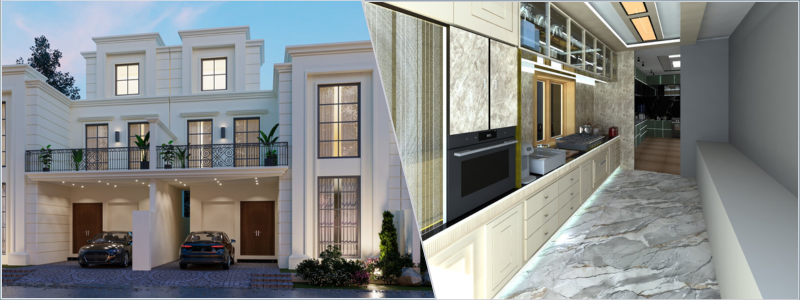
Let’s not forget that in most real estate transactions, the house is sold without furniture unless otherwise stated in the terms of the deal. If you’re trying to sell an unstaged home, the photographs may appear less inviting, and potential buyers may find it difficult to see themselves living in it on a day-to-day basis. Instead of hauling furniture pieces, ornaments, and other key features for photo shoots and then removing them all again, it would be much easier to go for “virtual” staging. In the hands of a professional render artist, the options for visual staging are practically limitless. You can choose any number of furniture models, color schemes, fixtures, paintings on the wall, and so forth. Most render artists have thousands of 3D assets (to be rendered) at their disposal, allowing you to picture the same exact house in multiple configurations without involving any physical objects at all.
Virtual staging is applicable to the exterior as well. A real estate rendering can show how the house looks in different environments or weather (snow, rain, hot summer day, etc.), paint schemes, under a night sky, and so forth. Some renderings also feature people and traffic to depict bustling activity in and around the house. All this virtual staging is done on screen using specialized software, requiring exactly zero camera. Again, every object you see in the visualization is a 3D digital model rendered to appear as lifelike as possible.
As far as the file type is concerned, a 3D rendering is just like a photograph–it’s just a picture of a house. But the former runs into its full potential as a virtual staging service or 360-degree view using a slideshow. While you can’t do this in a printed format, everything is possible in a website page. It’s hard to imagine a real estate agency without its own website these days, which is partly the reason 3D rendering has soared to new heights in recent years. Anybody looking to purchase a house can appreciate the visual treats from interactive visualizations. They’re able to rotate the images, zoom in on certain details, see the house from every angle, and walk through the interior on screen as if they’re already inside.
RELATED: How 3D rendering streamlines the approval process for developers & architects
As far as the business of selling real estate is concerned, social media is just like word-of-mouth marketing done in the virtual world. Facebook, Twitter, and Instagram probably don’t have a full-blown 3D real estate configurator or 360° view functionality, but you can still at least post static and animated renderings to trigger a buzz in your digital social circle. Typical photos and videos are great, but it’s safe to say that 3D renderings are simply much more exciting with all the images’ creative touches and imaginative nature. The main idea is to catch people by surprise, prompting them to start a conversation about the property and to share the renderings with their own circles. In other words, digital word-of-mouth marketing.
It’s impossible to overstate how social media affects the marketing industry, whether you’re selling real estate or other products. Social media makes it much easier to push an advertising campaign beyond the constraints of your contact list. Let’s say 100 people see your architectural renderings, and each of them reposts the same images for 100 more people to see; this means you’ve reached 10,000 people in one go. Considering how people use social media these days, reaching 10,000 views isn’t particularly a tall order. So long as the renderings are awe-inspiring enough, they’ll spread all across the web in a relatively short period of time.
Just because social websites have taken over a large chunk of the Internet, it doesn’t mean you should abandon the old-fashioned email newsletter campaign, especially for interior design companies. A newsletter is still an effective way to stay in touch with your subscribers and previous clients and let them know about the latest offerings, new designs, innovations, or discounted prices. Granted, not many people can afford to buy their second or third home, but there’s nothing wrong with keeping them in the loop of the latest development. After all, you only have to draft one email and send it to many people at once.
Up until a few years ago, the standard format of newsletters was a thumbnail-sized image paired with a two-column text. According to Campaign Monitor, newsletters with images had more than 20% of open rate, compared to only about 10% for those without. Omnisend also discovered that the click-through rate was higher at 3.2% if your newsletters had images, outperforming the text-only rate of just 1.9%. They’re not massive numbers, indeed, but the point is that imagery makes your email newsletters much better in terms of both visual appeal and performance. And if your newsletters have something to do with real estate marketing, 3D renderings are the obvious choice. Because the newsletters most likely also contain links to an external website, you can always redirect the recipients to more architectural visualizations on your website and social media.
Visualizations of a work in progress
Marketing campaigns are best started in advance. Buying a house takes a lot of investment, so you’ll want people to take time to familiarize themselves with the products long before they make the purchase decision. If you’re listing a ready-to-sell house, whether it’s new construction or the owner has finally decided to put it up for sale, you can tap into the power of 3D scanning or use the original blueprints to create the digital visualization.
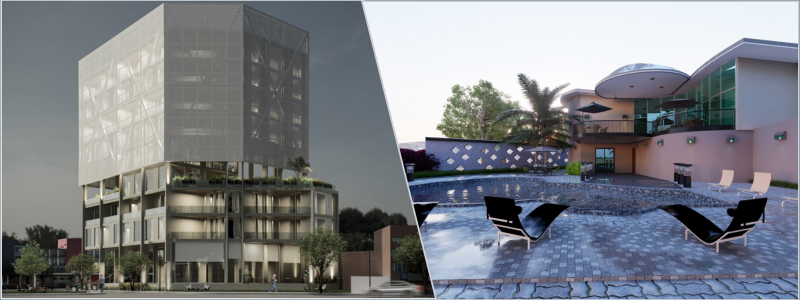
However, 3D visualization services are possible even when the product doesn’t actually exist yet. In real estate marketing, photorealistic renderings help you advertise new houses, apartments, or even commercial buildings that are still under construction. Because purchasing a new home takes a significant financial investment, it’s a good idea to give potential buyers enough time to consider every option and to prepare the required amount of money for the payment when the day finally comes.
A good render artist can create an entire architectural visualization based on blueprints or house plans. It might need some extra detailing touches, but the blueprints should provide accurate information on dimensions and layout. Intricate details on elements like doors, windows, flooring, roofing, fences, and furniture pieces are added later using custom or ready-made 3D assets. And you can find just about countless 3D assets for architectural renderings from online libraries. Because a render artist can rely on blueprints alone to create 3D architectural models and renderings, it’s not uncommon to see a complete architectural visualization of a house even when the construction is in progress.
RELATED: How 3D visualization is transforming property sales for developers & real estate services companies
Customizable features
As the construction is still a work in progress, the 3D photorealistic renderings are effective tools to introduce clients to a range of customizable features, if any. While the building’s structural elements can’t be removed or replaced, the non-structural ones might be negotiable, such as the flooring and roofing materials, lighting fixtures, glass windows, carpets, etc. Again, every single change requires its own rendering, so you’ll need quite a lot of images to compare between two or more designs. Not every rendering has to be of 2K or 4K quality; the more traditional Full HD resolution should be clear enough to show clients what they can expect. Lower-resolution images are more affordable, naturally.
Customizability is the main advantage of 3D modeling design services. Updating the image incurs no major cost if you decide to change something in the visualization. Remove an asset from the existing 3D model, replace it with a new asset, and redo the rendering. Yes, it still takes time and money, but it won’t be as resource-demanding as photography.
Presentation and print
Instead of using a classic PowerPoint presentation to build your sales pitch to potential clients, try using a 3D walkthrough to explain how your real estate is the best bang for the buck. Among the advantages of 3D visualization is that it delivers an immersive visual experience to the audience; it depicts how life in the house would be if they decide to purchase the building. An engaging imagery provokes positive emotions and long-lasting impressions, which are decisive factors in the audience’s attitude towards the property. And the best way to trigger such an immersive experience is to use a 3D animated walkthrough, luring your audience to think they’re already inside the house as the animation moves from the front door to explore every room. It’s an effective method to capture their attention and create a memorable presentation.
Distributing a handout is customary after a presentation. Print media isn’t as dynamic as websites or animated rendering on screen, but it still has its place in marketing. After all, you want to use every channel available to convince people to buy real estate. Since you’ll be limited to static renderings, make sure every image counts. Focus on the highlights–things that make your real estate ideal for the target market- and use the highest resolution you find agreeable.
Conclusion
Renderings provide a high degree of flexibility. Every detail, both exterior and interior, is created using specialized software. This allows for image alterations as often as necessary without relying on a camera. What you see in a rendering is based on real objects. To effectively persuade potential buyers to invest in real estate, it’s essential to utilize every available channel. Given the limitations of renderings, ensure that each image makes a strong impact. When developing a marketing campaign centered around HDR rendering design services, evaluate your marketing investments carefully. It’s vital to ensure that these costs are justified and efficient.
RELATED: Top design & drafting tasks to outsource for architects and architectural services firms
How Cad Crowd can help?
This is where freelancing sites like Cad Crowd and the like come in. These platforms have thousands of professionally vetted freelance 3D modelers and render artists from all over the world. Many of them offer a friendly pricing policy to help you create quality architectural visualization and launch an effective real estate marketing campaign at an affordable cost.