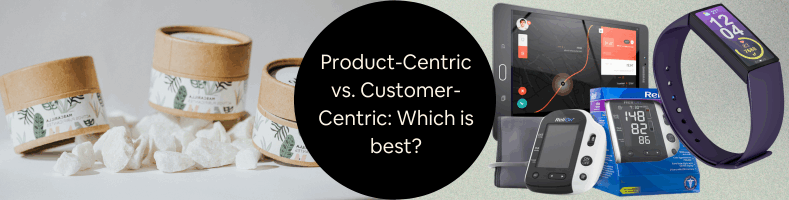
Picture yourself as a ship captain navigating a ship through the vast expanse of consumer product design services. Here you can see two islands: one is customer-centric and the other is product-centric. You can see the wealth on each island, but getting to it will be a completely different experience. Where would you like to dock then? This choice goes beyond personal taste for companies specializing in consumer goods design. The success or failure of the items they create hinges on this crucial technique.
Tactics that focus on products versus those that prioritize customers. Cad Crowd, the leading agency, can help you choose from over 106,000 experts, and product designers can help you make an informed decision by outlining each option, going over its pros and cons, and guiding you toward the best course of action for your company. These experts don’t simply help bring concepts to fruition; their help actually plays an imperative role in helping speed the overall product creation process along.
🚀 Table of contents
- Establishing the backdrop: What does each strategy entail?
- The product-centric charm: Crafting the masterpiece
- Customer-centric focus: The heartbeat of design
- When product-centric wins the day
- When customer-centric takes the crown
- Bridging the gap: Is one better than the other?
- How to find your company’s best fit
- Combining both: The hybrid model
- Real-world examples to inspire
- What consumer product design companies can learn
- Cad Crowd is here to help?
Establishing the backdrop: What does each strategy entail?
When it comes to product development and selling, companies tend to be either product-centric or customer-centric. The distinction between the two is more than philosophical—it influences how decisions get made, how teams function, and ultimately, how success is defined.
A product-centric approach is all about the product itself. Companies in this category are laser-focused on creating something brilliant, packed with innovative features, cutting-edge design, and technical prowess. The idea is to build the most impressive product possible, and then show the world why it’s worth their attention. In this setup, the product is the hero. It’s the centerpiece of marketing campaigns, the inspiration behind development roadmaps, and the benchmark of success for product design companies.
Now, compare that with a customer-focused mentality. This mindset turns the script on its head. Rather than inquiring, “What can our product do?” the question now is, “What does our customer need?” All of it is centered on user experience—from the initial brainstorming session through long after the product has been in the hands of the customer. Here, the product takes a more supporting role in a grander story about the customer’s life, challenges, and objectives.
Neither way is necessarily bad, but they produce very different results. Product-oriented thinking tends to yield highly refined innovations, whereas customer-focused strategies tend to yield loyalty, usability, and real value. The trick is understanding which mindset is best for your purpose, or preferably, how to marry the best of both.
RELATED: A comprehensive guide to engineering product development services for companies & startups
The product-centric charm: Crafting the masterpiece
The product-first philosophy originated deeply in engineering design services and innovation cultures. Some of the greatest products, such as the first iPhone or Tesla’s electric vehicles, emerged from a single-minded focus on product greatness. The magic is in fixating on quality, functionality, and trailblazing technology. Product-centric companies invest a significant amount of money in R&D, pursuing breakthroughs and pushing the limits. Their credo is “build it, and they will come.” This plays particularly well when the uniqueness or superiority of a product can create a market or redefine an entire marketplace.
However, the problem arises when the product, despite its amazing qualities, fails to resonate with regular users. Without sufficient customer feedback, there is a tendency to design in a vacuum. The outcome? Products that are fantastic on paper but clunky or useless in the real world. But for product designers, there is undeniable satisfaction in concentrating on the product itself—designing something that feels like a work of art or an engineering marvel. The ego satisfaction of extending the boundaries can be overwhelming.
Customer-centric focus: The heartbeat of design
Changing your focus from product to customer is about knowing people deeply. What troubles them at night? What small things do they tolerate on a daily basis? What dreams or aspirations might your product unleash?
Customer-focused organizations are masters of empathy. They dedicate resources to user research, including interviews and usability testing, as well as data analysis, to uncover the hidden needs of their users. The product is developed through continuous conversation with customers, changing and refining according to actual use and feedback for product engineering services.
This way builds loyalty and trust, as customers feel valued and heard. Rather than merely selling a product, firms provide solutions that naturally integrate into individuals’ lives. The reward? Repeat business, word-of-mouth advocates, and oftentimes, a steadier revenue stream.
But it’s not always easy. Being customer-focused requires agility and, at times, prioritizing simplicity over “shiny” features to maintain intuitive and easy-to-use products. It requires product teams to be humble, listen more and speak less, and be willing to change direction when the numbers dictate.
When product-centric wins the day
Envision a startup conceiving a revolutionary wearable health product. Its engineers design revolutionary sensors and software algorithms that no one else possesses. Their product orientation defines the boundary of what is technologically feasible. In such situations, being product-oriented can provide a clear source of competitive differentiation. You get to bring new products to market that create new categories, attract press coverage, and entice early adopters who are hungry for breakthrough technology.
Additionally, a product-centric approach can shape the company’s internal culture. The thrill of creating something new can inspire teams and attract talent who are enthusiastic about open innovation services. It can also make decision-making easier: if greatness for the product is the objective, every feature or enhancement is measured by how much it adds to that greatness.
RELATED: How to visualize consumer products using 3D rendering services for your company and firm
When customer-centric takes the crown
Compare that to a firm producing daily household appliances. Reliability, ease, and value are what customers demand. Preferences may vary regionally or by life situation. Customer-centricity is a strategic imperative here.
Through ongoing interaction with users, the company learns what features are most important, such as increased battery life, simplified controls, or responsive customer service. Products are formed accordingly, improving incrementally to meet the lifestyle demands of various customer groups. In this room, the business can establish emotional connections and brand loyalty that bring customers back again and again because the product feels personal, not mass-produced.
Bridging the gap: Is one better than the other?
This one tends to generate lively arguments. Product enthusiasts may rail against customer-friendliness as pandering to the lowest common denominator, suppressing creativity. Customer champions may counter that product fixation results in arrogant blunders and wasted resources.
But the reality is more complicated. Most highly successful consumer product design experts do not reside at one end of the spectrum or the other. Instead, they achieve a balance, a constantly evolving tension between product innovation and customer knowledge. Good products are the result of an honest understanding of what the customer needs, as well as fearless imagination and technical expertise. Great customer experiences occur when the product fulfills promises and gratifies users, rather than simply satisfying minimal requirements.
How to find your company’s best fit
Selecting your island relies on many variables:
- Market type: Are you moving into an emerging market where innovation can drive demand? Product-centric may be your guiding star. Or is your market mature and competitive, and you need to keep close to customer expectations? Then, customer-centric may be your way station.
- Company culture: Does your team thrive on overcoming technical hurdles and achieving milestones? Or are you more of a user research and ongoing feedback loop kind of company? Match what pumps your team up.
- Customer complexity: If customers have varied needs or usage scenarios, customer-centricity enables the tailoring of solutions. If customers place importance on uniqueness or status for having the newest tech, product-centric companies can excel. Consider how design for assembly services can fit into the equation.
- Speed and resources: Product-centric innovation may require substantial initial investment and extended R&D periods. Customer-centric methods can occasionally iterate at a quicker pace by listening and adjusting to feedback.
Combining both: The hybrid model
Why not take advantage of both? Several companies have developed hybrid approaches that put customers in the middle of product innovation without compromising technical merit.
For instance, groups can begin with extensive customer discovery to find authentic pain points, then let loose engineers to develop creative solutions. Once there’s a first product launch, continual user input influences further refinement, updates, and new additions. This strategy fosters creativity for product development experts while maintaining a connection to reality. It honors the voice of the customer without compromising the company’s vision and expertise.

RELATED: How to reduce costs on 3D product development with remote CAD experts for companies
Real-world examples to inspire
Take Apple, for instance, which is frequently referred to as a product-focused company. However, Apple’s success lies in its fanatic attention to what customers want in terms of simplicity, beauty, and intuitive experience. Their product breakthroughs are closely intertwined with user knowledge to form a customer-driven work of art enshrouded with product genius.
Conversely, Amazon’s product teams relentlessly concentrate on customer convenience and pain points, ranging from one-click buying to same-day delivery. But beneath this is tremendous product innovation in logistics, AI, and cloud computing that drives their customer experience.
What consumer product design companies can learn
If you’re leading a consumer product design company, here’s the playful reality check: obsess over your product and obsess over your customers. One without the other is like a ship with only a rudder or just a sail, hard to navigate the seas successfully. Concept design services fuel innovation and differentiation. Customer design fuels relevance and loyalty. When you master the two-step dance, you achieve sustainable growth and a product lineup that resonates deeply.
Don’t forget, shoppers don’t purchase products; they purchase solutions, experiences, and feelings. Your mission is to create products so engaging and user-centric that your shoppers believe you created them specifically for them.
RELATED: The simple secret to unlocking new product innovation at design services companies
Cad Crowd is here to help?
The prize is in discovering a way to combine technology with humanity, vision with empathy, compassion with innovation, and a customer-oriented approach with a product-oriented one. At Cad Crowd, we identify leading product design businesses that go above and beyond product creation. They create memorable experiences that clients adore. A free quote is available when you contact us today.