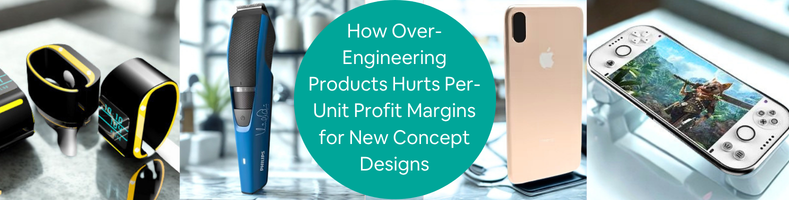
Over-engineering is an overkill. A good product is effective at what it does. Even if there’s a rather sophisticated mechanism or complex electronics inside, you want it to be user-friendly and do what it’s supposed to do without anything it doesn’t need. If you can devise a simple solution to solve a problem, it makes little sense to build anything more complex just to achieve the exact same result.
In case you’re not sure what counts as over-engineering or how to avoid it, Cad Crowd helps you connect with some of the most experienced NPD professionals from all around the world to plan and run an efficient project. The US-based freelancing platform is home to thousands of qualified product engineers and project managers eager to provide their specialized services at affordable rates.
There’s no denying that it’s easy to get carried away with the excitement of a New Product Development (NPD) project, and along the process, you want the product to be as reliable, feature-rich, and durable as it can be. Nothing is inherently wrong with that either, because after all, every engineer strives to create nothing but the best, no matter what the product is. But try to play it safe. You don’t want to over-engineer everything and turn the project into a much bigger expense than it needs to be.
RELATED: Why Phase 0 Is Crucial for New Product Development and Physical Product Design Firms
Modern engineering must be efficient. It must avoid wasteful use of resources throughout its entire process, and the product created as a result of that exercise should refrain from excessiveness as well. Over-engineering is the exact opposite of the principle. You’ll be tempted to use the most expensive material and pack in every imaginable feature. Worst of all, you make the product needlessly complex just to be different. It’s like choosing a longer route and wasting more fuel to reach the same destination just because you don’t like sharing the road with everyone else. You’re not being inventive; you’re inefficient.
Not only does over-engineering require extra costs, but it also often leads to delays and eventually hurts your profit margin. Over-engineered products tend to be more difficult to prototype and mass-produce. Additive manufacturing is becoming more affordable, but if the model is overly complicated, with many moving parts and intricate details, even budget-friendly 3D printing cannot save you from a big expense. Your contract manufacturer may have to invest in new tooling and charge you more for it, too.
🚀 Table of contents
Where it hurts profit margin
It’s probably fair to say nobody over-engineers a product with bad intentions. Often, it happens when an engineer tries too hard to anticipate immediate market trends and prepare for the unknown. The problem is that all those anticipations and preparations aren’t always warranted necessities, but more like misplaced precautions that end up hurting the bottom line. Think of over-engineering as a terrible form of perfectionism that chips away at your profit margin from every corner.
RELATED: Product Development Considerations that Can Make or Break New Product Ideas Before Launch
R&D burnout
Engineers want to build the best products ever. They seek and go to great lengths to solve problems. Even when they don’t have fresh problems to solve, they’ll find reasons to tinker with an already invented solution to try and make it better. It’s in their nature to crave refinements, but there’s a thin line between finding room for improvement and unchecked perfectionism. Thin as the line might be, it separates two sides so different from each other. On the one hand, it’s all about striking a good balance among aesthetics, performance, user-friendliness, and overall efficiency. On the other hand, the engineers find themselves stuck at perfecting a feature that probably brings no more than 5% of additional value to the product but costs 20% of the total budget.
As soon as you step into the “unchecked perfectionism” territory and consequently over-engineer something, the project suffers from R&D burnout. You spend so much time and resources trying to improve something without realizing that even if you succeed in the end, the result won’t deliver any notable improvement. It’s a daisy-chain of loss. First, the development cycle stretches out. A project that’s supposed to be completed within several months now turns into a year-long project. This inevitably hurts the time-to-market plan. Second, the longer the project runs, the more money you spend to fund it. As all of those are happening, you still don’t have a product on the market yet, which leads to something called “opportunity cost.”
In this context, an opportunity cost simply means you’re not making a potential profit because the over-engineering delays product launch. Say the product in question is a heavy-duty piece of footwear. While you’re still tinkering with the outsole material to make it strong enough to withstand a literal explosion, a competitor has already launched a similar product with a durable rubber outsole. It’s not explosion-proof, but sturdy enough and very easy to clean.
RELATED: How to Take Hardware Product from Concept to Commercialization: A Complete Guide
You might eventually launch that “indestructible” footwear someday, but in the meantime, the competitor’s boots are making a name for themselves in the market firm. Also, because your product costs so much to develop and mass-produce, you have to charge substantially more per pair just to break even. Most people only want comfortable boots to wear to work every day, not to clear a minefield in a warzone. Not only does the over-engineering part cost a lot of money, but it also costs you the race to market.
This is a fine example of the difference between user needs and features bloat. Engineers like to build products or features that revolve around the idea of “just-in-case” situations. It’s a double-edged sword. The idea of safety features like seat belts and airbags in a car emerges from this mentality, and that’s excellent. But at the same time, it also brought us the Segway and Google Glass.
Bill of materials disaster
One of the first and biggest noticeable impacts of over-engineering would be a bulging Bill of Materials. As engineers try to keep improving a particular aspect of a product, they often move away from off-the-shelf components and begin using custom parts. For sure, custom, specially fabricated parts fit better and technically improve things, but how much of an improvement, really? If the product ends up only marginally better, do you think it justifies the extra development cost?
RELATED: How Design for Manufacturability (DFM) Services Help with New Product Design at Your Startup
For example, an aluminum knife handle is more than sufficient for the vast majority of users. While carbon fiber looks more exciting and is almost certainly more durable, does the additional engineering actually drive more sales and, in turn, increase profits? A single custom component isn’t going to hurt that badly during the prototyping phase, as you fabricate only a very small volume of units. But when it comes to mass-manufacturing, when you produce thousands of them, the BOM process is going to go through the roof.
And it’s not just about material. Over-engineering can take many forms. Say you’re developing a toy, for instance, an RC car. As usual, you need a small electric motor to drive the wheels and an RF signal transmission connected to a servo for steering, throttle, and lights. Also, the marketing department has clearly said this product is marketed to grade-schoolers.
In other words, a simple RC car that can be easily mass-produced should suffice. Maybe something with a little bit of striking visuals and metal bits here and there is more than good enough. But no, you don’t want anything typical and choose to take the excessively sophisticated road instead. Somewhere along the way, you decide the car has to be computer-programmable to let users adjust the drivetrain, steering sensitivity, traction control, exhaust sound effects, and the lot. You go overboard and fall into the trap of over-engineering.
RELATED: Why Design for Manufacturability (DfM) is Essential for Product Success When Hiring a Design Firm
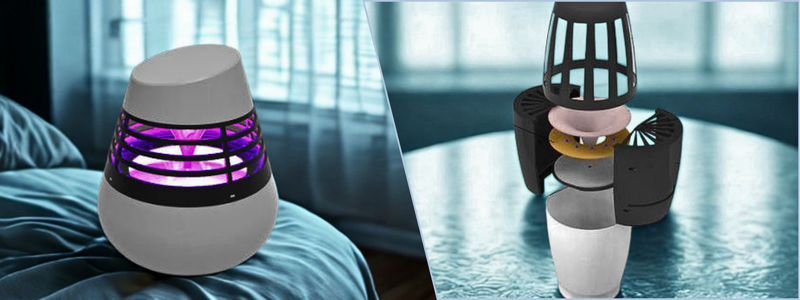
Every extra component, whether electrical or mechanical component, comes from multiple vendors. And for some reason, the over-engineered mechanism must instead be housed inside a metal enclosure, so the bodywork must be made from a premium material, too. When the product is finalized, you realize the project cost is twice the initial budget. And to make things worse, you can’t reasonably charge double the intended price range without risking a poor sales figure. The per-unit margin suffers.
Challenging validation
A complex product requires complex and possibly lengthy validation processes. This isn’t as unusual as you might think, because a lot of modern designs, especially large systems, are so intricate that the validation is almost as difficult as the engineering work itself. Think of sophisticated products like medical devices, UAVs, cars, CPUs, and so forth. What should never happen is an unnecessarily over-engineered product because it will then need an unnecessarily challenging validation. The more complex a product gets, the higher the chances of failure. It doesn’t happen to every complex product in reality, but the truth of the matter is that complex products fail more often than their simpler alternatives.
Relatively recent examples of this problem are the foldable smartphones. Often cited as one of the upsides of a foldable smartphone is versatility, as it can function as a “compact” candy bar smartphone when folded and as a tablet when unfolded. Having a larger screen also makes it more suitable for multitasking. A looming downside is that the device is generally less durable than its simpler, non-foldable alternative. Both the folding mechanism and the flexible screen create massive failure points.
RELATED: The Importance of Iteration in Product Development & Working with Product Design Companies
A proper design validation process may involve folding the device (along with the screen) 100,000 times or more, which is often considered equivalent to a few years of daily use. The manufacturers also use premium materials, such as aerospace-grade aluminum for the body and hinges, to improve durability. Every additional engineering and validation step can only raise the per-unit selling price.
Candy bar smartphones are often more durable because they have a pretty simple form factor. A large touchscreen in the front, a big battery in the back, and all the sophisticated electronics in between. When engineers decide to add hinges to the body and use a flexible screen, the burden of validation increases significantly.
With a regular smartphone, the validation may involve testing battery life and charging cycle, touchscreen sensitivity, thermal regulation, connectivity, audio quality, camera performance, etc. Take a foldable smartphone, and the validation process must include everything you do to its non-foldable counterpart, adding testing the durability of the screen and hinges. You need to check the wear pattern, environmental stresses under different conditions, and the power consumption of the larger display, among other factors. The validation process takes longer to complete because engineers must develop additional test methods for use cases that are both likely and unlikely to occur in the real world. All those efforts cost money, which ultimately must be covered by sales.
Admittedly, foldable smartphones are more like a fragile experiment in an already mature technology than an obvious case of over-engineering. But in a world where stand-alone candy bar smartphones and tablets co-exist with synchronization and seamless integration, the experiment can feel a tad unnecessary if not redundant. And if you compare prices, flagship foldable and non-foldable smartphones sell in roughly the same price range, which means the former most likely has a much lower per-unit profit margin.

RELATED: How to Quickly Cut Prototype Design Costs in 2026 for Product Design & Engineering Firms
High manufacturing cost
Just because a product is complex doesn’t mean it’s been over-engineered in the development process. Some products have to be made complex enough to perform many sophisticated functions. Take, once again, for example, a smartphone. Can you say that today’s typical smartphone with touchscreen, satellite navigation, high-resolution cameras, and video playback is a clear example of over-engineering? You probably could, back in the day, when the technology to cram all those features in a single device was cost-prohibitive.
Now, however, they’re all standard features you can expect from just about every smartphone brand, regardless of price range. What started as “cutting-edge” tech has now become mainstream thanks to market competition and efficient manufacturing process. They used to be complex (and that’s why smartphones were expensive then), but manufacturers improved their methods and competition intensified, driving prices down.
Now, you can hypothetically over-engineer today’s smartphone. You keep all those standard features and maintain the phone’s form factor while adding functionality that lets the device transform into a robot action figure with the press of a button. So instead of improving the screen’s durability or the speakers’ audio quality, you take an entirely different development path. Is it possible? Perhaps, with some excessive development time and cost. It’s challenging to keep the device acceptably thick while improving the battery, but let’s say you pull it off, and the new device is now ready to be mass-produced.
The more features you cram into a product, the harder it is to build. A product is only regarded as “over-engineered” when it’s barely technically feasible to manufacture at scale. Even if you can produce all the individual parts with existing technology, the assembly process will be a nightmare. A component that typically consists of ten parts now requires twenty smaller pieces to put together. It takes more money to get all the parts and twice as much time to assemble them. The contract manufacturer has to reprogram the robotic arm for a new assembly sequence or retrain human workers to learn new additional steps.
RELATED: Top 5 Prototyping Mistakes to Avoid in Product Development (And How to Fix Them)
When more parts are required to build a component, maintaining accuracy also gets more difficult. As a result, the manufacturing cost increases. For instance, a tolerance of 0.05mm is enough to assemble a component used in a typical toy robot. But because it’s a much more sophisticated product with a much higher number of mechanical and electrical parts, a tighter tolerance of 0.01mm is necessary.
And then you need to consider the selling price per unit. Say an equivalent smartphone in the market costs $700, whereas a similar robot action figure sells for $300. People can spend a total of $1000 to get the two, but you can’t compete on price because you need to sell your product for $2000 per unit just to cover development and manufacturing costs. To make a profit, you have to sell it at a higher price. How many people do you think will find it reasonable to splurge more than two grand for a phone that transforms into a robot when they can purchase the two separately for much less? Chances are, not many.
Design simplicity is key to low manufacturing cost. It’s one of the main reasons an NPD project needs to implement DFM (Design for Manufacturing) principles from the get-go. Over-engineering takes you a step further away from DFM. Rather than focusing on methods to simplify and streamline the manufacturing process, you get carried away by the need to be sophisticated and unique. Trying to be inventive isn’t always bad. In fact, every engineer has to be inventive, but there must be a clear distinction between that and over-engineering. Maybe in the future, new manufacturing techniques or more advanced assembly processes will enable lower production costs. Until then, stick to what’s technically and affordably feasible.
RELATED: How the Engineering Design Process Helps You Craft New Products for Consumer Goods Firms
Cost comparison of optimized vs. over-engineered product development
| Cost factor | Optimized design | Over-engineered design |
|---|---|---|
| Research & development | $20,000 | $40,000+ |
| Prototype development | $3,000 | $8,000+ |
| Tooling & manufacturing setup | $10,000 | $25,000+ |
| Bill of materials (per unit) | $18 | $35 |
| Manufacturing cost (per unit) | $12 | $24 |
| Validation & testing | $5,000 | $15,000+ |
| Estimated per-unit profit margin | 35–45% | 10–20% |
Yield rates issue
Still, in some way related to DFM, over-engineered products are prone to low yield rates. Bear in mind that mass manufacturing with a 100% yield rate is generally impossible, no matter what the product is. Even if the product is a simple decorative object with almost no function beyond serving as an ornament to fill a few square inches on a desk, the factory still has to face the fact that a few of those products will likely be defective. It can happen for entirely expected reasons, such as variation in the quality of raw materials, contamination, and equipment limitations.
Now, if a simple product cannot come with a 100% yield rate, what do you think is the story with a complex one? A product with a lot of moving parts, a lot of fine details, a lot of delicate electronics, and a lot of intricate features for sure, isn’t going to do any better.

A yield rate of 90% is considered low, which makes perfect sense in modern standards, considering how advanced today’s design and prototyping methods are. This means that about 10 units never pass the Quality Control (QC) screening for every hundred manufactured, 100 for every thousand, and so forth. On the one hand, a low yield rate indicates that you have a rigorous quality assurance process in place, so that every product that ends up on a store shelf is as good as it can get. On the other hand, a low yield rate takes a toll on your profit margin unless you increase the per-unit price, which you may not always want to do.
RELATED: A Guide to Concept Design with Product Design & Engineering Companies
And by extension, the low yield rate during manufacturing gets even lower when you take post-purchase support, such as repairs and warranties, into account. Every feature and moving part offers not only greater usage potential but also potential failure points. And unfortunately, a complex product tends to break in a complex way as well.
If a relatively simple knife breaks its handle, you might be able to repair or replace the damaged part quite simply. But if the handle of a Swiss Army knife is shattered, it’s going to take a more careful approach to fix it. Depending on the warranty terms, you may have to cover the shipping fee and have the repairs done at no cost. By making your product more sophisticated and feature-rich through over-engineering, you can create a post-purchase support burden that eats away at the profit margin of the initial sale.
There’s just going to be more calls to customer service from people asking for support because over-engineered products are harder to understand. DIY repair is just too risky, and sometimes it’s easier to replace an entire unit than to repair overly complex damage. And if you refuse or charge too much for out-of-warranty repair, chances are people will avoid your product entirely in the future.
RELATED: What Are Proven Product Design Principles when Working with Companies & Freelancers?
End it before it starts
Over-engineering isn’t a sign of creativity. It’s actually the opposite. Keeping a product simple yet effective while maintaining its unique characteristics is often much harder than enjoying a free engineering roam. Budget constraint is a thing in every NPD project, and thankfully, there are things you can do to stop over-engineering even before it begins.
The first thing you can do is to be very specific about the product requirements. There has to be a primary purpose of the product, perhaps with one or two additional features, and that’s it. Focus development on the primary objective, which, in most cases, is about solving a specific problem. If you want to create a safety razor, for example, the main objectives should be durability, comfort, and ease of use. Cool features like LED lights design, engraved patterns, or a foldable design aren’t supposed to steer you away from the priority.
Always remember that consumer research is the best defense against over-engineering. Talk to the target market and ask people which features they value most. Most people want a product that performs a specific function well, not a jack-of-all-trades. Why spend months putting a waterproof LED at the bottom of the safety razor handle when the vast majority of buyers only want something sturdy? They probably won’t bother replacing the battery. If they want lights on a grooming product, they’d probably buy an electric shaver anyway.
RELATED: Top Product Usability Factors for Good Product Design Services & New Prototypes
More importantly, set a hard limit on the development budget, including BOM, and stick to it. For example, if you’re not allowed to spend anything more than $20 for the entirety of materials for every unit of product, there’s no reason to go overboard. Keep it simple and sensible. Another advantage of having this kind of hard ceiling is that it forces you to be more creative and devise methods to solve problems with budget constraints in mind.
Closing thoughts
Over-engineering probably still makes sense in the R&D phase, especially when the budget isn’t a concern. In an actual NPD where the per-unit profit margin is among the most important considerations, it only makes perfect sense to design and engineer the product accordingly. If you plan to sell a unit for no more than $50 to be competitive, well then, the total cost of development and manufacturing per unit should not even come close to that amount. You need a healthy profit margin with every sale to keep the business sustainable. Just because there’s a budget constraint, it doesn’t mean you can’t build a creative solution at a competitive price.
Companies don’t always avoid over-engineering their products. Small companies want to prove their engineering capabilities and fall into the trap of over-engineering, whereas the bigger ones feel too comfortable experimenting with complexities. Based on that logic, every company can draw on guidance from experienced NPD professionals, whether project managers or lead engineers, to keep the project on track. Cad Crowd takes you right into the center of a massive freelancing hub filled with just the right experts and specialists for the job.
RELATED: Why Your Business Needs Product Engineering Services to Innovate & Accelerate
How Cad Crowd can help
Avoiding over-engineering is key to controlling costs and maximizing per-unit profit. Cad Crowd connects businesses with experienced product designers and engineering professionals who can optimize designs for manufacturability, reduce unnecessary complexity, and improve production efficiency. Whether you need help with product development, prototyping, BOM optimization, or Design for Manufacturing (DFM), our experts can help you build cost-effective products without compromising quality. Contact Cad Crowd today for a free quote.