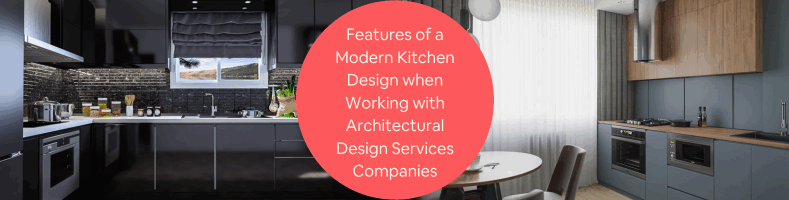
You’re standing in what could be your dream home. Light floods in from massive windows, the scent of freshly cut wood floors still lingers in the air, and then—you step into the kitchen. And it hits you. This space isn’t just for cooking. It’s the command center, the social hub, the visual highlight of your entire house.
But how do you arrive—how do you move from blueprint to breathtaking? When you’re collaborating with an architectural design services firm from the industry leader, such as Cad Crowd, creating a contemporary kitchen is a collaborative process. It’s where your lifestyle intersects with design intelligence, and where intelligent planning becomes stunning functionality.
Let’s dig into what truly makes a kitchen “modern” when you’ve got the power of an architectural firm behind the vision.
The open-concept layout: more than just knocking down walls
You’ve seen it on design shows and in Pinterest dream boards—open kitchens seamlessly flowing into dining and living spaces. But creating an open concept kitchen isn’t as simple as swinging a sledgehammer.
When you’re working with an architectural design expert, you’re not only knocking down walls—you’re carving out spaces. Architects consider load-bearing elements, sightlines, natural light, and space flow. Their task? To provide you with freedom of movement and access without sacrificing the structural integrity of the building.
Perk: Tactical utilization of ceiling details, such as wooden beams or recessed lighting trays, separates the kitchen from living spaces discreetly without shattering the open sense.
RELATED: How 3D rendering helps collaboration between clients and design services companies
Integrated smart storage systems that are magic
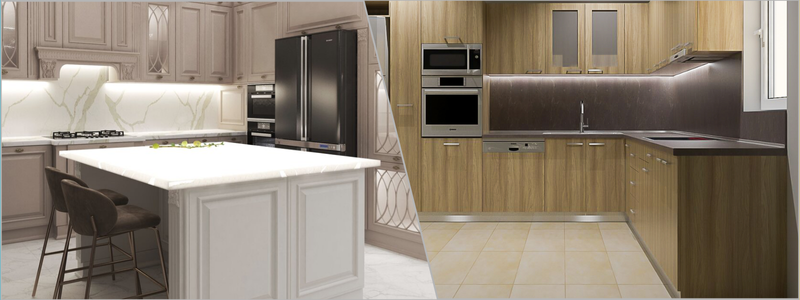
Designers and architects understand that mess is the nemesis of contemporary design. That is why contemporary kitchens frequently feature storage components that melt into the design—hidden pantries, toe-kick drawers, vertical pull-outs, and island compartments.
But here’s the twist: when you’re dealing with architectural design services firms, storage isn’t an add-on. It’s part of the kitchen’s DNA. These companies tend to work with custom cabinetry manufacturers and expert industrial designers to design storage spaces that fit your space and your lifestyle.
Think: a breakfast station behind sliding doors, or a tech drawer with charging stations built in. It’s all about outsmarting needs before you even know they’re there.
A preoccupation with the kitchen triangle—and then subverting the rules
If you’ve ever discussed kitchen design, you’ve heard of the “kitchen triangle”—the theoretically best positioning of the sink, stove, and fridge. It’s an ancient rule dating back to the electric stove.
But contemporary kitchens? They do better.
Design firms apply this rule as a starting point, then adapt it according to how you function within the kitchen. Perhaps you require a second sink for preparation, or an extended island that serves as your remote work office. Architects are educated to break these design principles when it’s in their best interest.
By utilizing 3D modeling design services and layout simulations, design companies can try out various configurations, and you can see and feel the space before it is actually constructed.
Aesthetic meets function: material choices that do both
Modern doesn’t have to be sterile. And architectural designers are masters at toeing that line between sleek and soulful.
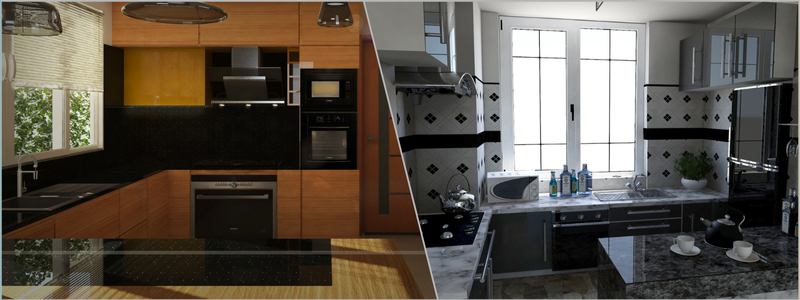
Contemporary kitchens today combine high-function materials with organic finishes. Marble-like quartz countertops without the upkeep. Brushed brass or matte-black fixtures that feel ageless. Wood cabinetry in warm tones, coupled with concrete-look flooring.
When working with an interior design services firm, you’re not picking finishes from a shelf. You’re choosing from curated, performance-tested options that match the rest of your home’s design language. These professionals help balance budget, durability, and style, and often suggest material pairings that most homeowners wouldn’t think of.
RELATED: How 3D commercial rendering services help present commercial architectural projects
Seamless tech integration: your kitchen, upgraded
Smart homes aren’t the future—they’re the now. And modern kitchens are a major part of that movement.
Architectural companies usually collaborate with technology consultants to build in features such as:
- Touchless faucets
- Induction cooktops are built into the counters that also serve as counter space
- Voice-controlled lighting systems
- Connected appliances that coordinate with your phone
- Custom app-controlled climate zones (particularly if your kitchen opens up into living areas)
When technology is integrated right up front—built into the blueprints rather than installed as an afterthought—it disappears and becomes second nature.
Sustainability isn’t a trend. It’s a standard.
Contemporary kitchen design is not merely about looks or even usability—it’s about accountability.
Architectural design services firms are increasingly embracing sustainable design strategies. From the use of energy-efficient appliances and LED lighting design services to the employment of locally sourced, eco-friendly materials and non-toxic paints, sustainability is embedded in the design right from the start.
And since architects know building codes and green certification needs (such as LEED or Passive House standards), they design your kitchen to accommodate energy conservation without sacrificing comfort or appearance.
Design insight: Look for details such as skylights, solar orientation design, and passive ventilation planning to cut back on artificial lighting and HVAC usage—all while increasing the ambiance.
RELATED: Creating collaborative zones: Innovation through spatial design with architectural firms
Zones, not rooms: Personalized activity spaces in the kitchen
One of the most dramatic changes in kitchen design is the idea of “zoning.” Rather than one work triangle, contemporary kitchens tend to have several zones:
- Prep zone – with butcher blocks, sinks, and pull-out trash receptacles
- Cooking zone – with intelligent ovens, ventilation, and warming drawers
- Coffee or breakfast station – nestled in a custom nook
- Entertaining zone – typically a component of a multifunctional island
- Clean-up zone – intelligent dishwasher drawers, drying racks, composting facilities
Architects adore this idea since it provides opportunities for several individuals to share the kitchen space at the same time. You are cooking, yet another is preparing coffee or washing dishes—and no one encroaches upon the other’s space.
Lighting that alters the environment
Lighting is to architecture what seasonings are to cuisine. Executed well, it makes everything pop.
Design-build architectural firms conceive in layers, with reasonable use of lighting fixture design services.
- Ambient lighting: typically incorporated into architectural elements such as recessed ceilings or wall coves
- Task lighting: under-cabinet LEDs or concentrated pendants above the island
- Accent lighting: open shelving with soft glows, toe-kick lights, or a soft wash on a textured backsplash
And then there’s natural light. A good architectural team will make the most of window placement, recommend skylights, or even rework adjacent walls to bring in more sunshine.
Islands that do everything except cook for you
If the kitchen is the heart of the house, the island is its heartbeat.
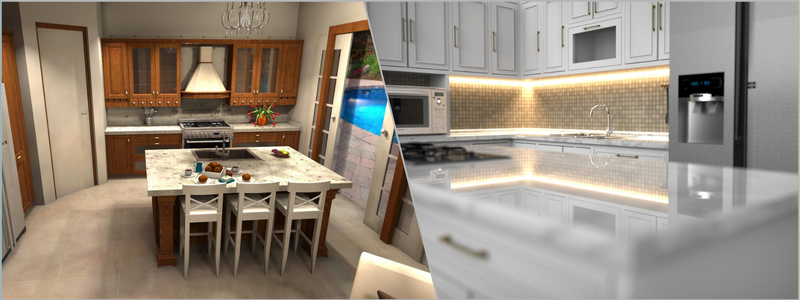
Those cramped prep counters are things of the past. Today’s kitchen islands are multifunctional beasts—generally equipped with seating, built-in shelving, sinks, cooktops, and even wine refrigerators.
Some homeowners even ask for two islands: one for food preparation, the other for hanging out or doing homework.
Architectural designers facilitate scaling and siting these islands just right, so that they don’t interfere with traffic patterns or overwhelm the room. They’ll also coordinate them with plumbing and electrical schematics, checking that it all functions before it gets constructed. You can use 3D architectural visualization services to recreate these environments to help your process.
Tailoring to your lifestyle
This is the real benefit of hiring an architectural firm: they don’t create a modern kitchen. They create your modern kitchen.
Are you a professional chef requiring a six-burner cooktop and spice library? Do you have big family gatherings and require expandable dining spaces? Perhaps you prep meals on Sunday and need additional freezer capacity.
Architects sit down to learn about your habits, requirements, and plans. They pose the questions no one else ever thinks to ask:
- Where do you usually unload groceries?
- Do you entertain in or out of the house more frequently?
- Do your children do homework on the counter?
These observations get translated into bespoke layouts, room planning, and details that make your kitchen feel like it was designed specifically for you—because it was.
RELATED: Improve furniture catalogs with CGI to market your products with design service companies
What goes on behind the scenes with an architecture firm?
Let’s demystify the process a bit.
Discovery and needs assessment
You’ll begin by meeting with your architects. Be prepared for a lot of questions. This stage is all about getting to know your lifestyle, your budget, and your wish list for your dream kitchen.
Concept design and layout options
Architects will create sketches, mood boards, and sometimes 3D walkthroughs. This is where you get to see how the kitchen integrates into the overall home design service.
Material and feature selection
With assistance from their network of fabricators and vendors, architects walk you through finishes, fixtures, and technology choices that fit your budget and style.
Construction drawings and coordination
Contractors, cabinetmakers, and engineers are ready with detailed blueprints and specs. If you’re remodeling completely or constructing new, this is where architects truly pay their dues—coordinating structural modifications, code requirements, and inspections.
Oversight during build
Many architectural design services companies offer project management. That means site visits, troubleshooting, and making sure your vision comes to life exactly how it was planned.
Final thoughts: when great design meets professional expertise
Commissioning the design of a contemporary kitchen from an architectural design services firm is not only an intelligent decision—it’s a revolutionary one. Such experts do more than possess a trained aesthetic eye; they possess problem-solving, planning, and vision that imbues every aspect of your kitchen.
So the next time you envision a kitchen that is both stunning and masterfully functional, don’t do it yourself. Collaborate with a group of Cad Crowd professionals who can take your vision and make it a masterpiece—the type of space that makes you exclaim, “This is where I want to live.”
Don’t just cook. Live.