

Think about how you would build a modern office tower with rooftop gardens, subterranean parking, and systems that use less energy. Using traditional methods can lead to expensive mistakes, such as realizing that the beautiful ceiling design needs to be ripped apart to make room for ductwork that was ignored. Architects, engineers, and designers not working together properly leads to costly delays and sacrifices that could have been avoided.
Building information modeling (BIM) services get rid of these difficulties by making a smart digital copy of your project. BIM is different from regular CAD sketches because it acts as a “brain” for the whole project, coordinating structural analysis, scheduling, and design integration in real time. For top architecture companies and CAD design studios, BIM has gone from a nice-to-have to a must-have standard. It makes sure that all the parts work together perfectly before building starts.
🚀 Table of contents
- BIM is not just a tool—it’s a whole way of thinking
- Everything talks to everything else (And actually gets along)
- Goodbye to rework and design conflicts
- Data-rich models that go beyond pretty pictures
- Lightning-fast quantities and cost estimation
- Real-time collaboration? Yes, please.
- Client presentations that wow (and convert)
- Sustainability objectives embedded from the ground up
- Post-construction facility management = Bonus round
- Future-proofing your practice
- Making the mundane automatic
- A huge boost for remote and outsourced teams
- Involvement with 4D, 5D, and Even 7D BIM
- Final thoughts: Is BIM worth the investment?
- Cad Crowd is here to help!
BIM is not just a tool—it’s a whole way of thinking
Let’s dispel an unfair myth immediately: BIM (Building Information Modeling) is not merely some flash 3D modeling tool. It’s really much more than that—it’s an entire mindset revolution. Consider BIM a digital philosophy that transforms how we design and build structures. Rather than laboring in isolation, the team works together starting day one in a unified digital environment. Each aspect, such as walls and wiring to beams and sensors, is simulated and smartly connected, providing everyone with the complete picture in real time.
For CAD design companies, this transition is enormous. Historically, their value proposition may have been to provide detailed drawings. With BIM, their value expands. They’re now co-creators of something much greater, an integrated process involving architects, MEP engineers, structural consultants, contractors, and even facility managers. Everyone contributes to the same digital model, identifying problems early on and making more informed decisions collectively.
So no, BIM isn’t “just another tool”, it’s a new way of thinking. It transforms isolated design work into coordinated innovation. If any design firm wants to remain relevant and competitive, adopting BIM isn’t a choice—it’s a necessity.
Everything talks to everything else (And actually gets along)
Let’s be real—old-school 2D CAD drawings are moody siblings. They never agree. The floor plan says something, the elevation something else, and the HVAC layout? Freelancing, likely.
BIM brings harmony to the household. Any aspect of the design is linked and parametric. Shift a wall in a view? It shifts everywhere. Install a skylight? It impacts energy analysis, lighting plans, and material quantities instantly. This cohesion results in fewer mistakes, quicker changes, and a sharp reduction in those 3 a.m. “Wait, did we modify that within the section drawings?” freak-outs.
Goodbye to rework and design conflicts
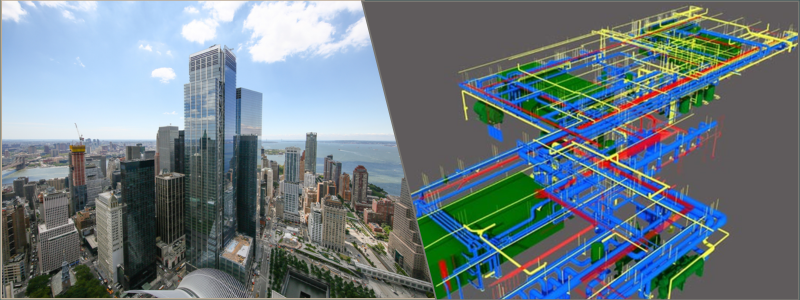
Let’s set the scene: the pipes have been run directly through a beam—again. The client raises an eyebrow, the contractor winces, and suddenly everyone’s discussing change orders and overtime. Ring a bell? Not if you’re working with BIM. With building information modeling, clash detection occurs early, before anything is ever built by architectural design services. BIM software can automatically alert when a duct collides with a beam or when two doors swing into each other in the same cramped hallway.
Instead of scrambling to fix problems on-site, you’re solving them digitally at the design stage. That means fewer delays, less rework, and way fewer headaches. Your firm looks sharp, your budget stays intact, and your project flows smoothly. Plus, let’s be honest—it feels pretty great being the one who catches a $20,000 mistake before it ever hits the job site. BIM doesn’t just build better—it builds smarter.
Data-rich models that go beyond pretty pictures
Yes, old-fashioned CAD drawings can be beautiful. But BIM models are more than that. They’re full of information about materials, thermal efficiency, cost, sustainability ratings, and fire resistance.
For architectural planning and design firms working with product libraries or prefab elements, this is a game-changer. Components in BIM can carry manufacturer specs, pricing, lead times, and even maintenance schedules. Suddenly, you’re not just delivering design. You’re delivering insight. And clients love insight.
RELATED: How do architectural BIM services for companies complement the MEP/FP design process?
Lightning-fast quantities and cost estimation
BIM doesn’t just design your dream building; it keeps an accountant’s eye on the budget. Because every object in the model is data-rich and tagged by category, running quantitative takeoffs is nearly automatic. Need to know how many square meters of glass you’re using? Done. Wondering about the volume of concrete for your foundation? Two clicks.
For companies that competitively bid or desire more control over project margins, this type of real-time cost monitoring is as good as discovering gold in the utility closet.
Real-time collaboration? Yes, please.
Here’s a twist: several designers collaborating on the same model simultaneously, from various locations, without sending 57 versions of “finalFINAL.dwg.”
BIM tools such as Revit, ArchiCAD, and cloud-based CDEs (Common Data Environments) enable real-time collaboration, version tracking, and user-specific access. The structural engineer in Berlin can insert reinforcements while the interior designer in Tokyo makes changes to lighting layouts. No lag. No confusion. Pure, digital harmony.
Client presentations that wow (and convert)
Clients tend to struggle to read 2D plans. But drop them into a flythrough of their new hotel, with daylight simulations and interior finishes? Suddenly, they’re convinced.
BIM’s ability to export to visualization software, VR/AR environments, and even gamified walkthroughs puts firms ahead in presentations. It’s not merely pretty, it’s immersive, informative, and crazily persuasive.
BIM-enabled designers and architectural design experts are able to express intent confidently, prevent misinterpretation, and speed up sign-off. It’s Netflix for housing aspirations.
Sustainability objectives embedded from the ground up
Green architecture is not a nice-to-have—it’s mandatory. Performance analysis software gets integrated with BIM tools to assess energy efficiency, solar exposure, thermal comfort, and even carbon footprint prior to breaking ground.
Want to compare two HVAC systems on a lifecycle carbon emission basis? You can do that. Need to model water usage to qualify for a LEED rating? Go ahead.
For companies committed to sustainable design leadership, BIM is an unbeatable friend—and a convincing sell to green-conscious clients.
Post-construction facility management = Bonus round
BIM doesn’t disappear after the ribbon-cutting ceremony. It remains the best project manager in the world, pumping data into FM systems (facility management), asset tracking, maintenance planning, and future refurbishments.
When CAD companies deliver BIM models that last long after the building is built, they transition from project collaborators to long-term solution providers. And that unlocks recurring revenue streams in digital twins, smart buildings, and IoT integration.
RELATED: Benefits of outsourcing architectural CGI services for real estate marketing agencies
Future-proofing your practice
This is for the boutique studios, engineering design freelancers, and young design renegades: BIM implementation is no longer a choice if you’re looking to play ball in the major leagues.
More and more tenders are making BIM mandatory. Governments, infrastructure builders, and global architecture competitions increasingly require BIM submissions. Being behind here is closing doors before you’ve even knocked.
Embracing BIM keeps your company lean, technologically advanced, and appealing to partners. And it simplifies hiring—young professionals anticipate using BIM, not tracing paper and spreadsheets.
Making the mundane automatic
Come on, let’s face it: nobody gets into architecture to manually label hundreds of toilets. BIM takes over tedious documentation work—schedules, door tags, keynotes, legends—so you can get on with designing, daydreaming, and ordering overpriced cappuccinos.
Automation via BIM also eliminates human error, ensures standardization, and facilitates easy updates. Your team no longer becomes a bottleneck but becomes a creative dynamo.
A huge boost for remote and outsourced teams
With worldwide workforces and blended teams, the new standard, BIM, facilitates easy outsourcing of CAD and architectural work. A lighting specialist in Dublin or a CAD drafting company in the Philippines—anyone can work from a common digital reality—the BIM model.
This makes access equal, permits 24-hour design cycles, and decreases overhead for companies collaborating with off-site contributors.
RELATED: Pros and cons of outsourcing 3D rendering services and visualization for your company
Involvement with 4D, 5D, and Even 7D BIM
The BIM universe doesn’t just exist in 3D. We now also have 4D BIM (time/scheduling), 5D (cost), 6D (sustainability), and 7D (facility management). Every additional dimension brings intelligence and planning capability to the project life cycle.
Want to model how long a phase will last? Monitor budget changes between different versions of the design? Streamline maintenance procedures in the future? It’s all within the extended BIM universe.
CAD companies that access these dimensions become high-value partners able to direct whole building lifecycles, not merely drawings.
Final thoughts: Is BIM worth the investment?
Yes, absolutely, BIM design is more than a trend, but it’s a tectonic shift in the way we envision, design, construct, and maintain the spaces we occupy. From magnificent skyscrapers to home design services, BIM empowers architectural and CAD design companies with an arsenal that meshes creativity, lucidity, and control.
Yes, there is a learning curve. Yes, it will take some software investment and training of teams. But the ROI is huge—fewer mistakes, quicker timelines, more collaborative successes, and buildings that don’t just look good but perform better from day one.
Cad Crowd is here to help!
Ready to eliminate costly design conflicts and deliver projects that wow your clients? Transform your architectural workflow with intelligent BIM design from Cad Crowd’s expert professionals. Stop losing money on rework and change orders. Start building smarter with real-time collaboration and clash detection technology. Connect with our BIM specialists today and discover how leading firms are staying competitive in the digital age. Get your free quote now and join the future of architecture and design.



