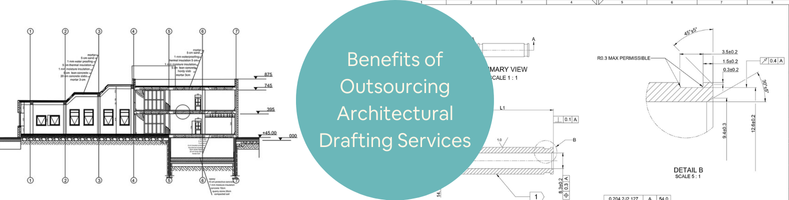
In today’s high-speed architectural climate, there is a need for efficiency, cost-effectiveness, and accuracy. To fulfill these requirements, a number of design studios and architectural companies are looking for outsourcing as a strategic solution.
Whether you outsource specialized firms or freelance designers individually, outsourcing architectural drafting services is valuable in many respects. As an industry-qualified professional, Cad Crowd is always happy to assist you in getting the best architectural drafting services from our large talent base.
In this paper, we examine the main benefits of outsourcing, how company-created services differ from solo designers, and how they both can be used to contribute towards better project outcomes.
🚀 Table of contents
- Common mistakes in architectural drafting
- Incorrect measurements and scaling
- Unreliable documentation
- Conflicts of multi-disciplinary designs
- Non-compliance with local codes and standards
- Version control issues
- Reasons for architectural drafting errors
- How outsourcing simplifies drafting inaccuracies
- Focus on quality control
- Application of advanced technologies
- Cost-effective solutions
- Why outsource your architectural drafting needs?
- Cost efficiency
- Access to global talent and expertise
- Enhanced efficiency and faster turnaround times
- Core competencies
- Scalability and Flexibility
- Availability of advanced technology
- Quality assurance and risk mitigation
- Increased cooperation and communication
- Risk management and compliance
- Cost predictability and budgeting
- Conclusion
- Cad Crowd is here to help
Common mistakes in architectural drafting
Architectural drafting is the linchpin of successful construction, converting complex design ideas into technical drawings with accuracy. Regardless of the most accurate drafting procedure, human error judgment may be inevitable, resulting in delay cost and structural failure. Awareness of common mistakes and knowledge of how to eliminate them are indispensable to architects, engineers, and contractors.
Incorrect measurements and scaling
Inaccurate measurement and scaling are also two of the most common architectural drafting problems. Small mistakes have a tendency to balloon when executed to produce leaning structures, misfitting pieces, and lost integrity. Such errors usually come from human input mistakes or measurement interpretation mistakes, so checking measurement is particularly crucial, as well as the utilization of proper scaling tools.
RELATED: 3D commercial rendering: Effective retail design layouts for your company
Unreliable documentation
Accurate and uniform documentation is necessary for effective communication between all the stakeholders of a project. Architect drawings and specifications are to be combined if they conflict with each other because it distracts construction teams and is prone to create additional errors and prolong projects for architectural design firms. The inconsistency in documents results in the conflict of design intent vs. what is being constructed, leading to wasteful rework and misuse of materials.
Conflicts of multi-disciplinary designs
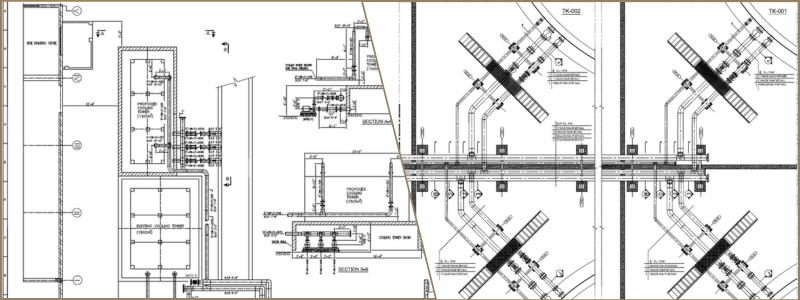
The designs of buildings will include different disciplines, such as structural, mechanical, electrical, and plumbing (MEP) systems. Coordination among these different items is not an easy task, and without coordination, design clashes are unavoidable. For instance, structural beams can conflict with HVAC ducts, which can lead to field changes that could have been avoided with proper clash detection while drafting.
Non-compliance with local codes and standards
Nonadherence to local building codes and regulations is another catastrophic drafting mistake. It leads to disapproved permits, litigations, and the requirement for substantial revisions, all contributing to project delays and unwarranted expenses. This is typically due to a lack of familiarity with new codes or inattention to detail during drafting, highlighting the necessity for ongoing education and code audits.
Version control issues
In big projects, several teams can work simultaneously on various components of the design. With inefficient version control, teams will be working from outdated drawings, and inconsistencies will lead to the finished design and build. Inefficient version control will result in misunderstandings, redesign, and mistakes that undermine project timelines and budgets.
RELATED: Techniques for 3D architectural visualizations and tips for your services firm
Reasons for architectural drafting errors
The identification of causes of drafting errors is the key to efficiency for drafting and design companies:
- Insufficient training: Substandard skill level in operating draft equipment and computer programs can result in inaccuracies.
- Stringent deadlines: Limited personnel with tight deadlines can hasten sloppy work and inaccuracies.
- Poor teamwork: Ineffective communication between staff personnel renders design misinterpretation likely.
- Complex designs: Most contemporary building designs are complex and need specialized equipment and skills.
How outsourcing simplifies drafting inaccuracies
Architectural drafting services outsourcing has been an excellent way of reducing errors and improving project performance. The following are some of the reasons why outsourcing is beneficial:
Focus on quality control
Quality control (QC) and quality assurance (QA) procedures are very rigorous in good outsourcing companies. These tests ensure that each deliverable is accurate, consistent, and meets industry standards, thus reducing the chances of errors by a significant margin.
Application of advanced technologies
Outsourcing drafting services usually have access to the latest technology like Building Information Modeling (BIM), AutoCAD, and Revit. This kind of technology enables the detection and rectification of clashes, errors, and non-compliance at the initial phase before it gets out of hand during construction time.
Cost-effective solutions
Outsourcing support activities like drafting prevents businesses from incurring the recruitment, training, and upkeep expenses of in-house personnel. Outsourcing services allows businesses to concentrate on core functions while maintaining quality, error-free drafting services.
Errors in architect drafting have long-lasting consequences and impact project stability, cost, and timeline. Finding pitfalls, tracing their source, and taking advantage of outsourcing will assist architectural practices in increasing the success, quality, and productivity of their projects.
RELATED: Exploring the different versions of dynamic 3D visuals in architecture and design services
Why outsource your architectural drafting needs?
Cost efficiency
The largest reason that commercial drafting services are outsourced is an attempt to save money. Drafting internally requires a significant investment in wages, software licensing costs, computers, office space, and training. Outsourcing takes much of the overhead out, and the companies only pay for usage.
- With mature companies: Working with mature drafting firms provides bundled services, and project management and technical support costs are minimal. Mature firms provide scalable solutions, which allocate more resources according to the project’s requirements without requiring major involvement.
- With freelancers: Freelance graphic designers have lower operating costs, which enable them to quote prices competitively. This is appropriate for small businesses or those with no adequate budget. Freelancers can also be employed on a needs basis, with no cost of continuous commitment.
Access to global talent and expertise
Outsourcing offers the facility to access global talent, employing highly skilled staff with varied experience.
- With companies: Highly skilled multidisciplinary professionals possessing deep expertise in various types of architecture, software products, and trade specifications work for draft companies. All the experience combined provides holistic support to intricate projects.
- Through freelancers: Freelancers are concerned with individual niches and offer distinctive capabilities and innovative thinking processes. Organizations can thus efficiently handle specialist project needs by hiring freelancers with the required expertise, such as millwork drafting services.
RELATED: How emotional design in architecture enhances mood for 3D modeling & architectural services firms
Enhanced efficiency and faster turnaround times
The efficiency factor of building projects cannot be overemphasized. Outsourcing ensures efficiency through streamlined procedures as well as round-the-clock productivity.
- With companies: Most outsourcing firms function in more than one time zone, which ensures round-the-clock work cycles. Such a 24/7 facility shortens project timelines, cuts down delays, and facilitates quick delivery of drafts and revisions.
- With freelancers: Freelancers provide adjustable work schedules and are usually equipped to meet pressing deadlines. The open communication channel enables quick feedback, rendering revisions insignificant.
Core competencies
Architectural practices may concentrate on their main functions, such as design development, consulting with clients, and planning by outsourcing.
- With companies: Outsourcing is to specialist companies in order to have internal resources used more effectively. Compartmentalization enhances productivity and ensures that important design decisions receive proper attention.
- With Freelancers: Segments of an activity or standalone activities are outsourced to freelancers so that in-house teams can take up creative and strategy work. Dynamic nature provides scope for changing project management and resource allocation.
Scalability and Flexibility
Architectural projects, such as structural design services, are sure to experience ups and downs in workload. Outsourcing can provide flexibility by adding or removing resources according to the needs of the project.
- With companies: Companies with access to outsourcing can handle variable demand and high-volume projects. They can easily change team size with continuous output without any permanent employment requirements.
- With freelancers: Freelancers are ideal for low-volume projects or specialized work. Their inherent personality and flexible ability in work scope suit them well for variant project conditions.
Availability of advanced technology
Monitoring the latest technology and tools might be a capital-costly affair for architecture firms. Outsourcing the services provides access to the latest tools without spending extra on capital.
- With companies: Firms that prepare utilize the latest CAD tools, BIM tools, and visualization software. The technological advantage provides high-level outputs meeting industry standards.
- With freelancers: CAD design freelancers deal with one bundle of software, with expertise in tools that may not be in-house. Their technical knowledge can lead to the technical quality of drafts and designs.
Quality assurance and risk mitigation
It is important that quality levels be maintained in architectural drafting. Outsourcing has internal quality checks inherent in it for accuracy and consistency.
- With companies: Firms with experience have strict quality control processes like multi-level checks and conformity assurance. Their standard work procedures remove errors and minimize the possibility of project delay.
- With freelancers: Although not employees of companies, freelancers are generally very reliable because they possess a keen eye for detail. Open communication and clearly defined project standards guarantee high-quality work.
RELATED: Creating exterior renderings using 3D exterior rendering services for architects
Increased cooperation and communication
Successful architectural works depend on effective collaboration. Outsourcing ensures effective communication via online media and project management software.
- With companies: Companies may utilize advanced project management software for scheduling activities, tracking progress, and providing real-time reporting. The process is properly organized for maximum transparency and collaboration.
- With freelancers: Freelancers tend to offer direct and personal communication, resulting in close working relationships. The responsiveness and flexibility of freelancers guarantee smooth project progress.
Risk management and compliance
Architectural work is accompanied by some technical correctness, time, and compliance risks. Outsourcing minimizes these risks through professional skills and standard practices.
- With companies: Recruiting firms are good at hand with overseas and domestic construction codes, zoning ordinances, and trade conditions. Their familiarity reduces the compliance risk and project delays.
- With freelancers: Experienced freelancers are in tune with pertinent legislation and best practices. The experience ensures that individual compliance requirements are met appropriately.
Cost predictability and budgeting
Outsourcing offers greater budget control over project expenses in open pricing terms and cost predictability.
- With companies: Most drafting companies have fixed-price contracts or cost-contained estimates, which empower companies to budget effectively. Predictability removes the cost surprise.
- With freelancers: Freelancers normally come with flexible charges such as per hour or per project rates. Owing to the flexible rates, organizations are able to control costs based on a project’s scope and complexity.
RELATED: How 3D rendering enhances great architectural design presentations for companies
Conclusion
Contracting architectural planning and design services to professional companies and freelance designers has many advantages, from saving costs and reducing inefficiencies to access to global talent and top-of-the-line technology. Contracting the services of professional firms or freelance experts allows architectural firms to improve the quality of their projects, rationalize operations, and be more agile in terms of human resource management.
Cad Crowd is here to help
By synergistic use of the capabilities of the firms and freelancers, businesses can manage the complexity of contemporary architecture projects safely and efficiently. Cad Crowd is the company to call on that you can rely on to connect you with the top architectural drafting professionals. Contact us now to learn more about our service.