
Let’s get real: outsourcing electronics design services and PCB engineering company is not something you do over coffee and croissants. It’s a gamble that can make or break your entire product. Whether you’re creating the next wearable fitness tracker, designing complex industrial automation systems, or introducing a sleek consumer device, the folks behind the circuit boards are just as important as the vision behind the product. Platforms like Cad Crowd help companies find CAD designers and mechanical engineers who already understand the practical side of electronic enclosure design and hardware product development. The goal is to build an enclosure that works properly in the real world and still makes sense once production starts.
The electronics design outsourcing space is massive, occasionally bewildering, and not always clear. There are companies that claim rocket science and produce spaghetti wiring. There are others that are gems quietly driving some of the hippest gadgets available. The secret? Knowing how to move through this landscape with confidence, clarity, and an eye for detail. So grab a cup of coffee (or something stronger), and let’s dive into the real, no-fluff guide to finding the perfect outsourcing partner for your electronics and PCB engineering needs.
🚀 Table of contents
The outsourcing sweet spot: why companies do it
Outsourcing isn’t a shortcut because it fits as a strategy. When companies decide to outsource electronics design or PCB engineering design, it’s rarely about trimming the fat. It’s about being sharp with time, money, and talent. You might be a startup trying to stretch your runway, or a fast-growing firm juggling deadlines that move faster than your hiring process. Maybe your in-house team is brilliant but doesn’t have deep experience in RF systems, high-speed layout, or that thorny EMC compliance issue. That’s where outsourcing excels. It allows you to tap into a universe of talent without the overhead of full-time employees or hefty design software investments. You’re now working with people who eat, sleep, and breathe this kind of thing, and who’ve likely cracked the same problem five times before breakfast. The time to market decreases.
RELATED: Avoid These Hardware Design & PCB Electronics Outsourcing Mistakes Made by New Startups
But it’s not plain sailing. The wrong partner can make your fantasy project a financial headache. Flubbed milestones, muddled communication, or shoddy hardware construction can cascade into failed tests, lost launch windows, and angry stakeholders. Worse? Losing the trust of your investors or users. So no, outsourcing isn’t lazy when done correctly. The sweet spot is getting the right partner who understands your vision, is fluent in your tech speak, and ships without drama. Outsourcing done well isn’t a risk; it’s a rocket booster.
Not all design firms are created equal: know what you’re really outsourcing
It’s all too simple to get swept up in gaudy promises and technology-infused buzzwords. “End-to-end design solution”? Sounds great, not until you stop and consider that it can range anywhere from soup-to-nuts concept-to-production assistance to, you know, just schematic capture and a smile. The reality? Not all design houses carry the same toolset, and you wouldn’t want to learn that midway through a key project. Some companies are geniuses at prototyping design services but stumble over regulatory obstacles. Some companies are wizards with heavy-duty, industrial-grade PCBs that wither over-flogged conditions such as heat, dust, and high voltage but don’t even put their hands near high-frequency RF design with a ten-foot pole. There are companies that can blindfold-tune an antenna, and companies that give system integration or embedded firmware only cursory glances.
So don’t shake hands or send the first PO until you zoom in on the details. What exactly are you outsourcing? Are you paying for layout only, or full stack support like firmware, testing, and the works? Will they mark manufacturability issues for you or leave you with a pretty but flaky board? There is a lane for every firm, and attempting to push them into yours is a recipe for frustration. Your role is finding the partner that doesn’t just self-proclaim alignment but demonstrates it. That involves asking higher questions, drilling down into actual capabilities, and reading between the hype words.
RELATED: The Future of Electronic Design Engineering: Innovations and Trends for CAD Services Companies
Vetting a company: the real-world checklist (no corporate speak)
We’ve all been there, browsing a company’s glossy website, awestruck by high-resolution images of circuit boards that would qualify as abstract art and buzzwords piled like pancakes. “Cutting-edge.” “Turnkey.” “End-to-end synergy.” Yeah, it sounds cool. But inside, you know better.
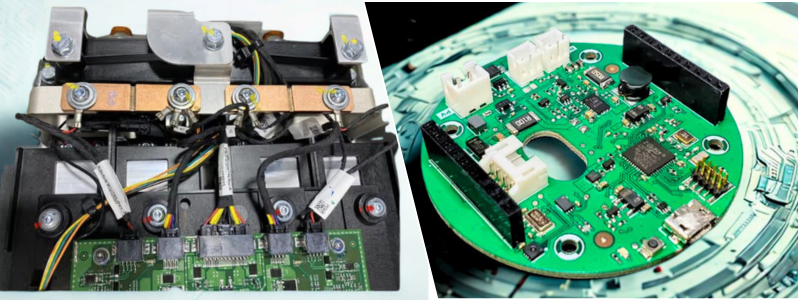
Since branding doesn’t cause your prototype to boot at 3 a.m. Branding won’t locate the pesky EMI gremlin that’s causing trouble for your wireless module. Actual engineering design services will. And finding the right personnel to work on your electronics or PCB design project requires cutting through the hype. Here’s the no-nonsense, boots-on-the-ground list you really need. No jargon. No filler. Just good advice from people who’ve been burned enough times to know what counts.
1. Technical Breadth and Depth (a.k.a. “Have they seen some things?”)
You don’t want to have a team that’s just discovering how to route a power plane. You want a team that’s been there, done that, who’ve struggled with tough analog-digital interfaces, wrestled with high-speed traces, and survived to tell the story. Begin with their portfolio and case studies. If all they have ever worked on are Arduino breakouts and LED blinkers, that’s likely not your team for a six-layer board with Bluetooth mesh networking and impedance controls and whatnot.
RELATED: Tips for PCB Design Services Creating New Products
Ask the right questions:
- Do they do design for manufacturability (DFM) product? This is not just a buzz term; it’s about keeping you out of rework hell when you need to scale.
- Have they worked with regulatory agencies such as the FCC, CE, or UL in the past? If not, be prepared to plan for a compliance consultant down the line.
- Do they possess domain knowledge? Aerospace is different from wearables. Medical devices are not IoT doorbells.
- Can they work with small form factors or thermal issues?
- Do they know EMI shielding design and grounding strategy beyond the simple “slap on some copper pour and pray”?
You want evidence, not promises. True experience has a track record.
2. Team Composition (Who’s actually behind the curtain?)
This one’s subtle. Some firms appear to be large operations up front, but in the back room? It’s a single guy, two screens, and a cat on the keyboard. Solo engineers are fine; most of them are terrific. But complexity demands co-conspirators. If your project involves firmware, enclosure design, RF, power electronics, and compliance testing, you’ll need more than a layout jockey.
Ask point-blank:
- Who exactly will be working on your project?
- Is the person you’re corresponding to merely a sales rep?
- Do they have in-house firmware devs available?
- Any mechanical engineers for housing design or thermal simulations?
The objective is to identify a team with the proper blend of skills in-house or a well-established network of experts they work with on an ongoing basis. Otherwise, you’re the one stuck dealing with freelancers and patching integration problems. And believe me, nobody likes that circus.
3. Communication Fluency (The underappreciated dealbreaker)
Even the best engineering team can sabotage a project with bad communications. It begins quietly: a fuzzy project timeline, a confusing spec sheet, an email that sits for three days unanswered. Next thing you know, you’re two weeks behind schedule and still debating the pinout of a connector. You desire a team that understands how to talk to people. No tech jargon for the purposes of appearing intelligent. Just straightforward, truthful updates.
Listen closely from day one:
- Do they clarify their process in a way that makes sense to you?
- Are they at ease with answering difficult or “simple” questions without sounding irritated?
- Do they follow through when they promise to?
- Are their project reports clear, with versioning and change logs?
The greatest teams don’t ghost you. They don’t speak around you with buzzwords or overused language. They keep it moving and inform you.
4. Toolchain Compatibility (A quiet time-saver you’ll thank yourself for later)
You don’t want a “tools arms race” in the middle of your project. You know the type: they use some esoteric software design, your factory can’t open the files, and now everybody’s exchanging PDFs and screenshots back and forth. It’s 2026. We can do better.
Ask up front:
- What CAD and simulation tools do they employ? Altium? Eagle? KiCad? OrCAD?
- Do they have the ability to export files in industry-standard formats; Gerber, ODB++, pick-and-place files, BOMs?
- Can they integrate with your workflow, maybe your GitHub repo, or your PM tool like Jira or Trello?
Toolchain compatibility isn’t just about convenience. It’s about risk reduction. Misaligned tools mean misaligned expectations, and that usually leads to costly mistakes. Save yourself that headache.
5. IP Protection & Legal Frameworks (Because your brilliant idea shouldn’t become someone else’s asset)
Here’s the ugly truth: everyone doesn’t play by the same rules. And your intellectual property is something you should protect whether you’re a startup with a new design or a Fortune 500 business spinning up a new R&D initiative services. Any serious company should be embracing the legal discussion. If they start to get nervous about NDAs or ownership provisions, that’s a huge red flag.
Things you have to be crystal clear on:
- Who retains ownership of the design files after the project is completed?
- What happens in the event the project gets terminated mid-stream?
- Are there any subcontractors, and if there are, are they held to the same contracts?
- Is the IP subject to your nation’s laws or theirs?
These aren’t hypotheticals. The last thing you want is to see your identical board, design, firmware, BOM design and all turning up on Alibaba six months later under a different label. Guard your work as your retirement nest egg because, in a few instances, it could be.
Location, location… or perhaps not?
Geography is no longer a deal-breaker when outsourcing electronics deign or PCB design work, but it still holds some importance. Local companies tend to be the more conservative choice; however, if you wish to have face-to-face meetings, instant feedback, and convenient legal harmonization. The convenience of popping into an office or jumping on a call without having to do timezone math is a luxury, but one that costs a premium. Local talent is expensive, and in certain markets, very expensive.
On the other hand, global companies, particularly in Eastern Europe, Southeast Asia, or Latin America, can provide dazzling technical talent for much lower prices. The catch? You’ll just have to do some extra legwork on quality control, make sure IP protections are sound, and be prepared for the occasional 2 a.m. email. For most companies, the sweet spot is a hybrid model. Consider local project managers who know your language (literally and culturally), combined with remote engineers who provide the horsepower. You get the comfort of homegrown management and the cost-effectiveness of international talent. It’s not always simple, but when it does happen, it really does.
Know what stage you’re in before outsourcing
Not all electronics design companies are equal and not all of them are designed to take you by the hand through your entire product process. The reality is, your perfect outsourcing partner will change based on where you are in your process. If you’re in the idea-generating stage, you require big-picture thinkers. This is where system architecture, component selection, and proof-of-concept enter the picture. You want a company that knows how to take napkin sketches and turn them into functional prototypes design. Moving into the mid-stage? This is where things get real and messy. You’ll need quick iteration cycles, tight design-for-manufacturing practices, and someone who knows how to navigate compliance testing without holding up your timeline. Delays often pile up here, so process-driven partners are worth their weight in gold.
RELATED: PCB Design Engineering Rates, Costs & Freelance Service Prices for New Company Products
Once you’re in the late stage, the game is all about scaling. Now you want a company that knows cost-saving strategies, production line idiosyncrasies, and supply chain quirks on a worldwide level. They must be at ease with exchanging components mid-process, fixing vendor bottlenecks, and catching problems before they hit the factory floor. It’s easy to think that you can be taken through from ideation to mass production by one firm. Some will, but others specialize in only one stage. Knowing that upfront can save you time, budget, and some serious headaches. Knowing where you are isn’t only intelligent, it’s a must. The right person for the wrong time can do more damage than good. So before you sign on that dotted line, take a moment to match your needs with their strengths. It’ll be worth it in the long run.
Ask the uncomfortable questions (even if it feels awkward)
Employing an electronics design or PCB engineering firm isn’t buying a new phone from the store; furthermore, it’s selecting a co-pilot for a lengthy, high-risk flight. So why do so many businesses insist on being placid and surface-level with interview questions? It’s time to probe deeper. Try turning the tables on them during that discovery call. Be a devil’s advocate. Spew out some curveball questions and observe how they take the heat. Ask them about their most epic project failure and what they learned from it. Is there a design that failed certification and what did they do to get back on track? Push harder: what happens if a critical engineer drops off the face of the earth halfway through the project? Who takes their place? Is your project hung up?
And here’s the punchline: ask if you can speak to one of their past clients, ideally someone from your line of business. If they hesitate, that’s a bad sign. If they embrace the challenge, you’re likely working with a company that is proud of what it does. You’re not being rude; you’re being responsible. You’re not just vetting their skills; you’re testing their character, their communication, and their resilience. A great company won’t just pass the test, they’ll also appreciate that you’re asking the tough stuff.
RELATED: How to Find an Electronic Design Company for Outsourcing New Product Engineering
Prototyping: the acid test of a design company
A design may shimmer on a screen, all smooth edges and perfect geometry but the real world won’t care how nice it looks in CAD software. When road meets rubber, or circuit board meets plastic, that’s when things get serious. That is when prototyping becomes the make-or-break phase and how a company goes about it says it all. Are they getting their hands dirty making and testing initial-stage prototypes? That indicates they’re not simply pixel pushers; they’re problem solvers. It’s even better when they’ve got trusted rapid prototyping partners on speed dial. That type of relationship halves wait times and headaches. But the great companies do better. They don’t give you a prototype and walk away. They get feedback, listen, and turn sometimes quickly. Iteration is where excellent designs become outstanding products.
And if you’re lucky, the company might offer access to in-house or partner testing labs where your design can brave simulated rainstorms, bone-rattling vibrations, or desert heat. That kind of environmental and thermal testing services isn’t just bells and whistles. It’s essential when your product needs to survive the real world, not just a desk demo. All in all, prototyping is the integrity test of any design process. If a company gets this step right with grit, velocity, and accuracy, chances are they’ll transfer that same intensity directly to final production. And you know who you want on your team.
Red flags to avoid like a corroded trace
In the outsourcing business of electronics design and PCB engineering, a slick website or a charming salesperson isn’t always a promise of quality work. Behind all that shine may be a whole multitude of red flags just waiting to short-circuit your project. Begin with the proposal. If pricing sounds unclear or always “depends,” but no one can ever provide you with context, back off. A solid firm should be able to describe costs clearly, not tiptoe around them. And if you’re constantly hearing from the sales reps but never actually getting to talk to an actual engineer, that’s another warning sign. Engineers don’t merely construct the product because they contribute the logic, feasibility, and technical spirit to it. You need to get your hands on them early. Documentation services is another smoking gun. A decent firm ought to have clean version control and open revisions, not a disparate hodgepodge of file names such as “Final-Final-v7-BobEdit.” If test, validation, and compliance requirements aren’t addressed, you’re looking at a possible catastrophe. These aren’t add-ons; they’re must-haves.
And lastly, watch out for promises of miracles. A firm that says they can provide a certified, production-capable device within two weeks for only $500 is not being bold; they’re being unrealistic. That’s not innovation; that’s a formula for failure. In this business, a little doubt is worth a lot. Trust your instincts, ask intelligent questions, and always examine the breadcrumbs before you engage. The right partner won’t just simply give you confidence; they’ll do it with actual proof.
RELATED: What Certifications are Used for New Electronic Hardware Products & PCB Design Services?
Building a relationship, not just a contract
When outsourcing hardware design, the actual victory is not merely accomplishing a task but rather having a partner that follows you through each iteration, each late-night adjustment, and each surprise in the supply chain. A good company will provide you with clean schematics, sound layouts, carefully considered documentation, and prices that don’t make you cringe. But a great company? That’s something else. Good companies don’t wait to be told; they are eager to learn about you. They know how you think over time, what’s most important to your product, and how you want things done. When items are going on backorder, they’re already sending you good substitutions in your email. When the design choice will save you money or increase efficiency, they bring it up without prompting. They’re the sort of team that alerts you to risks before you even realize there’s a cliff in front of you.
This kind of collaboration doesn’t happen overnight. It’s earned, built one project at a time. That’s why it’s important to stop treating every job as a one-off transaction. If you’ve found a firm that genuinely adds value to your process, nurture that connection. Don’t just squeeze them on cost but also reward their insight, loyalty, and reliability. Because in this industry, long-term success isn’t just about having the best tools or fastest turnarounds. It’s about having the right people in your corner. This isn’t a one-night stand; it’s a business marriage. Treat it that way, and you’ll build something far more valuable than just a PCB.
Final thoughts: trust, but verify, because your idea deserves better
Choosing the right electronics design and PCB engineering company is a bit like picking a co-pilot for a long, risky flight because you’re not just hiring someone to do a job; you’re trusting them with your vision, your product, maybe even your startup’s future. It’s tempting to go for the cheapest quote or the company promising lightning-fast turnaround, but that shortcut often leads straight into a maze of reworks, poor communication, and disappointing results. What’s actually important is compatibility. Does the team understand what you’re creating? Are they posing thought-provoking questions and presenting more than buzzwords? Do they appear to have a stake in the result, not only the receipt? You need someone who contributes experience and curiosity. And you deserve a partner who listens, tests, and constructs carefully.
RELATED: The Future of Electronic Design Engineering: Innovations and Trends for CAD Services Companies
Cad Crowd is the perfect place to start that search. It puts you in touch with pre-screened, expert electronics designers and PCB engineers who actually care about providing results that work. Because when you discover the right fit? When the schematics click, the communication is smooth, and the first prototype whirs to life just as dreamed, that’s when it all seems worth it. That’s when you know that you didn’t merely hire a business. You discovered your people.
How Cad Crowd can help
Working with the right experts makes the dream work. Having clear communication and collaboration is a step toward making a product successful. With suitable and right deliberation, communication, and support, any simple idea can be turned into a fully made product that customers will trust and be happy to buy. Contact Cad Crowd today and start bringing your ideas to life with a free quote.