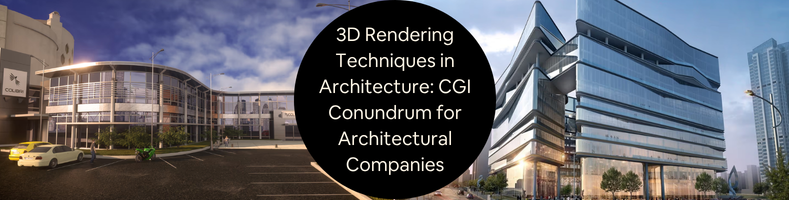
3D rendering, as a breakthrough technological application in today’s architecture industry, empowers the development of photorealistic and visually appealing renderings of buildings, landscapes, and interior spaces – but it’s not just about the renders. Architects leverage 3D rendering techniques to embark on an interesting journey of exploring different scenarios of architectural visualization services so that they’re able to come up with a design that satisfies the expectations of many stakeholders. It also helps detect potential flaws in design before the design phase even begins.
3D rendering in architecture improves the effective communication and sharing of ideas to all stakeholders, clients, and the general public, most simply and easily. Using top-of-the-line CGI images allows architects to convince customers to buy their products and choose their services. Employing CGI in architecture is an enticing process that requires abundant creativity and technical expertise.
🚀 Table of contents
How does CGI work in the architecture industry?
Here are the steps involved in using 3D rendering in architecture:
3D CGI modeling
The first step of CGI rendering is to design the 3D model of the intended building or space. The use of specialized software for architectural rendering helps produce visually stunning design concepts. 3D rendering is critical for interior and exterior designers who want to test different design elements and correct flaws before construction starts. Such an approach saves time and improves cost-effectiveness while offering cheaper cost estimates by eliminating the need for physical prototypes.
Texture and mapping
The second step is to decide on the right materials and textures to apply to the surface of the model. Good examples of textures for CGI presentations include wood greens, brick patterns, frosted glass, rough concrete, and polished concrete, just to name a few. This process is important to create real-time, lifelike visualizations that will entice prospective clients to buy.
Scene setup
Using strategically placed virtual cameras and proper lighting to create top-of-the-line CGI interior and exterior designs would be a big help. Lighting design services are critical to generating visually enticing CGI.
It can create shadows, highlights, and reflections to enhance the dimension and visual depth of the architecture. Virtual cameras will offer a clearer view of the entire design from every angle.
RELATED: Understanding architect fees and hiring options for your firm with Cad Crowd
Rendering
The rendering process starts after the successful setup of the scene with models, textures, lighting, and architectural animation. This rendering process involves the high-performance computations of the software that simulate the interaction between light rays, virtual objects, and materials to achieve the final visual result of the scene.
It is highly recommended that you work with the best 3D rendering studio with a team of excellent 3D rendering artists to identify the appropriate parameters and guarantee the best final design product. To speed up the CGI process in the architecture industry, projects are often divided into smaller projects and spread across numerous architectural design software programs before the final post-processing stage.
This last step includes making the necessary adjustments or changes if there are flaws and applying enhancements, color adjustments, and compositing. The final CGI imagery is presented to the client for prospective buyers to see. Depending on the client’s preference, the output can be in various forms, including images, video files, films, video games, or architectural visualization.
Popular CGI rendering applications in architecture
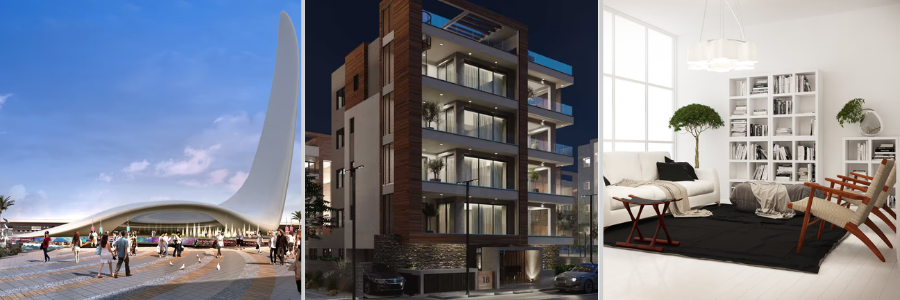
3D rendering design services are important in the modern era of architecture. It allows architects and designers alike to come up with visually stunning renderings before construction begins. The construction marked a significant growth in the 3D industry as it enhanced and streamlined the process of conveying intricate design concepts to stakeholders and clients.
The following are the most popular applications of 3D rendering techniques in architecture:
Historic restoration and preservation
Designers in the architecture industry use CGI to come up with lifelike 3D models of historical buildings and monuments required to direct efforts in restoration and preservation.
Interior design
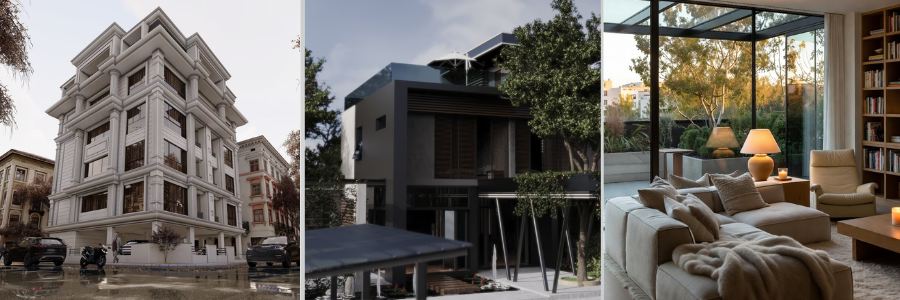
Qualified 3D rendering services are needed to create eye-catching interior spaces. These services can equip buildings with the best décor, lighting, and furniture. This benefits designers working on different commercial projects, such as hotels and resorts, by creating efficient and inviting environments for customers.
Landscape design
3D rendering is important to ensure the success of a landscape design. The use of CGI technology is exceptionally critical in the planning and development of urban spaces. It also empowers designers to come up with inviting outdoor areas.
Urban planning and development
Architectural design experts also use 3D rendering techniques to design buildings. CGI simulation is valuable for successful large-scale projects to develop a sustainable urban environment and appealing 3D homes.
RELATED: The power of 3D visualizations in improving construction safety and project efficiency
Benefits of CGI for architectural companies
Like other creative processes, the creator will always want to present their ideas and concepts in the best, most professional, and most appealing way possible. Unfortunately, architecture always comes with the challenge of explaining drawings to non-architectural construction teams or professionals.
The fastest way to address this problem is by using CGI to correctly convey the blueprint or sketch. The following are the top reasons why architectural companies should consider using CGI.
Visualize specific design ideas
Every time an architectural planning and design company presents a project, its designs may show the placement or how the space is arranged inside the house. However, these are illustrated using symbols that most people can’t understand.
Building concept models may also be great, but this may cost too much effort and time. Paradigms and drawings are also tricky to adjust or tweak to meet the client’s demands and make them look realistic.
Cost-effectiveness
Even though the CGI rendering process calls for an upfront investment in expertise and software, it is still more cost-effective down the line. It decreases the need for expensive prototyping and physical models and reduces the costs associated with numerous design revisions.
Efficient revisions of the design
Revisions are a critical aspect of the architectural process in terms of design. With the help of 3D rendering techniques, it becomes faster and easier to make the necessary revisions. Compared to traditional techniques, where even the slightest changes can consume too much time, CGI allows for faster modifications that help save resources and time.
Enhanced client communication
CGI rendering allows architectural design companies to convey complex concepts to their clients more efficiently. This transforms their ideas into visually appealing and understandable images that bridge the gap between clients’ perceptions and architects’ technical language. The clarity guarantees that all parties involved will be on the same page, making the design process more efficient than ever.
Contextual and environmental analysis
3D rendering can mimic various conditions and elements in the environment and place an architectural structure in its potential context in the future. Thanks to this feature, it becomes possible to analyze the interaction of the building with its surroundings, such as factors like neighboring structures, weather, and lighting.
Improved presentations and marketing efforts
CGI renders are extremely powerful marketing tools. Realistic, high-quality images are great for advertisements, presentations, and brochures, and they can attract more potential investors and buyers. The visual appeal of these renders can significantly improve architectural projects and their marketability as a whole.
Competition and innovation
CGI rendering can help foster innovation and help architectural companies stay competitive. Architects can stay on top of the game in the quickly changing industry if they use the most state-of-the-art technologies and constantly push the boundaries of architectural design and its possibilities.
BIM integration
CGI rendering experts can seamlessly integrate with BIM or building information modeling experts. Thanks to this integration, architects can create more detailed and accurate renders based on real data, improving the overall precision and quality of their visualizations.
Photorealistic visualizations
One of the biggest benefits of CGI rendering is that it allows architects to produce photorealistic images of the projects entrusted to them. The visualizations are so accurate and detailed that they usually look like actual photographs. This form of realism is important for stakeholders and clients to view the exact appearance of the finished space or building down to the tiniest detail.
Virtual representation of style and material
CGI rendering offers architects the much-needed flexibility to experiment with different finishes, styles, and materials. The material allows a more creative exploration of various design options, enabling architects to present their clients with different alternatives.
Augmented and virtual reality experiences
The progression of augmented and virtual reality technologies helped further expand the capabilities of 3D rendering. Thanks to these technologies, immersive 3D experiences can be produced that allow clients to walk through the project’s virtual model. This kind of interaction offers a deeper engagement and understanding of the design.
RELATED: Overcoming errors in architectural drafting with outsourcing design services
How Cad Crowd can help
If you’re looking for the best 3D rendering services, don’t hesitate to contact us. We can connect you with the right professionals for the job! Request a quote today.