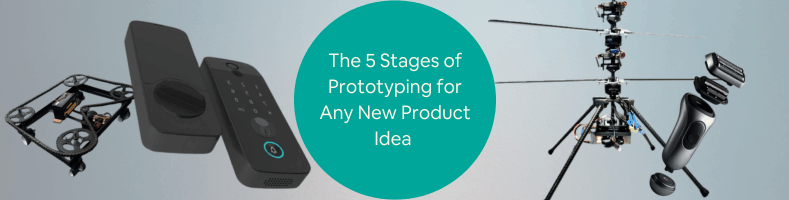
Today’s article covers the five stages of prototyping for new product ideas. Every successful product development needs a strong foundation with an organized process and flow. To visualize this, imagine the bottom of the pyramid, which symbolizes the foundation, and the concept of the product. The top of the pyramid symbolizes the result of the refinement in the entire project, which also includes the final product. Just like any foundation and goal, there are other layers that need to be taken into account to achieve success, and sometimes these layers or processes can make or break the product development.
Essential phases of prototyping
Ideation might not be an integral part of a prototyping process, largely because the ideation has been validated by the time you arrive at the first prototyping phase. Be that as it may, this is the point where everything begins. Some people say ideation must be treated as a separate stage in product development services, but others generally agree that, at the end of the day, a prototype is essentially a materialized idea. Key activities at this very first phase are as follows.
RELATED: Designing Prototypes: 3D Design Services for Inventors and Companies
- Problem identification: all products (or the vast majority of them) are intended to be the solutions to specific problems. For example, a nail exists so you can join pieces of wood together for construction purposes, while a hammer helps you drive the nail easily into the material. For a product to have a chance of commercial success, it has to address an unmet need or at least provide a unique alternative to an existing solution. Identifying a problem may involve extensive research.
- Market analysis: Your 3D design team must be able to conduct an analysis of the existing products and see whether they address any of the problems you’ve identified earlier. If such products don’t exist (yet), well then, you’re off to a great start. But if they do, it’s time to figure out how your idea can deliver a better solution and gain a competitive advantage.
- Idea generation: In any project, you should include various experts, such as designers and engineers, in any product category to achieve an effective brainstorming session as the foundation. If you want to focus on consumer electronics, your team should be composed of industrial designers, mechanical engineers, and electrical engineers.
- Feasibility assessment: The more product concepts your team can generate, the better your chances of conceptualizing a better product. Don’t forget that every approved concept must be assessed to analyze its manufacturing viability, estimated development timeline, resource requirements, cost calculation, etc. At the end of the feasibility assessment, you should be able to pick no more than two possible concepts if you have lots to choose from. This can help you minimize the development process and costs.
- Brand identity: This is the part where your prototype design team already reached the feasibility study phase. This is also the part where you want to involve the product branding. The product’s design and functions must be reflected in the name or brand. The logo used for the brand may affect some of the design decisions, too.
RELATED: What Are The Main Prototypes Used By Companies in Industrial Design Prototyping?
The main point of an ideation process is to determine “why a product should exist in the market” and “what values it can offer” to potential buyers. It’s your design team’s responsibility to make sure that the entire development process is actually based on a real market opportunity.
Digital models
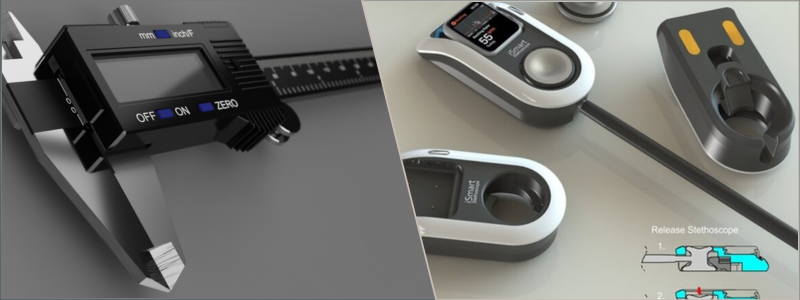
You’ll be hard-pressed to find any modern product design firms that build the first prototypes without any kind of CAD tools. Gone are the days when designers and engineers solely depended on hand-drawn diagrams and physical mockups to validate ideas. Design software has reached a point of photorealism where any design team can put the entire technical foundation of a product on a screen for advanced analysis and simulation. Don’t get this the wrong way. CAD modeling services exist not to make physical prototyping obsolete; it exists to make the process much more time-efficient. Think of virtual prototyping as a preview of how the product will look and function, and what materials to use. Major areas to explore with digital models are listed below.
RELATED: Complete Guide to Prototyping Methods Used in Product Development Services for Companies and Firms
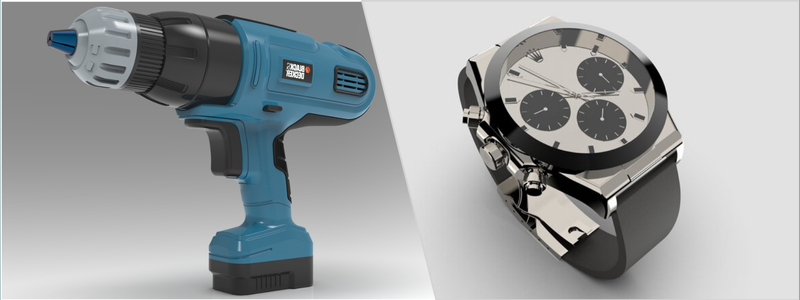
- 3D models: If you know that you hired good designers and engineers, you can be assured that they will have advanced CAD software to build 3D models of your product with great accuracy. A virtual prototype can be very precise, even when the proposed product design contains complex geometries, intricate mechanical parts, and a fancy finish with a textured surface. Depending on the product type and design, the virtual prototype is possibly done with solid modeling, wireframe modeling, polygonal modeling, digital sculpting, or any combination of those.
- Technical specifications: You should keep in mind that 3D models are not just visual representations. They are used to create a simulation of your product without producing a real product, to avoid waste materials and costly tests. What you can do is create a 3D model of a hammer made of a fiberglass handle, steel claw, and head. If you try to run this through a simulation (such as a stress test), both parts can mirror the behaviors of their real-world counterparts. Fiberglass can break under excessive stress, and steel can scratch.
- Aesthetic options: The obvious advantage of 3D modelers using CAD software to build a virtual prototype is the freedom in visual design. The team can experiment with any imaginable shape, color, and form factor without even leaving the desk. However, it’s important not to get easily carried away. The purpose of virtual prototyping is to translate the product concept into a feasible design. Although you have the freedom to try countless visuals, not every design is technically viable. Aesthetic design experiments should be intended as a way to make sure that the product can be manufactured in the most efficient way possible.
- Simulation: running a design analysis by simulation means you don’t have to build a physical model to test how the product works under many different scenarios. It allows engineering designers and designers to gauge product performance and recognize issues early on. For example, a 3D model of a hammer is put through a virtual analysis to understand how the materials distribute shock and vibration from the point of impact to the handle and eventually the user’s hand. Running multiple sessions of simulation can help engineers discover problems and make design adjustments before moving to the physical prototyping phase.
RELATED: 10 Tips on How To Find the Best Prototype Engineering Firm Services
A lot of the digital modeling phase is about experimenting with various design iterations. Everything is done in a virtual environment to save cost and time. Only when the 3D models and analysis results are found to meet the design requirements, the design engineering team proceeds to build physical prototypes.
Proof of concept (PoC)
It’s an early form of a physical prototype whose sole purpose is to demonstrate nothing but the fundamental feasibility of a product. PoC is never meant to be functional, let alone resemble a finished product. At this phase, your team’s goal is to validate whether your product concept and their process are feasible and manufacturable. Sometimes, a PoC prototype often involves creating a low-fidelity physical model to prove the feasibility of your idea. That’s why it’s important for you to get the best team that you can get. You can follow this workflow.
- Defining the objectives: first things first, the team has to specify what technology and mechanical concepts require validation. The PoC prototype has to be able to validate those concepts, albeit in a crude fashion.
- Minimalist model: You might be making a bad choice if you decided to allot a big budget to a prototype just to prove that your product idea is technically feasible. That’s why it’s important to hire prototype designers and engineers, so they can advise you not to invest in an unproven and untested product. Your team starts with a minimalist model, which means they are using affordable and readily available materials, such as styrofoam and wood. If the design is complex enough that it requires assembly of multiple parts, a consumer-grade 3D printer should do the job just fine.
- Small-scale test: Proof of concept (PoC) is implemented to mimic the final product used by designers, engineers, or other consultants for initial testing and assessment in terms of technical feasibility, electronics, and functionality.
RELATED: How to Make a Prototype for Your New Product Design
During this stage, public tests that will involve other random participants are prohibited to avoid launching it in public and IP concerns. The feedback from all the involved persons in the team is used to benchmark revisions and design refinement.
- Evaluation and final PoC: following the small-scale test, the product design team goes back to the drawing board and makes the necessary adjustments based on the feedback. There can be a final PoC prototype for further analysis, but this is not mandatory.
A PoC prototype is best described as a process to minimize development risk. All the initial concept validations, the scrapping of unnecessary features, and perhaps the additions of must-have functionality happen here at this phase. It’s an important step to answer all the fundamental questions about the product concept and remove all the doubts about its viability. At the end of this phase, the team should be able to come up with definitive design requirements, core product functionalities, an estimated development timeline, a projected development cost, and success criteria.
Mock (3D printed) prototype
All the refinements from the previous phases are mostly applied to the digital model, so that the next prototype (usually a 3D printed one) already shows some improvements over the original PoC. This is why a final PoC prototype is optional; instead of wasting resources on another PoC, the team can go directly for a mock model. Rapid prototyping services using a 3D printer is pretty affordable these days, allowing the team to evaluate the dimensions, ergonomics, and general form factor without having to invest in injection molding or any other expensive fabrication method. For electronic products, a mock prototype serves as an early sample of the enclosure size and shape. This phase mainly concerns the following points.
RELATED: Key Differences between Prototyping and Prototype Engineering for Companies & Firms
- Non-functional model: A model that is usually used by designers to check the shape, volume, form, and dimensions of your product. This is like a mock prototype that is used to update you with the progress of the product and project. If the product design is simple, your 3D printing team can use readily available items such as styrofoam, but if the design is complex or your team is 3D experts, a 3D printed model made of plastic materials can be used. Non-functional models are usually created in the first phase of the project to reduce the costs of producing prototypes when the functions or features are not yet final.
- Haptic exploration: although the team can’t accurately measure the weight and durability of the product due to the differences in materials, at least it’s possible to gauge the portability and usability. A mock model helps clarify how the object looks and how easy (or cumbersome) it is to use and store.
- Branding integration: A 3D printed prototype offers a sneak peek into where to put a logo or other branding elements you might want to use. It might seem trivial at first, but proper placement can improve the product’s visual appeal.
Mock prototypes are simplistic, but much more refined than the utterly crude PoC. In most cases, the design team deliberately avoids giving the prototype a detailed treatment to allow for quick iterations. A mock prototype created by a professional prototype manufacturing designer is the first real gateway to an early discovery of mistakes, identifying potential issues, finding new opportunities for design improvements, and basically learning unexpected lessons.
RELATED: Prototype Design Engineering: How Well Should Your Company’s Prototype Function?
There can be multiple rounds of mock prototyping. Each iteration is based on the feedback gathered from the previous model. The team goes back and forth between the CAD software and 3D printer to make big and small adjustments to the model until the iterative process delivers the desired result. Adjustments aren’t always about major design changes. They can be anything from a tiny reduction in material thickness for better ergonomics to cosmetic changes.
Additive manufacturing is the technology of choice, mostly thanks to its speed and affordability. If the additive manufacturing designer expects to make more than several iterations within a relatively short period of time, a 3D printer is the best tool for the job. CNC machining (which is a subtractive manufacturing technique) is the next best thing if you want to build a physical model using metal materials. But both are relatively low-cost fabrication methods, ideal for creating non-functional prototypes. At the end of the day, discovering design mistakes in this phase is certainly cheaper than fixing them later in the next stage of product development.
Functional prototype
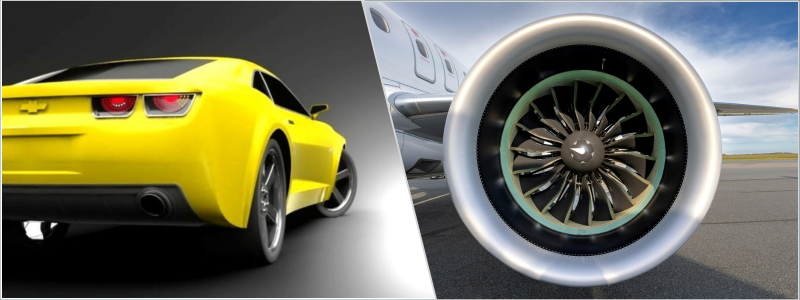
At this point, your team has already produced a prototype that can be tested in real-life conditions. This allows you to check for flaws, features to be improved, and additional features you might want to add. All of your chosen visual design and functionalities are presented here to mimic a real product. Also, your engineers use your real materials instead of the 3D printers, but depending on your decision, you can use other fabrication methods such as CNC programming services, laser cutting, and vacuum casting. These are the things you should check during this testing.
RELATED: Benefits of Outsourcing CNC Machining Services for Your Company’s Prototype Design
- Performance metrics: The team had probably done performance metrics in the concept/ideation process, but it’s necessary to reiterate the objectives when starting the functional prototype phase. Over the course of the product development thus far, there might be some changes, big and small, that affect the design requirements. Ideally, the performance metrics at this phase encompass everything that the final product is trying to achieve, in terms of both visual appeal and functionality. Each metric represents a specific point of the design that requires examination.
- Fabrication methods and material selection: as mentioned earlier, the design for additive manufacting team often uses several different fabrication methods depending on the required fidelity and complexity. A professional-grade 3D printer could be good enough to create small mechanical parts in acceptable quality, but vacuum casting can be an excellent alternative as well. In fact, vacuum casting is often more cost-effective than 3D printing for a small production run. Assuming you need to create anywhere between 50 and 100 prototypes for real-world user tests, vacuum casting is the recommended option. For metal parts, CNC machining or sheet metal fabrication are the obvious choices.
- Real-world tests: One of the main points of a functional prototype is to observe how the product performs in various real-world usage scenarios by potential buyers. The DFM design team will send the prototypes to multiple users, let them use the prototypes according to their intended usage, and gather feedback from those users.
RELATED: DFM For New Product Design Excellence: Complete Guide for Company Success
A functional prototype should be built to the same quality standard as the desired final product’s specifications in every single aspect. That said, the team cannot just assume that the prototype at this point is perfect in every way. No product development process is completed without user testing, which almost definitely leads to the discovery of shortcomings. This is only the nature of users’ feedback; a perfect product doesn’t exist. Some of that feedback, whether constructive criticisms or otherwise, is valuable insight into the market. It tells the 3D CAD drafting designers what features most buyers like and dislike.
Bear in mind that not every feedback can be implemented in a practical fashion without a major design overhaul. For example, some buyers might find the carbon fiber handle to be an unnecessary feature of a claw hammer. It adds too much of a premium when the more affordable materials like wood or fiberglass will do. At the same time, the material of choice is important because you want to differentiate the product from an ocean of alternatives in the market. It is the design team’s responsibility to respond to (or act on) the feedback. If the overwhelming majority of the feedback expresses the same concern, a design modification can be necessary. But because this can also lead to a major overhaul, which increases the development cost even more, there should be a middle-ground solution as the team sees fit.
Final prototype
Based on the results of real-world user testing and adjustments made according to the feedback, the product development team once again refines the functional prototype into an almost production-ready model. Most companies will not make a final prototype until they make sure that there will be no more major changes to the design. They’ve invested so much time and money into the development effort that another modification can cause months, if not years, of setback. Also, a lot of hardware startups use final prototypes for pre-sales, attracting interest from distributors and retailers, or pitching investors. They just can’t afford to make another revision, not without risking a blowback. You can say that the final prototype is the culmination of iterative refinements throughout the previous phases. A final prototype focuses on the following points.
RELATED: Why Prototype DFM Services Are Useful for Product Design at Companies and Firms
- Production-grade materials: Your team uses the same materials they proposed to create your product. This is not a replica, this is the first tangible product, and you should identify if the product is already good enough for it to proceed to manufacturing. At this point, you should check for features to be improved, and at the same time you should also check that the quality, aesthetics and performance are the same as proposed.
- Manufacturing validation: the final prototype is the model used as a production sample. This is the prototype that the design for manufacturing and assembly team sends to the manufacturing partner. A production sample is then analyzed (or perhaps digitally deconstructed) for custom tooling preparation if needs be. In an ideal product development world, the final design shouldn’t need any custom tooling at all to save manufacturing costs. But then again, custom tooling is inevitable when the product in question requires the fabrication of unique parts and components.
The idea behind a final prototype is to prepare for the transition from development environment to mass production. Creating a final prototype isn’t just about fabricating a physical model, as it also involves proper documentation and quality control, allowing for a smooth handover to the production team.
RELATED: 8 Tips Companies Use to Simplify Design Manufacturing or Design for Manufacturing
Note for electronic products: all the prototyping phases mentioned above apply to just about any physical product development, except for electronic design services. If the product requires PCB and embedded firmware of any kind, the prototyping phase focuses first on the circuit design, along with the features and user interface (especially if the product comes with a screen/display), before it moves forward to the physical enclosure design. That being said, the general principle remains the same that prototyping is an iterative process from ideation all the way to a production sample.
How Cad Crowd can help
In every product development, planning and implementation are the crucial steps that can affect the very outcome of your product. From choosing your team, to rough sketches, iteration, creating functional prototypes, until the final production, is beneficial to the success of the product. This is the cycle of any project, and each cycle allows any team to learn from the previous mistake and improve the model, leading to a successful project and product. If you want a team to turn your imaginative concept into a tangible one, don’t hesitate to contact Cad Crowd for a free quote!