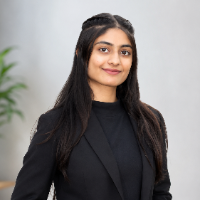
Chandni P.
Mechanical engineer and product designer with 3+ years in Fusion 360 and SolidWorks, delivering manu
 Ahmedabad,
India
Ahmedabad,
India
Global rank:
271,083
/
149,725
Skill pts: 0
About
I am a mechanical engineer and product design specialist with over three years of experience turning ideas, sketches and reference photos into CAD models that can actually be manufactured, not just rendered.
WHAT I DO
- Product design and 3D CAD modelling in Fusion 360, SolidWorks and AutoCAD
- Design for Manufacturing (DFM) reviews before tooling: draft angles, wall thickness, undercuts and features that drive up production cost
- Injection-moulded parts, machined parts and sheet metal design
- Print-ready STL and 3MF files for FDM and SLA, checked watertight and manifold after export, with tested 0.3–0.5 mm fits so parts assemble first time
- Reverse engineering from sketches, photos, PDFs and legacy drawings into clean, editable parametric models
- Dimensioned technical drawings with tolerances and GD&T callouts, assembly drawings and bills of materials
- CNC programming, nesting and MPR file generation
- Photorealistic renders in Blender for pitch decks, listings and investors
HOW I WORK
Every model is built as a parametric master with a clean feature tree, so a new size or variant is a parameter change, not a full remodel. Before I start, I tell you honestly if a feature will be hard or expensive to manufacture, so problems are caught on screen rather than at the quote stage.
RECENT PROJECTS
- CAD optimisation and structural verification of a packaging insert with complex internal cavities, including finite element validation (SolidWorks)
- Redesign of a gas-driven piston accumulator for manufacturability (SolidWorks)
- Consumer product delivered in two production-optimised variants with full 3D data and 2D drawings
- CNC nesting and custom MPR file generation for production machining
- 3D printable lamp shade and base, validated for FDM production
WHAT YOU RECEIVE
Native source files, STEP, STL/3MF, DXF and PDF drawings, plus a BOM where needed.
On ▒▒▒▒▒▒, I hold a 100% Job Success Score and a 5.0 average rating across all completed projects.
... more »
« less
WHAT I DO
- Product design and 3D CAD modelling in Fusion 360, SolidWorks and AutoCAD
- Design for Manufacturing (DFM) reviews before tooling: draft angles, wall thickness, undercuts and features that drive up production cost
- Injection-moulded parts, machined parts and sheet metal design
- Print-ready STL and 3MF files for FDM and SLA, checked watertight and manifold after export, with tested 0.3–0.5 mm fits so parts assemble first time
- Reverse engineering from sketches, photos, PDFs and legacy drawings into clean, editable parametric models
- Dimensioned technical drawings with tolerances and GD&T callouts, assembly drawings and bills of materials
- CNC programming, nesting and MPR file generation
- Photorealistic renders in Blender for pitch decks, listings and investors
HOW I WORK
Every model is built as a parametric master with a clean feature tree, so a new size or variant is a parameter change, not a full remodel. Before I start, I tell you honestly if a feature will be hard or expensive to manufacture, so problems are caught on screen rather than at the quote stage.
RECENT PROJECTS
- CAD optimisation and structural verification of a packaging insert with complex internal cavities, including finite element validation (SolidWorks)
- Redesign of a gas-driven piston accumulator for manufacturability (SolidWorks)
- Consumer product delivered in two production-optimised variants with full 3D data and 2D drawings
- CNC nesting and custom MPR file generation for production machining
- 3D printable lamp shade and base, validated for FDM production
WHAT YOU RECEIVE
Native source files, STEP, STL/3MF, DXF and PDF drawings, plus a BOM where needed.
On ▒▒▒▒▒▒, I hold a 100% Job Success Score and a 5.0 average rating across all completed projects.
Experience
-
Freelance Product Design Engineer, CAD & 3D Printing
Self-employed · Freelance
Aug 2025 –
Present
1 yrs 2 mos
Surat, Gujarat, India
End-to-end product design and CAD services for startups, inventors and product companies internationally, from concept to production-ready documentation.
- Manufacturing-ready 3D models, prototypes and drawings in Fusion 360, SolidWorks and AutoCAD
- DFM reviews before tooling, flagging undercuts, unfillable walls and cost-driving features
- Parametric master models so variants are delivered by parameter change
- Print-ready STL/3MF files verified after export, with validated 0.3–0.5 mm slip fits
- Projects include a packaging insert with FEA validation, a piston accumulator redesign, CNC nesting with MPR files, and a two-variant consumer product -
Product Design Engineer, CAD & 3D Printing
Studio Unfold · Full-time
Apr 2023 –
Aug 2025
2 yrs 4 mos
Surat, Gujarat, India
- Designed consumer products, functional prototypes and manufacturing-ready CAD models in Fusion 360, AutoCAD and Blender
- Led concepts through 3D modelling, technical drawings and STL/STEP delivery
- Optimised geometry for FDM 3D printing and prepared fabrication-ready files
- Reverse engineered parts from sketches, PDFs and images into editable parametric models
- Produced assembly drawings, DXF exports and BOMs for production teams
- Worked across lighting, furniture, footwear concepts and branded accessories
Education
- GTU Bachelor of Engineering (BEng), Mechanical engineering 2019 – 2023
Other experience
-
Reverse Engineering | Sketch, Photo & PDF to Parametric CAD
I rebuild existing parts and legacy documentation into clean parametric CAD models, working from whatever reference the client actually has rather than requiring an ideal input.
Typical starting points are photographs of a physical part with a scale reference, calliper measurements written on a sketch, old PDF or scanned drawings with no source file, a competitor product the client wants adapted or improved, or a mesh from a 3D scan that needs converting into editable solid geometry.
The important distinction is parametric versus dumb solid. A traced mesh or an imported STEP file gives you geometry you cannot meaningfully edit - change a diameter and the model breaks. I rebuild with a proper feature tree and driven dimensions, so a hole size, wall thickness or overall scale is a parameter edit rather than a remodel. That matters because reverse engineering is rarely the end of the project; the client almost always wants a variant next.
I am direct about accuracy. Photographs without a scale reference produce proportional guesses, not dimensions. Two or three angles plus a handful of calliper measurements on the critical features produces something a manufacturer can work from. I tell clients which category their references fall into before starting, and what measurements would move it into the second.
Deliverables include the parametric source file, neutral STEP and STL exports, and dimensioned drawings where the part is heading into manufacture or quoting. -
Design for Manufacturing (DFM) & Tolerance Engineering
A model that looks correct on screen and a model that can actually be manufactured are different things, and the gap between them is where most product projects lose time and money.
I design around the intended production process from the first sketch rather than retrofitting it later. For injection moulding that means uniform wall thickness, draft angles on every vertical face, ribs proportioned to avoid sink marks, and parting lines placed where they will not show on a finished part. For machining it means tool access, internal radii that match standard cutter sizes, and dimensions referenced from usable datums. For 3D printing it means wall thickness set to exact nozzle multiples, overhangs kept within printable angles, and orientation chosen so layer lines run across the load rather than along it.
Tolerancing is the other half. Fits copied from machining practice seize solid when printed, and fits that work in PLA will not behave the same in resin or nylon. I specify 0.3–0.5 mm slip fits for printed assemblies and test them physically before handover, so parts go together the first time rather than needing a file and a hammer.
Where a client is heading to tooling, I flag anything that will drive cost unnecessarily before the quote stage - an undercut that needs a side action, a wall that will not fill, a feature that could be moulded in rather than assembled. Catching that during design costs an hour. Catching it after tooling costs a great deal more. -
3D Product Designer & CAD Engineer | Print-Ready STL for 3D Printing
Parametric 3D modelling and product design for 3D-printed consumer products - lighting, footwear concepts, wall-mounted furniture, and branded accessories.
What I deliver:
- Print-ready STL and 3MF, watertight and manifold, verified after export - not just in the viewport
- STEP files, dimensioned 2D drawings (PDF/DXF), BOM and web GLB when the client needs a full package
- Design for manufacturing: wall thickness set to exact multiples of the nozzle, support-free geometry, and toleranced fits (0.3–0.5 mm slip fits) that assemble first time
- Printability reports listing every feature in real units and as printed, so clients know what will and will not survive the printer
Every model is built as a parametric master, so a new size, scale, or pattern variant is a parameter change rather than a remodel. Files are tested against FDM (Bambu Lab) and SLA workflows before handover. - Product Design & CAD Modeling Specialized in transforming concepts, sketches, and reference images into functional 3D CAD models using Fusion 360, AutoCAD, and Blender. I create manufacturing-ready models, technical drawings, assemblies, and production files suitable for prototyping and mass manufacturing. My workflow focuses on accuracy, functionality, and Design for Manufacturing (DFM).
- 3D Printing & Rapid Prototyping Experienced in designing and preparing high-quality 3D printable models for FDM and resin 3D printers. I optimise designs for printability, strength, material usage, and assembly while ensuring accurate dimensions and reliable manufacturing. I have hands-on experience with Bambu Lab printers and can deliver production-ready STL files, support optimisation, and prototype validation.
Licenses & Certifications
- Autodesk Fusion 360: Product Design & Manufacturing-Ready Modelling Jun 2026 – Present
- 3D Printing & Additive Manufacturing May 2026 – Present
- Blender Fundamentals Mar 2025 – Present
Verified info
- Email address
Stats
0 followers, 0 following
Joined: October 6, 2026
Last seen: October 6, 2026
Area of Expertise
3D Printing Design
Industrial Design Services
Concept Design
Lighting Design
Injection Molding and Casting
Reverse Engineering
CNC Programming
SolidWorks Design Services
Sheet Metal Design
AutoCAD Design Services
3D Models of Machine Parts
Assembly Drawing Services
Prototype Design Engineering
PDF to CAD Conversion
Mechanical CAD Design
3D Product Modeling
2D to 3D Modeling
Photorealistic Rendering
Design for Manufacturability (DFM Services)
Design for Additive Manufacturing
Languages
English Full professional proficiency
Hindi Native or bilingual proficiency
Gujarati Native or bilingual proficiency
Location
Ahmedabad, India