
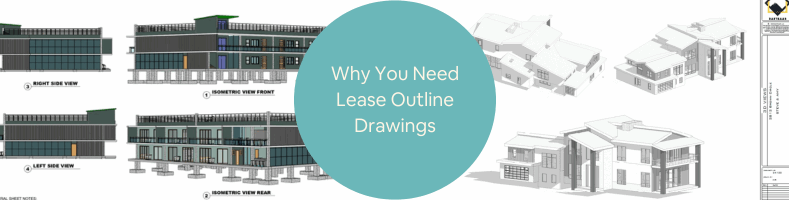
A lease contract of a property, either residential or commercial, is a rather complex agreement that requires a pile of technical documents in which the intertwining interests of all parties involved, typically lessees (tenants) and lessors (landlords), along with property managers if necessary, must be clearly defined. Among such documents is a lease outline drawing, a practical record that marks the extent of the property under lease.
Drafting a proper lease contract is no small matter. It might include an exhaustive list of elaborate clauses to determine the terms of the agreement and prevent any violation of those terms. When a contract is so comprehensive to the point where it actually becomes excessive, there’s always a chance that somebody overlooks something important, such as the square footage of the leased area in question, and this is where lease outline drawing comes in.
Considering the fact that the drawing carries an important weight in the contract, the only way you’d want it done is with much care and professionalism to ensure accuracy. It’s a good thing that you can rely on architectural design firms, draftspersons, and CAD experts in Cad Crowd or other reputable freelancing platforms to lend their expertise on the matter.
🚀 Table of contents
What is a lease outline drawing?
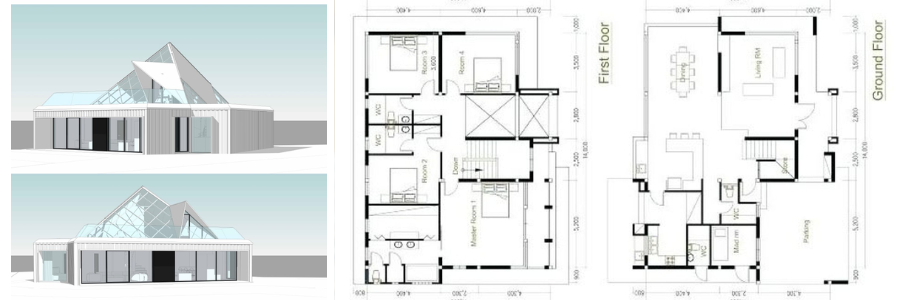
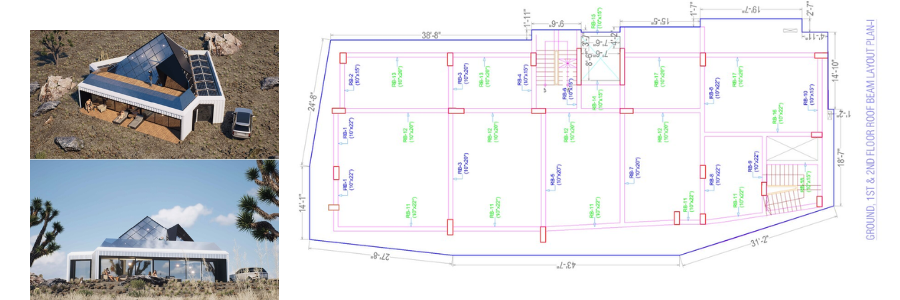
The term is pretty self-explanatory, really. A lease outline drawing is a visual representation, or a diagram if you like, of a property (or the specific part of a property) under lease. While the drawing is pretty technical, it doesn’t have to be as elaborate as a blueprint or a floor plan. The whole point of the drawing is to highlight the leased area, including its dimensions, boundaries, shared spaces, and layout. In the lease agreement, the drawing is used as a reference for both the tenant and the landlord to ensure transparency and reduce ambiguity.
You probably don’t need such a drawing if the lease agreement is simple enough and includes an entire small residential house located in a specific parcel of land, but the document is almost certainly mandatory in large-scale or commercial leasing scenarios where an accurate definition of the area is important for operational and legal purposes.
RELATED: A comprehensive overview of steel detailing services and their importance for construction companies
What makes an effective lease outline drawing?
Neither a plain nor an overly complicated drawing will do for an architectural planning and design company. An effective lease outline drawing has to be straightforward enough that even the most ignorant tenant and landlord can understand it, but at the same time, it still has to contain at least the following features:
| Element | Note |
| Dimensions | Accurate measurements of the leased area. The legal documentation (lease contract) must specify the correct dimensions, allowing for proper space planning. |
| Boundaries | Accurate measurements of the leased area. The legal documentation (lease contract) must specify the correct dimensions, allowing for proper space planning. |
| Straightforward layout | Major structural features such as doors, windows, and walls are outlined. Major fixtures, like built-in appliances, need to be highlighted as well. |
| Shared spaces | If there are multiple tenants in the same property or only certain sections of a property are leased, there might be shared spaces such as parking lots, hallways, lobbies, etc. These shared spaces must be clearly identified and labeled in the drawing. |
Like a map or a diagram of a building, the drawing must include directional markers, such as “North” or any other form of orientation cues for contextual understanding. It doesn’t have to be elaborate, either; a directional marker can be a simple compass icon that corresponds to the drawing for design and drafting firms.
Lease outline drawing workflow
Every draftsperson, architect, surveyor, property manager, and leasing agent has their own methods to produce the drawing. They may even use different sets of tools and software packages to get the job done. Be that as it may, most of them follow more or less the same workflow, as summarized below.
- Property information review: The first step is to gather all the relevant information about the property in question. Information may include floor plans or architectural blueprints. In some cases, the landlord has done some major renovations to the property, so it’s important to use the latest available records. Keep in mind that there might be a lot of other documents required for the leasing transaction in general, but for drawing purposes, the relevant document mainly concerns the physical property itself.
- On-site inspection: Being able to physically visit the property helps with measurement verifications. A thorough inspection allows you to identify irregularities or discrepancies between the actual physical layout and the architectural records. To avoid inaccuracies, use advanced tools like laser distance meters or 3D scanning devices.
- Drafting: assuming you find no notable differences between the architectural blueprint and the physical property, the drafting process can be as simple as copying the layout. Otherwise, you add the missing objects from the blueprint as needed. Include major structural elements like doorways, windows, and walls. Mark the boundaries of the leased areas and highlight the leased spaces. You may consider architectural drafting services that specialize in this department.
- Annotations: At this point in the process, the drawing part is done, and all that’s left to do is the labeling. Annotations provide context, making it easier for the landlord and the tenant to interpret the document. Every room subject to the lease agreement should be named or clearly designated in some other way. The dimensions for each section of the leased area and the orientation cue of the entire drawing must be present as well.
- Validation: before the lease outline drawing can be incorporated into the lease agreement, it is reviewed by all parties involved in the leasing process for approval.
Following the validation and approval, the lease outline drawing is included as part of the contract or attached as a stand-alone document for reference.
RELATED: How design drawings help avoid interior design mistakes for 3D design companies
What’s it for?
A lease outline drawing is an integral part of the lease terms and agreement, but what exactly is it for? If you could define and explain the dimensions, layout, and boundaries of the leased area in writing, would you still need the drawing? Is it really that important? And can you draft a lease contract without it? Or is it only a matter of preference because using a lease outline drawing suggests that you’re a real professional?
It’s not impossible to draft a lease contract without a lease outline drawing, so long as the leased property is described clearly in writing. There has to be zero ambiguity because it may lead to a breach of contract at a later date. The idea behind a lease outline drawing is to minimize such ambiguity concerning the exact area or space subject to the lease agreement. It functions as a visual representation of the leased property to help eliminate possible misunderstandings among the tenant, the architectural design expert, the landlord, the property manager, and any party involved in the contract. The drawing fosters transparency, which in turn reduces the potential for misinterpretations.
Conflicts and disputes over the extent of a leased area are not uncommon. At the same time, most (if not all) lease agreements are legally binding. As soon as a lease outline drawing is incorporated into a contract, it becomes an official record that gives a neutral point of reference. Should a dispute arise during the term of the lease, the drawing can be used as evidence in court or as a visual guide to help settle issues without having to undertake any legal proceedings.
In addition, a lease outline drawing makes it easier for the tenants to do their space planning, which is important if the property is leased for commercial purposes. The visualization provides a clear view of the layout, most likely from a bird’s eye perspective, allowing them to be more precise and careful in positioning business equipment or designing the interior of the establishment in general. And when the current term of the agreement ends, the drawing can be helpful in a renegotiation process. For example, the tenant might want to expand the space or make non-permanent modifications to the layout done by the architectural drawing service; for the landlord, the existing layout (as visualized in the current drawing) can be used as the baseline for price adjustment or changes in the accommodation.
In a large-scale leasing process involving multiple tenants in the same building, the property manager might use a lease outline drawing as a visual guide to make improvements such as adding more utilities in the shared space, providing efficient maintenance services, and reducing operational costs. In the event of damage to the property, the insurance adjusters will need the lease outline drawing to determine eligibility for claims.
If you’re the property owner (the lessor or landlord), having the lease outline drawing produced in advance means you can market the available space in a more effective fashion. Tenants will appreciate the clarity and transparency even before they visit the property. A clear visualization of the layout and dimensions of the space should help them make an informed decision. This also speeds up the negotiation process.
RELATED: 5 reasons freelancing studios are the future of 3D visualization services
Conclusion
A lease outline drawing isn’t just a diagram attached to the lease agreement for the sake of attachment. It’s a useful tool to facilitate effective communication and foster transparency between the lessor and the lessee. Beyond its importance in the agreement itself, the drawing is also used for space planning, especially in a commercial leasing scenario, and all sorts of property management tasks. Considering how the drawing can play a crucial role in a leasing contract negotiation, renegotiation, and conflict resolution, it only makes sense if you have it produced by a truly qualified professional.
How Cad Crowd can help?
Despite its simplicity and straightforward visualization, lease outline drawing is still pretty technical; it has to correctly indicate the boundaries, the layout, the dimensions, major structural features, the positions of built-in fixtures, and room designations. Thankfully, at Cad Crowd, finding the right person doesn’t have to be a chore, as it can help you connect with hundreds of experienced architectural drawing professionals with just a few clicks of a button. Request a quote today.



