
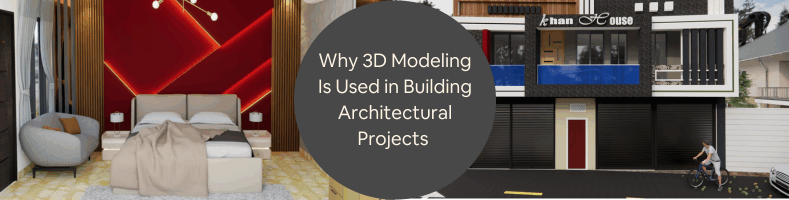
In architecture, the transition from traditional blueprints to computerized visualization has revolutionized project conception, presentation, and construction. But why is 3D modeling such a priority in construction work? It’s because it enables greater precision, greater collaboration, more efficient processes, and the development of concepts with precision never seen before.
In the middle of the revolution lies 3D modeling design services, an advanced tool that has become standard in freelance designers’ and architecture firms’ processes. Cad Crowd is the leading agency that can connect you with over 94,000 experts who specialize in 3D modeling for building architectural projects.
🚀 Table of contents
- Revolutionizing construction design with 3D modeling
- From blueprint to digital modeling
- The technology behind 3D modeling
- Changing architecture and engineering
- Enhanced visualization: Bringing concepts to real-life experience
- Accuracy: Avoiding mistakes early on
- Smooth workflow and revisions
- Improved interdisciplinary collaboration
- Cost effectiveness: Minimizing waste and optimizing resources
- Realistic rendering for marketing and client engagement
- Facilitating virtual reality (VR) and augmented reality (AR) experiences
- Supporting sustainable design practices
- Flexibility across project types and scales
- Enhancing construction planning and management
- Future-proofing architectural practices
- Cad Crowd is here to help
Revolutionizing construction design with 3D modeling
3D modeling revolutionized construction for architects and engineers by providing them with an interactive, dynamic, and accurate means of constructing buildings. As opposed to the previous systems, in which drawings were essentially flat two-dimensional sketches, 3D modeling provided them with a virtual platform on which buildings were conceptualized, changed, and perfected long before a spade was ever hammered into the ground.
From blueprint to digital modeling
The transition from paper sketches to computer 3D models represents a revolution in building construction. It allows designers to break beyond the drawing board, producing detailed, sophisticated representations of buildings to be constructed. This not only helps define designs but ensures stakeholders better understand the end result, making coordination simpler and eliminating expensive misunderstandings.
RELATED: How 3D visualization is transforming property sales for developers & real estate services companies
The technology behind 3D modeling
It depends on advanced software programs like AutoCAD, SketchUp, and Revit to design modern buildings. With these programs, it is easy to create high-level computer models, which are accessible for viewing from any direction. It is easy to modify dimensions, materials, and layouts, providing precision and flexibility at various stages of the project.
Changing architecture and engineering
Computer software capable of 3D modeling has changed the face of engineering firms and architecture. Through more precise designs, they save on rework and mistakes at the construction phase. Experimentation with a lot of options for design sets the stage for creativity and innovation, and computer simulations enable one to detect structural flaws early on.
Additionally, 3D modeling facilitates easier communication between the contractor, client, and project team, who are all kept in sync. In addition to design assistance, 3D modeling also allows for project scheduling and resource planning, all aimed at cost-saving and efficient construction operations.
In construction today, 3D modeling is no longer an application – it is a platform for advanced design and project delivery.
Enhanced visualization: Bringing concepts to real-life experience
One of the strongest arguments for the application of 3D modeling in architecture is the visualization potential. Unlike 2D drawings, which tend to take a trained eye to truly comprehend, 3D models create a real-world, interactive version of the completed building. This allows clients to “walk through” their new spaces and appreciate spatial relationships, lighting, and aesthetic value in a manner not possible with flat drawings.
For independent designers, this level of accuracy is groundbreaking. It facilitates the easy communication of design intent to clients, lessening misinterpretation opportunities and ensuring conceptualized projects are brought to life in client visions. Corporations use 3D models as a step to demonstrate projects while making pitches, putting them at an advantage when winning contracts. Precision and
Accuracy: Avoiding mistakes early on
Accuracy is to be anticipated in architecture. Small missteps in planning can be giant problems after building has begun, with stoppages and increased cost. 3D modeling addresses the problem directly by enabling designers to produce highly accurate computer models of buildings. These can be carefully inspected and tested for stability, code compliance, and structural flaws before a brick is set.
Freelancers benefit immensely from this accuracy as it enhances their credibility and reliability in architectural design services. Organizations utilize these precise models to coordinate with diverse stakeholders, from structural engineers to interior designers, to ensure that all the elements fit comfortably within the broader architectural context.
Smooth workflow and revisions
The process of designing architecture is, by its nature, repetitive. The client desires to change, something new in legislation comes into force, or design development can happen in the course of development. All these in traditional drawing would be time-consuming and are very susceptible to error. With 3D modeling, not only are changes easier but quicker.
Designers can simply modify dimensions, material, or layouts in the model with corresponding automatic updates to all views. This responsiveness is especially useful for freelancers handling numerous projects at a time because it saves them time and reduces errors. It makes project management a breeze for companies, thus meeting deadlines without compromising on quality.
Improved interdisciplinary collaboration
Architecture is never a single-handed endeavor. It is a multi-disciplinary practice where there is collaborative working between architects, builders, owners, and engineers. 3D modeling facilitates interdisciplinary coordination by offering an umbrella reference point for everyone.
Freelance designers are distributed workers, and hence coordination has to be seamless. 3D models, via cloud-based systems, enable real-time feedback and revisions regardless of location. Architectural practices benefit through enhanced coordination between internal personnel and external architectural design experts, leading to more consolidated project deliverables.
RELATED: How 3D rendering helps collaboration between clients and design services companies
Cost effectiveness: Minimizing waste and optimizing resources
While money and time have to be spent initially to develop intricate 3D models, in the long run, it saves tremendous costs. Accurate models enable one to detect possible design flaws at an early stage, preventing costly construction mistakes. It also helps one to quantify materials with greater accuracy, avoiding waste and optimizing the utilization of resources.
Freelancers, who work on tight budgets most of the time, can find a means of taking advantage of these efficiencies and providing high-quality outputs without such costs. Companies that have big projects on their hands see less rework and improved cost control, leading to overall profitability for the project.
Realistic rendering for marketing and client engagement
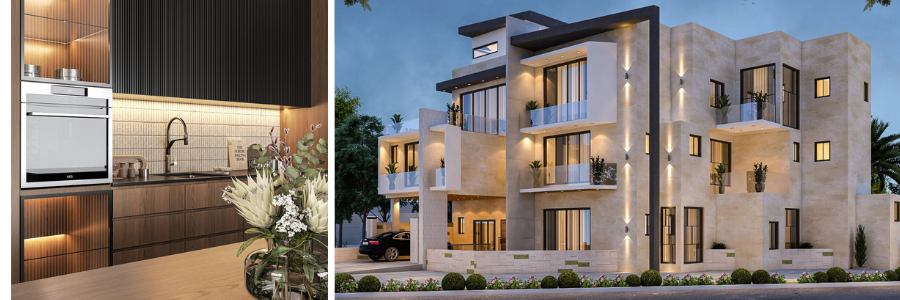
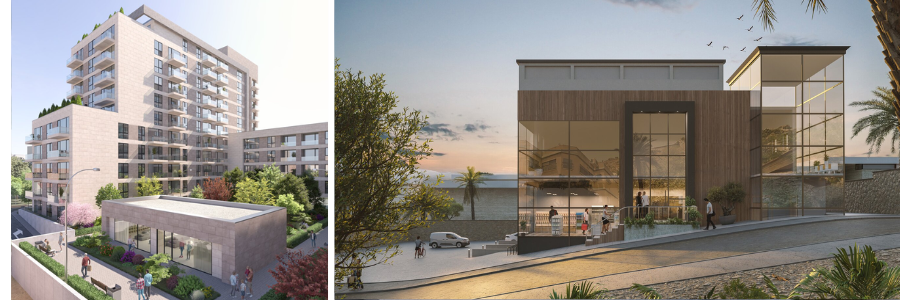
Besides design functionality, architectural 3D modeling services can also serve as an effective marketing tool. Images that are photorealistic from 3D models look excellent, evoking the attention of prospective customers and investors. They are worth gold in proposals, presentations, and marketing material since they help designers and companies display their work in the most positive light.
These are captured through highly advanced camera technology. Independent architects can create beautiful portfolios with beautiful 3D renderings, acquire more clients, and gain recognition in a saturated market. Architectural practices utilize these images to secure tender contracts, obtain funding, and set up their practice.
Facilitating virtual reality (VR) and augmented reality (AR) experiences
As technology continues to improve, new applications for 3D modeling are emerging. Integration of models into AR and VR technology revolutionizes client presentations. Clients can actually walk through the virtual space and view designs in an interactive, immersive form, which is impossible with static photographs.
Freelancers who offer 3D architectural VR and AR services stand out from the rest by generating value that justifies payment premiums. Organizations using these technologies in their process demonstrate innovation and vision, appealing to tech-savvy customers and investors.
Supporting sustainable design practices
Sustainability is becoming a major concern in architecture, and 3D modeling provides access to green design. Models can analyze energy consumption, natural light transmission, and environmental impact, allowing designers to maximize buildings for sustainability.
Freelance green designers can use these tools in an attempt to create green projects and win clients who are interested in sustainability. Businesses can more effectively meet regulatory requirements and obtain certifications like LEED, which enhances their credibility in the market.
Flexibility across project types and scales
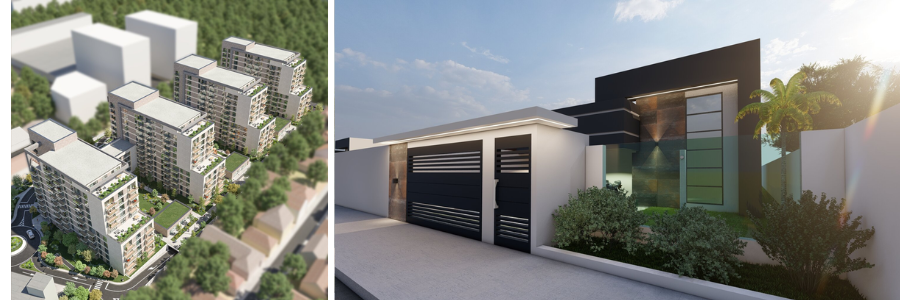
3D modeling is not only for high-budget commercial structures. It’s equally effective for any residential home or city planning. A 3D modeling freelancer whose task involves an individually customized interior redesign or a corporation whose job involves a multi-storied skyscraper, 3D modeling is a specific requirement of the project.
This adaptability allows freelancers to expand their services, which are varied according to the needs of the clients. Organizations can standardize the design process and thus achieve consistency and quality for diversified sets of projects.
Enhancing construction planning and management
The benefits of 3D modeling do not stop at the design phase but extend to construction planning and project management. Models may be integrated into Building Information Modeling (BIM) systems, providing accurate information regarding materials, timelines, and cost. The connection enables better scheduling, optimal use of resources, and avoidance of risks early in the process.
Design-build freelancers can offer complete services, from idea generation to construction management. Businesses can minimize project delays, complete projects sooner, and improve construction quality overall.
RELATED: A guide to 3D environment design & concepts with freelance 3D modeling companies
Future-proofing architectural practices
The world of architecture continues to evolve as technology increases, and the demands of customers continue to change. Utilizing 3D modeling keeps the company and designer ahead. With each new advancement in technology, new software is also being developed, and people who can master 3D rendering services will be best positioned to adapt and flourish.
Freelancers are able to future-proof their own careers by learning the most up-to-date tools and techniques and staying competitive. Companies that invest in 3D modeling capabilities are able to become industry leaders, draw top talent, and grow their range of services.
3D modeling is not just a design tool but a revolutionary technology that has rewritten the architectural scene. From precision and visualization to collaboration and environmental friendliness, its advantages are extensive and multifaceted. Independent designers are independent, efficient, and competent, and architectural companies experience enhanced project success, economic returns, and strategic expansion.
Cad Crowd is here to help
As all things go forward in architecture, this is the one thing certain: 3D modeling is no phase – it’s what lies beneath current architectural practice. It is not an option to work with this technology; it’s a necessity for anyone who wants to be ahead of the curve in the overcrowded field of architecture and construction. Reach out to Cad Crowd to get the best-fit 3D modeling services that can bring your architectural designs to life. Get a quote now.



