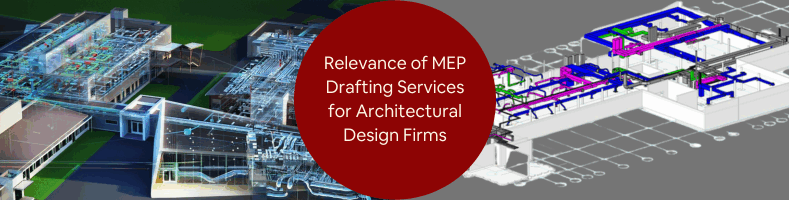
There’s a moment in every architectural or construction project when things shift from dazzling 3D concepts to a very real, on-the-ground challenge: how do you fit a building’s inner organs—its mechanical guts, electrical lifelines, and plumbing arteries—into an elegant structure without making a mess?
That’s where MEP drafting services swoop in like the unsung heroes of the design world. These services—Mechanical, Electrical, and Plumbing drafting—are often behind the scenes, but they carry the weight of ensuring that buildings function beyond their beautiful façades.
While the glamour often goes to architectural renderings and dramatic skyline shots, MEP drafting is where a project’s long-term success truly brews. No glitzy façade can hide an HVAC system that clogs up the lobby or electrical panels that make maintenance crews want to scream. Architectural design firms and construction companies have figured this out. And they’re leaning heavily into precision MEP drafting to make sure the behind-the-walls drama doesn’t outshine the blueprint vision.
🚀 Table of contents
- Why architects should care deeply about MEP drafting
- Construction companies and the million-dollar savings of a good draft
- It’s all about the coordination game
- Outsourcing: Secret weapon or necessary evolution?
- MEP Drafting and BIM: The Dream Team That’s Changing the Game
- MEP Drafting for Sustainability Goals
- Real talk: What happens without MEP drafting?
- The magic of shop drawings: Where design meets reality
- A new era of smart buildings needs smarter drafting
- Architects and engineers—Finally playing on the same team?
- Wrapping up (But not taping the duct just yet)
- How Cad Crowd can help?
Why architects should care deeply about MEP drafting
Architects dream in bold lines and dramatic spaces—skylights that flood rooms with daylight, floating staircases, serene open plans. But those elegant visions hit a wall the moment the real-world demands of HVAC, plumbing, and electrical systems enter the picture. No one brags about ductwork in a design competition, but without it? That sun-drenched atrium becomes a sweatbox. That sleek hotel café? Suddenly not so chic when the plumbing won’t fit beneath the slab.
MEP drafting—Mechanical, Electrical, and Plumbing—might not steal the spotlight, but it quietly holds the entire production together. It’s the layer of design that ensures everything functions. More importantly, it’s the layer that ensures it all fits before anyone breaks ground. Without early, precise coordination between architectural intent and MEP logistics, designs fall apart—literally and financially.
And here’s where it gets serious: in a BIM-driven world, where every detail is modeled and schedules are tight, guessing where the HVAC or sprinkler heads might go just won’t cut it. Architectural design experts who embrace MEP drafting early in the process don’t just protect their designs—they elevate them. They avoid costly redesigns, sidestep furious phone calls from contractors, and preserve the integrity of their vision.
When MEP drafting is dialed in from the start, the result is seamless—buildings that work as beautifully as they look. It may not be glamorous, but it’s what transforms a sketch into something that can actually stand, breathe, flow, and endure.
RELATED: How structural engineers improve custom home design when you hire architects & design firms
Construction companies and the million-dollar savings of a good draft
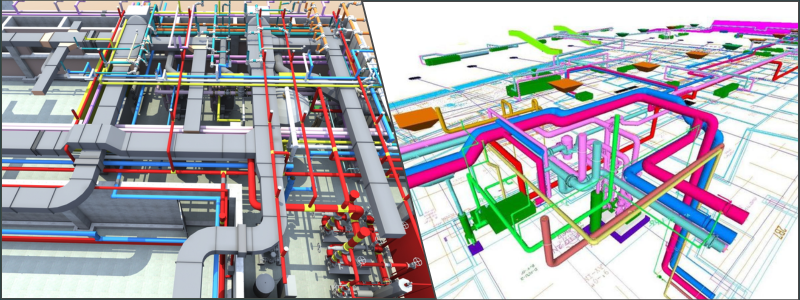
Contractors thrive on certainty. When a construction crew rolls up to a job site with rock-solid plans in hand, the entire build feels smoother—and often is. That’s where MEP drafting services come in as unsung heroes. These detailed technical drawings help construction firms avoid chaos by ensuring that mechanical, electrical, and plumbing systems are fully coordinated before anyone starts cutting or drilling.
Think of it this way: a single duct routed a few inches too low could mean clashing with a beam, rerouting pipes, or tearing into finished work. That’s not just frustrating—it’s expensive. We’re talking delays, RFIs piling up, and costly change orders that ripple through the project timeline. When MEP drafts are accurate and comprehensive, those headaches fade fast.
Good drafting isn’t just about avoiding errors. It’s a smart investment in project efficiency. When tradespeople can trust the drawings, they move faster, waste less, and build with confidence. Fewer surprises mean fewer slowdowns—and that directly affects the bottom line.
Construction drawings companies that integrate MEP drafting services early in the design-build process aren’t just crossing their fingers for a smooth ride—they’re engineering one. The result? Jobs that finish on schedule (or ahead), thrilled clients, and margins that don’t get eaten alive by rework.
In the world of construction, a solid draft can mean the difference between profit and panic. And when a clean set of plans keeps a project from spiraling, it’s not just helpful—it’s a million-dollar move.
It’s all about the coordination game
If architecture is the art and construction is the muscle, then MEP drafting is undoubtedly the brain behind the operation. And in this world of moving parts and tight deadlines, coordination isn’t just helpful—it’s everything.
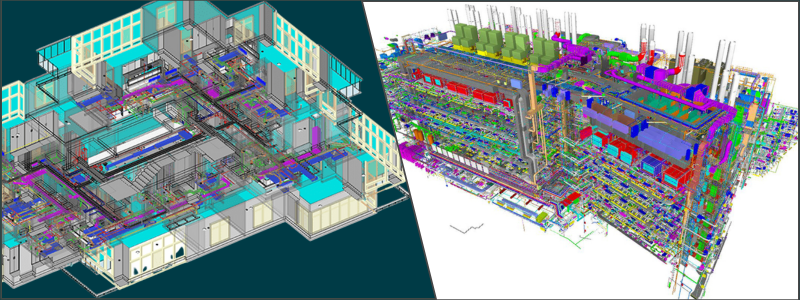
Think of a solid MEP drafter like a backstage technician at a Broadway show. They may not take center stage, but without them, the lights don’t shine, the sound doesn’t sync, and the magic doesn’t happen. It’s the same behind the scenes of commercial construction. From hospitals to high-rise offices and data centers, mechanical, electrical, and plumbing systems need to fit together with precision. No one wants to discover on-site that a duct is cutting through a sprinkler pipe or that electrical conduits are clashing with HVAC lines.
That’s where modern MEP drafting services shine. Tools like Revit, AutoCAD MEP, and Navisworks are game changers. They allow teams to see potential issues virtually, before a single wall is framed or a dollar is spent on materials. It’s proactive, smart, and cost-effective for architectural design firms.
Instead of relying on guesswork or patchwork fixes down the line, everything is coordinated in advance. Conflicts are flagged, resolved, and updated in real-time. It’s not just drafting—it’s strategic collaboration. And for architectural design firms and construction companies juggling a dozen trades on a single site, that kind of clarity is priceless.
In the coordination game, MEP drafting isn’t a side act. It’s the mastermind making sure the whole performance runs without a hitch.
Outsourcing: Secret weapon or necessary evolution?
Outsourcing MEP drafting services isn’t just a budget-friendly move—it’s become a sharp, strategic advantage for architectural and construction firms looking to stay agile and competitive. Think about it: why carry the weight of a full-time in-house MEP team when you can tap into a pool of experts exactly when you need them?
This approach is a game-changer, especially for mid-sized firms juggling fluctuating project loads. Instead of stretching internal resources thin or turning down work, architectural planning and design firms can easily scale up with specialized drafters who are laser-focused on mechanical, electrical, and plumbing nuances—from ductwork geometry to code-compliant panel schedules.
It’s not just about cost efficiency; it’s about gaining access to deep technical know-how. Many outsourcing partners operate globally and bring fluency in a wide array of international standards—ASHRAE, NFPA, IPC, IEC—the kind of alphabet soup that turns into a lifeline on projects with strict regulatory demands. For firms stepping into multinational developments or working in jurisdictions where compliance rules are especially stringent, that expertise can make or break a project timeline.
In a market that rewards precision, speed, and adaptability, outsourcing isn’t just a nice-to-have—it’s increasingly the backbone of smart project delivery. Whether it’s meeting tight deadlines or navigating cross-border code requirements, having a trusted external MEP drafting team may be the difference between keeping up and leading the way.
MEP Drafting and BIM: The Dream Team That’s Changing the Game
Anyone who’s dipped their toes into Building Information Modeling (BIM) knows it’s a game-changer for construction. It’s not just about sleek 3D visuals anymore—BIM offers a dynamic, data-driven model of a building that evolves with the project. But here’s the catch: BIM is only as good as the information you feed into it. That’s where MEP drafting steps in as the perfect partner.
MEP—short for mechanical, electrical, and plumbing—drafting ensures that what’s being modeled isn’t just a visual placeholder. When these elements are designed within architectural BIM services, they’re packed with intelligent data. Imagine ductwork that knows its own airflow rate, insulation specs, and materials. Electrical panels that come with built-in load calculations and future maintenance reminders. Plumbing lines that already account for slope angles and fixture units. That’s not just drafting—it’s designing with foresight.
What really makes this combo a powerhouse is its ability to simulate time and cost. With 4D BIM, MEP drafters contribute to scheduling simulations, helping teams plan the sequencing of work long before the first tool hits the site. Add 5D BIM, and you’re looking at real-time cost analysis that shifts as the model evolves.This is designed in high definition, with a crystal ball included. MEP drafting doesn’t just make BIM smarter—it makes construction safer, more efficient, and dramatically less prone to expensive surprises. Together, they’re not just drawing plans—they’re crafting a construction strategy that sees around corners.
MEP Drafting for Sustainability Goals
Sustainable buildings aren’t just about solar panels and bamboo flooring. Behind every LEED-certified, Net Zero-ready, or Passive House-inspired structure lies meticulous planning, and at the heart of that coordination is MEP drafting. It’s the glue that binds architectural vision with high-performance systems.
Think of it this way: a building can’t truly be “green” if its ducts are a tangled mess, the lighting ignores natural daylight, or the plumbing system treats water like an afterthought. MEP (Mechanical, Electrical, and Plumbing) drafting ensures that sustainability isn’t just a marketing slogan—it’s baked into the bones of the building.
A well-executed HVAC design service trims energy use without sacrificing comfort. Smart electrical layouts factor in daylight harvesting, reducing the need for artificial lighting. And efficient plumbing drafts make water conservation feel effortless, from graywater reuse to low-flow strategies.
When sustainability is on the agenda—and at this point, it always is—MEP drafters step up as silent sustainability strategists. They transform eco-goals into technical realities, fine-tuning every pipe, wire, and vent to work in harmony with the planet and the people inside the building.
Architects may sketch the dream, but MEP drafters are the ones who make that green dream livable—and buildable.
RELATED: Benefits of outsourcing architectural CGI services for real estate marketing agencies
Real talk: What happens without MEP drafting?
Chaos. That’s what happens.
Picture this: an HVAC subcontractor shows up and starts claiming ceiling real estate, completely unaware that space was already earmarked for lighting fixtures. Meanwhile, a plumbing crew reroutes their lines on the fly because—surprise!—a massive steel beam is in the way. And the electricians? They’re drilling through structural supports, thinking it’s all good… until it’s not.
It’s a domino effect of miscommunication, waste, and damage. What should’ve been a smooth build turns into a game of “Who messed up first?” The result? Delays, bloated budgets, and sometimes even lawsuits. No one walks away happy—not the clients, not the builders, and definitely not the folks stuck reworking designs mid-project.
That’s where MEP drafting services come in clutch. These aren’t just fancy blueprints—they’re coordination lifesavers. MEP (Mechanical, Electrical, and Plumbing) drafts bring all the hidden systems to the forefront, mapping out every pipe, duct, and cable before anything is installed. They help everyone—architects, engineering design firms, contractors, fabricators—speak the same language, work off the same page, and avoid costly surprises.
It’s like turning on the lights in a room everyone’s been stumbling through. When you invest in solid MEP drafting, you’re not just paying for drawings—you’re buying clarity, collaboration, and confidence that the build will actually go as planned. Because without it? You’re building blind.
The magic of shop drawings: Where design meets reality
Shop drawings may not be the flashiest part of MEP drafting, but they’re undoubtedly among the most essential. These ultra-detailed technical documents act like a bridge between a design on paper and the actual pipes, ducts, and wires being installed on-site. If architectural drawings are the dream, shop drawings are the practical, nuts-and-bolts roadmap that makes it all happen.
Picture this: every tiny element—from the angle of an elbow joint to the placement of a hanger bracket—is laid out with precision. Voltage specs? Labeled. Dimensions? Checked. Coordination between systems? You bet. Nothing is left to chance.
What truly sets shop drawings apart is their intimate link to fabrication. These aren’t just pretty diagrams—they’re installation-ready instructions. In fact, contractors use them the way chefs use recipes or pilots use flight manuals: meticulously and without deviation. It’s their go-to guide to ensure everything works as intended, without any nasty surprises halfway through construction.
For design teams, shop drawings might seem like just another step in the process. But for contractors, they’re the holy grail. Without them, you risk costly improvisations and on-site confusion. With them, you gain clarity, confidence, and a direct line from the engineer’s brain to the builder’s hands.
In the world of MEP drafting, shop drawing services are where vision becomes reality—and where projects are won or lost. They may not be glamorous, but their precision and practicality make them indispensable.
A new era of smart buildings needs smarter drafting
Smart buildings aren’t just buzzwords anymore—they’re here, and they’re learning. From motion-triggered lighting and intelligent HVAC systems to water consumption tracking and AI-driven automation, the modern building doesn’t just function—it responds. But behind every smart building is something less flashy and far more essential: smarter MEP drafting.
Gone are the days when MEP designs were just about plugging in ducts and pipes. Today’s MEP drafters are essentially digital architects for intelligent infrastructure. Every sensor, automation panel, and data line must be precisely planned and perfectly placed. That motion sensor lighting? It needs power. That HVAC system that learns when you’re out of the office? It needs seamless integration into both the mechanical layout and the building’s digital nervous system.
Coordination is everything. If even one system gets overlooked in the design phase, the entire smart operation can stumble. Drafting now demands a fusion of engineering precision and tech-savvy foresight. You’re not just mapping wires—you’re wiring a brain.
It’s a shift from reactive to proactive design. MEP freelance professionals are being asked not just to support smart tech, but to anticipate it, to build the foundation that makes automation possible. This is the new standard. The blueprints of tomorrow must think ahead, quite literally.
So no, this isn’t your dad’s ductwork. It’s the backbone of a building that learns, adapts, and evolves—and it starts with next-gen MEP drafting.
RELATED: MEP shop drawing services: The secret weapon for freelancers and firms in successful building Construction
Architects and engineers—Finally playing on the same team?
For years, the dynamic between architects and MEP (Mechanical, Electrical, Plumbing) engineers has been… complicated. Architects dream big—sweeping lines, towering ceilings, showstopping aesthetics. Engineers? They bring the math, the systems, the “how-do-we-make-this-work” part. Tensions were bound to happen. What architect hasn’t heard, “We can’t fit the ductwork up there,” and what engineer hasn’t rolled their eyes at an impossible design?
But the game is changing.
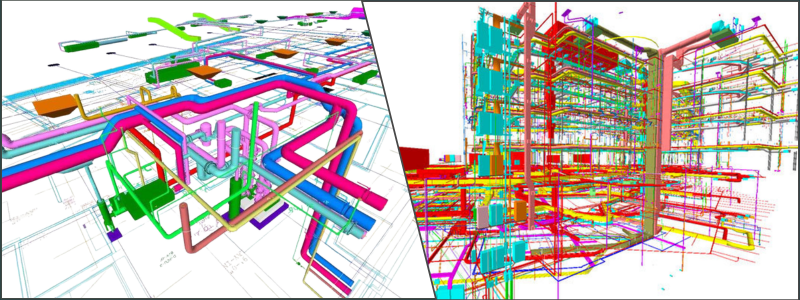
Thanks to integrated MEP drafting and modern collaborative platforms, these formerly opposing forces are starting to operate like a team. Now, everyone—from HVAC specialists to lighting designers to architects—works from a shared model. Changes are updated in real time. Version control keeps chaos at bay. Clash detection tools flag issues before they hit the construction site. And that messy stack of marked-up blueprints? History.
This isn’t just about cleaner workflows—it’s about communication. Design engineering firms and architects can now challenge, support, and respond to each other’s visions in real-time. The result? Buildings that are both beautiful and functional.
Turns out, drafting is no longer just technical—it’s also political. And with everyone finally playing on the same team, the results are smarter, smoother, and a whole lot more satisfying.
Wrapping up (But not taping the duct just yet)
If you’re an architectural design firm that wants your buildings to actually work, or a construction company tired of RFIs and rework, MEP drafting services aren’t a luxury—they’re the foundation of your success.
These services bring clarity to complexity. They bridge the gap between vision and execution. They prevent disasters, reduce costs, and accelerate timelines. And when combined with BIM, sustainability goals, and smart building systems, MEP drafting becomes an unstoppable force of efficiency.
So, whether you’re sketching your next high-rise or breaking ground on a new medical center, don’t overlook the value of well-executed MEP drafting. It may not be the star of the show, but it’s the reason the show runs smoothly from opening curtain to final bow.
How Cad Crowd can help?
Ready to transform your architectural visions into buildable realities without the coordination headaches? Cad Crowd connects you with skilled MEP drafting professionals who specialize in seamless mechanical, electrical, and plumbing integration for projects of any scale.
Our vetted experts deliver precision drafting services that eliminate costly conflicts, accelerate timelines, and ensure your designs function as beautifully as they look. Don’t let MEP challenges derail your next project—partner with Cad Crowd and experience the difference that expert drafting makes from concept to completion. Get a free quote today.