
Let’s be real—when you’re knee-deep in the design stage of a project, managing client needs, zoning issues, and impending deadlines, the last thing you want is a BIM partner who won’t get it done. Hiring the right Building Information Modeling (BIM) services firm from the industry giant, Cad Crowd, has the potential to eliminate the madness or contribute to it. That choice? That’s not something to be taken lightly.
BIM is no longer a buzzword; it’s baked into every stage of architectural practice, ranging from initial conceptualization to facility management. Whether you’re a small firm new to 3D modeling or a large practice looking to expand cost-effectively, securing a BIM partner who shares your ethos, workflow, and ambitions is paramount.
What are BIM services?
RELATED: Why architects outsource 3D modeling services and the benefits for your design company
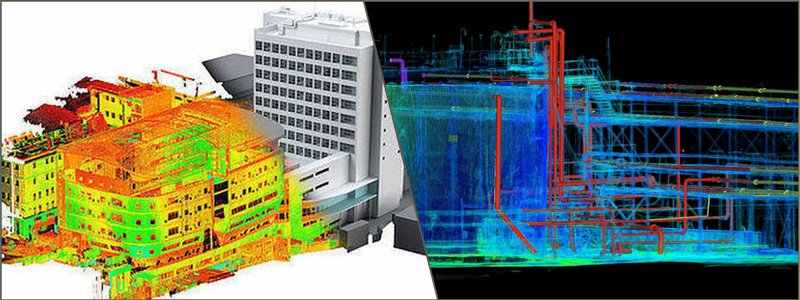
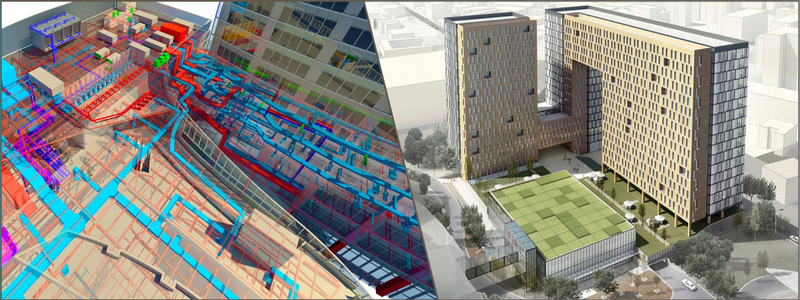
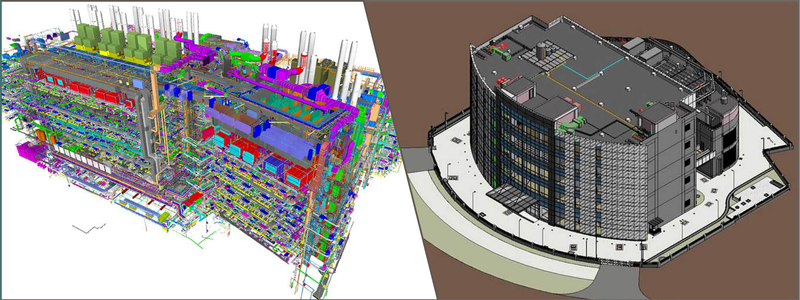
BIM (Building Information Modeling) services consist of the creation and maintenance of digital models representing physical and functional building characteristics. BIM services facilitate the planning, design, construction, and operation of buildings in 3D models with embedded data.
BIM allows architects, engineers, contractors, and stakeholders to coordinate better, eliminate errors, and enhance efficiency in the project’s life cycle. Services can encompass 3D modeling design services, clash detection, quantity takeoffs, cost estimation, and facility management.
By offering a common knowledge base, BIM services simplify workflows, improve visualization, and enable improved decision-making in construction and infrastructure development on residential, commercial, and industrial projects.
Now, you’ve learn what BIM services are all about. So, how do you actually go about selecting the right one, then?
This manual takes you through the actual questions to ask, red flags to look out for, and clever methods to make your architecture firm receive the BIM services it actually requires.
Define your requirements before you begin searching
Even before you call on prospective BIM providers, you have some research to conduct.
- What stage of your project(s) will require BIM integration?
- Do you need full BIM coordination or merely model development?
- Do you require clash detection, quantity take-offs, 4D scheduling, or 5D cost estimation?
- What software do you presently use—Revit, ArchiCAD, Navisworks—and will the vendor have to integrate into your environment?
Getting these questions in sequence is like drafting a good project brief. It provides direction, clarity, and expectations for architectural design firms. Having a clearly defined scope also keeps you from paying too much for services you don’t require—or worse, being stuck with a provider who can’t provide what you do.
Here’s the way to think about it: you wouldn’t start building without blueprints. The same rule applies here.
Review their portfolio, but read between the lines
A glitzy portfolio is good. It demonstrates capability, scope, and design potential. But don’t get impressed by nice renderings and shiny case studies alone.
Here’s what to look for instead:
- Project similarity: Have they done buildings similar to yours—educational campuses, hospitals, commercial towers, or heritage projects?
- Complexity level: Can they deal with irregular geometries, sustainability modeling, or high-end parametric elements?
- Team integration: Did they work as silent team players or take charge of BIM coordination among various disciplines?
Request to view the real BIM outputs, not glossy renders. Ask about the model LOD (Level of Development), documentation quality, and if they used open standards such as IFC (Industry Foundation Classes).
🚀 Pro tip: If they’ve worked with MEP services or structural consultants you know and trust, that’s a good indicator of collaborative compatibility.
Verify technical competency, not software know-how
Anyone can say they “use Revit.” That’s not sufficient. You must know how well they do it—and if they do it smartly.
Some questions to consider:
- What BIM standards or naming conventions do they use?
- Are they able to design custom parametric families for specialty items?
- Do they provide Revit API scripting or Dynamo automations for efficiencies?
- How do they handle version control and data interoperability with other tools?
Dig into their workflow. A good BIM provider will be eager—even proud—to share their process and how they approach data-rich modeling. Look for evidence that they don’t just draw in BIM—they think in BIM.
RELATED: How structural engineers improve custom home design when you hire architects & design firms
Ask about communication and coordination skills
Here’s a universal truth: technical brilliance means nothing if it doesn’t come with communication.
Your architectural BIM partner will become an extension of your team, so whether or not they can handle expectations, report back to you, and communicate in your language is important—a big deal.
Assess the following:
- How do they process feedback loops?
- Will they attend coordination meetings with contractors and consultants?
- Do they offer model sharing through cloud platforms such as BIM 360 or Trimble Connect?
- What’s their response time when it’s the critical design phases?
Certain companies even appoint a BIM Manager who speaks directly to your team. That single point of contact can be worth its weight in gold when working through model conflicts or reconciling new scope demands.
A willing partner who knows architectural schedules (and the actual pressures behind them) can make all the difference.
Check references—then dig a bit deeper
Don’t miss this step.
A call to a previous client will show you something that no portfolio or presentation ever will. Were deadlines met? Were revisions executed smoothly? Did the models perform in clash detection meetings?
Some questions to ask references wisely:
- What was the most difficult aspect of the project, and how did the BIM provider react?
- Would you hire them again?
- How did they manage change requests?
- Were their deliverables consistent with your BIM execution plan?
If possible, connect with others who aren’t on the reference sheet—like someone you happen to know at LinkedIn who’s worked with them in the past. That uncensored feedback might be pure gold for any architectural planning and design firm.
RELATED: How 3D rendering helps collaboration between clients and design services companies
Evaluate scalability and long-term fit
Suppose your company is expanding, or expanding to tackle bigger, more challenging projects next year. Will this BIM supplier scale with your business?
Investigate the following:
- Number of people in their team, as well as their capacity
- The capacity to integrate rapidly for dynamic projects
- BIM Level 2 or Level 3 maturity model support
- ISO 19650 certification or knowledge
Also, ask if they can provide assistance throughout a project’s lifecycle—through design development, construction administration, and even into facilities management.
A partner that grows with you saves you the inconvenience of re-hiring or retraining in the future.
Know their pricing model
No one likes budget surprises.
Get straight about how they bill:
- Is it by the hour, per model, or per square foot of project area?
- Are revisions, coordination meetings, or rendering extras included in the separate costs?
- Do they have fixed-price packages for schematic, design development, and construction documentation stages?
Clear-cut pricing is a mark of professionalism. It also allows you to judge cost-to-value for 3D modeling experts accurately.
Bonus tip: Don’t always go for the lowest bid. You’re not just paying for models—you’re investing in accuracy, collaboration, and project flow.
Ensure data security and legal clarity
As BIM becomes more integrated with cloud platforms and IoT devices, data privacy and IP ownership can get murky.
Make sure you:
- Sign NDAs and IP agreements
- Clarify who owns the model and data at project completion
- Understand where your files will reside—on local servers, private cloud, or third-party sites
- Define data backup and versioning policies
You don’t want your models (or client information) to be appearing in another project. A reputable BIM provider will have security and IP rights in mind.
Pilot project testing
Not convinced yet? Run a low-risk pilot. For example, through a simple 3D visualization service, you can help yourself get ahead of any issues that you may face with the project.
Assign them a small part of your next project—a lobby model, a bathroom block, or a parking garage layout. See how they deliver under your timeline, feedback structure, and coordination expectations.
This trial-by-fire can reveal a lot:
- Are they proactive or reactive?
- Do they anticipate issues or just follow instructions?
- Can they troubleshoot missing or unclear design intents?
It’s like dating before marriage—better to find out early if the fit isn’t there.
Trust your instincts and culture fit
This may sound fluffy, but it’s essential.
Your perfect BIM partner won’t merely check the boxes on tech and cost. They must resonate with your firm’s design ethos, culture, and workflow approach.
- Do they prioritize design integrity over speed?
- Are they adaptable enough to work with changing sketches and ideas?
- Do they honor the role of architecture, or are they all about the tech?
When a BIM provider is not only aware of your files but also of your why, they can become a long-term creative partner—not merely a subcontractor.
RELATED: Benefits of outsourcing architectural CGI services for real estate marketing agencies
Final thoughts: Opting for impact, not only output
Your ideal BIM services provider is not a vendor—they’re an ally in your architectural journey. They can assist you in solving constructability challenges before they come up, impress stakeholders with pristine visuals, and maintain your project documentation bulletproof.
Yes, the process of selection may be time-consuming. It should be. But the reward? It’s smoother workflows, reduced errors, improved collaboration, and ultimately—better architecture.
So the next time you’re up to your neck in a concept sketch, just keep this in mind: your BIM partner at Cad Crowd should make your vision easier to build—not harder to describe. Get a quote today and get it for free!