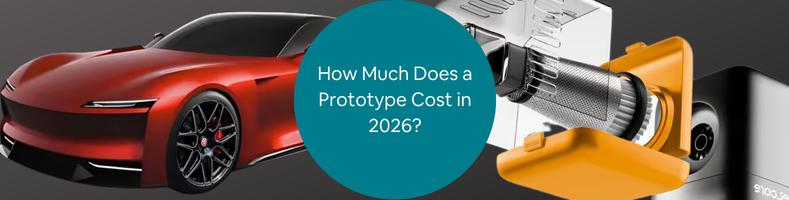
A prototype cost depends on its type, function and resemblance to the actual and final product. It could cost $100 to $100,000. If for a simple 3D printed model that’s used for checking the design and physical attributes, it could cost $20-$200. If it’s for an electronic prototype, with custom circuit boards, it could cost $5,000 to $50,000 or even more. Most products that are generally under highly regulated industries like medical devices or automotive, it is more expensive because it would require specialized materials and extensive testing and documentation. The total cost is not fixed. It is driven by a lot of factors that are sometimes overlooked. To help you in building your team for prototyping, check out Cad Crowd now.
What is a realistic prototype budget in 2026?
Realistically, in one-off projects, the budget can range from $50 up to $10,000. This is a 2026 estimated range but the final cost would really depend on the product’s design, materials and manufacturing requirements. For a basic prototype with a simpler shape and just made of common plastic using 3D printing services – little to no custom tooling is required. This is considered as the most affordable and cost-efficient choice. Simple prototypes are said to cost under $50 and if it’s injection-molded, it can exceed $10,000. When the prototypes has included electronics, it can be more expensive since it would require custom-printed circuit boards, firmware development, wiring and other housing or enclosures. The cost would range from $500 up to $50,000.
How does prototype cost break down by manufacturing method?
Every manufacturing method has an equivalent cost implication. The right option would be to select one that fits not just the project budget but also its production timeline and goals. There are methods that could have a cheaper upfront cost, ideally for simpler prototypes and exploration of ideas. There are also others that would feel like an investment because of its high price but are a lot more practical when thinking about long-term massive volume of production. Through matching the method to project needs and goals, there’s balance among quality, speed and cost.
- 3D printing (FDM/SLA/SLS)
One of the most popular and affordable methods for creating early prototypes is 3D printing. This is because it does not necessarily require expensive molds or prototype tooling. It only needs a machine to build a part layer by layer directly from a digital design. This makes it a lot more ideal and efficient for testing out concepts and ideas. It’s also used for checking dimensions and evaluating how it overall looks and fits before committing to production. In this method, little to no set-up is needed, and it can also be finished in just hours or within the day. It helps businesses to save more money and time during product development. The cost of 3D printing depends on materials, size of part and the level of detail it needs, ranging from $20 to $200 per part.
RELATED: What Is 3D Printing? A Beginner’s Guide
- CNC machining
CNC machining involves creating parts by cutting away material from a solid block of metal or plastic through computer-controlled machines. It removes the material to produce an accurate and durable part. This is commonly used from prototypes that have to closely resemble the actual final product. It is mostly ideal for functional testing and engineering validation. The cost of CNC machining is a bit higher since it involves operating time, cutting tools, and other skilled programming. It costs $100 to $100 or even more, depending on a part’s complexity, size and required precision.
- Urethane casting
Urethane casting is considered as a prototyping method that sits between 3D printing and injection molding. It involves a process of creating a flexible silicone mold through a master pattern made through 3D printing or CNC machining. This process is more ideal for creating small batches of high-quality prototypes, without the costly manufacturing of metal molds. This method typically ranges from $200 to $5,000 and may even cost more depending on the complexity, size and the volume of units needed to produce. This is best suited for small quantity batches since the silicone mold wear out after production of several units.
- Rapid injection molding with aluminum tooling
For a bigger volume of producing prototype parts, rapid injection molding and casting services are typically and commonly used. This method uses materials that are closely matched to the final product. It uses aluminum tooling instead of expensive steel molds. This helps in doing a faster and more affordable production process. Rapid injection molding is considered an ideal method for testing product performance, fit and function before committing to full-scale production. The molding of this process can be quite costly. A basic aluminum mold would typically cost $2,000 to $10,000. Once the mold was created, the production costs for each part could drop dramatically. It could range from $0.50 to $5.00 per part, depending on the material and design. For larger production, a more durable steel mold is used and would cost around $100,000 and even more for a more complex project.
- Sheet metal fabrication
In sheet metal fabrication, it involves the process of cutting, bending and shaping thin sheets of metal to produce parts such as brackets, enclosures, panels and other structural parts. This process is most commonly used for products that would require strong, lightweight and durable parts. It’s most suited for small production runs for functional prototypes. It also matches the final product look. The costing depends on the type and thickness of the metal, number of bends and other complex features and finishes it could have. The pricing can be comparable to CNC machining because of its set-up and precision fabrication. If the fixtures and tooling are already existing and prepared, the costs per part may drop.
RELATED: How to Detail Sheet Metal Shop Drawings for Increased Fabrication Accuracy for Companies
Prototype cost comparison table
| Method | Typical Cost per Prototype | Tooling Needed | Lead Time | Ideally For |
| 3D Printing (FDM/SLA/SLS) | $20-$200+ | None | Hours-days | Early concept, fit checks |
| CNC machining | $100-$1,000+ | Minimal | Days | Functional, production-grade materials |
| Urethane casting | $200-$5,000+ | Silicone mold | 1-2 weeks | Low-volume, cosmetic/functional |
| Rapid injection molding (aluminum) | $1,000-$10,000+ | Aluminum mold | 2-4 weeks | Pre-production, 50-5,000 units |
| Production injection molding (steel) | $10,000-$100,000+ | Steel mold | 8-12+ weeks | Long-run manufacturing |
Sources: Fictiv, Hotean CNC
How much does pricing change by fidelity level?
The cost of prototype design services can significantly vary depending on how precise the resemblance is to the final product. During the early stage, low-fidelity models are produced and created to check and evaluate the overall concept, appearance and fit rather than functionality. They are made of simpler materials and 3D prints, and costing depends on materials, tolerance and extensive techniques to finish the project.
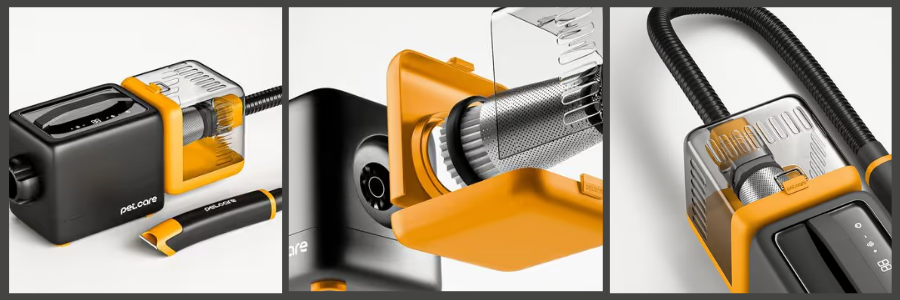
- Proof-of-concept
One of the earliest and simplest types is Proof-of-concept prototypes. This is used to determine if the design model is technically possible before committing to produce it into a more detailed setting. This does not necessarily look exactly like the final product. It just focuses on testing the core concept, function or key components. This can be produced through 3D printing, basic electronics or just from readily available parts. Since it does not require many materials and engineering techniques, it typically costs $50-$500.
- Looks-like
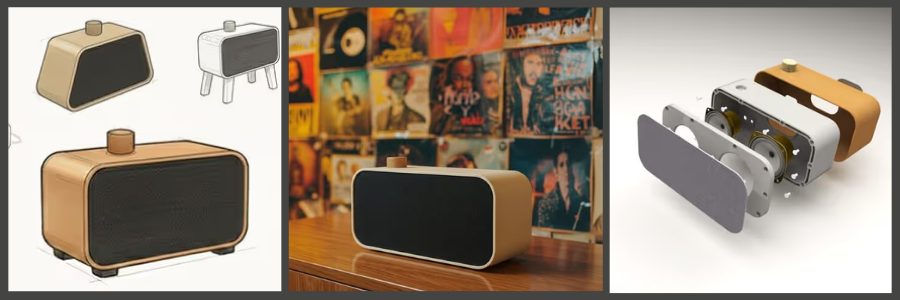
A looks-like prototype focuses on the overall appearance, size and design of the product. It does not necessarily have to test its functionality or performance. This is created to evaluate and check how the final product would look. This helps the team know the possible areas of improvement for its shape, materials, and other visual details. These prototypes are typically used for market pitches, presentation, investor reviews and approvals or getting feedback. The costing ranges from $200-$2,000. This depends on the level of detail needed, materials used and the quality of the finish. For basic models, it would only need simple 3D printing design and finishing.
- Works-like
A works-like prototype is created to test and evaluate the production functionality and system mechanisms. It’s used to verify if it’s able to work as intended. It does not need to match the overall appearance of the product, it just needs the core parts to ensure the functionality of the product. This helps the engineers behind it to identify technical issues and improve its overall performance. The costing of this prototype ranges from $1,000 to $15,000, depending on how extensive the needed technology is to produce it.
- Engineering prototypes
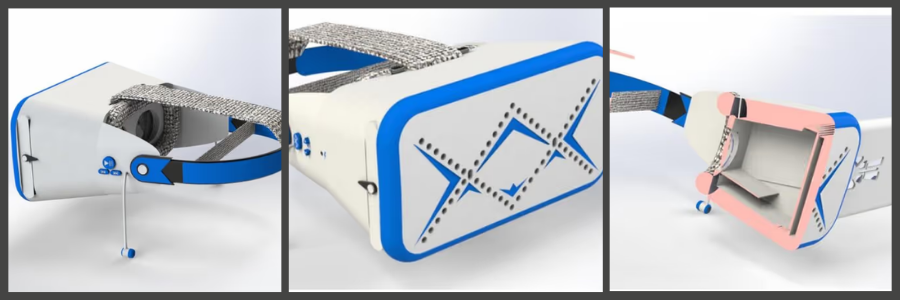
For prototype design engineering services, the design is more of a combination of a product’s functionality, appearance and technical requirements. It’s not just about testing one attribute but an evaluation of it as a whole. It should be built in a way that it almost matches the final product version. This helps engineers and designers to evaluate not just its performance and appearance, but also its assembly methods, materials and manufacturing challenges. It helps in addressing possible risks before full production.This type of prototype may require a more advanced process like CNC machining or other specialized techniques and customization. It could cost more depending on how extensive the processes and documentation are.
- Pre-production prototypes
Pre-production prototypes cover final stages before a full-scale manufacturing. It tests units in real-world settings to check its reliability and readiness in production. These kinds of builds are commonly divided into Engineering Validation Test (EVT), Design Validation Test (DVT) and Production Validation Test (PVT). These prototypes were made the same way a final product should be produced. This helps in evaluating realistic issues a unit may encounter once manufactured. Its cost could dramatically increase depending on the required tooling, quality testing and compliance checks. For a complex or regulated product, it may cost $50,000 because of the additional testing and certification requirements.
RELATED: Designing Prototypes: 3D Design Services for Inventors and Companies
When does 3D printing stop being cheaper than injection molding?
It is common knowledge how 3D printing is known as an affordable and practical option. In this method, it is simply less expensive because it does not require costly prototype tooling and each part does not have major upfront costs. However, it may not always be the case once the production volume increases. This is because it would require similar material and machine every single time. Injection molding works the opposite way, it has higher initial investment but the additional batches would be cheaper to produce. This is when the injection molding becomes a more cost-efficient option. Choosing the right method depends on the project stage and goals. Knowing it would give a more accurate budget anticipation.
| Volume | Ideal option | Reason |
| Under 50 parts | 3D Printing | Zero tooling cost, fastest iteration |
| 50-200 parts | Depends on complexity | Simple parts favor molding earlier |
| 200-1,000 parts | Rapid tooling (aluminum) | Bridges cost gap before full production |
| 1,000+ parts | Injection Molding | Per-part cost drops sharply |
Source: Hotean CNC manufacturing cost analysis
Injection molding can actually be more affordable than 3D printing when it has reached a larger volume of production. For instance, a simple snap-fit enclosure using $3,000-$4,000 aluminum mold may reach its breaking point at around 200 units. But a more complex design unit using injection molding amounting to $12,000-$15,000 mold would still not break until 700-800 units. The choice really depends on the stage the model is in to make it cost-effective.
What hidden costs do people forget to budget for?
Most startups would only focus on the provided quotation for manufacturing a prototype. It is often overlooked how this is just a part of the total cost. Transforming a concept to a finished prototype often involves more additional expenses than imagined. Each small fee can cause a significant increase in the overall budget. The common overlooked costs are design revisions, testing and certification, shipment and logistics, and other substantial or custom fees. Being aware and factoring these expenses would provide a more realistic budget anticipation.
- CAD work to get a printable or moldable model.
One of the most common overlooked expenses is CAD work. Manufacturers would expect a complete, manufacturing-ready CAD file. If the idea is only on a rough sketch or drawing, or 3D scanning services, it still must be converted into a detailed 3D model so that it can be manufactured. The model is created in detailed information, ensuring correctness in dimensions and tolerances to ensure it can be successfully processed through 3D printing, CNC machining or injection molding. Accounting design work can help in reducing delays and provide a more reliable budget planning.
- Design iterations between rounds.
It is rare for a prototype to successfully pass in one round of tests. It is important to account how many iterations there can be before a prototype can pass. It is not bad to fail a few times since iterations are meant to identify and spot possible failure and weak points. It is to ensure that a product can survive in a real-world setting. Accounting iterations costs are significant, especially during later stages of development. Being aware of these costs help in avoiding unexpected fees.
RELATED: Adaptive and Iterative Prototyping: Iterate on Your Product Design With Industrial Design Firms
- Shipping and expedite fees.
Shipping and logistics can be another overlooked expense. A quotation received may not be able to account for the delivery of the prototypes and rush express shipping may significantly cause higher cost implications. It’s also important to consider possible other incurred costs if ordered internationally, such as customs, import taxes and brokerage fees. These extra costs may add up to 30% of the total project budget and may be hard to take for startups.
Prototype cost by industry
- Consumer products
For consumer product design firms, the cost range is typically $500-$10,000 per prototype. This depends on the level of complexity and refinement required. Most companies would choose 3D printing since it’s low cost. The most common and ideal approach for this is focusing more on design improvements before committing to production molds.
- Electronics and IoT devices
For electronics and IoT devices, the cost range is typically $5,000-$50,000+ per prototype. This could still change depending on how detailed and customized the PCB, firmware, sensor, and enclosures are. It also needs to account for the testing and certification needed to produce it.
- Medical devices
Medical device design services are considered the most expensive since they have to meet strict compliance to safety standards and regulatory requirements. More than the prototype development, it still needs to account for biocompatibility testing, sterilization validation and extensive documentation before regulatory approval. The total development may cost more than $100,000, especially for units that are for clinical and commercial use.
- Automotive and industrial equipment
For automotive and industrial equipment, it typically costs around $2,000 for simple models and more than $50,000 for a fully functional assembly. In here, the most common process used is CNC machining since it demands operating conditions to meet performance requirements.
- Aerospace and defense
In aerospace engineering and defense prototypes, high-performance materials require compliance with strict quality and safety standards. It would also require tight machining tolerances and complete traceability for every material and manufacturing process. These additional extensive requirements would lead to an expensive cost implications for the budget before full production even begins.
Hire a designer on Cad Crowd before you quote a prototype
For best practices, CAD models have to be developed first before requesting for manufacturing quotes. Browse Cad Crowd and connect with freelance designers who are specialized in product design and prototype-ready CAD.
RELATED: The Importance of Iteration in Product Development & Working with Product Design Companies
FAQ
What is the cheapest way to prototype a new product?
3D printing is easily one of the lowest-cost options since it requires little to no tooling. For a simple concept model, it can just cost as little as $20-$200.
How much does a functional prototype cost?
A functional electronics prototype may just typically cost $5,000-$50,000+. It just depends on the PCB complexity, enclosure, and the number of test units needed to produce.
Why do prototype costs vary between industries?
This is because not all prototypes are the same. They have different functionalities and uses. Some industries, like the healthcare industry, require following a bunch of standard regulations, certifications, compliance testing, and biocompatibility validation in manufacturing costs. That’s why the costs of prototypes are different between industries.
Do I need to submit a finished CAD file before getting a prototype quote?
Generally, yes. Manufacturers would expect that the CAD is ready for their use. Although some people don’t know this information, and still push to create prototypes due to the time constraint and rushed deadlines. This can result in an expensive failure, and failed product.
Should I prototype in-house or outsource it?
Doing an in-house prototype would give more control but it requires equipment and skilled labor. This will incur additional overhead costs. Outsourcing to a freelancer is a more cost-effective option since it avoids the overhead costs.
How Cad Crowd can assist
Prototyping in 2026 can typically range from a few hundred dollars but this depends on a lot of things, method, design complexity, project stage and even industry requirements. It is important to understand the cost drivers to come up with more reliable budget planning. By selecting a prototype that fits your project needs and goals, you are removing risks and improving the overall efficiency of production. If you’re ready to move your idea from sketch to a manufacturing-ready model, browse Cad Crowd and hire a vetted freelance designer or engineer for your next prototype. Contact us for a free quote.