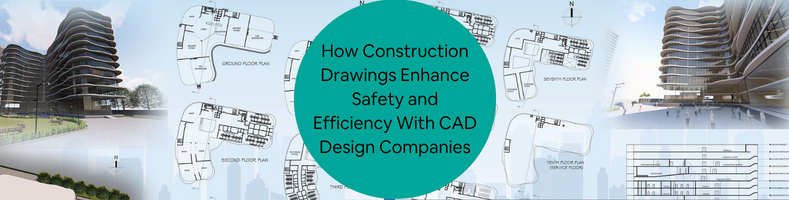
In so many different lines of work, you aren’t really good at what you do if you have to take a glance or twice at the “how-to” guide. Think of it this way: would you get on a plane knowing that the pilot was just reading a manual on how to make a proper landing on the way to the cockpit? As if that’s not bad enough, the manual is in broad pages and heavily illustrated with fun colors; you can spot it from the parking lot. Guess what, this notion that a true expert needs no notes doesn’t apply at all in architectural work, where construction drawing services are the definitive how-to guide.
We understand some people aren’t too fond of professionals who still need manuals with pictures, but that’s how the architectural industry has been done for more centuries than you think. An architectural project without a construction drawing is like a LEGO set without instructions. You can just wing it and put the pieces together while hoping for the best, but what usually happens is the complete opposite. Things don’t look like what you imagine. Some pieces won’t fit because there’s not enough room; many more are hiding under the carpet waiting for you to step on them, shouting, and the assembled bricks shatter at the slightest bump.
Those are exactly what you can expect to happen in a construction site without a proper drawing to let the contractors and workers know when, where, and how to do their jobs. Except in a real-world project rather than LEGO, everything is much more dangerous and expensive. Mistakes can lead to accidents and costly reworks. Construction drawings prevent a job site from turning into absolute chaos. They save time, money, and even lives.
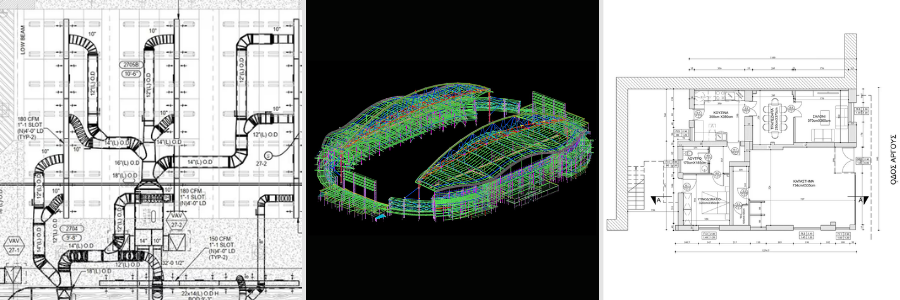
Mind you that construction drawings aren’t just fancy shapes and lines on a piece of paper (or in a CAD file, more realistically). There’s a big difference between architectural visualization services and drawings. The former is a photorealistic image of how the buildings or structures should look when the project is complete, whereas the latter shows how they should be constructed. Construction drawing experts must represent every detail of the structure, from rebar placement and intersecting trusses to roof design and plumbing lines. This is why a single project needs multiple sheets of construction drawings, sometimes dozens of them, depending on project size.
Construction drawings must bridge the gap between the ideas in the architect’s mind, the problem-solving techniques of an engineer, and the actual physical works done on site. It takes real expertise to produce accurate construction drawings because they must be treated as technical illustrations. Expertise you can source with confidence from Cad Crowd, a freelancing platform that specializes in the AEC industry and is populated with thousands of qualified draftspersons to help transform an architect’s ideas, and maybe even yours, into a workable plan.
🚀 Table of contents
Safety and efficiency
Not only are construction drawings a workable plan, but an understandable one at that. OK, it’s at least understandable to the construction workers, who technically include contractors, subcontractors, and builders. To a typical client, as in the project owner, getting a good grasp of construction drawings and everything that the documents might entail often seems like a tall order, but only because it actually is. That’s what photorealistic visualization services are for. They allow the client to imagine and understand what’s being built.
When the construction drawings are accurate and plain as day for the workers, the project itself gains major benefits in the form of enhanced safety and efficiency. Here’s how it happens.
RELATED: Understanding real-time rendering, how it works, and benefits for architectural companies
Clear view of point of hazards
Just about the entirety of a construction site is a safety hazard, and that’s why contractors don’t take their children to a picnic in one. It’s full of trenches filled with dirty water, allergy-causing dust, noises from heavy machinery, and unsightly porta potty. So, not that much of a difference from parks, then.
The most dangerous hazards of all are those you can’t see. Still remember about a LEGO piece hiding under the carpet? A lot of things are sneaky like that in a construction site, but much more lethal. We’re talking about high-pressure gas mains, enormous water pipes, electrical lines bigger than a rebar, and the like. If, and only if, a construction worker fails to notice one of those hazards, gets carried away with breaking a pile of hard soil, and swings his cutter mattock an inch deeper than he should, things can go horribly wrong. It’s a little over specific, admittedly, but that’s a possible nightmare scenario when people take construction drawings for granted.
Detailed construction drawings from architectural design firms can show you where the existing utilities are located. This isn’t just about avoiding headaches with the insurance company, but making sure that no one gets electrocuted or experiences the horror of witnessing an exposed septic tank. Accurate drawings can’t make a construction site any safer or riskier than it already is, but they do tell workers how deep they should dig, especially when using heavy machinery.
Finding ways around the danger zones
It sounds like what a map does in a battlefield, but it’s also one of the benefits you get from construction drawings on a jobsite. Give the safety officers a minute or two with a site plan, then lo and behold, they can immediately tell what safety plans to use and where. Well, they should. That’s their job. It’s in the name. Doesn’t really matter if they have to summon Merlin to cast a safety spell to the site or do a proper Job Hazard Analysis. Unlike what the term may suggest, the analysis covers both the identification of existing hazards and, more importantly, solutions to minimize risks.
Based on the site plan (in case we haven’t mentioned, it’s a type of construction drawing), the safety officers can figure out the kind of work activities being done on the site, the tools and materials used for those tasks, what and where the hazards are in the environment, and finally determine how to get the construction work done safely.
Those are quite a lot of words to describe a job, but to put it simply, safety officers use construction drawings as a basis to devise some methods to keep everyone reasonably safe while they’re working. For example, if there’s a deep well somewhere on the jobsite, they have some tall fencing made around it so that no one accidentally drops a helmet into the hole. Simple, isn’t it? In the real world, things aren’t that simple, unfortunately, but you get the idea. A site plan isn’t photorealistic, but you can trust safety officers because they’re trained professionals with the power to see technical drawings in 3D mode. Evel Knievel also had safety officers, maybe. They don’t eliminate the risk, only minimize it as best they can.
Defying gravity
Nothing technically “defies” gravity. Hot air balloons and even the light bulb that suddenly appears above your head each time an idea comes by are subject to gravity. But humans, since the dawn of civilization, have been playing tricks to try to prevent gravity from messing around too much with their lives. Some people even travel far away to space to avoid it. At least from that perspective, architectural design services are better than astronauts because they don’t need fancy suits and expensive rockets to defy gravity. No, they use construction drawings to devise some clever plans to make sure that a structure doesn’t crumble and fall to the ground.
No matter where you are on Earth, gravity always tries to pull you downward. It even happens underwater. If you’re smart like architects and engineers are, you’ll know what to do to make structures, especially tall ones, strong enough that they can withstand the force of gravity. Things might be easy if you’re constructing a small, plain, boxy structure. Just use four massive columns, some beams, and joists to support the roof, and you’re good to go. But not every construction project has the luxury of simple structures. Lots of different building designs are pretty complex; they also require sophisticated engineering concepts and solutions.
Construction drawings translate all those engineering ideas into a technical illustration. Everything is heavily annotated in case the architect forgets what those lines and shapes should represent in the drawings, and their dimensions too. This brings us back to the notion of construction drawings serving as instruction manuals. They tell the contractors and subcontractors how to build the structure, so it has a good fighting chance against the mighty force of gravity, not only in the short term after the project is done, but also throughout decades and centuries of use.
Contractors shouldn’t have to guess how the frame of a structure must be assembled. Construction drawings specify the columns, footings, foundation, reinforcement bars, concrete pour, primary and secondary beams, trusses, bolts, welding, and the lot. Based on each component’s specifications, the architect can identify the load-bearing components and calculate their maximum capacities.
More often than not, it actually is the drafter who takes on the responsibility to come up with the right calculation. Architect’s approval is still required for everything, but a good draftsperson plays an important role in improving construction safety and efficiency. It’s not that difficult a safety concept, really. If the (unfinished) structure stands still, the workers can move about with their heads held up high.
RELATED: How plumbing engineers benefit from CAD drafting and design services
Buying only what’s necessary
Professional architects and engineering design experts probably don’t suffer from the tendency to buy more materials than what the job needs. Just because suppliers offer free returns and a money-back policy doesn’t mean anyone enjoys doing it. One of the hallmarks of an efficient construction project is the absence of unused materials on site. It’s an unnecessary mess and certainly a sign of money not well spent at all. But the opposite is also true. Ordering less material and still wanting to get the structure properly built are foolish ideas. For instance, having fewer nails and screws is just a disaster waiting to happen. Sure, the hammer and the drill bit suffer from less wear and tear, but it’s not really worth the risk.
In this specific example, construction drawings are like a recipe card. Say you want to make an apple pie this Sunday evening, so when things go horribly wrong on Monday, at least you have something reliably good to turn to at the end of the day. You need to get all the right ingredients in the right amount and follow the directions in the right order to make the right apple pie. If one ingredient is missing or is nowhere near enough, you can just borrow some from the neighbor. Now, imagine that instead of one or two eggs or a measuring cup, it’s 20 tons of lumber or a couple of dozen custom-sized glass windows. Can you call a neighbor and have them ready by the door when you get there? Nope. The more likely outcome is a one-week project delay because the lumber and windows must be sourced and fabricated first.
We’ve mentioned before that construction drawings, or at least some of them, are heavily annotated. Material take-off is technically an annotation, but it’s often too long that it needs separate sheets. Material “take-off” sounds a little scary, although it’s just a fancy term architects like to throw around to say something about counting the materials correctly. Not just the big stuff like concrete mix, reinforcement bars, masonry, and prefabricated components, but also small items like nails, screws, binding wires, and everything else in between. It shouldn’t come as a surprise that a task well done can be a massive efficiency booster.
When you order just the right amount of materials, and at the right time, there’s no sitting around and taking selfies while waiting for the concrete mixer that never fails to arrive late, or sending someone to the nearest hardware store during rush hour to buy more plumbing pipes. And if this person has to stop for fuel, that’s additional time not used wisely. Time that the plumbing contractors can otherwise use to actually install the pipes. And since you don’t overorder, you don’t have piles and boxes of unused materials cluttering the site. Even an unassuming item like a leftover timber and an empty barrel can cause someone to trip, fall, get hurt, and claim insurance money. If you only have what you need on a construction site, things are more likely to stay organized and the logistics well-managed.
Egress planning
Construction drawings don’t just go and end their useful life when the project or working with architectural design and drafting services is done. People whose jobs revolve around the maintenance and management of a building use the drawings as guidelines to perform their duties. A big part of this management task is to mark the locations of the fire exits.
Nobody expects a building to catch fire just so they can follow the ubiquitous arrows pointing at the escape route. But if things do go wrong and the fire sprinklers suddenly burst out water on your laptop, followed by an annoying alarm sound, you don’t want anybody to wonder where to go and run for their lives. Using construction drawings, architects and drafters detail the locations of fire exits, emergency paths, and stairs in the building.
The “egress” (another fancy word, this time for “getting out as quickly as you can”) planning is meticulously crafted to make sure that no matter where you’re in the building, it’s never too far away from a safe exit. The planning part includes the use of fire-rated walls, the number and locations of fire sprinklers, and the positioning of emergency lighting.
And from an efficiency perspective, a properly laid-out emergency exit helps, in a small way, prevent the city inspector from coming to the construction site and shutting down the project because you don’t have enough doors leading directly to the outside. Of course, it’s also cheaper and much more practical to draw a massive door than to cut through a concrete wall later on.

RELATED: CAD outsourcing: Architecture & BIM drafting strategies for architectural design firms
Takeaway
A safe construction site is an efficient workspace. Construction drawings help you achieve both, as they give you enough time and freedom to design and plan the project on paper long before the physical work begins. Think of the drawings as an action plan to remind you what to do and when, in the safest and most efficient ways possible. From ordering the right amount of materials and devising safety precautions in danger zones to ensuring structural integrity and mapping the fire exit, construction drawings have it all.
How Cad Crowd can help
Every good architect develops a proper construction plan and hires a professional draftsperson to translate it into detailed technical drawings. The headache should be kept strictly to the planning phase, not during construction. As for the whole “translation” thing, it’s actually more like adding all the necessary details and transforming sketches into a comprehensive architectural plan. Cad Crowd is home to thousands of professional drafters, experienced in architectural projects big and small. With flexible hiring options and an accuracy guarantee from Cad Crowd, you can work with any drafter on the site with confidence and peace of mind, knowing that the task is being handled by some of the most qualified talents in the country. Request a quote today.