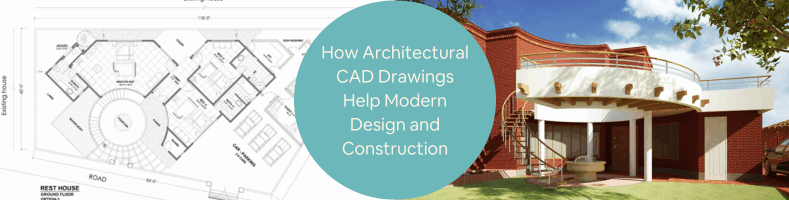
Visualize a building’s layout without computer-aided design (CAD) files. It’s like trying to build something complicated using just rough sketches: you’d end up with a huge undertaking but no clear plan. Cad Crowd is an excellent service that helps companies find freelancers with the necessary skills to produce high-quality CAD design services. These digital blueprints transform abstract concepts into practical building plans; they are more than just drawings.
For what reasons has this technology grown so important in contemporary construction? In a nutshell, it merges imagination, precision, and velocity. There are a plethora of choices and details to keep track of from the time an architect is inspired until the day the last beam is installed. With CAD designs, there is no room for disarray or miscommunication.
You might think of computer-aided design (CAD) as the link between architects’ ideas and the built environment. Before building even begins, engineers and designers can examine their work in fine detail, try out various methods, and resolve any issues that may arise. They can digitally model something first rather than guessing how it might work. As a result, the whole building process will be more streamlined, with fewer unexpected obstacles and more efficient use of materials.
🚀 Table of contents
- Breathing life into imagination
- Accuracy that saves time and money
- A visual language for all parties involved
- Supercharging project management
- The magic of 3D and beyond
- Incentivizing sustainability and efficiency
- Adaptability in a rapidly changing industry
- Training the next generation of Architects and Builders
- The human side: Creativity meets technology
- Wrapping it up
- Let Cad Crowd’s freelancers elevate your project
Breathing life into imagination
At the center of each great building or environment is imagination, by utilizing shapes, proper arrangement, and how individuals will experience the world around them. But having something incredible in mind is only the beginning. To bring those visions to life, architects require a strong method for expressing that vision clearly. That’s when 3D CAD design services, through computer-aided design software, enter the picture.
Those days are gone when it used to take a lot of effort to make hand-drawn sketches, which could be difficult to read or lack crucial details. With CAD, each line, angle, and curve is recorded exactly on a digital canvas. Not only does it make designs more visible, but also more accurate and easier to share.
What truly makes CAD magic is how it sparks imagination. Architects are free to experiment with various iterations of a design, changing sizes, materials, or configurations in a matter of seconds. Rather than deleting and redrawing whole blueprints, they simply click some buttons to experiment with new ideas. Such on-the-spot agility inspires a lively design process in which innovation happens. All at once, ideas that previously appeared impossible are suddenly completely possible, bringing life to imagination in the most useful and thrilling manner.
RELATED: 3 steps to hiring a reliable architecture firm & freelance services architects
Accuracy that saves time and money
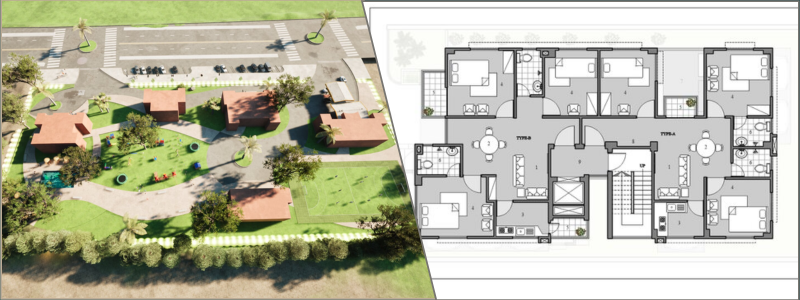
Ever gazed in amazement at a giant skyscraper or a complex museum and marveled at how they got it all done so perfectly? The key is in the remarkable accuracy of architectural CAD drawings services. In contrast to freehand sketches, CAD provides layers of detail that remove guesswork. From plumbing and electrical systems to the structural support, these are carefully mapped out ahead of time before construction even begins.
Why does this amount of accuracy matter? Imagine building a sophisticated edifice with cryptic or divergent blueprints. It’s a formula for pricey errors, annoying delays, and costly redoing. CAD blueprints get around this by being one simple, trusted plan that involves engineers, contractors, and suppliers who are certain about. One coherent truth cuts through misunderstanding, keeps the entire team moving as one unit, and avoids errors, conserving precious time and money through the entire course of construction.
A visual language for all parties involved
Constructing a new building without trying to use a blueprint or any definitive blueprint would result in total chaos. That’s where architectural CAD drawings truly excel. They serve as a common visual language that all parties to the project can comprehend, regardless of their function. Whether you’re the architect dreaming up the design, the structural engineer making sure it stands strong, the interior designer picking the perfect finishes, or the contractor bringing it all to life onsite, CAD drawings lay it all out clearly.
By translating complicated ideas into precise visuals, CAD eliminates those frustrating misunderstandings that can lead to costly mistakes. Detailed annotations, 3D modeling design services, and cross-sectional views break down even the trickiest parts, making sure nothing is lost in translation. This shared clarity keeps the whole team in sync, turning a complicated project into a smoothly coordinated effort where collaboration thrives and confusion fades away.
Supercharging project management
Let’s discuss how CAD drawings are powering project management in construction and architecture. Not only does CAD make designs appear snappy, but it also merges seamlessly with project management software and BIM platforms, revolutionizing the manner in which teams manage complex projects. Think of this: without a single brick being laid, the whole construction process can be virtually simulated. This enables companies to identify problems such as a duct interfering with a beam long before they happen, saving expensive on-site drama.
Businesses, enterprises, or clients may now accurately and in real-time monitor every aspect using CAD and BIM. This covers logistics, supply chain management, and cost tracking data. As a result, service providers and clients alike gain from streamlined operations and more efficient methods of operation. In addition to keeping tabs on time and money, this can help them spot issues that may develop as the project progresses. Computer-aided design (CAD) is more than just a lovely picture; it’s a strong mechanism that keeps projects running smoothly.
RELATED: Turning concepts into stunning 3D renderings with architectural visualization at your services firm
The magic of 3D and beyond
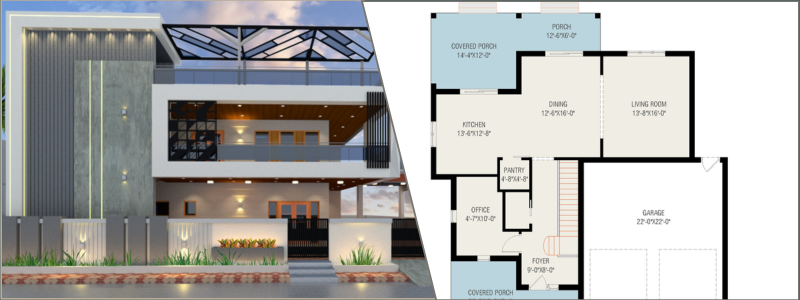
Now let’s discuss the magic of 3D design and why it’s a game-changer for architectural design experts, builders, and clients. Sure, flat blueprints have worked for decades, but today, CAD technology takes it way beyond mere drawings. Imagine not only viewing a floor plan, but actually walking around a fully rendered 3D model of your future space from all sides. You actually get a sense of scale, volume, and even the appearance and texture of various materials.
Incentivizing sustainability and efficiency
Let’s discuss how architectural CAD drawings are gradually transforming sustainable building design. You may consider CAD to be some sort of posh drafting technology, but it’s more of a secret advantage for designing environmentally friendly buildings. By modeling every minute detail, CAD allows architects to mimic the way sunlight passes through a building or air circulates before the ground is even broken. That way, they can create buildings that automatically remain cooler or lighter, reducing the amount of artificial light and air conditioning needed.
Not only does this conserve energy and lower the bill, but it also minimizes the building’s carbon footprint. And because CAD’s accuracy makes it possible to measure materials precisely, builders use less and remain cost-effective. All these benefits make projects more likely to achieve green building certifications, leading the construction industry toward a brighter, greener future—one CAD drawing at a time.
Adaptability in a rapidly changing industry
It’s said that the defining factor of industrial design services is the fixation on mass production. Think of it as product design infused with DFM. Also, remember that you can only mass produce physical products. For instance, a manufacturing facility might be able to make millions of smartphones in a year, but it doesn’t actually create an operating system for every single device. The operating system itself is a digital product distributed by the developer.
Suppose the smartphone in question runs a version of Windows Mobile; does this mean Microsoft has to develop millions of the same operating system, too? No, the company only needs to build one and then distribute it to the devices. What about in the old days when Microsoft sold physical copies of the Windows OS? The media (CD or DVD) were mass-produced, but not the operating system they carried.
The construction industry is always evolving, with new materials, technologies, and building codes popping up constantly. Architectural CAD drawings provide a flexible foundation that adapts quickly to these changes. Instead of scrapping entire sets of plans, architects and engineers can update digital files rapidly to comply with the latest standards or incorporate new innovations.
This flexibility isn’t simply a luxury; it’s critical. The potential to react with speed to alterations guarantees projects are completed without delay and expense, making businesses competitive and resilient. And because of the combination of CAD with cloud technology, dispersed teams across the globe can instantly collaborate, converting the world into one giant creative workshop.
Training the next generation of Architects and Builders
In particular, computer-aided design (CAD) is revolutionizing the training of future building tradespeople as well as the construction and architectural design industries. It is currently considered a vital talent for the trade, and as a result, CAD capabilities are being prioritized in architecture schools and construction training programs.
Students and apprentices learn to navigate complex software systems, improve their technical correctness, and develop three-dimensional spatial thinking skills. They are more equipped with the digital literacy needed by a tech-centric sector and are ready for real tasks faster, thanks to this first exposure.
The human side: Creativity meets technology
Let’s discuss the human aspect of CAD, where technology and creativity come together. Yes, CAD software is robust. It can perform intricate calculations, draw accurate lines, and accelerate the design process like no other. But at the center of every CAD drawing is a genuine human being: an architect or designer who invests his or her passion and vision into the project.
Imagine CAD as a reliable sidekick that handles the drudgery and technical work. That allows architects to step back and think big, concerned with how their designs can make people’s lives better, celebrate cultures, and inspire. It’s that delicate balance between human imagination and machine accuracy that makes contemporary architecture so thrilling.
Except for digital products, there’s not much of a difference between product design services and industrial design services, especially considering the fact that nearly all modern product design services implement DFM principles.
RELATED: 6 types of residential design & CAD services for companies
Wrapping it up
Architectural CAD plans are much more than technical documents. They’re the unsung heroes of successful modern design and construction. They translate concepts into accurate plans, reduce mistakes, encourage teamwork, accelerate project completion, and define what buildings can be.
For design and construction firms looking to remain at the forefront of an increasingly fast-paced, sophisticated industry, adopting architectural CAD is not a choice—it’s essential. Whether designing signature skyscrapers, eco-friendly homes, or groundbreaking public spaces, CAD designs offer the clarity, precision, and freedom to create the future today.
Let Cad Crowd’s freelancers elevate your project
If you’ve ever admired the beauty and complexity of a well-designed building, know that architectural CAD drawings were probably at the heart of bringing that vision to life, until the dream stood tall in reality. Cad Crowd is at the heart of architectural design and engineering as the utmost freelance platform providing vetted design and engineering services.
Ready to transform your architectural ideas into a stunning reality? Contact us now for a free quote and start your journey with our expert team today!