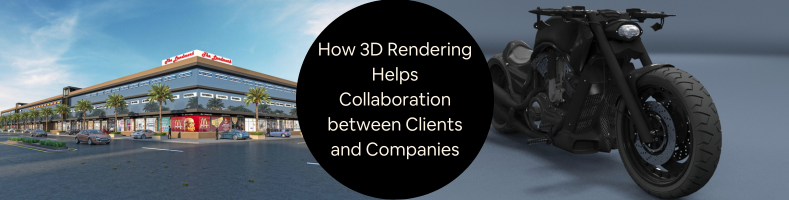
Today, in such a fast-moving world of designing and architecture, the interaction of clients with service companies of design services is more relevant than ever before. The most influential transforming technology behind such collaboration is 3D rendering services, producing photorealistic and detailed presentations of a concept of design that bridges the gap of abstract ideas towards tangible outcomes to allow seamless cooperation between clients and professionals.
🚀 Table of contents
Understanding 3D rendering in design services
3D rendering is a process that converts 3D models into two-dimensional images or animations with photorealistic or stylistic effects. Sophisticated software used in this process may include Autodesk 3ds Max, Blender, or SketchUp. A designer working with such software invokes visually realistic environments to more or less follow the reality in architecture, interior design, product development, or construction business.
To clients, 3D rendering will interpret the designs in complex visuals which they can understand easily. To design services companies, 3D rendering is a very efficient means of communication that conveys ideas and expertise. These will place them in a collaborative environment, where both parties are striving for the same goals.
RELATED: Top tips you need to know for choosing a BIM company for architectural design & CAD services firms
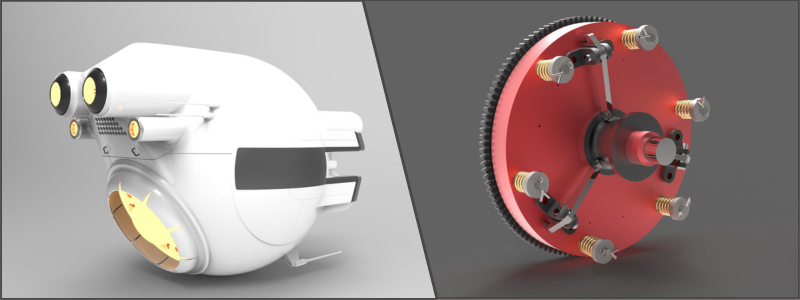
Advantages of 3D Rendering in Client-Designer Collaboration
Better communication and understanding
Traditional design methods often rely on 2D blueprints, sketches, or verbal descriptions, which can leave room for misinterpretation. 3D rendering eliminates this ambiguity by offering realistic representations of design concepts. Clients can visualize spaces, textures, colors, and lighting before a single brick is laid or a product is manufactured.
For example, an architect can provide a detailed 3D walkthrough of a building project, which helps clients explore the design from all angles. This interactive experience will thus ensure that the clients completely understand the proposal, thereby making it easier to deliver competent responses.
Quicker decisions
Clients can quickly evaluate several design options, compare alternatives, and make decisions without the need for lengthy deliberations with 3D renderings. This efficiency is particularly valuable in industries such as real estate, where time-to-market is a critical factor. With 3D renderings, clients can be confident about their choices at an early stage of the design process by clearly visualizing the final product.
Cost-effective revisions
Revisions are part of any design project, though changes at the construction or production stage are pricey and time-consuming. The best thing about 3D rendering is that most clients can get changes at the planning stage without risking expensive errors. In fact, it is easy to change the layout of a room, play with the lighting, or test materials, as revisions are cheap and fast with 3D renderings.
Improved team collaboration
Most large-scale projects have many stakeholders involved, including architects, interior designers, contractors, and engineers. Centralized communication in 3D renderings will help everyone on board have a similar vision of the project. A common vision helps reduce misunderstandings and simplifies workflows, leading to a better outcome of the project.
Improved client involvement and satisfaction
The more engaged the clients are with the design process, the more likely they are to appreciate the end product. 3D rendering becomes the avenue through which a client can view their concept take place. In addition, interactive features like VR and AR services bring in more significant immersion levels through letting the client “step into” the design and provide instant feedback.
RELATED: Top 5 challenges in interior design solved by outsourcing CGI services at freelance CAD firms
Case study: The 3D rendering of Cad Crowd’s collaborative process
Cad Crowd is among the best options for connecting customers with freelance designers and engineers when it comes to using 3D rendering in the design development process. Tapping into their extensive global list of professionals, Cad Crowd guarantees to deliver to the client individually crafted 3D rendering projects that are sector-specific. Its collaborative approach by Cad Crowd has immense benefits for a client and, indeed, even a freelancer via its customized solutions and increased communication, followed by iterative development, cost, and real applications.
Customized solutions for various projects
What makes Cad Crowd unique is the highly customized 3D rendering solutions offered for different projects. Freelancers on the site are able to produce highly customized renderings to meet the requirements of their clients. Such projects include architectural designs and product prototypes, which are some of the many types of projects Cad Crowd is open to.
For example, in sustainable housing design for a client, one can collaborate with a Cad Crowd freelancer over the visualization of parts such as solar panels, rainwater harvesting systems, and energy-efficient layouts. Renders of this nature bring the client’s idea alive but also support the execution of feasibility tests and aesthetic evaluations. These renderings, so detailed, fill in the conceptual gap between idea and execution to ensure that their needs are met precisely.
Effective communication through technology
Effective communication is the only way to get successful collaboration; Cad Crowd guarantees this by integrating advanced tools and platforms. Through shared workspaces and cloud-based project management systems, the platform ensures that smooth interaction between the clients and freelancers is maintained.
Clients can access 3D renderings and 3D modeling design services in real time, provide immediate feedback, and monitor project progress, ensuring transparency throughout the design process. This level of interaction helps align expectations and minimizes misunderstandings, leading to smoother project execution. By enabling clear and consistent communication, Cad Crowd fosters a collaborative environment that benefits all parties involved.
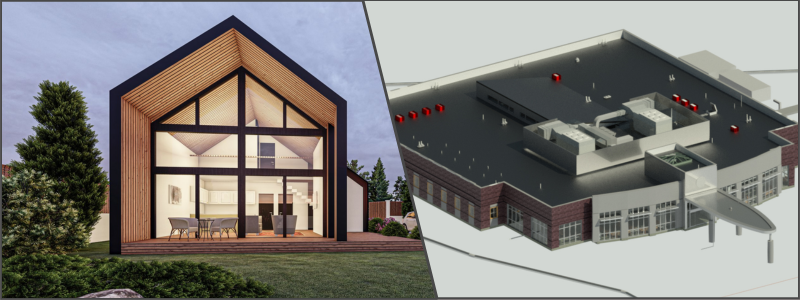
Efficient iteration and feedback
Sometimes, iteration means the proper design, and that is where Cad Crowd succeeds. Freelancers do initial 3D renderings based on what the client briefly says. The client can give room for changes while also presenting alternatives using the preliminary designs created.
This iterative approach ensures that the final rendering is perfectly aligned with the client’s vision. Clients can experiment with different design elements, such as color schemes, materials, and structural layouts, without committing to a final decision too early. This flexibility not only enhances the quality of the final product but also provides clients with a greater sense of control over their projects.
Cost-effective solutions for businesses
The primary benefit of Cad Crowd is that it is a low-cost service. It connects clients with freelance professionals worldwide in order to help them render high-quality 3D content at an affordable price. Thus, smaller and new organizations that cannot otherwise afford these services can access them.
For instance, a startup can employ a freelancer to develop high-detail 3D renderings of a new product prototype for companies within its set budget. This way, they can have ready-to-pitch visuals for investors or potential partners to raise their chances of success. This is how Cad Crowd enables small, medium, and large businesses to achieve their design goals without breaking the bank.
Real-world applications
Cad Crowd has made 3D rendering services possible for many real projects in different industries. Some examples are:
Architectural visualization services is a luxury condominium project that emanated from the collaboration of a real estate developer with freelancers working on Cad Crowd. Those 3D renderings for this case would mainly be to market to investors first and then later to the eventual buyers. Actually, through the rendering of the design and any features of such a project into reality, much interest and later funding were generated.
Product design: A technology startup commissioned the 3D rendering services of Cad Crowd to create visuals of a prototype wearable device. The renderings were important to raise the capital and refine the design before hitting the manufacturing phase. The fact that this capability allowed an effective communication of the vision of the startup product also helped win over the stakeholders.
Interior design: A hospitality company hired a Cad Crowd freelancer to create interior visualizations for a boutique hotel. This included furniture layouts, lighting, and color palettes. It helped the client get an idea of what the final outcome would be so that the project could be aligned with the client’s vision and brand.
Cad Crowd represents the integration of leading-edge technology and a global pool of talented professionals in their approach to 3D rendering. Personal solutions, ease of communication, successive iterations, and cost-effective services are provided, thus enabling clients to bring their ideas to life and catering to freelancers who want to show off their expertise. Its capability to prove worth in actual applications keeps Cad Crowd on the list of setting standards in collaborative design for ages ahead in the digital era.
RELATED: Key signs it’s time to reach out to outsourcing companies to improve your engineering business
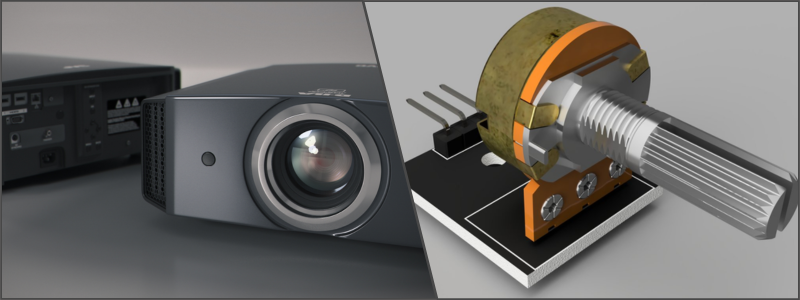
Emerging trends in 3D rendering and collaboration
As technology is updating, 3D rendering is becoming even more sophisticated, opening new doors to collaboration:
Real-time rendering
Real-time rendering enables clients to see changes made to a design instantly. Tools such as Unreal Engine and Unity enable designers to create interactive models that clients can explore and manipulate. This capability enhances collaboration by making the design process more dynamic and engaging.
Virtual reality (VR) and augmented reality (AR)
VR and AR technologies are revolutionizing 3D rendering by providing immersive experiences. Clients can “walk through” a virtual building or interact with a product prototype in a simulated environment. These experiences not only enhance understanding but also build excitement and confidence in the design.
AI-driven design
AI is increasingly being used in 3D rendering. AI-based tools can create realistic textures, optimize lighting, and even predict client preferences based on data. These tools enable designers to focus on creative and strategic aspects of the project by automating routine tasks.
Sustainability visualization
Increasingly environmentally conscious, their clients have interest in sustainable designs. 3D rendering can actually put into picture an environmental impact as a result of chosen design choices-be it energy consumed or carbon footprint. It thus brings the ability of making the most informed decision and aligning both the clients’ and designers’ goals toward sustainability.
Conclusion
3D rendering has changed the way clients and design services companies interact. It has filled the gap between vision and reality through realistic visualizations, streamlined communication, and cost-effective revisions. The company Cad Crowd is an example of how 3D rendering can be a collaboration tool to deliver great results for clients in any industry.
How Cad Crowd can help
With new technologies like real-time rendering, VR, and AI, the horizon for 3D rendering revolutionizing collaboration is limitless. To remain competitive in today’s design landscape, embracing these changes is not just an option but a necessity for both clients and designers. Get a quote today from Cad Crowd.