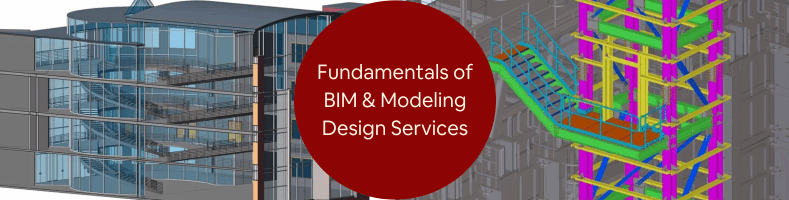
Let’s own up to it: the construction and architecture business was once a sort of sloppy beast. Piles of blueprints, miscommunication, revisions ad infinitum—playing a game of never-ending telephone, except with steel, concrete, and multi-million-dollar contracts. Along came BIM—short for Building Information Modeling services—a name that sounds ominously like something your IT guys might grumble about, but actually changed the entire AEC (Architecture, Engineering, Construction) business.
BIM isn’t software. It’s not simply a 3D model. And it’s certainly not some new acronym to bandy about during client presentations to appear clever. Consider BIM like the digital DNA of a building—an intelligent system that allows your building to come to life before a single brick is placed. But let’s not jump ahead of ourselves. To comprehend the basics of BIM and exactly what Cad Crowd’s model design services at BIM firms really do, let’s first take a look under the digital hood.
🚀 Table of contents
- What exactly is BIM?
- BIM modeling design services: What do these companies actually do?
- 3D modeling: Drawing with brains
- Clash detection: The digital bouncer
- 4D BIM: Construction sequencing for control freaks (In a good way)
- 5D BIM: The dollar signs
- 6D and 7D BIM: Long-term thinking
- Collaboration: The BIM buzzword that actually means something
- The tech behind the magic: A peek into the toolbox
- What makes a great BIM company?
- Who uses BIM modeling services?
- The road ahead: BIM’s evolving role
- Final thoughts: Why BIM matters more than ever
- Cad Crowd is here to help!
What exactly is BIM?
Ask ten people to explain BIM, and you’ll likely hear everything from tech buzzwords to puzzled guesses. But here’s the clear truth: Building Information Modeling (BIM) is not just fancy software or 3D design—it’s a smart, collaborative process that spans the entire life of a building. From that first doodle on a café napkin to the day the wrecking ball swings, BIM helps manage it all.
So, how is BIM different from conventional design software? It’s much more than simply drawing lines and shapes. Imagine designing a skyscraper. Rather than merely writing static blueprints, you’re creating a dynamic, digital model that holds actual information. That model is aware of the wall thickness, the type of material the insulation is composed of, the weight of the steel beams, the flow of the HVAC system, and even the duration of the construction.
Every component in that model, every beam, light fixture, and duct, contains embedded information. This is where it gets truly powerful: everything is interconnected. Changing the window size or altering materials updates the entire system. Floor plans, elevations, cost estimates, and material lists are all updated automatically.
That’s the real benefit of BIM: coordination in real time, better decisions, fewer errors, and improved communication among architects, engineering firms, contractors, and owners. It makes buildings smart systems before they are constructed—and that is not only smart, it’s revolutionary.
RELATED: All things to consider when hiring a design-build firm & services company
BIM modeling design services: What do these companies actually do?
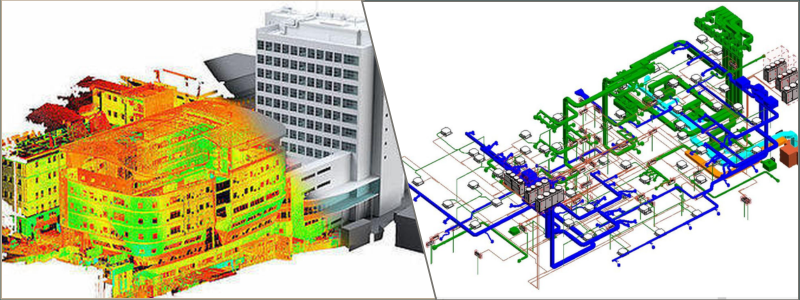
Picture yourself stepping onto a construction site—except that instead of concrete and steel, it’s constructed of blocks and Legos. It’s more data, more precision, and a detailed virtual model that’s aware of everything in the building, from the last bolt to the last duct. That’s the environment in which Building Information Modeling (BIM) design service providers work. They’re essentially a combination of virtual architects, engineers, and project managers, with high-powered modeling software that allows them to model every aspect of a building prior to the laying of a single brick.
At the center of it all is the model itself—a highly detailed, multi-faceted digital twin of the future building. Rather than using two-dimensional blueprints, stakeholders can navigate an intelligent, dynamic model that recounts the entire narrative: how everything is connected, how much it will cost, when it will be constructed, and how it will perform in the long term.
They begin by creating precise 3D models that encompass architectural, structural, and MEP (mechanical, electrical, plumbing) systems. They then perform clash detection—pinpointing any clashes or overlaps before they turn into costly on-site problems. That model also does math, generating correct quantity takeoffs and estimates so budgets remain on target.
Then comes construction sequencing, where timelines are visualized in 4D, allowing teams to plan who does what, when, and how. Tack on 5D cost modeling and even 6D facility management integration, and you’re looking at a full lifecycle digital roadmap—from the initial design concept to long-term building maintenance for architectural design firms.
So, what exactly do BIM companies do? They add clarity to complexity. They transform static plans into smart models. And perhaps most importantly, they enable everyone from architects to building owners to make smarter, faster decisions every step along the way.
3D modeling: Drawing with brains
2D CAD drawings were all the rage, but using them now is like having a flip phone when everyone else has smartphones. That’s where 3D modeling comes in—not merely an aesthetic boost, but an intelligent design revolution. With Building Information Modeling (BIM) software such as Revit, ArchiCAD, and Navisworks, projects aren’t simply drawn; they’re built digitally with intelligence.
These 3D models are more than nice pictures. They’re high-information environments where each piece of information knows who it is, what it does, and how it relates to the larger system. A wall isn’t a wall—it knows its material make-up, thickness, price, and even how much paint it will take. HVAC systems know their air flow requirements. Structural members report their load capacity and cost per square meter.
The great news? Everything is linked. Alter one component—a wall extension, for example—and everybody’s information updates instantly. Architects, engineers, interior design experts, and quantity surveyors are in sync without a problem. No yucky back-and-forth, no mistakes from miscommunication. Just smooth collaboration fueled by intelligent modeling.
It’s not sorcery. It’s BIM at its finest—transferring conventional drafting to a dynamic, smart process that thinks as intently as it draws.
Clash detection: The digital bouncer
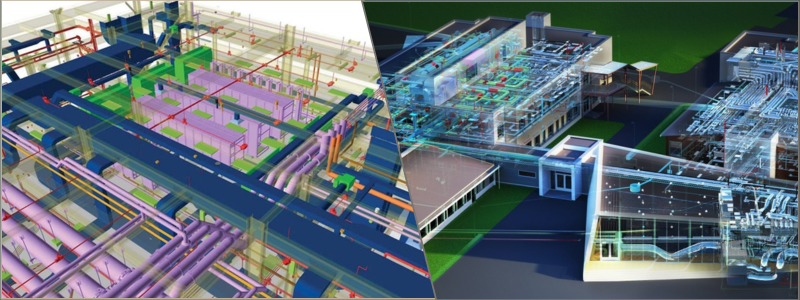
Envision your HVAC duct run right through a structural beam. In conventional construction, this type of clash would not reveal itself until tradespeople were already onsite, leading to eleventh-hour redesigns, growing frustration, and colorful outbursts. Better times are quickly disappearing thanks to Building Information Modeling (BIM).
BIM brings a proactive solution with a process known as clash detection. BIM coordination software blends architectural, structural, and MEP models into one digital space. They then behave like a hyper-vigilant referee, flagging items immediately that are on a crash course, long before materials are ordered or boots touch the ground.
This isn’t merely a matter of catching errors; it’s optimizing workflows. By pinpointing and fixing problems early on, clash detection eliminates the expensive delays and rework. The payoff? Smoother schedules, lower stress, and way happier clients.
Consider clash detection the virtual bouncer at the front door of your construction site—preventing conflict before it even enters. For BIM modeling firms, it’s one of their strongest value-adds, converting what used to be a building nightmare into a clever, effective collaboration. And the beauty of being able to do all this is that none of it takes place until after the first wall has been constructed.
4D BIM: Construction sequencing for control freaks (In a good way)
If you’ve ever witnessed a building site go from nothing to utter chaos in seven days, you’ll know why timetabling is crucial. 4D BIM brings time into the model. This enables teams to model the build process step by step, day by day, demonstrating precisely how the building will be constructed—foundations first, followed by the steel frame, then glass curtain walls, then interior glitz.
This isn’t for entertainment purposes only, although seeing it happen is strangely pleasing. It enables project managers to identify inefficiencies, schedule deliveries, steer clear of scheduling conflicts, and facilitate trades with a level of precision that would make a Swiss watch blush.
5D BIM: The dollar signs
You know that moment when someone asks, “What’s this going to cost?” and the room falls silent? Not anymore. With 5D BIM, cost is no longer an afterthought. Every component in the model is tied to a cost item, meaning your beautiful 3D model is also a walking, talking, budget-tracking machine.
Curious about the cost-effectiveness of going from conventional glazing to high-performance glass? BIM informs you. Curious about aluminum panels vs. concrete cladding? BIM compares the numbers from 3D modeling design services and beyond. It turns guesswork into confidence. And that’s priceless—literally.
RELATED: Top design & drafting tasks to outsource for architects and architectural services firms
6D and 7D BIM: Long-term thinking
Designing and constructing is only the start. What about sustaining the building during the subsequent 30 years? BIM doesn’t end when the ribbon is cut. 6D BIM incorporates facility management information—such as warranties, maintenance schedules, and asset information—directly into the model. The structure is now a digital twin: an active representation of the actual building that grows with it over time.
7D, depending on your source, tends to mean sustainability analysis. How does the building handle various weather conditions? What’s the carbon footprint of your selected materials? You can test energy usage and environmental performance with BIM services and create green without guessing.
Collaboration: The BIM buzzword that actually means something
One of BIM’s not-so-hidden superpowers is its power to bring everyone together at the table. No more isolated workflows. No more he-said-she-said between architectural design experts and subcontractors. BIM firms tend to use Common Data Environments (CDEs)—single digital hubs where all project data is shared, updated, and followed.
Tools like Autodesk BIM 360 and Revizto make this collaboration seamless. Everyone sees the latest model. Everyone can comment, annotate, and assign tasks. It’s like Google Docs for buildings—except instead of writing essays, you’re building hospitals.
The tech behind the magic: A peek into the toolbox
Let’s discuss software. BIM design services rely heavily on a set of digital software to make all of the above work. Revit is frequently the king of the castle, with full modeling functionality in architecture, structure, and MEP. Navisworks is one of the favorites for clash detection and construction simulation. ArchiCAD has stylish software tools. Then there are specialist platforms such as Tekla (excellent for structural steel), Synchro (superb for 4D sequencing), and the constantly changing world of cloud platforms.
And yes, automation and AI are already creeping in. Few BIM companies employ scripts and plug-ins to automate tasks such as room tagging, element renumbering, or even model checking. The payoff? Quicker delivery, reduced errors, and more time for the team to engage in actual design thinking rather than copy-pasting.
What makes a great BIM company?
When you’re searching for a good BIM (Building Information Modeling) firm, glossy 3D rendering services don’t cut it. Sure, it’s great when the renderings are crisp, but an outstanding BIM firm contributes much more to the table than mere looks.
Excellent BIM firms have a larger picture in mind. They consider themselves strategically, as opposed to spatially. It’s not a matter of creating a model—it’s about assisting in creating the whole project more intelligently, from initial planning through final handoff. That involves knowing construction sequencing inside and out. They understand when things must take place, how one action impacts the next, and how to keep moving forward in an efficient manner.
Effective communication is another defining feature. These teams understand how to communicate effectively with architects, interior design services, contractors, and clients to keep everyone on the same page. They proactively alert others to potential issues before they develop into expensive headaches. Permits? Building codes? They’ve got those covered—and then some.
What actually distinguishes the top BIM companies is the extent to which they listen. No two projects are the same, and being able to listen to what the client requires—and respond in kind—is crucial. They use the BIM model as a living, changing resource, not merely something to deliver.
At the end of the day, BIM is driven by people. Behind every finished model is a group of thoughtful, informed decisions being made. It’s not about clicking on buttons in software—it’s about solving and creating value together, within a shared digital space.
So when you’re evaluating BIM services, don’t just look at the output. Look at the process, the people, and the principles driving the work. That’s where you’ll find the real difference.
RELATED: Keys to successful structural design & construction projects with architectural services firms
Who uses BIM modeling services?
When most people hear “BIM modeling,” they envision sleek high-rises or billion-dollar transportation projects. But that’s hardly the tip of the iceberg. Building Information Modeling, or BIM, has far outgrown its initial high-profile beginnings. It now impacts everything from small suburban housing developments to state-of-the-art hospitals, sprawling university campuses, and sports stadiums done by architectural site plan companies.
So, who’s really using BIM? The answer ranges across almost every aspect of the construction and design business. Real estate developers, contractors, architects, and engineers were some of the first. However, they no longer dominate the field. Interior designers, facility managers, and even furniture manufacturers are incorporating BIM into their routine operations. This shift occurs because BIM goes beyond 3D models; it employs an intelligent, data-rich approach for planning, visualizing, and coordinating every phase of a building’s lifecycle.
Think of a builder designing a green eco-hotel. Rather than cobbling things together in conventional CAD tools, they hire a BIM modeling firm to produce one coherent digital model. This isn’t a model that indicates merely where walls and windows go. It contains extensive information about MEP systems, energy efficiency requirements, material choices, and schedule timetables.
With BIM, the green hotel can be built to exacting green building standards, conserve energy, and minimize waste on site. Subcontractors can be coordinated during construction using the model, so expensive mistakes are avoided and the project remains on track. No more conflicting pipes and ducts realigned at the last minute.
And when the building finally opens its doors? The advantages continue. Facility managers can count on the BIM model for correct, current information concerning each system in the hotel. Need to switch out the HVAC units a decade later? There’s no uncertainty—they’ll know precisely where all of it is and how it fits together, not unlike architectural MEP services.
In brief, BIM is no longer the sole preserve of megaprojects. It’s a technology that’s being embraced by industries for its precision, adaptability, and potential to future-proof buildings. Whether you’re building a contemporary art museum or a prefab tiny house, there’s a high likelihood that BIM can make the process more intelligent, seamless, and environmentally friendly.
The road ahead: BIM’s evolving role
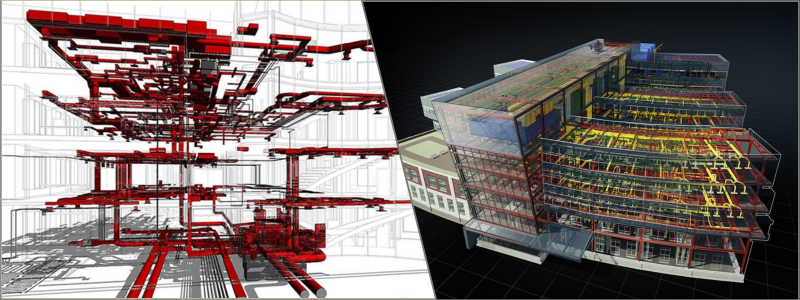
So, is this the end of the line for BIM? Not at all. The next wave is already upon us. Consider digital twins that interface with IoT sensors for real-time monitoring. Consider mixed reality overlays on construction sites. Consider AI programs that provide predictive maintenance and design optimization recommendations in real-time, leveraging the expertise of engineering design experts.
BIM is increasingly a “way we think” rather than a “thing we do.” With building complexity increasing, sustainability targets narrowing, and client expectations becoming more sophisticated, the modeling services provided by BIM firms are evolving into long-term digital relationships.
Those days of the drawing set presented at project delivery are over. The BIM model is the ongoing gift, previously, in real time, and far beyond the end of construction.
RELATED: How architects embrace innovation for modern home design services with companies
Final thoughts: Why BIM matters more than ever
BIM is not all about technology. It’s about trust. It’s about smarter building, not merely faster building. It’s about viewing a building not just as steel and glass, but as an evolving, living being. And for BIM design firms, it’s about enabling teams to transition from confusion to clarity, from guesswork to accuracy, and from chaos to coordination for architectural design and CAD experts.
If you’re setting up a project, regardless of its size, hiring a building information modeling company isn’t a nice-to-have—it’s a competitive edge. They won’t simply give you a model. They’ll give you a roadmap, a control panel, and peace of mind in one.
Cad Crowd is here to help!
Looking to transform your next construction project from chaotic guesswork into streamlined precision? Don’t let outdated methods drain your budget with costly surprises and delays. Partner with Cad Crowd, the leader in providing professional freelance services for architectural, engineering, and design firms.
We’ll help you connect with experts proficient in BIM modeling. It’s your project’s insurance policy against miscommunication, rework, and budget overruns. Ready to build smarter, not harder? Get your free BIM consultation today and discover how intelligent modeling can save you time, money, and countless headaches from day one. Request a quote here.