
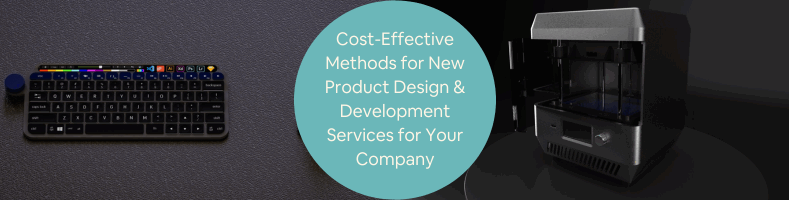
Let’s discuss product development and design services—the exciting, mind-bending, coffee-drenched path from a napkin scribble of a concept to a sizzling, functional product your customers won’t shut up about. Now add some flair: how do you accomplish all that without blowing through your budget like a fire on a windy night?
Product design can be a game of Jenga. Each step—materials, prototypes, CAD drafts—impacts your timeline, cost, and marketplace success. Take one misstep, and the tower of your budget teeters. So, how do the Cad Crowd experts do it without pulling out clumps of hair or sucking dry the company coffers?
Easy. They employ low-cost methods.
We’re not talking about cutting corners and settling for “meh.” We’re talking about smart, strategic, and sustainable practices that allow you to launch a product that is not just operational, but profitable too.
🚀 Table of contents
- Design to cost (DTC): Budget is your partner
- Fail fast, learn faster: Fast prototyping for victory
- Simplicity =savings: Don’t overdesign
- Leverage off-the-shelf components
- Virtual validation: Let CAD tools do the heavy lifting
- Use freelance or small design houses
- Design for manufacturing (DFM): Your factory will thank you
- Outsource strategically: Know what to keep in-house
- Establish a feedback loop early with end users
- Iterate, but know when to stop
- Wrapping it up: Be frugal, be smart
- Cad Crowd is here to help!
Design to cost (DTC): Budget is your partner
Imagine designing an automobile with every possible amenity. and realizing it’s costing more than your target audience makes in an entire year. Whoops. This is where Design to Cost (DTC) saves the day. Instead of designing your dream product first and then figuring out how much it will cost, DTC asks first: What will this have to cost in order to meet our profit goals and customer requirements?
By integrating cost thinking into the design process right from the beginning, you avoid over-engineering and sticker shock. It’s a reverse-engineering of the budget back into the blueprint.
Key strategies:
- Modular design with many functions.
- Use cost-effective and long-lasting materials.
- Look into manufacturing methods (CNC, injection molding, 3D printing) up front.
Paycheck: Your product doesn’t have to cost a lot to feel premium, even for your own consumer product design companies.
RELATED: Best practices for new product design & development with services companies & freelancers
Fail fast, learn faster: Fast prototyping for victory
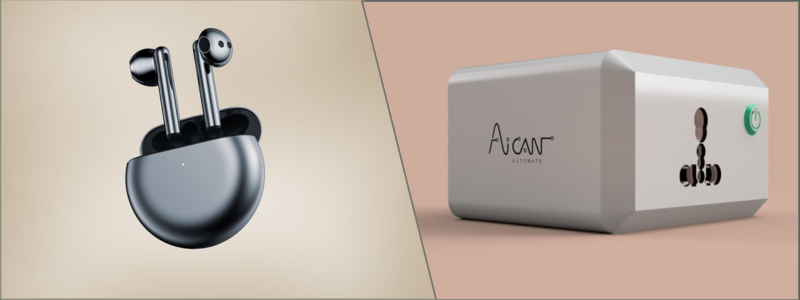
Do you recall how, in the old days, prototyping could take months—and if it turned out to fail, you simply had to redo it all from scratch? Fortunately, those were already in the rearview mirror. Rapid prototyping is nowadays the miracle cure. You can sketch an idea in the morning and have it 3D printed by lunchtime. Foam mockups, computer models, and cardboard mock-ups (yes, sure—cardboard is still a designer friend) allow you to draft ideas at warp speed.
With machines like FDM 3D printers and CAD-testing programs, you don’t have to wait for overseas manufacturers to ship a mold. You can actually check your design’s look, feel, and functionality almost immediately. The advantages? You’ll catch errors early, get feedback faster, and make changes without going bankrupt.
Consider prototyping design services as dating—you don’t want to know what doesn’t work before you’re long-term committed. Fail fast, adapt quicker, and create more wisely.
Simplicity =savings: Don’t overdesign
It’s easy to get carried away when you’re in the midst of product development. “Let’s add Bluetooth!” “Oh, and an LED display?” “Can we waterproof and microwave it?” Hold back—this is classic feature-madness. Here’s the truth: Overdesign can quietly murder your budget. Every extra feature means more parts, more tooling, more testing, and more frequent headaches. Sure, those flashy extras can make your product dazzle—but only if they are actually solving user needs.
So what’s the smart thing to do? Start with a Minimum Viable Product (MVP). Focus on high-value, low-complexity features. And most importantly, steer clear of “feature creep”—a treacherous trap that can send both timelines and budgets astray.
Learn from Apple. The first iPod? One button. That’s it. And revolutionized music. Sometimes the best answer is the simplest—and the most budget-friendly.
Leverage off-the-shelf components
Custom parts = custom costs.
Before designing a proprietary screw, ask yourself, “Is there a standard part that does the job?” Using off-the-shelf components—from fasteners to circuit boards—saves time and money. And suppliers often offer volume discounts. This also speeds up your assembly process and simplifies your bill of materials (BOM). Fewer parts = fewer headaches for product development experts.
Instead of designing a custom hinge, utilize a catalog hinge that has already been tested and certified for your load-carrying requirements. Not everything needs to be bespoke. Vanilla is sometimes the brightest flavor.
Virtual validation: Let CAD tools do the heavy lifting
With today’s CAD software, you can run stress tests, thermal performance, motion studies, and more—before you cut a single piece of material. Virtual simulations enable you to identify design errors early, minimizing the need for expensive physical prototypes and post-production revisions.
Bonus: With cloud-based technology, your team can work remotely without the high cost of hardware installations.
Pro tip:
Finite Element Analysis (FEA) and Computational Fluid Dynamics (CFD) are used at the start of the design process to optimize performance and material usage.
Get your computer to work overtime so your budget doesn’t.
RELATED: Top 50 SolidWorks design companies for 3D modeling, CAD services & engineering in the US
Use freelance or small design houses
Employing a huge design house is like acquiring a Formula 1 pit team for your e-scooter company. Glitzy, perhaps too much. For the majority of companies, particularly start-ups and small companies, boutique product design houses and freelance engineers are an indulgent treasure trove. You receive bespoke service, adaptive pricing, and quicker turnaround times frequently.
Platforms like Cad Crowd make it simple to source vetted professionals who will take care of everything from industrial design services to CAD modeling to prototyping.
Look for:
- A talented product portfolio freelancer in your area.
- Businesses that offer tiered service packages (concept design, engineering, DFM analysis, etc.).
- Concise communication and transparent pricing.
It’s like having your dream team without the full payroll overhead.
Design for manufacturing (DFM): Your factory will thank you
You can design the most beautiful product on earth—beautiful, ergonomic, space-age—but if it’s a production disaster, your factory will rise up in rebellion. That’s where Design for Manufacturing (DFM) comes in. DFM doesn’t only make your product “design-ready,” but “factory-ready.” It’s all about simplifying production complexity, part counts, and waste.
How to Implement DFM
- Use components that are compatible with your process.
- Create parts that can be readily machined, molded, or assembled.
- Use unnecessary close tolerances unless you absolutely have to.
DFM bridges the gap between “neat idea” and “real product,” and believe us, your manufacturer will offer you a virtual high-five.
Outsource strategically: Know what to keep in-house
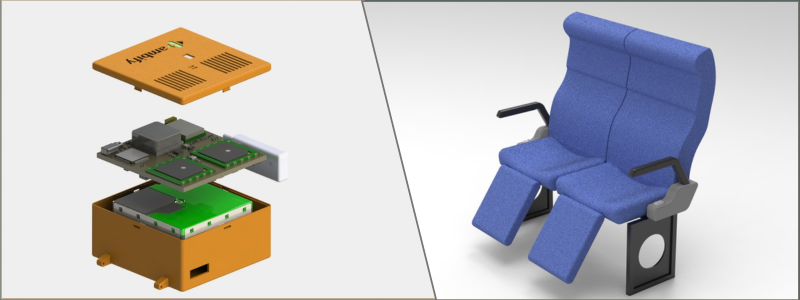
Outsourcing isn’t just a case of exporting your product overseas. It’s a case of strategically deploying resources. You can maintain design ideation in-house (where you have the vision best) and outsource the likes of prototyping, 3D modeling, or electronics design services to specialists. This is a hybrid method that enables you to scale without needing to bring in a full team. Outsourcing also gives you access to specialty skills and global price advantages, especially if you’re prototyping or buying parts globally.
Quick tip:
- Filter out your partners. Cheap prices are pricey if quality is sacrificed.
- Use NDAs and IP safeguards agreements with freelance or offshore partners.
Being strategic with the outsourcing can give you an edge in the competitive market.
RELATED: A guide to electronic product design for manufacturing with PCB design firms & engineers
Establish a feedback loop early with end users
Want to squander money? Create a full product, release it, only to find that customers hate it. Want to conserve money? Involve your users early and often. Do it well and you’re set. Whether beta testers, surveys, focus groups, or pilot programs, the input is a design guide. It prevents you from having to add pointless features, redesigns, and embarrassing product flops.
Suggestions:
- Utilize interactive mockups or AR previews to show customers what’s coming.
- Invite target users to test functional prototypes.
- Ask brutally honest questions: What don’t you like? What’s confusing?
Customer-driven development saves more money than a thousand spreadsheets ever could.
Iterate, but know when to stop
A hard pill to swallow is that there is no such thing as the perfect product. There’s always a newer material, a smaller chip, or a more ingenious design trick that can be used by product engineering professionals. But at some point, you must say, “This is version 1.0,” and ship it.
Design iterations are needed, but endless tweaking incinerates budgets. Set milestones, scope, and stick to your launch schedule.
How to know when to stop:
- Your MVP has achieved basic functional goals.
- Users can utilize and enjoy it.
- You’ve cleared the necessary tests or certifications.
Wrapping it up: Be frugal, be smart
Value-driven product development is not about being cheap; it’s about being smart with your dollars. It’s about designing for purpose, testing with a sense of urgency, and creating with long-term value as the goal. Your new cost-saving toolkit should adopt Design to Cost from day one, embrace rapid prototyping and virtual testing, and resist overdesigning by staying lean and targeted. Whenever possible, use off-the-shelf parts instead of custom components, and partner with the right freelancers and small firms who offer expertise without the overhead.
Apply design for manufacturing services early in your process, outsource strategically while protecting your intellectual property, and build customer feedback loops that prevent expensive mistakes. Perhaps most importantly, know when to ship and iterate later—perfection is the enemy of progress. By weaving these strategies into your product development process, you’ll not only bring your ideas to life—you’ll do it faster, cheaper, and with fewer gray hairs along the way.
RELATED: 10 design principles for product development & industrial design services teams
Cad Crowd is here to help!
Ready to bring your design from concept to reality without draining your budget? Cad Crowd connects you with expert designers who deliver premium results at competitive rates. Stop overpaying for product development. Get your free quote today and discover how affordable innovation can be. Your market-ready product is just one click away. Contact us and get your FREE quote now!



