

Baby products are things that need an intensive process before being manufactured officially. The CPSC enforces these requirements under the CPSIA and other laws while applicable ASTM standards provide safety guidelines. Depending on the baby product, there are some that requires third-party testing, certification, and appropriate age grading before being produced in the market. Designing products for babies and young children isn’t just about being functional and appealing. It also needs to follow and meet strict safety requirements that are designed mainly to protect children from any potential hazards, which make compliance a very important part of the design process right from the very beginning.
In this article, we will explore the different safety standards, testing requirements, and CPSC rules that significantly apply to baby and juvenile products in the United States. We highlight the specific role of CPSIA, ASTM standards, certification, third-party testing, age rating, and how these requirements can significantly influence the product development. Platforms like CadCrowd helps in connecting you with new product design professionals who can best support the technical side of developing compliant products.
What is the CPSC and why does it matter for baby product design?
The U.S. Consumer Product Safety Commission (CPSC) is known as the Federal Agency that is mainly responsible for protecting the public from any unreasonable risks of injury or death that’s associated with consumer products. CPSC plays a very important role, especially when it comes to baby and juvenile products. It oversees products that are designed or primarily intended for children that are 12 years old or younger. The agency established federal product safety laws and regulations, enforces mandatory safety requirements, monitors products for any potential hazards, investigates product-related injuries and concerns, and takes enforcement action when needed.
RELATED: How Much Does It Cost to Develop a New Physical Product? A Complete 2026 Breakdown
The CPSC also works collaboratively with retailers and manufacturers to recall products that expose safety risks. Some of the product categories needed to be addressed with hazards, especially involving small parts, flammability, lead, phthalates, structural integrity, and other safety risks. For manufacturers and designers, compliance must not be treated only at the final inspection performed just before the specific product reaches the market. Instead, safety and regulatory requirements must be considered all throughout the design and development process.
Several features must be thoroughly considered such as material selection, construction methods, component choices, dimensions, and intended age range can significantly affect compliance. Taking these things into consideration helps best in reducing costly redesigns, production delays, failed testing, recalls, and serious enforcement issues in the long run.
What does CPSIA require for children’s products?
The Consumer Product Safety Improvement Act (CPSIA) establishes significant requirements especially for children’s products that are manufactured in the United States. The requirements specifically depend on what the product is, its specific use, and its applicable safety rules. Areas include testing, certification traceability, and limits on certain chemicals used.
Third-party testing
Significant children’s products should be tested by a CPSC-accepted third-party testing laboratory to ensure compliance with applicable federal safety requirements. The testing requirements highly depend on the product category and the rules that specifically apply to it. Manufacturering companies must identify the essential requirements early in the design process instead of just waiting until the product is already ready for production.
RELATED: Top 31 Websites to Hire Toys & Games with CAD Design and 3D Modeling Freelancers
Children’s product certificate
A children’s product certificate, or CPC, is known as a document that is issued by the importer or manufacturer certifying that the specific product complies with all the applicable children’s product safety rules and requirements. The CPC is highly based on the results of required third-party testing and must determine the product, applicable regulations, testing laboratory, and all the other required information.
Tracking labels
Children’s products generally need permanent tracking labels or markings that shows information to help identifying the private labeler or manufacturer, the location and production date, and other important details that are needed in determining its specific source and production batch. These requirements support traceability if any safety issue or recall occurs.
Lead limits
The CPSIA restricts the amount of lead that may be found in any children’s products especially in specific accessible parts of surface coatings. Manufacturers and product designers need to consider the product’s coatings, paints, materials, and finishes that are used in the specific product.
Phthalate limits
The law also restricts certain phthalates in children’s toys and any childcare articles. It depends on the specific substance and product category, which makes material choices a very essential part in the compliance planning. Material selection should account for any applicable chemical requirements from the very beginning of the process. Ensuring to choose appropriate materials early can really help in preventing redesigns, failures, and any production delays later in the product development.
RELATED: 8 Ways How Companies Use 3D Models and Prototypes in Toy Development
What is section 104 rules for durable nursery products?
Section 104 of the Consumer Product Safety Improvement Act, CPSIA, is also known as the Danny Keysar Child Product Safety Notification Act. This mainly requires mandatory safety standards for products that are intended for infants and toddlers. These rules are significantly enforced to make sure hazards associated with products that are regularly used by young children will be reduced.
Here are some of the durable nursery products and the design issues the standards may address.
- Cribs – Structural strength, stability, and child entrapment
- Bassinets and cradles – Stability, structural integrity, and secure locking
- Toddler beds – Strength, guardrails, and entrapment risks
- Highchairs – Stability, restraints, and locking mechanisms
- Booster seats – Restraints, stability, and secure attachment
- Strollers – Brakes, restraints, stability, and folding mechanisms
- Play yards – Locking systems, structural strength, and entrapment
- Infant walkers – Stability, structural integrity, and unintended movement
- Changing tables -Stability, structural strength, restraints, and fall prevention
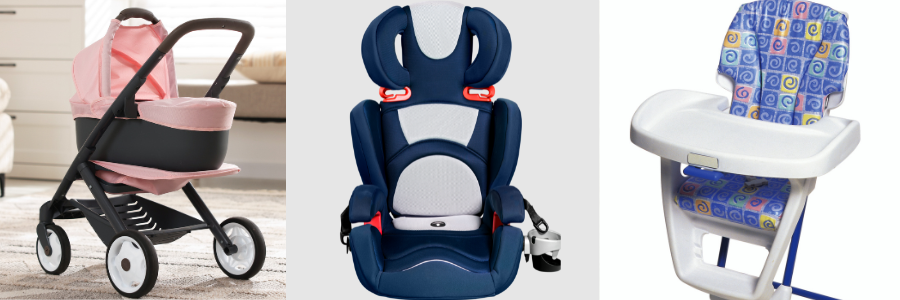
These requirements can truly influence how a certain product is designed and manufactured. Several features like stability, restraints, folding systems, structural strength, locking mechanisms, and spaces that could certainly create entrapment hazards are all needed to be considered during the process of development.
What is ASTM F963 and when does it apply?
ASTM F963 is a consumer safety standard, which is highly known for enforcing requirements for toy design services that are mainly intended for children 12 years old and younger. It is one of the several safety standards that are considered when designing and manufacturing applicable children’s toys in the United States. This standard is mainly intended to address potential hazards that may occur during normal use and any reasonably foreseeable misuse.
ASTM F963 may address areas such as:
| ASTM F963 Area | What It Covers |
| Mechanical and Physical Requirements | Sharp points, sharp edges, small parts, and other potential injury hazards |
| Chemical Requirements | Certain restricted substances and other accessible materials |
| Flammability | Fire-related risks that are associated with applicable toy materials |
| Sound-Producing Toys | Potential risks or concerns from excessive sound levels |
| Battery-Operated Toys | Safety considerations which involve batteries, battery compartments, and other related components |
For new product designers, ASTM F963 can really influence decisions about specific features like material, construction, dimensions, components, and how a certain toy is expected to be used. Considering all these requirements early can really help in reducing potential risks of design and testing problems later. Other ASTM standards are not automatically federal law because they are published by ASTM International. Certain requirements of ASTM F963 become mandatory only when it is incorporated into federal regulations and established under applicable U.S. consumer product safety laws.
RELATED: The Importance of Iteration in Product Development & Working with Product Design Companies
ASTM standards or provisions may also remain voluntary unless there is another regulation, industry practice, or legal requirement that makes them applicable. Therefore, manufacturers must identify different requirements that specifically apply to their product instead of just expecting that every ASTM standard is legally mandatory.
Is JPMA certification required for baby products?
JPMA certification is basically not required by federal law for baby and juvenile products. The Juvenile Products Manufacturers Association (JPMA) significantly operates as a voluntary certification program intended for eligible products, which helps manufacturers by giving them an additional way to demonstrate their specific products as it is evaluated against applicable safety standards. Although certification is not a universal legal requirement, it can still provide practical benefits in the market world. For manufacturers, participating in this kind of voluntary certification program greatly helps in demonstrating product commitment to safety and quality, all while strengthening its relationships with consumers and retailers.
JPMA certification may help several manufacturers:
- Build market credibility by showing a real commitment to product safety and quality.
- Increase retailer confidence when certain products are considered for distribution.
- Strengthen consumer confidence through delivering additional signal which helps in product safety.
- Differentiate the product in the front baby and juvenile product marketplace.
- Support brand reputation, especially when marketing products to several parents and caregivers.
However, voluntary JPMA certification must not be confused with any mandatory regulatory compliance as it doesn’t function as a replacement for federal safety requirements that are established by the CPSC, CPSIA, or other applicable laws and regulations. It highly depends on the product, and the design for manufacturing firms still need to meet mandatory safety standards, complete all required third-party testing, and issue the appropriate certifications before they sell the product in the United States. The distinction of both is very important since a product can have a voluntary certification while still being subject to another federal requirements.
RELATED: Why Prototype DFM Services Are Useful for Product Design at Companies and Firms
Manufacturers must first determine and satisfy all the needed mandatory requirements that best apply to their product. And once everything is addressed, they can already consider whether JPMA certification or another voluntary program could be added as an additional value. In short, JPMA certification is only an optional addition to compliance, not a requirement or a substitute for it. It helps in strengthening credibility and trust, but meeting mandatory safety requirements remains the very essential foundation of bringing children’s product into the market.
PRODUCT CATEGORY AND AGE REQUIREMENTS
Which baby product standards apply to which product categories?
Different baby and juvenile products are subject to several safety requirements that are significantly based on their design, specific use, and target age group. Manufacturers must determine and identify the specific rules that best apply to their product during the early process of the product design and development process, since requirements can really affect the product’s materials, dimensions, construction, and components.
| Product Category | Applicable Standards / Requirements | Key Design Considerations |
| Cribs | Applicable CPSC requirements | Entrapment, structure, mattress fit |
| High chairs | Applicable CPSC requirements | Stability, restraints, pinch points |
| Strollers | Applicable CPSC requirements | Folding, stability, restraints |
| Play yards | Applicable CPSC requirements | Entrapment, locking, structure |
| Toys | ASTM F963 and applicable federal rules | Small parts, chemicals, mechanical hazards |
| Child care articles | CPSIA and applicable rules | Lead, phthalates, materials |
| Other juvenile goods | Product-specific requirements | Verify applicable rules |
The table above provides a general overview of some of the common product categories and the types of requirements that are appropriately apply. It is only for educational purposes and not a complete compliance checklist. Requirements depend on specific products and its intended use. Prototype design engineers must verify current CPSC, applicable federal regulation, and essential standards for their specific products before they begin testing and manufacturing.
How does age grading affect baby product requirements?
Age grading significantly plays an essential role in designing a children’s product, and it is more than just deciding how it will be marketed. The specific age range that is assigned to a certain product can influence the regulations that apply, the required testing, and the warnings that should be provided. Also, the types of possible hazards designs that are needed to be considered.
RELATED: Child-Resistant Packaging: Design Tips for Your Company’s New Product
A product’s intended age must be based on several factors like:
- Physical development – focuses on child’s strength, coordination, size, and motor abilities.
- Cognitive development – it is all about the child’s ability to understand different instructions and recognize specific potential hazards.
- Intended use – how a specific product is expected to be used by children within the specified age range.
- Marketing and advertising – it’s mainly about how a product is presented and the age group it intends to target.
- Packaging– images, language, and specific instructions that must communicate who it’s intended for.
Age grading also affects toy classification, testing procedures, small parts requirements, and safety warnings. Therefore, product concept designers must make sure to consider how a child within the specific target age range would interact with the product realistically, including several foreseeable use and misuse.
HOW REGULATIONS AFFECT PRODUCT DESIGN
How should small parts and choking risks influence product design?
In designing products for babies and young children, every little thing or small component must be treated as a potential safety concern. Whether it’s a small or detachable parts like buttons, caps, wheels, knobs, fasteners, decorative elements, battery compartment components, and any removable accessories are considered hazardous once they break or detach during use.
Designers must put into mind these questions before designing a specific product:
- Can the specific component I am using come loose during repeated use or even normal use?
- Could wear and tear possibly weaken the connection over time?
- Could the part possibly detach after it’s dropped or impacted?
- Can a child possibly pull, twist, or pry the specific component away?
- Could a broken component lead to a small part hazard?
These potential risks should be addressed while the specific product is still being designed. CAD allows CAD drafting designers to determine and examine how individual components interact and connect, while material and fastening choices can help in improving durability and reduce the potential cases of certain parts to be detached. It is also very essential to consider any foreseeable use and misuse. It is inevitable that children may chew, pull, shake, twist, or drop products in ways that adults may not expect.
RELATED: What Files and Specifications Do You Need for a Successful Freelance CAD Project?
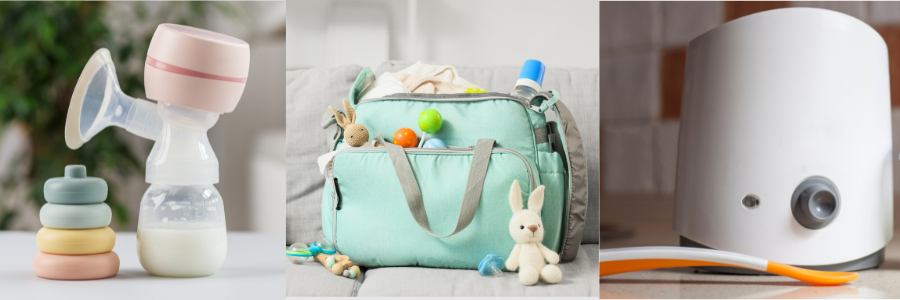
That is why if a product is only designed for ideal use, it can therefore leave important hazards undiscovered later. When considering potential choking hazards before tooling and prototyping, manufacturers can have a lot of opportunities to strengthen its connections, redesign components, and select materials that are safer and reliable without the need to face expensive changes in the long run.
How can designers prevent pinch points and entrapment?
Pinch points and entrapment hazards must be considered by the product engineering professional whenever a children’s product has parts that fold, slide, adjust, move, or rotate. Features like joints, gaps, openings, folding mechanisms, hinges, and locking systems can possibly create potential hazards if not designed carefully. This is highly important since products like high chairs, strollers, convertible juvenile products, and cribs, since these are examples of products where components may change position in everyday use.
During the design process, CAD help teams in examining how every component interact and identify potential problem areas, such as spaces where a child’s fingers could possibly be trapped, gaps or openings that could somehow create an entrapment hazards, interfaces between moving components of a product, areas around hinges and joints, which could create pinch points, how parts interact as they are adjusted, rotate, slide, or fold, whether locking mechanisms properly engaged and remain as secure as it needs to be.
Prototype designers must also evaluate several foreseeable misuses instead of just considering only the product’s intended operation. A child may climb onto a product, pull on a component, place their fingers into an opening, or even push against a moving part. That is why reviewing these possible scenarios early on with CAD and physical prototypes they can be able to adjust clearances, improve mechanisms, refine component geometry, and eliminate hazardous gaps before they enter the production. Identifying these challenges and issues early is beneficial as it provides efficient workflow and less costly than applying changes after tooling or manufacturing has already begun.
RELATED: Designing Prototypes: 3D Design Services for Inventors and Companies
TESTING AND MANUFACTURING
How should use-and-abuse testing influence CAD design?
Children may interact with certain products in ways that go far beyond what it’s intended to be. They may drop, bite, twist, pull, climb, shake, or repeatedly operate components and mechanisms. CAD designers must account these foreseeable behaviors before the product reaches its final testing or manufacturing.
Designers must consider:
- Fastener retention
- Material fatigue
- Joint and connection strength
- Product stability
- Repeated operating cycles
- Structural loads and impact forces
Its main goal is to properly evaluate how a product will perform during realistic conditions, including any foreseeable misuse. CAD models help in identifying weak connections, stress points, and other areas that may require any redesigning or reinforcement. The principle is basically simple; design for foreseeable abuse, not just ideal use. 3D modeling designers must anticipate how children would interact with specific product since it can be helpful in reducing potential failures, improve its durability, and address potential safety concerns earlier rather than making costly revisions when finally launched.
Planning to design a juvenile product? Need a helping hand that could guarantee a smooth flow of having safety requirements and create an easier way to build a design before prototyping, testing, and expensive tooling begin? Worry no more! Cad Crowd can help you by connecting you with the right CAD designers, engineers, and 3D modeling professionals who are expert in turning your concepts into manufacturable products, all while supporting product development right from the early stages of design through the prototyping and production stage.
RELATED: CAD Design and 3D Modeling Rundown
FREQUENTLY ASKED QUESTIONS:
- Who is mainly responsible for children’s product compliance? The manufacturer or the designer?
It’s the manufacturer or importer since they are responsible in ensuring that the product complies with all the applicable requirements. Designers, though, play an important role in making sure that the safety considerations are incorporated into the product’s design.
- Can a product be sold in the U.S. before it passes required testing?
Mainly no. When it comes to children’s products, it needs to be tested since it is generally subjected to mandatory testing requirements that must be applicable before they are legally imported, distributed, or marketed.
- What happens if a children’s product fails the required safety test?
If cases like this happens, the product must be redesigned or tested before it can be legally marketed. Some failures may also result in recalls or even regulatory action.
- Do imported baby products have to meet the same U.S. safety requirements?
Yes. Children’s products that are imported into the United States must comply with the same U.S. safety requirements regardless of where they were manufactured.
How Cad Crowd can assist
In designing a safe and successful baby or juvenile product, a proper compliance must be considered long before it reaches the final testing laboratory or production line. Every process from age grading to material selection to entrapment risks and safety requirements can significantly shape the critical design decisions. That is why it is very important to address these factors early so that any potential or costly redesigns will be prevented along the way.
If you are developing a children’s product, especially for the U.S. market, Cad Crowd can help you best in connecting with the right and experienced CAD designers and engineers to help in turning your requirements into a thoughtfully designed product that is not just visually pleasing but also right to be manufactured with the proper accordance of standard requirements. Contact us for a free quote.
Disclaimer: This article is intended for educational purposes only and must not be considered legal, regulatory, or compliance advice. Children’s product requirements depend specifically on certain product category and can possibly change over time. Before manufacturing or selling juvenile product in the United States, make sure to confirm all the required standard requirements with CPSC-accepted third-party testing laboratory and qualified legal counsel.



