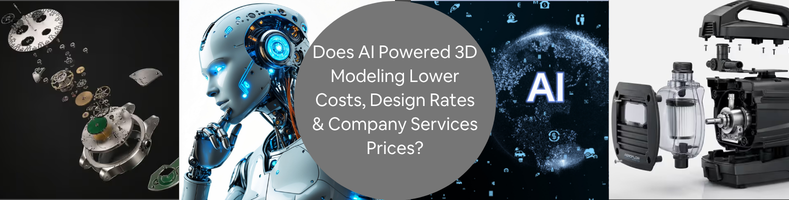
In 2026, AI has become a tool for making workflows streamlined and simplified. Engineering and design have incorporated AI to 3D modeling services not just to make it cheaper but also to improve the overall design process. AI-powered 3D modeling shortened project timelines, improved design concepts, avoided costly reworks and improved collaboration among the team. Using AI is especially advantageous for markets like the United States, which are considered higher-cost markets. For firms and businesses that seek experienced 3D design freelancers who can integrate AI in 3D modeling, Cad Crowd would be the right platform to start.
Quick Comparison: traditional vs. AI-assisted 3D modeling
| Project area | Traditional 3D modeling challenge | AI-assisted improvement | Business impact |
| Concept modeling | Many paid hours before a clear direction appears | Faster first drafts and visual options | Lower early-stage costs |
| Revisions | Manual changes can raise costs quickly | Quicker edits and alternative versions | Shorter feedback cycles |
| Generative design | Limited time to test many forms | More design options in less time | Better performance choices |
| Quality review | Errors may appear late in the process | Earlier checks and cleaner handoffs | Less rework |
| Visualization | Extra time for renders and presentation assets | Faster visuals for approval and marketing | Faster stakeholder buy-in |
Where AI creates the most value
| Value area | Cost benefit | Speed benefit | Quality benefit |
| Early concepts | High | High | Medium |
| Design variations | Medium | High | High |
| Generative design | Medium | Medium | High |
| Rendering and visualization | Medium | High | Medium |
| Manufacturing review | High | Medium | High |
| Documentation support | Medium | Medium | Medium |
Simple impact graph: where AI helps most
| Workflow stage | AI impact level |
|---|---|
| Concept exploration | ██████████ 10/10 |
| Design variations | █████████ 9/10 |
| Rendering support | ████████ 8/10 |
| Revisions | ████████ 8/10 |
| File cleanup | ██████ 6/10 |
| Final engineering validation | ████ 4/10 |
AI’s strongest points lie in fast exploration, design variation and any generative creative concepts during the early design stage. While it is indeed fast in producing a concept or a design, human judgment and refinement is still needed to conduct tolerance checking or any other engineering/manufacturing approval. This is why AI can’t fully replace 3D modelers. Design professionals are still needed to ensure accuracy and functionality.
RELATED: The Impact of AI on 3D Architectural Rendering Services for Companies and Firms
1. AI reduces early concept modeling hours
An idea doesn’t just pop instantly. Early 3D concept design could be expensive because of the time designers have to render to explore layouts and shapes. They have to conduct research, find inspiration and relate to the project requirements. Starting a design takes long hours and could be costly, especially for a high-cost market like the United States. Long hours would mean cost implications to the project cost. This is where AI can help by generating rough concepts, forms, and references related to the project vision. It significantly reduces the time needed to brainstorm and research. The designs generated are also optimized in a way it matches exactly what the designers are in mind, considering constraints, limitations and standards.
2. AI helps teams compare more design options
When the budget and the schedule is tight, the 2D & 3D designers struggle to find time to produce different design concepts. They do not have the luxury of exploring ideas due to the constraints. Every design variation would mean another set of costly labor, and some startups can’t afford such privilege. Having access to a variety of designs is now possible with AI. It does not just help in producing multiple design concepts; it also sets a smoother direction for the project. It allows the team to evaluate and analyze which design concept is more profitable and functional.
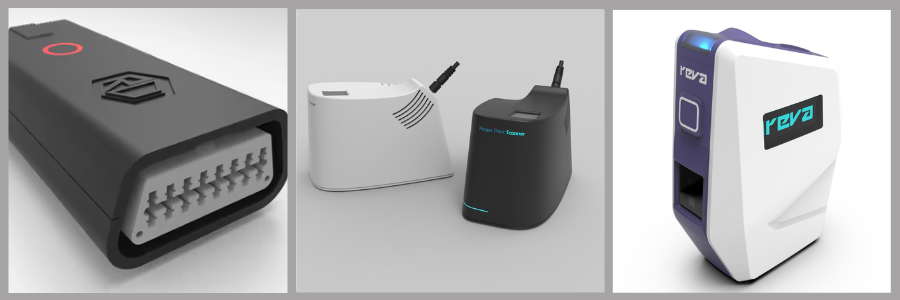
3. Generative design improves engineering efficiency
Producing a design is not just about how it looks or how it functions. It also is predefined by goals and constraints set for it to become a solution. Making a design that covers all would require a lot of time to research, test and validate. Knowing which method or material is the right fit would be time-consuming and costly. Generative AI design improves engineering efficiency by producing a design that matches the parameters set. It could be about weight, material usage or load requirements. Its advantages lie in speed and optimization. It produces solutions to the problem, making sure it does not sway from the original intent.
RELATED: Pros & Cons of AI for 3D Modeling Services and Your Cost Savings at Companies in 2026
Generative design benefits at a glance
| Benefit | How it helps 3D modeling services | Why clients care |
|---|---|---|
| More alternatives | Creates many design paths quickly | Better choices before final modeling |
| Weight reduction | Tests lighter structures | Lower material and shipping costs |
| Performance improvement | Balances strength, space, and load | Better product function |
| Manufacturing fit | Compares production-friendly options | Fewer expensive redesigns |
| Faster decision-making | Gives teams visual options earlier | Shorter project timelines |
4. AI lowers the cost of first visual drafts
During the early design stages, the first concept drafts from the CAD drafting professional are to be approved by the clients. They’d need visual presentations to understand how the concept goes. Traditionally, manually doing it would take a lot of time. AI can accelerate this by producing a concept needed to present to the client in minutes. This helps the communication faster and reduces delays during the design approval stage. Although the quick generated concepts are still rough and need further adjustment, it is still helpful for the client to understand and provide feedback. It minimizes revisions and iterations, resulting in a more efficient design process.
5. AI speeds up design revisions
Revisions are costly. A simple design change or alteration would mean more labor work. It may seem little at first, but the build up over time would have a great cost and time impact to the project. This is why AI-assisted workflows are game changers. It assists in accelerating the repetitive edits and adjustments. It helps product designers to efficiently apply changes. When the revisions are done quickly, the communication between the team and the client is smoother. It reduces the turnaround time just to get approval and feedback. It is critical to stay in the zone or momentum when doing alterations to support clear decision-making.
6. AI helps reduce expensive rework
Time is money. In the United States, wherein every additional hour means higher cost impact, it is important to be cost-efficient. One of the most expensive challenges in design and product development is rework. There are instances wherein the output does not match the expectations or there are clashes observed during construction/product development. AI helps in eliminating such errors by flagging possible issues such as inconsistencies, and clashes. Early detection in product modeling services would mean early fix. This helps in reducing errors before it reaches production stage. It prevents spending more time fixing major revisions and instead helps in focusing more on the detailed modeling.
RELATED: Will AI Replace 3D Artists in 2026? Expert Insights for ArchViz & Architects
Cost drivers AI can reduce
| Cost driver | Why it raises pricing | How AI helps |
|---|---|---|
| Unclear concepts | Designers spend time guessing | AI creates early visual references |
| Too many revisions | Each change adds paid hours | AI speeds up option generation |
| Manual variations | Every version takes extra time | AI creates faster alternatives |
| Late design errors | Fixes become more expensive | AI supports earlier review |
| Slow approvals | Delays affect project schedules | AI improves visualization speed |
7. AI improves design communication
Not all clients have the sufficient technical knowledge to understand 3D design language. This is why it’s important to communicate in visuals or sketches for a clearer understanding. A shared visual between the client and designer sets the right expectations, making the whole workflow soother. This lessens further revisions and speeds up approval. Since AI can produce quick visuals, the designers can focus on improvement and refinement of it. With AI-generated concepts, it would be easier for the client to grasp the ideas during early design stages and let the designer have more time to come up with a stronger outcome.
8. AI can make freelance 3D modeling more scalable
Most freelancing 3D product renderers use AI as support. They let AI handle the repetitive tasks, layout options and any simple tasks that wouldn’t impact the design quality. It’s more of an efficient support system to improve productivity and speed. With this, startup companies would have access to this kind of professional support without hiring an in-house. This is useful especially when the company is not ready for a full commitment. The projects could scale up and down, and the companies would have the flexibility to outsource when needed. Platforms like Cad Crowd are especially reliable to outsource vetted professionals to have access with AI-assisted 3D modeling.
9. AI supports faster product visualization
Product visualization wouldn’t look real without necessary polishing. It needs to have a good clean model, carefully selected material texture, lighting and camera angles. Instead of blind experimentation, AI can create visualizations that are suitable for market presentations or investor pitches. While it can create compelling visuals, it is still important that the 3D visualization designers would conduct quality checks. The generated output should still match the design’s original attributes and does not mislead the buyers or investors. This is why professional designers still play a critical role.
RELATED: How AI Trends Influence New Product Design and Development Companies
Design timeline comparison
| Project phase | Traditional workflow | AI-assisted workflow |
|---|---|---|
| Briefing | Client explains idea with notes and references | AI helps clarify visuals and requirements |
| Concepting | Designer creates limited first options | Designer reviews more AI-assisted options |
| Modeling | Manual build from selected direction | Faster base forms and guided refinement |
| Revisions | Changes are made one at a time | Variations can be tested more quickly |
| Visualization | Renders are prepared after modeling | Visual studies can happen earlier |
| Final delivery | Designer checks and exports files | Designer checks, cleans, and validates files |
10. AI can reduce costs for small design teams
Small businesses and startups lack resources to keep large in-house 3D departments. Often when needed, they tend to hire outsource the services externally or collaborate with part-time product concept freelancers. They’d benefit more in working with freelancers who use AI tools to speed up the design process and make the workflow more efficient. Project savings come from an efficient timeline. AI makes it more manageable and accessible for small businesses to move quickly from design stage to production, without skipping or sacrificing quality. It just allows them to gain access with smart approaches.
11. AI improves speed in high-cost labor markets
It is understandable that the 3D modeling rates could be costly since they possess skills and technical expertise and software proficiency. AI can help in reducing the number of hours resources would need to complete the task by handling the repetitive work. It does not mean AI will replace the skilled modelers but rather allocate the human expertise more strategically. AI will act as support for generation, exploration and other repetitive tasks and the 3D modelers will be in charge of accuracy, functionality and quality control.
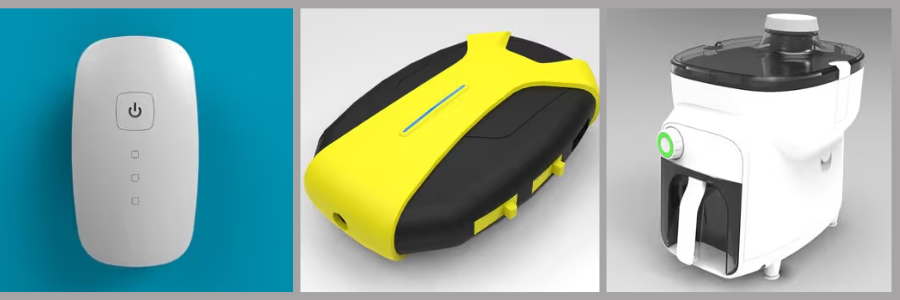
12. AI helps create design variations faster
Making a design variation could be time-consuming. It requires more time to explore different kinds of packaging options, interior designs, or gaming mapping or skins. The more time spent on creating variations, the costlier the project budget would be. AI can speed up this process by generating alternatives, allowing designers to explore ideas. It does not only produce aesthetic designs but also practical results which helps the product more marketable. It also helps the client choose which variation is more aligned with their vision, and speeds up approval.
RELATED: How AI Innovations Transform Modern Consumer Product Design at Agencies & Companies
Example: How AI can affect project pricing
| Example service | Traditional pricing pressure | AI-assisted advantage |
|---|---|---|
| Product concept model | Many early design hours | Faster first-pass options |
| 3D rendering package | Multiple lighting and material tests | Faster visual exploration |
| Mechanical part design | Long optimization cycles | More generative design options |
| Architecture visualization | Many scene and material changes | Quicker mood and layout studies |
| 3D printing model repair | Manual mesh cleanup | Faster issue detection |
13. AI can improve material and texture workflows
Applying textures to a 3D model would require a lot of time since the designers have to explore the right one to make it look realistic. Materials such as wood grain, glass, plastic or fabrics would require attention to detail to make it look photorealistic. AI can help in generating visuals, suggesting textures and directions. While the generated visuals are convincing and look realistic, photorealistic rendering designers would still have to review and scale the textures to make it look natural. This is why, AI acts as a support and 3D modelers would still be the core designers to balance realism.
14. AI helps with topology and cleanup tasks
Not all AI-generated models are clean and perfect. It could still have messy geometry and inconsistent elements included in it. However, it could still be cleaned up using AI-assisted tools. Post-processing tasks such as retopology, mesh cleanup, and model reconstruction can be done through AI. It is important for the model to appear clean and structured. Quality control remains a critical process in the design stage. Whenever a cleanup is done, modelers would still do a run through to make sure that the model is still accurate and stable.
15. AI supports faster prototyping
Since AI can generate concepts and ideas quickly, it shortens the time needed from concept to digital prototypes. AI-powered modeling can quickly make variations of a product according to fit, ergonomics, visual or overall performance. Fast prototype design services is an efficient approach to validate design and material options. It speeds up the learning process of the team and avoids costly mistakes in choosing unnecessary materials or methods. It helps the businesses to operate even in tight deadlines, having confidence in their design models.
RELATED: Generative AI Design Technology for 3D CAD: A Comprehensive Guide for Companies
Prototype workflow comparison
| Step | Without AI | With AI support |
|---|---|---|
| Idea sketch | Slow manual interpretation | Faster visual translation |
| Form exploration | Limited options | More alternatives |
| First 3D model | Built manually from scratch | AI-assisted starting point |
| Review | Later in the process | Earlier visual feedback |
| Prototype prep | More manual checking | Faster issue spotting |
| Final validation | Human-led | Human-led |
16. AI can reduce design bottlenecks
The design process may slow down when a resource has too much workload or tasks. It could pile up and lead to project delay. AI can help in reducing the bottlenecks by handing the repetitive work and concept exploration. This lets the designers focus on more critical and valuable tasks. Bottlenecks when mishandled are costly and could lead to project delay. This is why it is important that the design process is efficient to support even tight deadlines. AI-assisted workflows keep the project moving without delay, and improve consistency and efficiency.
17. AI makes early-stage design more affordable
Many companies delay design work due to upfront costs. It is undeniably real how costly the early-design stage could be due to time spent in exploration of ideas. Ai can speed up the exploration and come up with various designs to choose from. It makes early-design more affordable. This allows early validation before committing. AI does not only help in making the early design affordable, but it adds value to refinement of outputs. It helps in filtering or narrowing down ideas to come up with the final concept. It makes product designers focus more on the design intent instead of manually doing sketches and research. This creates a more efficient and strategic design approach.
18. AI improves presentation speed
Some projects stall when the stakeholders couldn’t clearly visualize the final outcome of the project. AI-assisted modeling can help create presentations that are clearer and easier to understand. It allows the design team to show different design concepts in a more understandable way. When stakeholders understand the vision, decision-making would be faster. It wouldn’t take a lot of time for a back-and-forth revision-approval cycle. Better visuals allow the clients and investors to have confidence with the project.
RELATED: Artificial Intelligence & AI’s Impact on 3D Rendering Design at 3D Modeling Companies
Hidden savings beyond hourly rates
| Hidden saving | Why it matters |
|---|---|
| Faster approvals | Teams spend less time waiting for decisions |
| Fewer dead-end concepts | Budgets go toward stronger directions |
| Better briefs | Freelancers quote and deliver more accurately |
| Earlier error detection | Problems cost less to fix early |
| More confident stakeholders | Teams move forward with less hesitation |
19. AI helps optimize parts for weight and strength
Generative AI design can optimize parts to balance weight and strength. A remarkable example to this is Airbus A320 wherein the internal partitional weight has a reduction of 45%. This has significantly help make the walls lighter without compromising safety and strength. In fields like transportation, aerospace and medical devices where balance in strength and weight is important, AI can explore optimized forms to improve its performance. Not only that, but lesser materials would also directly incur project savings.
20. AI supports design for manufacturing
Design for Manufacturing (DFM) services are about producing parts efficiently at a low practical cost. This allows the businesses to come up with cost-efficient parts without compromising safety and performance. AI can assist in identifying optimized geometries and methods suited for the design. One powerful example is the collaboration between General Motors and Autodesk.AI generated a redesign option for a vehicle seat bracket that consolidated 8 parts into 1 and made it 40% lighter and 20% stronger.
This proves how AI can help designing a model that is not only realistic but practical to produce. While AI can produce promising outcomes, human expertise is still needed to review before manufacturing and production begins.
21. AI can reduce outsourcing waste
Outsourcing is only smooth when the instructions and briefs are clear and understandable. A misunderstanding between the company and freelancer can lead to more rework and repeated corrections. AI-assisted workflows can help the businesses and clients to set expectations to reduce ambiguity. When the directions are clear, outputs are more accurate and aligned with expectations. AI streamlines the learning process and allows freelancers to become more efficient and productive.
RELATED: Trends Shaping the Future of Product Design for Industrial Design Services
AI Savings by client type
| Client type | Common challenge | AI-assisted benefit |
|---|---|---|
| Startup | Limited budget and urgent timelines | Faster proof-of-concept models |
| Manufacturer | Need practical production files | Better design-for-manufacturing review |
| Ecommerce brand | Needs many product visuals | Faster rendering and variations |
| Architecture firm | Needs client approval visuals | Faster concept visualization |
| Inventor | Has rough ideas but few technical files | Clearer briefs and early models |
22. AI helps freelancers deliver faster estimates
In estimating 3D modeling work, there are a lot of factors that are assessed like complexity, references, review time, iterations and any other expectations. AI can help in coming up with an estimate by benchmarking from similar project scopes. This way, the estimate is more consistent and accurate. When the estimates are clear and organized, it helps the client to budget. It reduces misunderstandings and unclear deliverables. It improves the project’s overall efficiency and quality delivery.
23. AI improves collaboration between designers and engineers
A 3D modeling project is a collaborative work between designers and engineers. Designers focus on the overall appearance of the model, while engineers focus on functionality and structural integrity. AI generative design allows balance by producing a design that incorporates both creativity and technical requirements into one. It improves the overall project quality and ensures practicality during production. This smoothens collaboration between engineers and designers and lets them focus on decision making and refinement of the design. It supports valuable alignment, reducing risky clashes and costly reworks.
24. AI reduces manual drafting support tasks
3D modeling work is often connected and accompanied by administrative tasks. It includes technical drafting, adding measurements and annotations, documentation, and applying layouts. Most of these supporting tasks are repetitive and time-consuming to do. It is especially tedious for large-scale projects. AI can assist in simplifying the workflow by handling the administrative design work. AI automation can reduce the time spent in doing repetitive tasks so designers can focus on quality checks instead. The generated work would still need four eyes to verify tolerances and dimensions. This ensures consistency and accuracy of the output, reducing possible costly mistakes.
RELATED: Freelance 3D Modeling Techniques: An Overview
Where human experts are still essential
| Task | Why human expertise matters |
|---|---|
| Final CAD modeling | Files must be accurate and usable |
| Manufacturing validation | Real production constraints matter |
| Tolerance decisions | Small errors can cause part failure |
| Client interpretation | Designers understand context and intent |
| Brand consistency | Visual quality needs judgment |
| Engineering signoff | Safety and performance require review |
25. AI helps create better client briefs
One of the most effective ways to cut costs due to unnecessary revisions is to make a strong brief. It is important that the brief has clearly demonstrated the design intent, project requirements and all expectations. AI can generate a brief that will give clients a structured idea and concept, aligned to their preferences. This makes it easier for designers to understand the scope even better. When the brief is clear and strong, it improves the overall project efficiency. There would be less time for clarifications and assumptions. Product development designers would only have to focus on the actual design models, making the deliverables more aligned to client expectations. This speeds up the turnaround time and improves project quality.
26. AI makes 3D asset creation faster
In 3D AR/VR architectural services, gaming, e-commerce, architecture, and marketing, 3D assets are widely utilized. AI can act as a support to speed up base mesh creation, style exploration, and texture references. This allows the team to come up with more assets in less time, which lowers cost per assets. Studies and developers’ reports from tools like Autodesk and NVIDIA show that AI-assisted modeling can actually reduce asset creation time by approximately 30-70%. It supports a faster iteration cycle, which improves productivity gains.
27. AI helps reduce rendering costs
Rendering is time-consuming and expensive. It is a resource-intensive task since it requires a lot of things to consider such as material texture, lighting and camera angles. AI-assisted tools can help in reducing time and costs with preview generation, scene ideation, and post-processing. This allows the team to explore and test different ideas to come up with the final visual style. It would be more beneficial for e-commerce industries or fields that need several renders per product. AI can speed up the timeline for rendering and improve project efficiency. While it is quick and fast, designers would still need to check if it aligns with the brand and intent.
Rendering workflow impact
| Rendering task | AI contribution | Professional review needed |
|---|---|---|
| Lighting ideas | Fast mood exploration | Yes |
| Material studies | Faster texture options | Yes |
| Camera angles | More presentation options | Yes |
| Scene backgrounds | Faster environment concepts | Yes |
| Final product accuracy | Limited reliability | Always |
RELATED: Pros and Cons of Hiring a Freelance 3D Modeler
28. AI supports faster architectural visualization
Ai can help speed up architectural visualization through involvement with concept imagery and visual studies. It generates design directions, style references and any other rough ideas that could help suggest the final concept. It lets the client and designers become aligned before committing to detailed modeling. AI-generated visuals can help in producing concept direction, but the detailed modeling will be handled by designers. Since the visuals would still require strict technical compliance and structural logic, designers would still have to handle it.
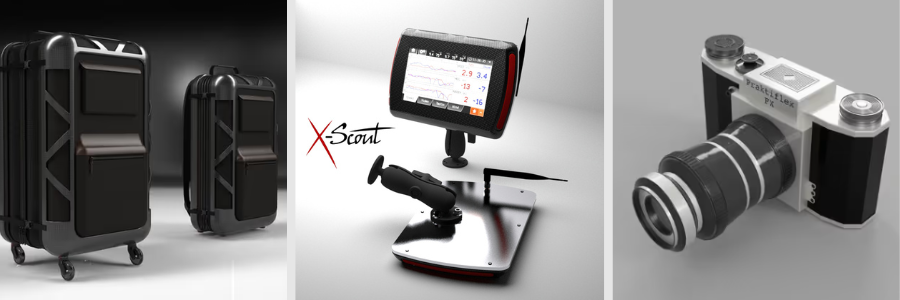
29. AI helps with reverse engineering workflows
When there’s a reference photo, scans or CAD, AI can assist with reverse engineering services. Instead of reconstructing it manually, AI can help with shape reconstruction, mesh cleanups and feature recognition. This minimizes time spent in manually editing the model. AI can speed up rebuilding the digital model but to ensure accuracy, designers would have to remain critical to tolerances. The dimensions would have to be verified and validated. AI can speed up the workflow, but designers’ validation is still essential.
30. AI reduces time spent on repetitive shapes
In 3D modeling, there are shapes and patterns that are repeated. There are parts that are considered standards and are copied throughout the model. Manually drafting and editing this is time-consuming, especially for large scenes or detailed models. AI automation can help in streamlining the process. It automates repetitive elements more quickly, minimizing labor work. AI automation combines procedural modeling with patterned generation. It can suggest patterns and generate them accordingly. This lets designers focus more on complex and critical parts of design. AI enhances procedural modeling, reducing manual labor work while retaining technical accuracy.
31. AI can make premium design services more valuable
While AI is one way to minimize costs, it also increases the value of premium 3D design services. Since administrative and repetitive tasks are automated, skilled designers can focus more on higher-level design and logic. They can produce deliverables that are more optimized and have creative direction. The goal is not just to make things cheaper but to add value to the output. It’s more of an efficient approach for designers to have more time to analyze and explore designs that are best aligned with project requirements and client expectation. Skilled designer and AI automation combined justifies professional rates.
Low-cost vs. high-value AI-assisted modeling
| Approach | What it focuses on | Risk | Better use |
|---|---|---|---|
| Cheapest possible AI output | Low upfront cost | Poor geometry or unusable files | Rough inspiration only |
| Human-only workflow | Full manual control | Higher time cost | Complex final deliverables |
| AI-assisted expert workflow | Speed plus professional review | Requires skilled oversight | Most commercial projects |
32. AI helps reduce opportunity costs
A slow design workflow can delay product launches or manufacturing firms. It wouldn’t reach the market sales as planned. Often, the delays in the design stage costs higher than the actual 3D modeling service. AI-powered tools can help in compressing the timeline between idea and design to production. This minimizes opportunity costs. Startups need their timeline to be on point. It is best to quickly generate a model to pitch to investors and secure funding approval. It helps them gain early feedback to work on before full commitment. For large companies, speed helps them in being more efficient.
RELATED: Top 3D Rendering Software Used by 3D Modelers
33. AI changes pricing from hours to outcomes
A traditional design modeling relies on hours spent to work on the task. Every hour matters since it directly implies rates. AI is shifting the workflow by making the tasks faster. Instead of hourly-based services, freelancers or providers sell outcomes or deliverables. This is a more strategic and straightforward pricing approach. It allows clients to compare bundled services, choosing which outcome is more aligned with them. This shift is beneficial to both parties. Designers can justify their rates based on expertise and quality while companies gain better predictability of the budget. AI can make things a lot easier and faster, but value still comes from professional skills.
34. AI works best with skilled 3D modeling freelancers
AI-assisted tools can reliably generate fast results. However, the results are not guaranteed to be correct or accurate. Human expertise is still needed to check, validate and refine it to make it impressive. Professional 2D & 3D modeling freelancers have a deeper understanding of the critical details that need to be checked such as scaling, tolerances, and manufacturing requirements. This is why AI alone can’t fully be a reliable source. It can reduce cost and speed up the work, but the best outcomes would still need professionals. AI is most useful when used by a professional designer.
35. AI makes 3D modeling services more competitive in 2026
AI-powered 3D modeling services are making design services more competitive. It has focused more on the output and deliverables instead of relying on hours-spent to do the work. AI supported the companies by reducing time for administrative tasks, improving the overall efficiency of the project. In 2026, the real question is not about how cheap the model is but rather how efficient the workflow is. AI can indeed make things easier, but companies could benefit even more when they hire or outsource freelancers who understand both modern AI tools and professional 3D modeling workflows.
RELATED: 3D Modeling & CAD Design Recap
Final takeaway graph
| Benefit | Relative impact |
|---|---|
| Faster early concepts | ██████████ |
| Lower revision costs | ████████ |
| More design options | █████████ |
| Better visualization | ████████ |
| Improved manufacturing review | ███████ |
| Lower final validation needs | ███ |
AI-assisted tools lower costs most when it reduces wasted design time. It adds more value to the project the most when it helps skilled designers to create better results faster.
How Cad Crowd can assist
AI-powered 3D modeling is not limited to just lowering costs. It has significantly contributed to optimizing workflows and supported administrative tasks. It expanded design exploration and allowed higher-quality decision making. It also supported efficient collaboration among the team. AI-assisted workflows are most successful when it is combined with reliable human oversight. Cad Crowd can help businesses to leverage its 3D modeling workflows by connecting with experienced freelancers specialized in AI-assisted design. Contact us for a quote today.