Why is it beneficial to outsource engineering design activities at your company to boost efficiency? Not so long ago, following the rather spectacular burst of the dot-com bubble, “outsourcing” was a pretty dirty word, associated mostly with work not very well done. We’re talking especially about online outsourcing, where businesses and companies sought help from small firms or individual engineering design freelancers they bumped into online to do specific tasks, often for ridiculously low prices.
Back in the early 2000s, you couldn’t realistically expect good quality work done through freelancing, and that’s why you weren’t supposed to outsource high-stakes jobs to complete strangers you barely knew about. Fast forward several years, and the narrative began to shift in the opposite direction to the point where today outsourcing is seen not only as an alternative method to increase productivity, but also as an essential strategy to improve efficiency. The basic tenet of outsourcing remains the same for the most part. You hire someone or a group from outside the company to handle one or more tasks for a fee.
But many things about outsourcing have changed over the last decade. Chief among these is that freelancers are no longer graduate students looking to make some money to fund their hobbies, or people seeking additional income who treat freelancing as a second job at best. Well, a good part of the freelancing world still consists of those groups, but overall, the workforce in the outsourcing environment has improved in many respects. Skillfulness and professionalism included. Many 3D engineering freelancers today are experienced specialists and experts in their respective fields.
RELATED: Why Your Business Needs Product Engineering Services to Innovate & Accelerate
They see freelancing as a form of professional service that bypasses the typical hiring process. In other words, you don’t have to hire a freelancer as a full-time employee to tap into their expertise. Freelancers today serve almost like subcontractors. And if your company is doing business in the AEC (Architecture, Engineering, and Construction) sectors, you understand how true the statement rings. Furthermore, the sheer number and variety of professional services you can get from outsourcing are pleasantly well-rounded.
It isn’t an exaggeration to say that even if you run a one-person architectural or design company, you’ll be pleased to know that you can practically outsource the entirety of a project’s engineering tasks and activities to design engineering freelancers and still make a good profit margin. The internet is loaded with all sorts of freelancing sites, from the general one-platform-fits-all kind to the trade-specific ones. A general platform likely offers a broad range of services and certainly a large number of freelancers, simply because there’s no limit to the industries they may serve.
A trade-specific platform has a much narrower focus, and in some cases, all the freelancers can be categorized into just a handful of business sectors. As far as specialized platforms are concerned, you really can’t do much better than working with Cad Crowd. Placing a heavy emphasis on the AEC industry, Cad Crowd makes itself home to thousands of the world’s most talented engineers who offer specialized services at competitive rates. Doesn’t matter if you’re renovating homes in an urban area, constructing greenhouses in the middle of a desert, remodeling a kitchen, retrofitting an old farmhouse, building bridges to connect castles, or anything else in between. Cad Crowd always has the right professional to handle the task.
Why outsource at all?
Outsourcing doesn’t mean you’ve given up on an engineering task and decided to spend extra money to have the workload handled by someone else. It isn’t a shortcut for people who don’t have what it takes to do the jobs themselves. Should anybody tell you otherwise, let them know in a calm and humble fashion that there’s something called evaluation and approval. This means that for every outsourced engineering activity, someone from the in-house engineering design team must scrutinize the work before approving it. You’re not simply handing the responsibility over to an external party.
You still maintain control and have the final say about the deliverables, in terms of accuracy and overall quality. If this sounds familiar, that’s only because outsourcing is just basically the same as subcontracting. It turns out some people like to point out that the two are quite different. Help yourself, and don’t bother with any of them. The big idea of modern outsourcing goes beyond meeting every deadline. Outsourcing allows you to be flexible and always ready no matter the scope of work the next project throws at you. It gives you the chance to work faster and win more clients without rushing to expand the in-house team.
While the payroll and overhead remain largely the same, as does your sanity level, the company becomes competitive enough to play in the bigger league against the bigger names. Even if you only have a small internal team, outsourcing opens the door to a massive network of design engineering experts and specialists ready to lend their expertise, for a reasonable fee of course. In case that’s not specific or convincing enough of a reason, here are some more to get you jumping on the bandwagon.
1. Summer burnout no more
Winter and spring are usually pretty quiet seasons for AEC companies. It’s a long six-month period of nothing but light projects, mostly plumbing repairs, electrical jobs, and landscaping. Not much happens from December to March because it’s difficult to do real construction work while wearing mittens, but things should start to improve in the next three months, despite the occasional rains, in which case using an umbrella makes things cumbersome at the jobsite. Summer, however, tells a different story. The season’s long dry days relieve workers from raincoats and beanies, allowing them to focus on the construction tasks at hand while wearing reflective vests and hard hats.
Summer makes for the ideal weather where all sorts of AEC projects can thrive, from masonry and roofing to excavation and brand-new construction. From winter and spring to summer and fall, most AEC companies experience a transitional period marked by a sudden shift in workload. But this is hardly a surprise. In fact, it’s a very welcome shift of gears and is expected to happen on an annual cycle. You can handle everything just fine during the first six months of the year, and then summer comes and throws too many balls in the air.
RELATED: 15 Engineering Design Constraints that Product Design Companies & Engineering Firms Can’t Avoid
The AEC industry doesn’t get along all too well with a steady workflow. It’s either just another week of renovating a bathroom and kitchen, or a hectic schedule juggling between MEP (Mechanical, Electrical, Plumbing) system overhaul and foundation work. Your CAD engineers have to pull 60-hour weeks, get tuckered out by week three, start making mistakes, and cost you a pretty penny to fix. Outsourcing is the best way to prepare for potential summer burnout and keep everyone in the company levelheaded. Think of it as an overflow in a pool loaded with engineering tasks.
Hiring an external party to handle at least a small portion of the engineering activities can prevent your core team from drowning in an abrupt workload surge. But instead of letting the overflowing tasks fall by the wayside, you have an outsourced professional to help you get things done and keep everyone from panicking. You don’t want one of your senior engineers to get stuck on doing entry-level drafting tasks when there are actual engineering issues that can use a real engineer’s problem-solving skills. And when things are back to normal workload level, you can always scale back the headcount.
2.. An extra set of eyes
Sometimes, the most challenging engineering activity of them all is pointing out your own mistakes. For an AEC team that has been working together for years, it’s only natural for them to get too comfortable with how everyone does things. Being comfortable is good, except when they stop throwing constructive criticism at each other. For instance, a senior MEP engineer loves the Hunter’s Curve too much and has used the method for plumbing design. Everybody finds zero problem with it because it works great each time.
The problem is that Hunter’s Curve is overly conservative. It overestimates water demand even during peak use, leading to oversized pipes. It’s like building a 14-lane freeway in Wyoming. An outsourced engineer can bring fresh eyes to how things are done at your company. Because they’re not part of the groupthink, they have no problem questioning the decision to use the oversized pipes and proposing a more up-to-date calculation method.
RELATED: IoT Electronic Device Design Tips for Startups Working With Electronics Engineering Companies
3. Niche expertise on-demand
The usual take on outsourcing is that you hire a freelancer or a smaller firm to handle simpler engineering tasks on a project. It doesn’t mean your in-house engineer isn’t willing to do the job. You just want their expertise used for the more important engineering activities. For instance, in a construction project where an engineer needs to provide both the HVAC design, 3D drafting & engineering services and plumbing systems with a looming deadline ahead, you don’t want to add “administrative support” to the already demanding workload. While you still see this to be the case today, the outsourcing landscape has changed quite a bit for the better.
Many freelancers and small AEC firms are just as qualified as those working for the big companies. They’re true professionals with respectable experience, portfolios, and specialized expertise. Take, for example, BIM (Building Information Modeling). It has been a while since the industry said that BIM would soon become the be-all and end-all of modern architectural planning. Years have passed, and the truth remains that the vast majority of AEC companies in the country remain reluctant to pursue full adoption. Most small and mid-sized AEC companies don’t have a full-time BIM expert on their payroll.
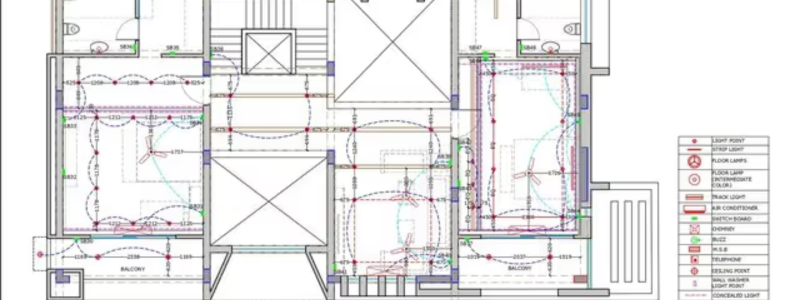
Some may argue that BIM is just another CAD drafting and documentation process, but this claim could only come from people who think they only use 10% of their brains or still believe that Einstein failed math. Quite the contrary, BIM is an integral part of engineering activities in all sorts of construction projects, including the MEP portions. Just about every aspect of architectural planning, from quantity takeoffs and cost estimation to material specification and clash detection, can be neatly handled within a single BIM file thanks to the model’s data-rich nature.
BIM is all that it promises to be. You’ll also be glad to know that there are dozens of BIM software options on the market today. But finding a professional trained to use the software is another matter entirely. BIM professionals are still considered rare in the US, and as the tool becomes more sophisticated, the skill gap in the workforce widens. Small and mid-sized AEC firms might not have the funds to invest in a training program. Not every project needs BIM, indeed, and you can always turn to non-BIM 3D CAD for the simpler visualization. But that would be like playing a shooter game that’s not Call of Duty or using Bing rather than Google. You get something out of it, but still missing a lot of good stuff.
RELATED: Top 101 Sites for Freelance Engineering Jobs, Mechanical Design Projects, & Remote Work
Thankfully, outsourcing offers an easy solution. Perhaps your in-house structural engineering team excels at designing and constructing a single-family home of any architectural style, and they’ve completed many projects in record time, even during winter. But what happens when a high-paying client comes with an offer for a residential building project? There’s just so much money involved that it would be embarrassing to say you can’t take it because the BIM part is too difficult. Like it or not, BIM is still a niche expertise in the US. And the best place to find an expert with a niche skill set is a niche freelancing platform.
Once again, Cad Crowd easily comes to mind. There might not be tens of thousands of BIM professionals on the platform, but they’re there, at least in the range of hundreds, ready to lend their talents to everyone in need. As a bonus, you get instant credibility in front of the client for the simple fact that you can comfortably punch above your weight. Outsourcing can walk you right to the front door of a high-profile project that you would normally turn down because it seems like you’re biting off more than you can chew.
4. The right people for the right jobs
Still, you don’t want a senior engineer in your team to spend hour after hour every day during a busy summer month converting a technical architectural draft into a 3D floor plan. As important as photorealistic 3D visualization services are for design presentation and client communication, little engineering know-how is required to translate a standard 2D project plan into a more eye-catching photorealistic format. This is not to say that digital artistry is a second-degree expertise in the AEC sector. 3D modeling is a specialized skill that takes years to master, and proper rendering takes an in-depth understanding of CGI wizardry.
That said, it makes sense and is appropriate for your engineers to apply their technical chops to their core responsibilities. Things like designing the structural components of a building, managing the construction process, developing plans for MEP systems, and managing the budget are more right up their alley. Don’t you know they had to go to school to learn the stuff? And remember, you hired them in the first place to take care of those.
RELATED: 7 Steps of the Engineering Design Process Used by Freelance Engineers & Companies
Much of outsourcing revolves around finding the right people for the right jobs without going through the usual tedious steps of a recruitment process. Making a high-level talent also handle entry-level responsibilities is a big waste of brainpower, and outsourcing keeps this tendency at bay, especially in small AEC firms that employ barely enough people to set up a proper division of labor. Engineers, more specifically, the senior ones, should be in charge of projects. They’re supposed to be the problem solvers, idea makers, design planners, supervisors, and leaders, not updating sheet indexes and tinkering with render settings for visualization.
5. Bigger workforce, minimum overhead
AEC business is pricey. Between office rent, software licenses, and high-end hardware to run those tools, the company’s overhead adds up to a sizable amount. Combine everything with employees’ wages in the payroll, and you come to really understand that it takes money to make money. Say you have a structural engineer as a full-time employee at the company. To keep the engineer working to their full potential, you’re paying not only their salary, but also for the tools and equipment necessary for them to do the job. In addition to the workstation and laptop they use, which cost thousands of dollars, there are software subscription fees of several hundred dollars per month.
Let’s not forget about health insurance and a 401k as well. Other recurring expenses include office utilities because they can’t work without electricity, the horrible-tasting coffee they can’t complain about, and, of course, broadband Internet for Windows updates. Hiring another full-time employee, for example, an MEP engineer, would be an invaluable addition to your company. But at the same time, you’ll be spending almost twice as much overhead as before.
Outsourcing also costs money, but at least the expense isn’t included in the fixed fee you pay every month. In many cases, a freelancer is happy to use their own laptop, so you don’t have to lend them one of yours. And when the project is over or the AutoCAD MEP engineering activities are finished, the overhead associated with the freelancer is no longer incurred. To put it simply, outsourcing is a way to increase your workforce size while keeping overhead at an acceptable level.
RELATED: How Do Engineers Evaluate Different Design Ideas?
6. Moving up the ladder
We’re not saying that hiring another full-time engineer or two is a bad idea. A reinforcement is always a welcome addition. New engineers bring a competitive advantage and allow you to handle bigger projects more comfortably. However, introducing new names to the payroll isn’t the solution to everything, and it doesn’t have to be the first thing to happen tomorrow morning. Scaling up a company isn’t a matter you can take lightly. It takes preparation and a whole lot of considerations to increase headcount, as it directly affects your profit margin on every project.
A professional engineering modeling designer is a qualified employee. And every skilled worker, like an expensive coffee machine, is a high-maintenance asset. An outsourced employee is, by nature, a temporary addition to the in-house team. In this case, “temporary” also means non-recurring overhead. Hiring a freelance engineer instead of a full-time one allows you to convert a fixed fee into a variable cost. During the slow months filled with snowy roads, rainy days, and smaller projects, the team has all the engineering tasks in control, and there’s no work to outsource, hence zero temporary bill.
Outsourcing affords you an easy way to scale up and down as needed. You get to keep the core team tightly small and the overhead manageable, making the company resilient and flexible in times of both downturn and upturn. For a small firm, such flexibility grants the power not to shy away from bigger projects. Even when a project appears to demand more horsepower than your core team has, outsourcing lays the path to immediate reinforcement.
7. Some relief from liability risk
We’re not just talking about reading the clauses in a terms and conditions paper, but the actual risk and liability associated with a project. No one really talks about it, so let us try to simplify the matter for you. In an AEC project, what appears to be a simple typo from the engineering drawing expert or a few millimeters misalignments in the blueprint isn’t always an honest mistake. It might be an honest mistake on your part, but the client has every right to see that as a potential lawsuit. Mistakes can lead to incorrectly sized truss beams, a fire sprinkler system that isn’t code-compliant, sewer odor due to an incorrectly installed plumbing vent pipe, or a failed home inspection that reduces property value.
RELATED: Top 32 Sites for Freelance PCB Designer Jobs & Remote Electronics Engineer Work Projects
Errors and Omissions insurance is expensive for a reason. You can’t always slip through the cracks of those liability clauses, but if you outsource some engineering activities to an established firm (as opposed to a stranger on Facebook who claims to have done millions of similar projects), you are distributing the risk in the process. Unlike a typical handyman who always skips the T&C page and just clicks the Accept button, a reputable engineering firm, more often than not, carries its own liability insurance, backed by an internal quality-control process.
When you outsource engineering activities to such a firm, all work is covered by the firm’s insurance policies as well. Your engineers get to sleep better at night, if they sleep at all, and you’re somewhat relieved from some of the burden of potential mishaps.
The bottom line
Engineering activities, no matter how small or trivial they may seem, hold some degree of importance to every AEC project and can definitely affect whether it’s going to be a success, finish as quickly as expected, or get stretched out to several more months because things don’t go quite as planned. Outsourcing helps ensure that every job is handled by the right person and minimizes the chances of your engineers feeling overworked, undervalued, or assigned to the wrong tasks.
Having some engineering activities outsourced to a freelancer or an external firm doesn’t necessarily mean you have an incompetent team. If anything, outsourcing can be one of the most effective ways to give your team the support they need, so they can maintain their focus on what they do best. Think of outsourcing as an affordable and surprisingly comfortable life jacket that prevents you from drowning when the tide is high and the deadline is drawing near.
RELATED: Key Factors to Consider When Vetting Engineering Firms for Design & Consulting Services
How Cad Crowd can assist
Hiring additional brainpower, albeit on a temporary basis, will keep your head above water and the project running at a steady pace without a hiccup. And as the tide recedes from the shore and things are safe, you can take off the life jacket with a great sense of relief. Whether you’re in need of an individual freelancer or an engineering firm to lend a hand and fresh perspective for a project, Cad Crowd is here to help you connect with thousands of talented engineers and experienced architectural firms from all around the world. Contact us for a free quote.