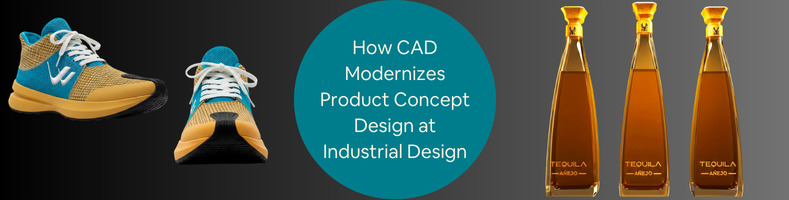
The classic napkin drawing has finally found its match. What used to begin with scribbled concepts and hours spent taking things back to the drawing board is today an extremely digitized, lightning-paced, and amazingly accurate process – and all thanks to Computer-Aided Design, or CAD design services. Today’s industrial designer does not need to struggle through trial-and-error fiddling or cumbersome prototypes that require weeks of rewriting. They use the digital might of CAD to visualize, simulate, and optimize ideas prior to making a single part.
Here comes the revolution. CAD and industrial design coming together is not a trend, but a complete paradigm shift in bringing ideas to product reality. Whether it’s consumer electronics, medical devices, wearables, or smart kitchen appliances, CAD tools are turning sketches into complex, production-worthy products quicker than ever before.
And when it comes to staying ahead in this fast-moving design world, Cad Crowd has emerged as the go-to company. More than just a talent pool, Cad Crowd is a global hub of elite CAD designers and industrial engineers who are rewriting the rules of concept development – one digital model at a time.
But how, precisely, is CAD fueling this revolution? Let’s take a closer look at the sexy, streamlined, and unexpectedly human face of computer-aided design.
🚀 Table of contents
From Scribbles to solids: CAD as the designer’s superpower
Concept design is both thrilling and agonizing. It’s the design rollercoaster where imagination gallops full-speed ahead, only to be brought back into check by the harsh realities of cost, manufacturability, and schedule. Not so long ago, this process was driven by crumpled-up pencil mark-ups, clumsy foam models, and the prayer that you got the first guess right. Those analog mockups were tangible, no doubt – but also slow, delicate, and agonizingly unforgiving when it came to redrawing.
Then, computer-aided design (CAD) emerged on the scene like a superhero cape-clad crusader for industrial designers.
With the powerhouse software of SolidWorks, Rhino, AutoCAD, and Fusion 360, the industrial design expert’s crude sketch can morph into a stunning, precise 3D model in the blink of an eye. Need to carve an ideal curve? Adjust the thickness of a casing? Try out if the design can withstand a drop? CAD makes all these possible on your screen – with the added advantage of undo keys and unlimited iterations. It’s almost like going from charcoal sketch to sculpting with light.
What used to take days using clay or cardboard now takes hours or even minutes. But more significantly, it means that designers have the liberty to experiment without fear. If it does not work, it is a quick fix – not a complete redo.
CAD didn’t simply update concept design – it’s turbocharged it. It takes nebulous ideas and turns them into proven, buildable concepts, closing the gap between imagination and manufacturing. Now, designers don’t only imagine – now, they model, simulate, and iterate those imaginations with speed and accuracy. That’s the true superpower.
RELATED: How to reduce new product development risks for design services companies
Speed, precision, and no guesswork: How CAD is redefining product design
There’s that magic moment in the life of every product – when it transitions from a crude drawing or delicate prototype into something you can actually produce. That used to take an exhausting period of time. Weeks of revisions. Months of reworks. But CAD (Computer-Aided Design) has entirely revamped the playbook.
Now, once an idea is captured digitally, the actual work starts – quickly. Designers can try out immediately how a hinge will function after 10,000 cycles. Want to test airflow through a snug casing full of sensitive electronics? Model it in minutes. Wonder how the product will appear in chrome versus matte black under lighting in the showroom? Render it and observe every nuance of the reflection.
This is not a time-saver – it’s a power shift. CAD provides industrial design companies with accuracy and authority unimaginable in the past. No more assumptions, no more “wait and see.” Each design decision is supported by actual data, virtual simulations, and testing that reveal flaws before anything physical is created.
The result? Improved products. Improved decisions. Fewer surprises.
Rather than responding to issues after prototyping or production, designers are actually addressing them ahead of time in the concept stage. They’re not only creating products – they’re creating confidence in the process. CAD enables groups to see further in advance, to construct smarter from the beginning, and to optimize that pivotal process from idea to real-world innovation.
That’s not evolution. That’s brainy design – and a significant step up in how we give ideas life.
CAD + collaboration = Creative firepower
Contemporary product design isn’t the isolated, lone genius scribbling concepts on a napkin anymore. Now, it is a complex interplay between industrial designers, mechanical engineering experts, UX specialists, marketers, and even users who will ultimately be utilizing the product. That is, it’s a team effort – one that requires perpetual communication, quick iteration, and accommodation.
But in the past, concept design was not exactly a workshop of collaboration. Legacy tools – such as static sketches, foam mockups, and unnecessary email chains – were buggy and unwieldy. They were slow to accommodate the speed of innovation and the demand for real-time commentary. Designers could spend weeks honing a concept, only to discover the engineers couldn’t implement it – or that marketing had a whole different idea.
Then CAD came along – and the world changed.
Computer-Aided Design transformed the way teams ideate, iterate, and bring to life. Particularly today, with cloud-based CAD software and collaborative spaces, the design process has gone truly global. A Toronto designer can model the outside of a product while a Berlin engineer works on the internal features. Meanwhile, a Seoul UX consultant is testing how it handles in a user’s hand. It all occurs in real time, with changes automatically tracked, revisions stacked effortlessly, and no one excluded from the loop.
It’s not only efficient – it’s lightning in a bottle. This kind of transparency and integration stimulates creativity. With less siloing and more collaborative input, teams can share out-there, unconventional ideas and actually pursue them without missing deadlines. CAD unleashes diverse thinkers to collaborate in a common digital sandbox, where walls come down and innovation blooms.
This collective magic not only speeds things up. It improves things. It provides a window of opportunity for multidisciplinary innovations and brings design to the people. You no longer have to have everyone in the same room – or even on the same continent – to form something remarkable.
And this is precisely where Cad Crowd becomes the secret weapon. Cad Crowd is not merely a freelance platform. It’s a network of premium CAD designers and engineers at your disposal. Want a team that can turn your napkin sketch into a fully realized, ready-to-manufacture prototype? Done. Want someone to craft a beautiful enclosure or 3D print-optimize your product? Someone in the Cad Crowd community has already figured out a better way to do it.
With Cad Crowd, you’re not just outsourcing tasks – you’re building a remote dream team that’s already aligned with the pace and expectations of modern design. They speak the language of collaboration, and they live inside the CAD ecosystem. That’s the new creative firepower – and it’s lighting up the future of product development.
Digital twins: CAD as the secret behind smarter, sleeker products
From voice-activated thermostats to palm-top drones that deploy midair, products these days are supposed to be geniuses straight out of the box. But all that smarts – sensors, circuit boards, batteries, Bluetooth modules – must be shoehorned into increasingly slender, more ergonomic packages. Getting that magic to work without the product burning up, frying itself, or shaking apart is no small thing.
This is where CAD comes in as the silent hero.
With CAD, designers don’t simply draw good-looking shells – they create digital twins: precise virtual replicas that replicate how the real product will perform. Such models do much more than depict dimensions. They model real-world stress, thermal flow, electromagnetic interference, and even how consumers may touch the product.
Suddenly, designers and product design engineers aren’t operating in the dark anymore. They’re not guessing if a new case will heat up too much or whether a button will be easy to press. They’re trying it – all of it – before any prototype is even created.
For companies providing industrial design services, this makes all the difference. Function and design no longer need to battle for supremacy; they’re created simultaneously. Redesigns are fewer, development cycles are quicker, and a lot more confidence entering manufacturing is the new reality.
In short, CAD-enabled digital twins are making smart product design a precision engineering endeavor – and the outcomes are simply nothing short of brilliant.
Goodbye silos, hello synergy: How CAD unites design, engineering, and manufacturing
In the past, product development was a disconnected experience between designers, engineers, and manufacturers. Designers would design something wonderful, engineers would struggle with making it feasible to produce, and manufacturers would be left to figure it out – oftentimes from nothing more than a sketchy drawing and a hopeful smile. The outcome? Miscommunication, redesigns, blown budgets, and much frustration.
That antiquated model is rapidly disappearing, thanks to CAD. By beginning the design process in computer-aided design software, groups now share the same digital language. CAD files can be seamlessly transferred from design to engineering to manufacturing. A 3D model is more than an idea – it’s a living, breathing data source that everyone can collaborate on in real time.
Now, designers don’t have to speculate whether their concepts are manufacturable – they can check for manufacturability in an instant. Engineers can get involved early, making important adjustments on the fly. And manufacturing design experts? They receive accurate, detailed geometry that drives tooling and production without the need for a complete rework. What once was three disconnected steps now becomes one intelligent, integrated workflow.
This is where Cad Crowd excels. Their independent CAD professionals don’t work independently – they communicate and work with engineers and production staff to produce designs that are not just beautiful but also feasible to build. Whether prototyping or gearing up for full-on manufacturing, Cad Crowd keeps everyone on the same page and moving fast.
No more silos. No more cumbersome hand-offs. Just unadulterated synergy – concept to creation.

RELATED: The simple secret to unlocking new product innovation at design services companies
Iteration without the price tag: Why CAD makes experimentation affordable
Money speaks in product development – and at the concept phase, it screamed. Each design adjustment came with physical prototypes, delayed times, and material expenses. A single miscalculation could land you back to square one, losing thousands on tooling or replicating costly molds. It was a heart-pounding, wallet-emptying procedure.
Enter CAD, and all of this is different. Suddenly, testing six various housing arrangements doesn’t take six prototypes. Want to know how a new grip texture will feel? Model it and calculate the results – no injection mold needed. Need to test out another material? Replace it virtually and compare performance characteristics, all in a virtual space.
This is more than a change in workflow – it’s a radical redefinition of what iteration is. CAD eliminates the cost barrier to play. You can experiment without breaking the bank by committing to an expensive physical process each time. It converts “What if?” from a cost risk into a creative invitation.
That’s where Cad Crowd excels. Their seasoned product design services celebrate this CAD-fueled freedom, working in tandem through speedy back-and-forth iterations to hone your idea into a refined, production-critical masterpiece. They don’t only provide a design – They co-evolve it with you.
And since Cad Crowd’s talent base works remotely and on demand, you’re not financing overhead – you’re financing results. That means every development step remains affordable, scalable, and totally in sync with your project objectives.
So go ahead: push the boundaries. With CAD and Cad Crowd, iteration is no longer a cost; iteration is a step forward.
Where aesthetic meets engineering brilliance
Industrial design is not simply a matter of producing something that functions – it’s a matter of producing something that people will actually use. It’s the skill of finding a balance between beauty and performance, between emotion and accuracy. If a product is stylish but fails on day one, it’s bound for the landfill. If it’s sturdy but ugly and uninspired, it sits on store shelves in retirement. The magic occurs when form and function become one – and that’s precisely where CAD and engineering design services enter the scene.
Computer-Aided Design (CAD) turns design from guesswork to computed creativity. Those sleek curves and lines? With CAD, they’re not only pretty – they’re designed. Surfacing software allows designers to shape forms that are as functional as they are lovely. Vent holes are part of the design language, not an afterthought. An ergonomically tested smartwatch can be designed digitally, without a single prototype being produced, while internal layout and strength are optimized.
CAD bridges the gap between engineering reality and design intent. It is no longer a fight of wills to make a product visually pleasing or functional. You can do both now – and you should.
That’s why Cad Crowd is a game-changer. Their network of freelancers consists not only of CAD drafters and engineers, but also industrial designers who know that visual beauty isn’t icing on the cake – it’s in the recipe. These professionals design products that make eyes pop, hands reach out, and work perfectly. With Cad Crowd, your design doesn’t have to sacrifice style for function. You get both – engineered to perfection.
How CAD gives industrial design firms a manufacturing jandoff boost
In industrial design, a great idea is worthless if it can’t be transferred seamlessly to the production floor. That’s where CAD (Computer-Aided Design) really rocks – it closes the gap between the design studio and the factory floor with speed and accuracy, especially with design for manufacturability services.
When designers design models in CAD, they’re not merely creating something that is pretty. They’re creating digital products that are producible day one. These files can be exported directly into CNC machines, 3D printers, or injection molds without interference. This is because CAD preserves data fidelity so high that what is produced is precisely what was created, down to the micron.
Which means less surprise when parts arrive on the factory floor. With design-for-manufacturing principles integrated into the CAD process, expensive production mistakes are cut down to size, and time-to-market receives a significant improvement. From creating a prototype smart device in San Francisco to producing a large quantity of custom enclosures in Shenzhen, you can count on the same CAD file to produce reliable results.
This flexibility is a game-changer for industries like consumer electronics device companies and medical devices, where speed, precision, and quality are non-negotiable. Industrial design firms can now adopt distributed manufacturing strategies – printing or molding across multiple locations – all seamlessly powered by CAD.
And if you need CAD designs production-ready from the get-go? Cad Crowd brings you in contact with veteran designers who know the entire pipeline. These are not merely artists – they are engineers who create models developed to conform to actual manufacturing. From racing a deadline to ramping up a product launch, Cad Crowd provides you with the CAD know-how that keeps production moving smoothly.
Crowdsourced design, solution-oriented: How Cad Crowd is revolutionizing the game
Crowdsourcing isn’t what it used to be – and that’s a good thing. What once had a reputation for being a fast-and-cheap shortcut is now a powerful engine for innovation, especially in the world of CAD and industrial design. At the forefront of this transformation is Cad Crowd, a platform that’s turned the typical design process on its head by tapping into a global network of brilliant minds.
Cad Crowd offers more than just freelance help – it brings a hybrid approach that combines open design challenges with curated, one-on-one collaboration. Companies can launch design contests to spark a flurry of inventive ideas, then choose the standout designer from the crowd to bring the concept to life. It’s a clever blend of creativity and execution, where fresh perspectives meet serious engineering muscle.
For startups, entrepreneurs, and fast-scaling businesses, Cad Crowd offers a vital shortcut through the expensive and time-consuming world of in-house design. Hiring a full team isn’t always realistic – especially when agility matters. Cad Crowd acts as your virtual product design department, ready when you are, no overhead required. Whether you’re working on a consumer gadget, medical device services, or rugged industrial equipment, you get access to pre-vetted CAD professionals who understand your goals and work seamlessly to deliver stunning, functional results.
This isn’t just about slashing budgets – it’s about leveling up. Cad Crowd empowers you to pursue cutting-edge product ideas without sacrificing quality or speed. You don’t have to choose between affordability and excellence. You get both – plus the added benefit of working with a team that’s laser-focused on solving your specific design problem.
By merging global collaboration with top-tier engineering, Cad Crowd is reshaping how great products get made. It’s not just a design platform. It’s a launchpad for the next big thing.
CAD is the future – and the now
Computer-Aided Design is more than a tool of the future – it’s redefining the product development game today. With innovation hurtling ahead, CAD technology is being powered by AI-assisted design recommendations, generative modeling, real-time simulation, and even topology optimization. Product development experts don’t have to do it alone anymore; they’re working alongside smart systems that process millions of data points and design iterations within seconds.
Nevertheless, in this maelstrom of progress, there is one thing that does not waver: technology is just as strong as the minds that direct it. The human element – creative instinct, hands-on know-how, and a gut feeling for what works – is irreplaceable. AI can propose forms, but it can’t comprehend market forces or emotional design. It can refine a shape, but it can’t sense the gravity of a customer’s expectation.
That’s where Cad Crowd is different. It’s not merely a venue to hire a person who has the capability to work with CAD software – it’s where businesses encounter innovative professionals who understand how to leverage these tools strategically and creatively. These are the engineers-turned-designers who think like them, create like entrepreneurs, and mold like artists.
CAD is the driving force behind contemporary design. But visionaries continue to drive. Cad Crowd is not only a part of the CAD revolution – it’s a leader in it. When you want designs that look great on the screen but translate into the real world, this is where you’ll discover the talent that can get that done.
RELATED: Speeding up product development with new product design services companies
Wrapping it up: Why Cad Crowd leads the pack
It’s easy to use CAD. It’s not so easy to master it.
The top industrial design experts understand that CAD is not merely about quicker drafting or more glamorous renders. It’s about revolutionizing how product ideas are developed, tested, tweaked, and released. It’s about accelerating time to market, increasing design excellence, and minimizing waste – all while extending creative horizons.
Cad Crowd doesn’t just ride this wave – they help build it. By connecting companies with elite CAD professionals around the globe, they empower businesses of all sizes to modernize their product concept design workflows. Whether you’re launching a revolutionary wearable or refreshing an existing product line, Cad Crowd makes it smarter, faster, and more scalable.
From concept sketches to manufacturable 3D files, from photorealistic rendering to functional prototyping, they’ve got the talent and tools to transform even the roughest idea into something market-ready.
In a world where the next big idea could come from anywhere, Cad Crowd ensures you’re ready to design it, model it, and bring it to life – with CAD precision and creative fire. This isn’t something that you can just find or get anywhere. It’s a result of years of expertise and well-honed skills from being in the industry.
So go ahead – dream big. CAD’s got your back. And Cad Crowd is ready to help. Get a free quote today.