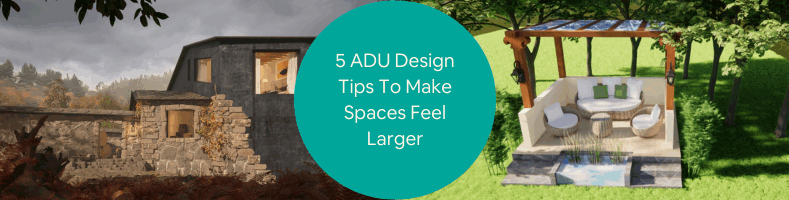
Accessory Dwelling Units (ADUs) are small by nature, but they don’t have to feel small. Whether it’s a backyard cottage, garage conversion, or a detached in-law suite, a well-designed ADU can punch well above its square footage. The key? Strategic design. And if you’re working with architectural design services or design firms from industry leaders like Cad Crowd, you’ve got a team that knows how to stretch every inch like it’s made of gold foil.
What is ADU Design? A quick and friendly guide
An ADU (Accessory Dwelling Unit) is a small, independent living space on your property, like a backyard cottage, garage apartment, or basement suite. These compact homes solve multigenerational housing needs, generate rental income, or maximize property use.
ADU design encompasses architecture, space planning, and smart layouts that maximize 400 to 1,200 square feet. Expert designers create functional, stylish spaces through strategic ceiling heights, window placement, and multipurpose features like kitchen islands doubling as dining tables. The goal is to make small spaces feel complete and comfortable.
Quality design balances privacy, natural light, property placement, comfort, code compliance, and curb appeal. Many incorporate sustainable materials and energy-efficient features for savings. ADUs offer versatility for aging parents, returning college students, or rental income. With relaxed zoning codes nationwide, more homeowners are embracing these solutions. Freelance professional CAD expertise in compact living is essential for creating small spaces that feel like home while earning every square foot.
RELATED: Interior design drafting: Undeniable advantages of CAD drawings for design firms
Why hiring architectural services & design companies is a game-changer for ADU design
So, you’re considering adding an Accessory Dwelling Unit to your property. Perhaps you need a guest house, a rental unit, a home office, or even a comfortable place for aging parents. Whatever your motivation, you’ve likely realized that it’s not as easy as plopping a tiny house in your yard and voilà.
That’s where architectural services and design firms come in ,and they’re not only useful, they’re complete game-changers.
They know the rules so you don’t have to
Let’s begin with the least thrilling but most important portion of the ADU process: working through regulations. Zoning ordinances, permits, height limits, property line setbacks… ugh, it’s a pain. And it’s not simply paperwork; doing this stuff incorrectly can result in expensive delays or even having your project shut down before it starts.
That’s why hiring an architectural planning and design firm that specializes in ADU design is such a great idea. These experts breathe building codes. They know how to navigate city officials, get the local idiosyncrasies, and do all the administrative red tape for you.
In short: less time lost, fewer errors, and peace of mind that your project won’t be bogged down in permit purgatory.
Space-savvy solutions that actually work
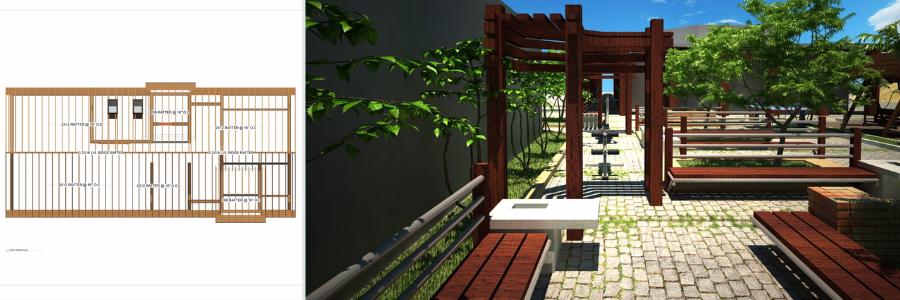
Designing tiny spaces is an art form. ADUs are about optimizing tiny square footage without making the space feel cramped. And not every builder or architect is qualified for the job.
The right design firm will find creative ways to make your ADU feel open and livable. Think fold-out furniture, built-in storage, smart kitchen layouts, and even lofted beds or multi-use nooks. Every inch counts, and these professionals know how to make each one work hard.
You’ll avoid awkward floor plans and random dead corners, and instead, get a space that flows, functions, and feels a whole lot bigger than it actually is.
Real-life customization
This is not just another shed, it’s an actual living space, and how you intend to use it is important. If it’s Grandma’s new home, a temporary vacation rental, or your own artistic refuge, you’ll want a floor plan that meets your requirements.
Architectural home design companies don’t use cookie-cutter blueprints. They interview you, they sense your goals, and fit the design into your lifestyle. Perhaps you want improved insulation for soundproofing, doorways that are open for mobility restrictions, or integrated storage to spare you from clumsy furniture. You won’t be forced to sacrifice, because the space is constructed with you in mind.
Built for the future
The top design companies don’t simply consider how your ADU appears today, how it will perform five, ten, even twenty years from now. That’s why they incorporate energy efficiency, sustainability, and long-term adaptability into the design.
From choosing eco-friendly materials to planning for solar panels or efficient HVAC systems, their designs can help reduce your carbon footprint and your utility bills. Some even plan ahead for future repurposing, like turning your rental unit into a home office or art studio down the road.
If you’re looking at this as a long-term investment, future-proofing is a must, and design professionals know exactly how to make it happen.
RELATED: Overcoming errors in outsourcing with architectural drafting services firms
One point of contact, all the way through
Building an ADU is a lot of moving parts: designers, engineering design firms, contractors, inspectors, and sometimes even landscape professionals. Attempting to manage all that yourself? That’s a recipe for stress and delays.
A seasoned architectural firm with ADU experience usually handles the entire process. They’re not just designing your space; they’re managing your project, keeping everyone on track, and making sure every stage moves smoothly.
Think of them as your project manager, problem solver, and creative partner all rolled into one. You’ll stay focused on the big picture, while they handle the details and logistics.
In the end, working with an architectural services or design firm that specializes in ADUs isn’t just convenient, it’s an investment in doing it right the first time. You’ll save time, avoid common pitfalls, and end up with a space that’s not just functional, but beautiful and well-built for the future.
So if you’re dreaming of that ideal backyard unit, whether it’s for family, rental income, or your own retreat, call in the professionals. You’ll be glad you did. Because the difference between a DIY headache and a really great ADU often comes down to one thing: the people who design it.
This time, we’re unpacking five smart ADU design tips that maximize space and trick the eye into thinking there’s more room than the tape measure suggests. These aren’t theoretical ideas, they’re proven strategies used by top architectural design experts and design-build experts who live and breathe small-space design.
Use vertical space like a pro
When you can’t go out, it’s time to go up. It’s one of those tried-and-true design principles that architects and interior designers swear by. Whether you’re in a studio apartment or a snug guesthouse, making the most of vertical space can totally change the way your space feels and functions.
Let’s discuss lofts, high cabinets, and all those ingenious little nooks. A well-planned loft space, particularly for sleeping, immediately opens up floor space for living or working. It’s like having a new room without the added square footage. Architectural design companies frequently go one step further by constructing raised reading nooks, small home offices in corner nooks, or staircases with storage. These options maximize every inch.
Tall cabinets that go all the way up to the ceiling are not only storage options, they’re visual tricks. By leading the eye up, they create a sense of tallness and roominess in a space. It’s a fabulous trick for creating the illusion that a room needs, which may otherwise feel confined. And here’s a bonus tip straight from the pros: vaulted or sloped ceilings, especially for living rooms or dining rooms, achieve the illusion of openness and spaciousness, even on tiny floor plans under 500 square feet.
But here’s something everyone forgets: lighting design services. If you’re working to maximize vertical space, lighting placement is key. Wall-mounted sconces, pendant lights high on the wall, or ceiling-mounted track lighting can all work to raise the eye and clear the clutter of floor or table lamps. The higher your light sources, the more space you open up, and the taller your space becomes.
In short, when square footage is at a premium, height is your friend. Go vertical, and you’ll find there’s more space in your space than you ever thought possible.
Let the light in (and bounce it around)
Natural light is your friend when it comes to making any space feel airy and open. It’s the design equivalent of a good filter, it softens hard edges and illuminates shadows.
| Strategic window placement | Designers are careful when they install windows. It’s not so much a matter of having a view; it’s about sightlines. A window across from a doorway increases visual depth. Corner windows eliminate the boxy quality and serve to “blur” the distinction between inside and outside. |
| Clerestory windows & glass doors | Clerestory windows (those high, thin strips of glass) are an underappreciated space enhancer. They let sunlight in without compromising privacy or wall space. Sliding glass or French doors to a patio immediately expand the living space visually and practically. |
| Reflective surfaces | Interior design experts frequently suggest using reflective surfaces, like mirrors or shiny backsplashes, to bounce light around the room. This produces a subtle illusion of openness without altering the structure. |
Architect tip: Underestimating window size or number is a frequent error in ADUs. A well-designed firm will optimize the window-to-wall ratio wherever feasible, typically moving windows between walls and ceilings to create a floating appearance.
Open floor plans with strategic zoning
You’ve heard it before: open floor plans make spaces feel bigger. But that doesn’t mean throwing everything into one big, undefined room. The trick is in the zoning, subtly separating areas without walls.
| The “invisible walls” approach | Architectural designers use flooring changes, ceiling treatments, and furniture placement to define different areas within the same space. For example: • A switch from hardwood to tile can indicate the transition from kitchen to living room. • A drop-down pendant light over a dining table makes a virtual “room” without physical dividers. • Built-in benches or bookshelves function as partitions with a dual purpose. |
| Furnishing with purpose | Design companies adore furniture that can do its job and do it well. Consider fold-down Murphy beds with a desk, expandable dining tables, and storage ottomans. The more functions one piece of furniture serves, the less you need to buy, minimizing clutter (and visual clutter). |
Architect tip: Never skimp on breathing space. Interior design companies tend to minimize the number of furniture items a homeowner initially believes they require. It is all about quality, positioning, and movement, not quantity.
Indoor-outdoor transition without separation
Perhaps the most effective way to make an ADU feel spacious is to take the living space outside the walls. Welcome to the patio, deck, or small garden, treated as an extension of the indoors.
| Blur the boundary | Architectural firms often suggest extra-large sliding doors, accordion glass walls, or even foldaway windows for outside-access units. These are equivalent to movable walls, erasing the boundary between in and out. |
| Continuity in design | To create a unified feel, professionals often use the same flooring material or matching color palettes for indoor and outdoor areas. For instance, if you’ve got a light oak laminate inside, a similar wood-tone composite deck outside can carry the theme through. |
| Functional outdoor zones | Just like interior zoning, landscape design experts and ADU designers break down outdoor space into usable zones: • A small bistro dining area • A grilling station or bar cart • A cozy corner with cushions and string lights Even 150 square feet outdoors can become a new “room” when executed well. |
Architect Tip: Lighting outdoors is critical. Soft, discreetly placed lights on walkways or walls can provide usable space throughout the day after dark, adding usable square footage well past sunset.
Minimalism with character: The art of “just enough”
The small space challenge is not being cluttered, while not being too sterile. Architecture and design firms tread carefully between these two worlds, making them minimalist yet bespoke environments.
| Built-ins and floating elements | Interior designers adore built-in shelving, seating, and floating sinks. They are not only space-saving but also simplify the visual field. Less visual intrusiveness with fewer legs on the floor means a larger-feeling, cleaner room. |
| Color psychology | Neutral colors overwhelm small space interior design, yet nothing has to be beige. Architects rely on a unified color palette with targeted color accents. A gray-hued wall paired with navy blue cabinets and wooden accents? Classy and calm. The aim is not visual fragmentation—everything must be perceived as part of an overall tale. |
| Texture and contrast | Minimal doesn’t have to be dull. New residential design companies add texture, matte tile, woven textiles,and reclaimed wood to maintain interest without visual overload. Contrasts are also necessary: light walls with darker built-ins or vice versa help create space. |
Architect tip: Most pros use a “3-material rule”: limit any room to three primary materials or textures. This keeps things cohesive, purposeful, and uncluttered visually and physically.
RELATED: 3 steps to hiring a reliable architecture firm & freelance services architects
Bonus advice: Work with the right design firm
Let’s get real, however many brilliant small-space tricks you may discover on Pinterest, they simply won’t add up if your project isn’t well-executed. And that’s precisely where the proper design or architectural team comes into its own. Working with specialists who understand all the subtleties of ADU (Accessory Dwelling Unit) design will transform your space from merely utilitarian to outright spectacular.
So, what are you looking for in a firm?
Number one, ADU experience. Not all firms are designed for small-space dwelling. You want a team that has a documented track record of ADUs or micro-living projects. These experts will already know how to optimize every square foot without creating a cramped environment.
Next, customization abilities. Your property isn’t like everyone else’s, and your ADU shouldn’t be either. Avoid firms that push cookie-cutter plans. Instead, go for those that listen to your lifestyle needs and tailor the design around how you’ll actually use the space.
Also important? Regulatory know-how. Local building codes and zoning regulations for ADUs can be wildly different and change frequently. An experienced architectural design & drafting firm will understand how to operate within those regulations and even assist in streamlining the permitting process. That translates to fewer delays, fewer penalties, and much less anxiety for you.
Pro tip: Find companies that provide 3D visualizations or virtual tours before hammering in a single nail. These enable you to walk through your soon-to-be ADU and make changes in real time, so you’re not surprised when work starts.
Bottom line? The ideal design company doesn’t merely create plans; it brings your dream to reality, cleverly and efficiently. Wouldn’t you rather do it right the first time?
From garage to gorgeous: A real-world ADU transformation
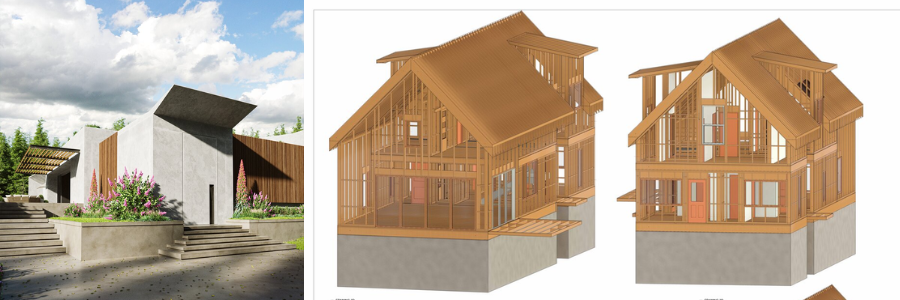
Let’s step away from blueprints and building regulations and walk you through an actual transformation, one that begins in an area most of us never consider: the garage. Imagine this: a 450-square-foot garage nestled in a peaceful suburban backyard. To most, it’s merely a repository for old paint cans, children’s bicycles, and stacks of abandoned holiday decorations. But to a visionary architectural design company? It’s a blank sheet of paper for something remarkable.
Here’s the way this unassuming space transforms into a breathtaking Accessory Dwelling Unit (ADU).
Getting vertical with intent
First, gaze upwards. Raising the ceiling just high enough to fit in a lofted sleeping space is accomplished by the design team. Not simply a bed on a shelf, this one’s reached through built-in stairs that serve as clever storage drawers too. Below, a snug sectional enfolds a media wall, providing a cozy nook for reading or TV binge-watching.
Letting the light in
Dark garages are over. Clerestory windows running along the new roofline provide natural light while maintaining privacy. A large sliding glass door leads out to a deck specifically built for it, with planters around it and fencing to create a small oasis in the backyard.
Clever, zoned floorplan
Instead of separating the space into zones using walls, the 3D floor plan design services rely on visual markers. A sleek kitchen is along one wall, supported by a plush tile backsplash. A dining alcove has its own show-stopping pendant light, and a small home office neatly nestles beneath the stairs, ideal for remote employment or artistic pursuits.
Outdoor living, elevated
The deck is not merely for show. It’s for use. During nice weather, it becomes an entire outdoor dining area. A pergola above it surrounds the space beautifully, with built-in lights for evening meals and just a hint of shade for breakfast or coffee on bright mornings.
Minimalism with personality
No clutter. No mess. Rather, imagine white oak floors, soft olive green cabinets, and discreet brushed gold fixtures. It’s a color scheme that is calm and contemporary but still provides texture and warmth.
RELATED: Top design & drafting tasks to outsource for architects and architectural services firms
Conclusion
ADU design represents the art of maximizing small spaces through strategic planning and creative solutions. From utilizing vertical space and natural light to creating seamless indoor-outdoor transitions, these compact dwellings prove that square footage doesn’t determine livability. The key lies in working with experienced professionals who understand the complexities of small-space design, local regulations, and your specific needs. Whether for family housing, rental income, or personal retreat, a well-designed ADU can deliver big functionality in a small footprint. With proper planning and expert guidance, your ADU can become a comfortable, efficient home that punches well above its size.
Ready to transform your space?
Don’t let size limitations hold back your ADU dreams. Partner with Cad Crowd, the leading platform in finding the best freelance talent, and work with our experts who specialize in compact living solutions. Get professional guidance on regulations, design, and construction today. Contact us for your FREE quote and bring your vision to life.