Sleek, Ergonomic Lightweight Rollator – Modern, Safe & Space‑Saving Design
in
Medical Devices Design
held by
bryanf
Last seen:
Contest Closed
-
Open
-
Choosing Finalist
-
Ended
Description:
BACKGROUNDWe’re on a mission to transform aging by reimagining mobility devices for people with limited mobility. We’re starting with the rollator — one of the most essential, yet most outdated, assistive devices.
Every day, thousands of people reach retirement age in the U.S. alone. Yet the products designed to support them remain clinical, impersonal, and poorly engineered for real human needs. We’re developing a new generation of durable medical devices that are safe, ergonomic, attractive, and personalizable — products that restore confidence, independence, and dignity to aging adults.
Our first product is a next‑generation rollator (walker with wheels) that is safe, stable, intuitive, and beautiful. Rollators are vital to millions: between 7 and 10 million people in the U.S. currently use one, and that number is expected to exceed 12 million by 2030, driven by consistent 6%+ annual market growth and a rapidly aging population.
Despite their popularity, today’s rollators suffer from serious design flaws that compromise comfort, usability, and safety. We’re looking for industrial designers to help us redefine this product category from the ground up.
THE PROBLEM
(1) Safety and Stability Concerns
Rollators are often unstable on uneven surfaces, leading to falls during turning, sitting, or weight transfer. Poor lateral stability and under‑engineered frames increase tipping risk. Cracks, curbs, and wet floors present constant hazards.
(2) Brake and Wheel Issues
Weak or inconsistent brakes, loose cables, and poor component quality result in unsafe performance. Some models even move when brakes are “locked.” Seniors frequently struggle with brake adjustment and engagement.
(3) Ergonomic Fit
Fixed or poorly adjustable handle heights cause back pain, shoulder tension, and poor posture. Many rollators force users to hunch or lean too far forward, accelerating fatigue and increasing fall risk.
(4) Weight and Portability
Heavier models are difficult to lift or store. Lightweight models, meanwhile, often feel flimsy or unstable. Even so-called “easy fold” systems are often difficult to use without significant coordination or strength.
(5) Durability and Maintenance
Low-cost components (brake cables, tires, grips, storage accessories) tend to wear out quickly, rattle, or break down, leading to frustration and safety issues.
(6) Cognitive and Visual Limitations
Low visibility, poor labeling, and lack of tactile or visual cues make rollators difficult to operate for those with impaired vision or cognitive challenges. Most models lack reflectors, lighting, or intuitive indicators.
(7) Aesthetics and Personalization
Visually unappealing, stigmatizing, and poorly aligned with the lifestyles of modern users, most rollators resemble hospital equipment more than consumer products—a visual signal of decline rather than empowerment. Many users, especially those in the early stages of mobility impairment, feel ashamed or reluctant to use their rollator in public. These devices fail to reflect the individuality, dignity, or design sensibility of the people using them. In addition, rollators often come in limited sizes and configurations, offering little adjustability for different body types or mobility needs. They’re also rarely customizable in appearance, with no way to select finishes, colors, or accessories that match personal tastes or home environments. People can personalize everything from their phones to their cars — why can’t they do the same with a rollator?
DESIGN CHALLENGE & DELIVERABLES
We’re inviting designers to reinvent the rollator as a lightweight, space-saving, and design-forward product that feels at home in modern life.
Your task:
Design a compact, ergonomic rollator for older adults — one that balances comfort, functionality, and modern aesthetics. The ideal design will be visually elegant, safe, durable, and 3D-printable for early prototyping.
Deliverables:
• 2–3 concept sketches or renderings
• 3D CAD files (STEP and STL format) optimized for 3D printing
• Exploded View (optional) — mechanical details if applicable
• Basic Engineering Notes — joins, materials, tolerances
• Brief design rationale (a few paragraphs on ergonomics, mechanisms, intended materials)
Wants:
• Ergonomics & Usability – Comfort, natural posture, and fit for older adults with varying physical needs• Safety & Stability – Anti-tip design, dependable braking, and traction across different surfaces
• Form & Aesthetics – Clean, modern appearance that feels at home in public and private spaces; a device that even design-conscious users will be proud to use and display
• Customization & Personalization – Adjustable sizing (e.g., handle height, frame width) and aesthetic options that empower users to make the rollator their own
• Innovation – Fresh thinking around folding, weight distribution, or interaction design
• Prototypability – Design must be suitable for testing via 3D printing (FDM/SLA)
• Feasibility – Components and materials should be realistic for eventual manufacturing
Don't Wants:
• Generic, hospital-style rollators with little attention to design or user experience• Products that look clinical, stigmatizing, or overly mechanical
• Designs with no aesthetic personality or potential for user customization or personalization
• Rigid, one-size-fits-all formats with no adjustability for different body types or physical needs
• Designs that are unsafe, prone to tipping, or difficult to control
• Folding mechanisms that are bulky, awkward, or too complex for older adults to operate
• Brake systems that are unreliable, confusing, or prone to failure
• Overly conceptual entries that are not realistically buildable or printable
Ask for Sample:
Please include:
• Portfolio pieces or product designs with ergonomic, mobility, or assistive technology components
• Any 3D-print-ready projects you’ve worked on
• Relevant mechanical or folding mechanism examples (if available)
Software:
- step
 Payment Pending
Entries
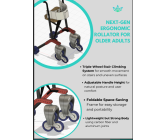
#14 Walker_2.O
by sparshy
Download Files
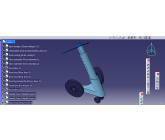
#13 Rollator Design
by Husnain
Download Files
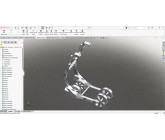
#12 Rollator
by suhermanwinong
Download Files
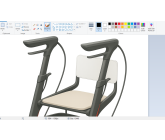
#11 EaseStride
by NextGen_IoT_LAB
Download Files
#10 S4 Rollator
by satyas
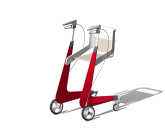
Download Files
#9 yamandesign
by kadiry2
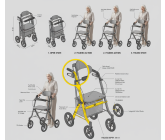
Download Files
#8 EaseStride
by NextGen_IoT_LAB
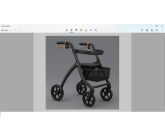
Download Files
#7 Aid walker
by MécaCim
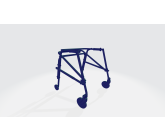
Download Files
#6 Medical Walker
by kadiry2
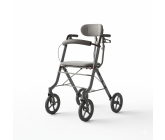
Download Files
#5 EaseStride-02
by NextGen_IoT_LAB
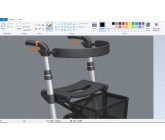
Download Files
#4 Medical Walker
by pedromoura
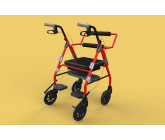
Download Files
#3 “Your Selected Design Delivered as a Manufacturable Model in 3 Business Days!”
by EDİZGNDD
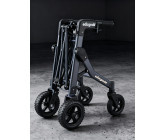
Download Files
#2 EaseStride
by NextGen_IoT_LAB
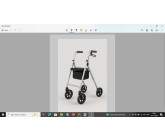
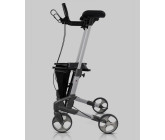
#1 The model is a Walker, designed and modeled in SolidWorks with a focus on ergonomics, stability, and user comfort.
by monirh
Download Files
Discussion
Could you please fix the payment at least?

Contestants: we encourage you to:
- look at the top products in the market (.e.g byacre.com/us/rollators/) and find ways to improve. clearly describe what features make your entry bettter/different
- think about shapes and forms; don't simply settle for rounded metal tubes
- consider the best materials (e.g. 3D-printed plastic) and discuss how your design makes prototyping easy
- be clear about customization options and accessories (this is very important!)
The winning entry should demonstrate and document user research.
- look at the top products in the market (.e.g byacre.com/us/rollators/) and find ways to improve. clearly describe what features make your entry bettter/different
- think about shapes and forms; don't simply settle for rounded metal tubes
- consider the best materials (e.g. 3D-printed plastic) and discuss how your design makes prototyping easy
- be clear about customization options and accessories (this is very important!)
The winning entry should demonstrate and document user research.
To all participants:
Please carefully read the contest description. We are seeing many, many submissions that are very similar to existing solutions. These will not be considered for the prize.
Contestants should:
- carefully consider all of the SPECIFIC the needs of users. for example: how can an elderly person easily use storage (remember that they cannot bend down easily), brakes (especially considering that many elderly people have arthritis), etc.
- consider how to solve the safe collapsibility of the device--in a way that will not harm the user, and that the device can easily be stored without falling over
- ensure that the device can be 3D-printed. nearly EVERY submission has been composed of metal tubes. This is not consistent with contest instructions
We're eager to find a winner and are even considering adding a 2nd place position for other good ideas. Please show us your RESEARCH, USER UNDERSTANDING, & MATERIALS CAPABILITY!
Please carefully read the contest description. We are seeing many, many submissions that are very similar to existing solutions. These will not be considered for the prize.
Contestants should:
- carefully consider all of the SPECIFIC the needs of users. for example: how can an elderly person easily use storage (remember that they cannot bend down easily), brakes (especially considering that many elderly people have arthritis), etc.
- consider how to solve the safe collapsibility of the device--in a way that will not harm the user, and that the device can easily be stored without falling over
- ensure that the device can be 3D-printed. nearly EVERY submission has been composed of metal tubes. This is not consistent with contest instructions
We're eager to find a winner and are even considering adding a 2nd place position for other good ideas. Please show us your RESEARCH, USER UNDERSTANDING, & MATERIALS CAPABILITY!
Similar Contests on Cad Crowd
Portable dry herb vaporizer
Overview: Dry herb vaporizers are growing in popularity, and I’m interested in producing a new product for this market. My interest is in producing an “oven” for the dry herb to be heated to the correct temp, and this oven needs to connect to an 8mm stem (these stems are already in market).
Brief: https://www.dropbox.com/s/0xgjnxflfq2x4vu/Oven%20Design.docx?dl=0
StrideAssist 2.0 – Medical Mobility Device CAD Design & Engineering Model
I am seeking an experienced CAD designer and/or mechanical engineer to develop a professional 3D CAD model for a patent-pending medical mobility device called StrideAssist 2.0.
StrideAssist 2.0 is an advanced mobility assistance device that combines adjustable shock absorption, energy return, ergonomic support, and modular functionality. The device is intended to reduce impact stress on the user while improving stability, comfort, and mobility.
The winning designer will:
Create a complete 3D CAD assembly
Develop individual part models
Design a functional adjustable shock absorption system
Create an exploded assembly view
Produce engineering drawings suitable for prototyping
Deliver STEP files and native CAD files
I will provide:
Patent drawings
Concept sketches
Written descriptions
Feature requirements
Important features include:
Adjustable spring and damping system
Lightweight structural frame
Ergonomic grip and support components
Adjustable height mechanism
Modular architecture for future expansion
Experience with medical devices, mobility aids, prosthetics, orthotics, or mechanical product development is highly preferred.
All intellectual property and design rights will transfer to the contest owner upon selection of the winning design.
In the US, Soma Waston sells carisoprodol Soma 350mg
Since it facilitates muscle relaxation and reduces muscle spasms, it is useful for conditions including muscle strains, sprains, and other musculoskeletal issues. Visit our official website: https://www.onlinehealthmart.com/product-category/soma/
Also Know More About Our Latest Product:
https://www.trustpilot.com/review/somawatsononline.blogspot.com
https://www.speakingtree.in/blog/buy-soma-online-usa-get-20-save-on-soma-product
https://www.trustpilot.com/review/somawatsononline.blogspot.com
https://www.trustpilot.com/review/somawatsononline.blogspot.com
https://www.yumpu.com/en/document/read/67993217/buy-soma-carisoprodol-watson-350mg-online-without-a-prescription
https://www.facebook.com/buysomacarisoprodolonline
https://www.bark.com/en/us/company/buy-soma-online--soma-watson-online--onlinehealthmart/4LEQG/
https://www.onlinehealthmart.com/product-category/soma/
Diagnostic reader for disposable test cartridges
We are a small company developing disposable test cartridges for use with human samples such as blood, saliva, swabs, and urine. We are looking for a 3D rendered image of a test cartridge with a reader. The reader should contain a touchscreen interface displaying the concentration readout of five proteins (TNFR2: 485 pg/ml, MMP1: 38,942 pg/ml, RANTES: 11,373 pg/ml, Endoglin: 3,257 pg/ml, sCD40L: 283 pg/ml) and "Microchip #3" as the title. As well, the reader should contain a slot to insert the test cartridge and our company logo. The test cartridge should be about the size of a credit card, made of clear plastic, and contain a sample loading port on one end. We would also like there to be three sample collection pipets and a swab. The three pipets should be colored red, blue, and yellow, and the swab should be white. Reference images are available upon request.
NextGen IHC Stainer – The Enclosure Design Contest
Project Brief: NextGen IHC Stainer – The Enclosure Design Contest
Revolutionize the Look of Cancer Diagnostics!
We are launching an exclusive design contest to create the next-generation outer shell for our high-precision IHC Stainer. We are looking for a visionary Industrial Designer who can wrap our advanced medical technology in a chassis that screams professionalism, reliability, and innovation.
The Challenge:
• Iconic Branding: Seamlessly integrate our "Q" logo as a 3D architectural centrepiece.
• Smart Functionality: Design a dual-side mounting System for monitor arms and integrated multi-level status LEDs.
• Technical Integrity: Evolve the provided STEP-file enclosure while retaining existing mechanical locks and specific container front panels.
• Medical Excellence: Achieve a premium look with tinted windows and "clean-room" ergonomics, while ensuring cost-effective mass production.
If you can balance bold aesthetics with strict engineering constraints, this is the project for you. We are not just looking for a box; we are looking for the new face of our brand.
Join the challenge and help us set a new standard in laboratory design!
1. Project Overview
We are looking for a professional industrial designs for the development of a modern, elegant, and highly functional enclosure for our new IHC (immunohistochemistry) staining device.
Scope of Work: The enclosure provided in the attached STEP file is to be replaced, extended, or otherwise modified as part of this design process. While the aesthetic shell is subject to your creative vision, all existing locking and closing mechanisms for doors and flaps must be retained and seamlessly integrated into your new design. Furthermore, the design must be economically viable for production.
Important: This contest is strictly limited to the exterior shell design. The internal mechanical frame and core functionality are already established. Your goal is to wrap this high-precision technology in a chassis that is manufacturable, ergonomic, and visually striking.
2. Brand Identity & Aesthetics
The design must reflect our corporate identity and stand out in a clinical environment.
• The "Q" Centrepiece: Our company’s "Q" logo (see attached) must be the primary visual anchor and "eye-catcher" of the design. It should be integrated into the chassis as a recognizable 3D brand signature.
• Full Logo: The full company logo (see attached) must also be present but should be secondary—subtle, small, and unobtrusive.
• Colour Palette: The enclosure’s colour scheme and overall aesthetic must be aligned with our corporate identity and logo colours.
• Visual Balance: We aim for "Unique Professionalism." The design should be modern and progressive but not too futuristic (no "Sci-Fi" or "Gaming" aesthetics). It must remain grounded as a reliable medical instrument.
• Tinted Windows: All viewing panels/windows must be tinted glass or polymer to provide a premium look and protect light-sensitive reagents.
3. Technical & Functional Requirements
• Evolution of the Existing Shell: You are invited to redesign, extend, or fully replace the exterior enclosure provided in the attached STEP file. While you have full creative freedom to modernize and improve the aesthetic shell, your design must maintain a cohesive, manufacturable structure that aligns perfectly with the underlying mechanical requirements.
• Retention of Mechanisms: All existing locking and closing mechanisms for doors, lids, or flaps (as shown in the reference model) must remain functional and be incorporated into your design.
• Dual-Side Monitor Arm Support: The enclosure must be designed to accommodate a monitor arm on either the left or the right side (ambidextrous mounting). Your design must include integrated, variable mounting plates and cable pass-throughs to support a variety of third-party monitor arm systems. Crucially, the aesthetics of the enclosure must remain uncompromised when no monitor arm is in use (e.g., via sleek, integrated caps or "invisible" mounting points).
○ For examples, see: VitroStainer 42©; Agilent Dako Omnis (Section 4: Competitive Benchmarking)
• Container Front Panels (Lower Level): The front panels of the containers in the lower level, as shown in the STEP file, must be retained in their original geometry. These panels should only be colour-adapted to match your new design and must be seamlessly integrated into the surrounding enclosure.
○ For examples, see: https://www.leicabiosystems.com/de-de/ihc-ish/ihc-ish-instruments/bond-prime/
• Economic viability: The design must be economically viable for production; we are looking for cost-effective manufacturing solutions (e.g., optimized material usage and assembly-friendly designs) that do not compromise the premium medical look.
• Fixed Attachment Points: The new housing parts must utilize the existing mounting/fixation points of our current internal frame. The internal structural skeleton cannot be modified.
• Status LED Integration: The design must include an integrated multi-level LED status bar (one separate light strip for each, the upper and lower level).
○ Example device for an LED status bar: https://www.celnovte.com/de/cnt320-full-automatic-ihc-stainer/
○ The enclosure must facilitate internal cable routing from the LEDs to the PCBs. All wiring must be completely hidden from the user and protected from contact.
• Manufacturability: Concepts must be practical for production. Consider standard processes like injection molding, vacuum forming, or sheet metal fabrication with high-quality finishes.
• Hygiene: Use smooth, easy-to-clean surfaces suitable for a laboratory environment.
4. Competitive Benchmarking
Please use the following products as a reference for industry standards. Your design should be influenced by the quality of these units but must not imitate them:
• Celnovte CNT320 and other: https://www.celnovte.com/category/instrument/automatic-immunohistochemistry-stainer/
• Dartmon AS610: https://www.dartmon.com/en/products/321
• Leica Bond Family: https://www.leicabiosystems.com/us/ihc-ish/ihc-ish-instruments/
• VitroStainer 42©: https://vitro.bio/en/anatomical-pathology-instruments/
• Roche BenchMark ULTRA IHC/IS -System: https://diagnostics.roche.com/ch/de/products/instruments/benchmark-ultra-ins-2099.html
• Agilent Dako Omnis: https://www.agilent.com/en/product/dako-omnis-solution-for-ihc-ish/dako-omnis/dako-omnis-family-of-instruments-9443864
Goal: Differentiate at first glance. Create something that looks more integrated and "high-end medical" than the competition.
5. Deliverables & File Compatibility
To ensure our evaluation committee can review all entries on standard office hardware, please provide:
1. High-Quality Renderings: Multiple perspectives (front, 3/4, side, rear...) as JPG or PNG files.
2. Presentation Deck: A PDF document summarizing the design concept, CMF (Colour, Material, Finish), and exploded views.
3. Universal 3D View (Optional but Highly Recommended): To allow us to inspect the design in 3D without specialized CAD software, please provide one of the following:
○ 3D PDF: Viewable in standard Adobe Acrobat Reader.
○ eDrawings (.edprt / .easm): Viewable via the free eDrawings Viewer.
○ Browser-based Link: (e.g., Autodesk Viewer or Sketchfab).
4. Source Files: Finalists/winners must provide high-fidelity CAD files (STEP and SolidWorks 2017 or later).
6. Submission Checklist for Designers
Please verify your entry against this list before submitting:
• Design & Branding:
○ [ ] The "Q": Integrated as a prominent, 3D visual centrepiece?
○ [ ] Full Logo: Included but kept subtle and secondary?
○ [ ] CI-Alignment: Do the colours match our corporate identity?
○ [ ] Tinted Windows: Are all windows depicted as tinted/smoked?
• Technical & Engineering:
○ [ ] Fixpoints: Does the shell align with the provided internal frame points?
○ [ ] LED System: Separate status bars for each level included?
○ [ ] Cable Routing: Are internal paths for LED wiring planned and hidden?
○ [ ] Manufacturability: Is the design realistic for medium-to-large scale production?
• File Formats & Compatibility:
○ [ ] Standard Office Compatibility: Are all renderings provided as JPG/PNG?
○ [ ] Documentation: Is the presentation deck provided as a PDF?
○ [ ] Accessible 3D View: Is a 3D PDF, eDrawings file, or Web-Link included for viewing on non-CAD hardware?
○ [ ] Final CAD: Are STEP and SolidWorks (2017 or later) files ready for the final selection phase?
7. Technical Attachments (uploaded)
• Logo_Q.ai (The primary eye-catcher)
• Logo_Q.pdf
• Full_Company_Logo.ai (For subtle placement)
• Full_Company_Logo.pdf
• S800G_Stainer.step (3D block model)
• S800G_Comments.pdf
• Project Brief.pdf
8. Software Compatibility & Technical Standards
• Primary CAD Standard: To ensure seamless integration into our engineering workflow, all source data and native files should ideally be compatible with SolidWorks (Version 2017 or newer).
Alternative Software: If you intend to use design software other than SolidWorks (e.g., Rhino, Fusion 360, CATIA), please contact us before submitting your entry. We need to verify in advance if your exported data will be fully compatible and usable for our internal mechanical engineering team.
RamaKD