What is virtual staging, and how does it benefit real estate businesses? In the competitive world of the real estate market, the first impression lasts when it comes to browsing online. It can make or break the deal when deciding which homes will be the first to visit among the lists. Having a listing of photos is considered as one of the most powerful marketing tools that can be utilized by real estate agents and sellers. Make your property listing be more appealing by connecting with vetted professionals in Cad Crowd now.
Virtual staging
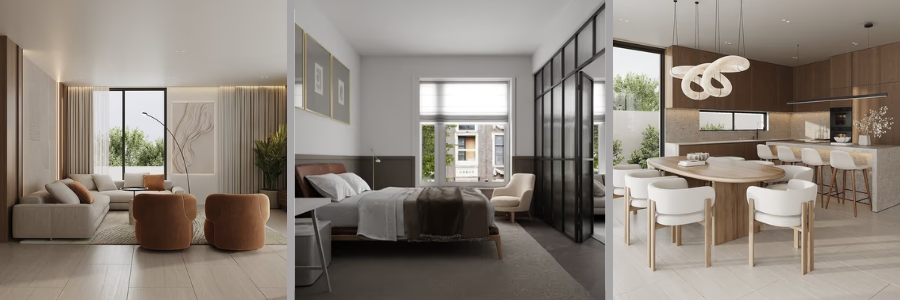
Where empty rooms can be difficult to visualize, may appear small to the naked eye, and it can be expensive to physically furnish an empty property, virtual staging for architecture services come in. It is the process of digitally transforming and furnishing photographs of the real and existing rooms with the help of editing software and 3D furniture models. Virtual staging makes it possible for the professionals to have a realistic feature, decor, lighting enhancements that could make the empty home feel alive. When it is correctly done, it makes it easier for the buyers to have an outlook and vision of how the space can be used without the need of having the real property into the property.
However, it should be known that virtual staging is not totally used as a replacement for the traditional staging in any circumstances. Understanding how it works, what it costs, and when to properly use it provides the opportunity to help the sellers make smart decisions when it comes to marketing. Rather than having the physical appliances such sofas, tables, beds, artworks, rugs, and lamps into the room, the 3D designers are able to put them into photographs while integrating the works of the camera perspective, room dimensions, natural lighting, shadows, furniture scale, and lastly with the interior style. The result of it is an image that appears to be professionally decorated despite the actual room being empty.
RELATED: Freelance 3D Virtual Staging Vs. Traditional Staging: Full Breakdown
Virtual staging vs. full CGI
Both of these services are usually perceived as confusing.
Virtual staging means working with the real photographs of the existing properties. An example of this is when a vacant living room is photographed; the furniture that is desired to be seen in the space can be digitally added to create the vision. A Full CGI rendering would depict making an entire environment in the digital world. Commonly, it can be applied to homes that have not been built, new developments, architectural visualization, and with pre-construction marketing. Instead of merely editing photographs, every wall, floor, and furniture piece is generated in 3D.
Why virtual staging has become so popular
A lot of homebuyers opt to browse and search online for their needs, or they sometimes look online for inspiration for their homes. Professionally staged photos stand out right away when buyers quickly peruse dozens of listings. 3D visualization services help the buyers when it comes to understanding the room proportions, imagining the placement of the furniture, visualizing the lifestyle possibilities, seeing the function of the awkward spaces, and having an emotional connection with the property. When the furniture is not present in the room, a lot of rooms could appear smaller than they actually are. Thus, proper staging allows visual reference points that could make it easier to comprehend and understand.
How does virtual staging work?
Step 1: Photograph the Empty Property
Having a high quality virtual staging can make the photographs appealing. The professionals could capture the living rooms, bedrooms, kitchens, dining rooms, home offices, and the outdoor spaces. When the images are done correctly, it could result in better images. The use of proper lighting, camera angles, and high resolution also adds up to making the virtual furniture appear to be more realistic.
Step 2: Analyze the Space
Every 3D architectural rendering designer studies the room carefully. The designers tend to identify every camera angle, floor dimensions, ceiling height, lighting direction, window placements, and the architectural style to help them plan on what’s the best move to apply. With this information, it guarantees that the furniture is placed naturally.
RELATED: Virtual Staging Services: The Important Benefits for Architecture and Real Estate Companies
Step 3: Add 3D furniture
The professional designers have the freedom in inserting realistic furniture models. They carefully check if it matches the perspectives, furniture scales, material textures, color palette, lighting, shadows, and reflections. The goal of the virtual staging is to have every piece appear as it was physically present in the room, making it more lively, attractive, and welcoming for the buyers.
Step 4: Post-Production
It would be easier to attain realism when final edits are made and generated in a way that is flawless. It may include shadow refinement, color correction, reflection adjustments, brightness balancing, object cleanup, and enhancements of minor lighting. Having to apply quality control with 3D architectural visualizations helps prevent editing errors or furniture that looks unrealistic in the photographs, making it unusable.
Virtual staging costs
In every service, pricing could depend on what a client would want, including factors such as image quality, revisions, room complexity, and provision of the service.
| Service | Typical Cost |
| Professional Virtual Staging | It would cost about $30-$200 per image |
| AI Virtual Staging Tools | Approximately it would cost for about $12–$39 per image (or subscription equivalent) |
| Physical Home Staging | The cost will be $1,500–$5,000+ for the first month, and additional ongoing monthly furniture rental and for other related costs |
The professional services typically consist of the design consultations, furniture style selection, high quality 3D assets, revision rounds, and manual editing that could provide a much better realism. The AI tools can be inexpensive, but usually offer fewer customization options and have a less reliable output.
RELATED: How to Create a Virtual Tour of Homes with 3D Rendering Services
Turnaround time
An advantage of using virtual staging is the speed and efficiency of doing the tasks.
| Service | Typical Turnaround |
| Virtual Staging | 24-72 hours |
| Physical Staging | 7-14 days |
The physical staging would typically require scheduling, styling, removal after the scale, moving crews, and the delivery of the furniture. On the other hand, with 3D rendering services and virtual staging eliminates almost all of the logistical challenges that could hinder the overall process of the product.
Why is virtual staging delivering better ROI?
It is not just popular because it is widely used, is known as a more economical choice, and can provide the client with an excellent return on investment. Reports in industry have shown that the staged homes do attract the interest of the buyers, which leads to selling faster, compared to upstaged homes. However, results may vary per market, and with the help of good presentations, it can improve the engagement, which in turn, will result in having more clients.
An example of this is that when applying physical staging, it would cost thousands, but with virtual staging, it would cost less for the overall listing. Comparing these two stages, the return on the lower-cost option is significantly higher as a small initial investment is needed. Yet, it does not always mean that virtual staging is the better option. It is better to depend on the property, the selling strategy, and the target buyers to know what is best to use.
When does virtual staging beat physical staging?
It is not always the best option to hire an architectural visualization designer for virtual staging, but when a situation arises, it can be a great help, especially as it provides speed, flexibility, and affordability, compared to traditional physical staging. It is one of the best marketing solutions for residential properties.
RELATED: How Virtual Staging is Shaping the Future of 3D Interior Design for Home Builders
Vacant homes
It is hard to figure out an empty and vacant room. An empty room may feel less inviting, and the buyers have a hard time seeing it. The use of the virtual furniture aids in improving the overall space, as one can visualize what is the best layout of the furniture to put. The empty rooms can be transformed into one of the welcoming spaces.
Budget conscious sellers
Rather than having a costly furniture rental, the sellers could easily market the properties without spending a lot. Having virtual staging applied in the works can be one of the smartest options for starter homes, mid-priced listings, and rental properties.
Remote cost
Some of the buyers relocate from other places. They browse the place online, where the first impressions take place.
Easy updates and design flexibility
Virtual staging makes it easier for the 3D architecture designer to modify the styles, colors, and room layouts without the need of moving a piece of furniture inside the room. The sellers can change the layout depending on the target audience. An example of this is changing the layout from the modern style to a farm house, it can be updated more easily than in the physically staged room.
Virtual staging beats traditional physical staging when it comes to affordability, speed, and flexibility, as it has a top priority in online marketing. This is the best option to utilize for many residential properties, as it balances the cost and the marketing impact.
RELATED: The Ultimate Guide to Virtual Staging for Real Estate and Architecture Companies
When physical staging still wins?
Physical staging is still the best choice despite its own limitations. Buyers tend to visit the location of the property in person as they would want to see the place and experience it. The visitors tend to appreciate the layouts of the furniture, room layout, and the atmosphere of the place, which a virtual staging cannot offer. Physical Staging helps in creating the overall experience during tours or visits. It would help in envisioning what it would be like to live in the place. It also helps the buyers easily understand the proportion of the rooms, as it can impress them during the visit.
The hybrid approach: the best of both worlds
With ongoing advancements in architectural design services, a lot of experienced real estate professionals use both of the methods and integrate them. An example of this is to physically stage the main living room, dining area, and virtually stage the secondary bedrooms, home office, and the other rooms. By utilizing these strategies, it can reduce costs while still having the experience of the buyers in the room. It is best since it offers an effective balance between the budget, speed, and the quality of the presentation. The hybrid approach recognizes the approach of the virtual and physical staging as a complementary strategy. Without spending a lot, the marketing can still happen, making the properties stand out without having to fully furnish the room.
AI virtual staging versus professional virtual staging
The use of artificial intelligence makes virtual staging faster and more accessible compared to before. Yet, it could generate AI images and professionally designed virtual staging that are not identical to it.
| AI virtual staging | professional virtual staging |
| Lower Cost | Higher Quality |
| Very Fast generation | Manual Attention to detail |
| Limited furniture Control | Custom furniture selection |
| May produce unrealistic proportions | Accurate scale and perspective |
| Fewer revision options | Multiple revision rounds available |
| Can struggle with complex rooms | Better handling of difficult layouts |
| Ideal for large volumes | Ideal for premium listings |
The use of artificial intelligence is helpful as it can offer speed, and it is affordable to use, especially when there are many staging images that should be produced at once. If you’re keen on checking precision, consistency, and polished marketing images, hiring a professional 3D architectural visualization designer is still the better option.
RELATED: How 3D Architectural Visualization Helps Companies Advertise Unfinished Projects
Ethical considerations and disclosure
It should be understood that the goal of having virtual staging is to improve the presentation and not to mislead buyers. It is important to be responsible for clearly labeling the visually staged photos, avoiding editing that could alter the structure of the property; it should also be noted that defects or damages should not be hidden, and ensure that the furniture is scaled realistically.
There are rules in the market that should be followed, such as the Multiple Listing Services (MLS) regulations, some may demand listing images that have been digitally altered to be exposed. Before publishing the virtually staged images, the real estate experts and professionals should review the applicable advertising regulations and local MLS guidelines. It is crucial to be transparent in many ways, as it can prevent misunderstandings and build trust with the buyers.
Tips for getting the best results for virtual staging
Having the right professionals and tools can help bring a project that is high quality. To have the best results, start with professional real estate photography as it could enhance the images, have a furniture style that could best match the architecture of the home, have realistic designs rather than having complex ones that are hard to achieve, and does not feel authentic. Build a consistent design across all the rooms, and request for revisions if the furniture scale or the hues are highly unnatural and do not belong to the place, as well as disclose the images when it is virtually staged. Even with these small changes, it could have a significant effect when it is collectively made, as it can also boost credibility and effectiveness in listing photos.
Is virtual staging worth it?
Some would agree, some would not. This would depend on the purpose and the goal. Virtual staging from an expert interior rendering designer does offer an affordable way to have the empty spaces transform into inviting, well designed and planned interiors, which can engage the buyers in visualizing their potential homes. On the other hand, the physical staging offers its advantages, especially in the world of the luxury properties, open houses, and events when the buyers want to visit their home in person. It would still be dependant on the project’s budget, property type, and the goal in choosing the best stage to use.
RELATED: How to Choose the Best Freelance Architecture Visualization Services and Designers
Working with the professional virtual staging experts
A high quality virtual staging would require more than a simple digital furniture present in a room. It should have a realistic perspective where it could inspire the buyers to choose it. Cad Crowd allows partners with experienced professional freelance 3D design experts who can virtually stage the photos according to the goal and purpose of the project. It can offer a personalized collaboration that could integrate with the details of the images, as it aligns with the marketing goals, making it represent the property accurately.
Using Cad Crowd makes it easy to have an output that is associated with the needs of the projects. Whether choosing an AI assisted staging, or a professional virtual staging, or the hybrid ones, it is important to apply the value of transparency and accuracy in providing a quality output. This could help in making the buyers connect more with the property while still trusting the overall process.
How Cad Crowd can help
The use of virtual staging has become widely known in modern real estate. It is one of the cost effective marketing tools that could help enhance the images, listings, and portfolios. The agents and the sellers can highlight a home’s potential without incurring the costs and hassles of moving actual furniture by digitally furnishing real estate photos. While physical staging continues to offer unparalleled impact during in-person showings, it is an appealing option for many listings due to its quicker turnaround times, cheaper costs, and powerful online presentation. For many properties, the best overall outcomes are obtained by carefully combining the two methods. Find the best freelancer for the job with Cad Crowd to bring your property photos to life. Contact us for a free quote.