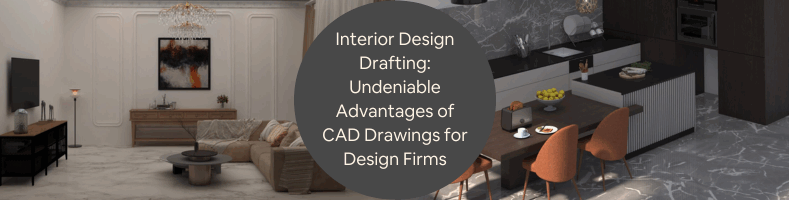
There’s just something so irresistibly enchanting about the process of taking a blank room and turning it into a thoughtfully designed interior space that’s a mirror of personality, comfort, and functionality. But every beautiful living room, high-end office, or warm café has a thoughtful plan and a creativity roadmap that dictates each brushstroke, each upholstery decision, and each bit of furniture that goes there. Welcome to interior design drafting, where imagination converges with precision thanks to the strength of CAD drawings.
If you’re picturing someone hunched over a drafting table with a pencil, eraser in hand, sweating over perfecting lines and curves, let me tell you: that world still exists, but it’s been revolutionized. The days of hand-drawn sketches and blueprints are increasingly giving way to the sleek, efficient, and downright dazzling realm of CAD—Computer-Aided Design. And for interior design companies that are part of industry giant Cad Crowd, adopting CAD drafting services isn’t a trend; it’s a sure win that’s revolutionizing the game for designers to communicate, collaborate, and create outstanding spaces.
Let’s explore why CAD drawings are the secret ingredient for interior design companies today and why they can be the ultimate sidekick a creative expert can have.
🚀 Table of contents
- The precision dance: Why accuracy is more important than ever
- From imagination to reality: Visualization like you’ve never seen before
- Collaboration gets a turbo boost
- Speed and flexibility: Since time is money
- Sustainability: Designing for a greener future
- Standardization meets customization: The best of both worlds
- Archiving, sharing, and reusing: A treasure trove of designs
- Training and talent: CAD skills as a career superpower
- The ROI that speaks for itself
- Beyond the Drawings: CAD as a design thinking partner
- Partner with Cad Crowd now!
The precision dance: Why accuracy is more important than ever
Think about attempting to create a beautiful ceiling pattern or a specialty cabinet simply by drawing it on paper. Of course, talent and a good sense of space are required, but even the steadier hand and more acute eye have their limitations. That’s where CAD is useful, converting every line, angle, and curve into a precise measurement, to the millimeter.
Precision to such a level isn’t a goal. It does make a difference that every object ends up where it’s going. CAD drafting enables designers to produce hyper-accurate floor plans, elevations, and sections. What this does is furniture sliding through doorways without a hitch, light fixtures avoiding ceiling beams, and built-in shelving or cabinets not awkward, useless alcoves.
But the greatest innovation is how this precision saves time and expense. Interior design companies employing CAD eliminate expensive errors in construction or installation. No eleventh-hour revisions, which undermine budgets or derail timelines. And in construction and design, dependability is paramount; it delights clients and work proceeds unencumbered.
In short, CAD isn’t just a tool. It’s the precision dance that keeps design dreams turning into flawless reality. Because when it comes to making spaces beautiful and functional, accuracy really does matter more than ever.
From imagination to reality: Visualization like you’ve never seen before
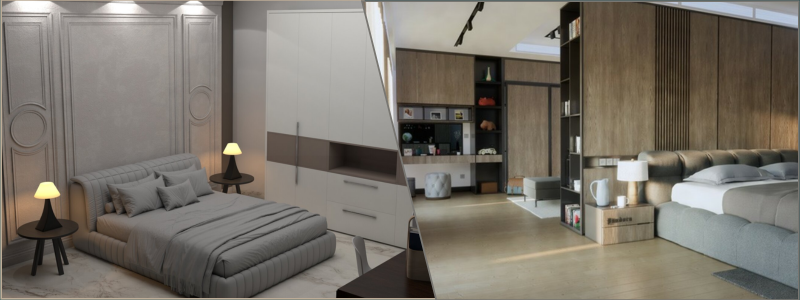
Good talk of ideas, but being able to show clients in actual terms exactly what their fantasy space will look like is a different level of competition. CAD drafting opens the door to accurate, photorealistic 3D renderings that render designs into a tangible form even before a single nail can be pounded.
With CAD, interior designers can create virtual tours, enabling clients to “step into” their space of the future. Want to see how the room appears with a particular lighting design service or how changing the color of upholstery alters the mood? No problem. This interactive approach not only boosts client satisfaction but also eliminates unnecessary back-and-forth revisions, simplifying the design process.
The “wow” element of these visualizations can also be leveraged as an equally potent marketing tool for design firms, making them stand out in a crowded marketplace. Potential clients prefer to see a rich, immersive preview instead of being forced to work on nebulous promises or flat, 2D designs.
RELATED: The evolution of architectural design with CAD software & design service companies
Collaboration gets a turbo boost
Interior design is not a one-person job. It’s a collaborative effort that may include architects, contractors, engineers, and clients. With conventional drawings, it would be a logistical nightmare to coordinate all the parties involved and have them literally on the same page.
CAD drawings, on the other hand, are in the project management systems or the cloud and are always available to the approved members of the team. Every time one changes a design element, everyone has a real-time view of the change. This constant collaboration eliminates miscommunications, maintains design integrity, and accelerates decision-making.
In addition, CAD files are accessible to be integrated with other programs, structural models, lighting models, and even procurement systems, building a single workflow from design development to project completion. For design practices working on several projects and tight deadlines, this is a time-saver, especially for architectural design firms.
Speed and flexibility: Since time is money
Time is the quiet, merciless enemy of every interior design practice. Client deadlines, contractor schedules, and budget restrictions all require a flexible and nimble approach.
CAD drafting accomplishes that on the design side by producing and editing design drawings much quicker. Resketching an entire section to insert a modification, which is what is necessary with hand drawings, is a thing of the past when using CAD. Want to move a wall, modify a tile pattern, or try out a new color scheme? A couple of mouse clicks, and the entire design rearranges itself.
This adaptability allows interior designers to try and offer customers a range of possibilities without squandering valuable time. Quick turnaround is the key to happier clients, timely approvals, and being able to work on more projects, a recipe for business success.
Sustainability: Designing for a greener future
In a day and age where sustainability is more than a buzz term, CAD drafting helps aid environmentally friendly design procedures. Conventional paper blueprints can generate volumes of waste from several rounds of revisions and printing. CAD electronic files minimize paper use and cut down on storage requirements, which can be hefty for architectural design experts.
But green advantages go one step further. CAD software can analyze energy efficiency, light effects, and material consumption, enabling designers to develop environmentally sensitive interiors that minimize carbon footprints. This perfectly fits emerging client requirements for green space, and it places design companies as visionary, responsible industry leaders.
Standardization meets customization: The best of both worlds
One of the challenges in interior design is balancing standardized elements with customized designs. CAD drafting strikes the ideal balance by enabling companies to have standardized templates for day-to-day components, such as cabinetry, lighting schemes, or electrical designs, while still customizing special details for individual clients.
This standardization accelerates the drafting process and is project-coherent without curbing creativity. One-off pieces can be accurately modeled and smoothly blended, allowing each room to be distinctly differentiated without compromising on efficiency.
RELATED: 6 types of residential design & CAD services for companies
Archiving, sharing, and reusing: A treasure trove of designs
Think of the worth of having a digital copy of every project your company has ever undertaken, at your fingertips, and to recycle or reuse on a new client. That’s yet another benefit of CAD drafting and 3D modeling design services.
In contrast to paper blueprints that can be lost, damaged, or superseded by newer building codes, CAD files are readily stored, queried, and retrieved. In the event the client returns years after needing a remodel or an addition, designers can readily retrieve the original drawings, update them as needed, and be back at work on the project where they left off.
This archive also aids in acclimating new employees more quickly and assists with quality assurance, maintaining a firm’s design standards consistently.
Training and talent: CAD skills as a career superpower
To designers, not only is it a worthwhile skill to have acquired by studying CAD packages, but for others, it’s a career booster. Companies that invest in staff training on CAD drawing not only increase productivity levels but also employ the best professionals who are willing to utilize the latest equipment.
For designers, CAD skills are a ticket to more advanced projects and co-working with engineering design services and architects, enhancing their opportunities. The technical skill is well complemented by imagination, resulting in creative yet realistic designs.

The ROI that speaks for itself
Finally, every investment a design firm makes should eventually return on an economic basis. Moving away from conventional drawing to CAD may at first glance appear to be a gigantic quantum leap in terms of software licensing cost, training time, and equipment cost.
Yet, the payback of the investment manifests itself quite quickly. Fewer errors, quicker project completion, increased client satisfaction, and improved competitiveness on marketing grounds translate into greater revenues and improved profitability. Most companies find that CAD drafting realizes returns in saved time and client loyalty in the first year.
RELATED: Architects vs. designers: What’s the difference and which should you hire for design services?
Beyond the Drawings: CAD as a design thinking partner
The most thrilling thing about CAD drafting is not what designers are able to do with it but how it transforms the way that they think. CAD software compels designers to think in three dimensions differently, model real situations, and learn constraints they could never have anticipated.
3D design experts can try unusual shapes, experiment with lighting conditions at variable times of the day, or design ergonomic furniture configurations with scientific accuracy. This computer playpen inspires imagination and creativity without allowing ideas to drift away from reality.
The history of interior design drafting from pencil and paper to computerized CAD systems is a tale of technology enhancing creativity. It’s one of spanning broad ideas and shaping them into precise, functional drawings that satisfy clients and endure the rigors of construction delays.
For interior design companies that are ready to succeed in a competitive and dynamic business, CAD drafting is no longer optional. It’s a major business benefit. From accuracy and teamwork to visualization and going green, CAD provides a variety of advantages that enhance the entire design process.
Partner with Cad Crowd now!
The next time you enter an impeccably designed environment, remember that behind its perfect beauty lies a digital blueprint crafted with the force of CAD, where technology and creativity meet and create magic. Contact Cad Crowd and ask for a free quote.