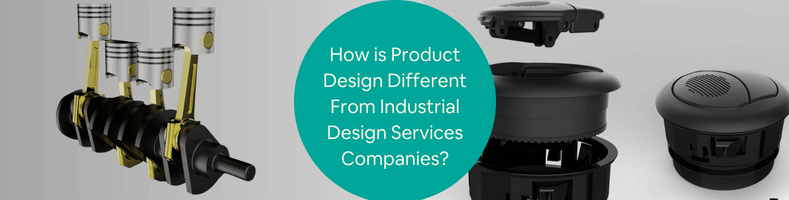
Many of us are under the impression that “product design services” and “industrial design services” are simply two different terms to refer to the same exact thing, but the process of designing a product to be mass-produced and sold to the masses. However, some people insist that the terms are only similar to each other, and they do have some notable differences.
Among the most commonly cited differences is that only the latter has anything to do with mass manufacturing, whereas the former stops at the prototyping phase. But don’t be surprised to find an explanation about how product design has a broader scope that includes both digital and physical products, while its industrial counterpart focuses almost exclusively on physical products–the kind that requires actual mass production rather than something akin to software launch.
Some would go as far as claiming that any industrial designer can be a product development expert, but not the other way, just because a product designer has no need for the knowledge of manufacturing at all. The good thing is that regardless of where the actual difference lies, the vast majority of professional product designers are aware of DFM (Design for Manufacturing) approach, which basically requires the designer to consider the likelihood of a product being mass-produced, so it pays to put any potential factory constraints into account throughout the design stages.
If you want to know more, you can ask any product designer on Cad Crowd freelancing platform, which has over 94,000 freelancers you can choose from. You’ll be glad to know that they, too, are pretty darn knowledgeable about DFM and mass manufacturing processes.
🚀 Table of contents
Pinpointing the dissimilarities
With all of that in mind, we come to some inconclusive points as follows:
- Differences between product design services and industrial design services are subtle.
- No definitive answer that everybody can agree on.
- It depends on who you ask and how they describe their professions.
- To say that product design processes stop at the prototyping phase makes little sense these days, as many product design firms also offer manufacturing services.
- While the terms may not be entirely interchangeable in every single situation, they refer to the same thing in most cases.
One more thing, BLS has no specific entry for “product designer,” but the site says industrial designers tend to specialize in different product categories. Some may design consumer electronics and medical devices, while others develop houseware, toys, clothing, footwear, cars, sporting equipment, etc.
Perhaps, all product designers are inherently industrial designers until they specialize in specific products. For instance, no one refers to Battista Pininfarina as an industrial designer; he was an automobile designer. However, James Dyson is an industrial designer because he works on multiple products such as the bagless vacuum cleaners, bladeless fans, and heatless hand dryers.
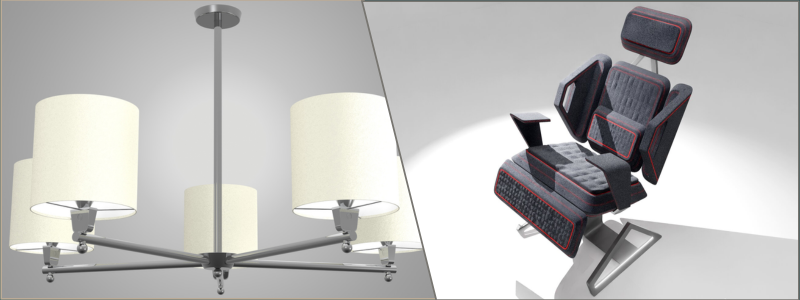
Product design – Functionality, aesthetics, and beyond
Each time you hear someone mention “product design,” the first thing that comes to mind is the process of developing a product from idea into reality, sending it to mass production, and then selling it to the masses for profit. In fact, product design services may even encompass the entirety of a product life cycle, meaning it can go beyond product launch to also include marketing campaigns, customer service, maintenance, and end-of-life management (for example, when an old product is deemed obsolete due to the lack of updates or better technology from newer alternatives).
Consumer product design services are fundamentally revolving around users’ needs, placing heavy emphasis on (1) understanding the target users, (2) defining the problem those users have, and (3) devising an effective solution to the problem. At the end of the process, the final product should meet users’ expectations in all major aspects (functionality, aesthetics, usability, etc.), and because the product also has to achieve the creator’s business objectives, it needs to be commercially viable as well.
Every product is made to cater to specific demographics. A product intended to penetrate the luxury market might be designed with few compromises on build quality and customer support; on the other hand, if the product is marketed to be affordable, it makes little sense to design and build a product that’s too expensive for the target customers to buy. It’s all about why you make a product, how to build one, and who the product is for.
Industrial design – The pursuit of mass production
It’s said that the defining factor of industrial design is the fixation on mass production. Think of it as product design infused with DFM. Also, remember that you can only mass produce physical products. For instance, a manufacturing facility might be able to make millions of smartphones in a year, but it doesn’t actually create an operating system for every single device. The operating system itself is a digital product distributed by the developer.
Suppose the smartphone in question runs a version of Windows Mobile; does this mean Microsoft has to develop millions of the same operating system, too? No, the company only needs to build one and then distribute it to the devices. What about in the old days when Microsoft sold physical copies of the Windows OS? The media (CD or DVD) were mass-produced, but not the operating system they carried.
Except for digital products, there’s not much of a difference between product design and industrial design services, especially considering the fact that nearly all modern product design services implement DFM principles.
No clear-cut difference
You can’t even say that one offers a broader range of service than the other. Both product design and industrial design services follow a similar series of steps, from market research and ideation to prototyping and mass manufacturing.
According to the BLS, the work of industrial designers mainly involves the development of a concept for manufactured products. The development process requires them to consider such factors as function, usability, aesthetics, and production cost. In general, the work requires them to combine engineering, art, and business know-how. BLS further elaborates that industrial designers often collaborate with specialists like mechanical engineers and manufacturers to determine whether the product can be mass-produced in a cost-efficient manner and sold at a reasonable profit margin. Parts of the job include creating physical prototypes, examining the materials, evaluating safety, and defining the manufacturing requirements.
But here’s the catch: product designers offer pretty much the same services, except when the product is in digital form, like an app or software, a website, or a video game.
There doesn’t seem to be a clear-cut difference between the two. Perhaps, they’re indeed the same or at least cover the same kind of services; it’s just that they have slightly different ways to handle the tasks involved. Referring back to the smartphone example mentioned above, the analogy below might lead to a better understanding of the terms.
Imagine a scenario where a product designer and an industrial design experts are tasked with developing a new smartphone.
Product design services should involve:
- Market research to understand the problems users have with the existing products.
- Determining the target market.
- Defining the functionality and features to provide solutions to the problems, such as improved communication apps, better camera capabilities, higher quality speakers, more durable touchscreens, overall better repairability, etc.
- Developing an operating system for the smartphone, unless there’s already an existing mobile OS that the designers can use.
- Designing the user interface for the smartphone. It might be based on the OS.
- Designing the physical device itself, including ergonomics, positions of physical buttons, screen size, and resolution,
- Researching the best possible materials for the hardware parts, taking manufacturability and production cost into account.
- Prototyping and testing.
- Establishing collaboration with parts suppliers and a manufacturing partner.
- Planning for product launch and post-launch management.
Industrial design services would involve:
- Everything that product design services include, except the parts that focus on operating systems, apps, and user interface. As a matter of fact, if you want to develop new software of any sort, you’d have a better chance at success by hiring software developers rather than industrial designers or product designers.
- Design for manufacturability service approach for all the hardware parts of the smartphone.
The non-physical parts of the smartphone can’t be mass-produced, and that’s usually (but not always) beyond the scope of services provided by an industrial designer. And as far as DFM is concerned, there’s no rule to govern that only industrial designers are allowed to implement the approach to the job.
Some sources cite that industrial design services put heavy emphasis on the physical characteristics of a product, including the materials, the shape, the ergonomics, and so forth. But this is a brazen belittlement of what industrial designers do. Their scope of work is beyond determining the right dimension of a product, choosing the color and finishes, or deciding where to put the volume rocker. They transform mere concepts of a product into reality through a series of complex undertakings and plan the mass manufacturing process, so that people can purchase it at a reasonable price.
Conclusion
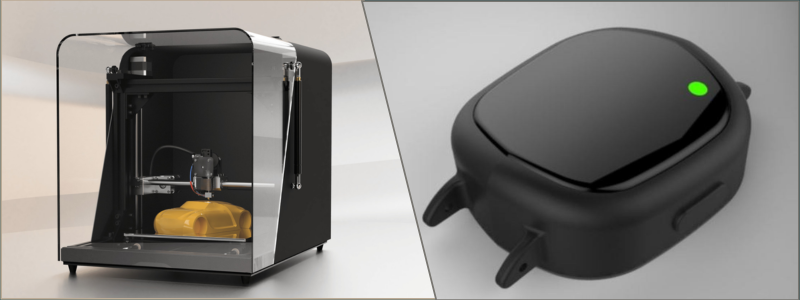
So far, we’ve established that product design and industrial design services revolve around transforming an idea into a commercial product that can be mass-produced and sold at a profit. Also, industrial designers don’t develop software or any kind of digital product, and neither do product designers. Assuming a product, most likely an electronic, requires software, they should know better than to handle the task on their own; it’s a specialized job best left to a specialized professional, which in this case is a software developer.
If there’s a striking difference between product design and industrial design services, it only becomes apparent when the former fails to implement the DFM and/or DFA (Design for Assembly) approaches to the workflow. In this day and age, when DFM and DFA software are pretty commonplace (at least among professionals), there don’t seem to be any real differences between how product designers and industrial designers deliver their services.
Cad Crowd is a leading platform for hiring freelance product design, engineering, and manufacturing design services. Request a free quote for your project today.