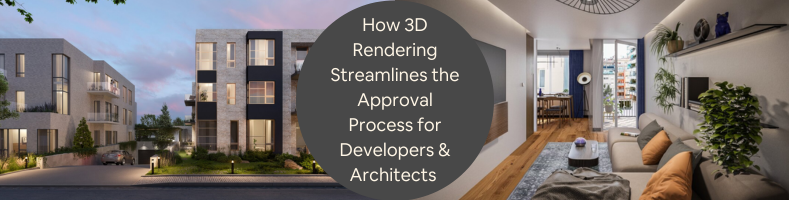
Today, in competitive architectural and development industries, efficiency, clarity, and effective communication have the highest priority. One of the biggest contributors to achieving these objectives is technological advancement in 3D rendering. The new technology has radically changed the way architects, developers, and clients relate to and approve design concepts.
The power of 3D rendering services is not only in the visualization of complex structures but also in the simplification of the approval process, enhancement of collaboration, minimization of errors, and acceleration of project timelines in the long run.
Cad Crowd has years of experience as the industry leader in providing outsourced 3D rendering services to the best architectural and design firms. This article examines how 3D rendering transforms the approval process of developers and architects through better communication, easier decision-making, and preventing costly delays.
🚀 Table of contents
- What is 3D Rendering?
- Importance of the approval process
- Better visualization: bring your designs to life
- Better communication between all involved parties
- Rationalization of the regulatory approval process
- Reduction of changes during approval process
- Simplifying client presentations
- Virtual walkthroughs
- Saving in cost and time
- A game-changer for development and architecture
- How Cad Crowd can help
RELATED: 3D real estate rendering services: What is the primary purpose of 3D real estate virtual tours?
What is 3D Rendering?
3D rendering is a process of creating a two-dimensional image or animation from a three-dimensional model. The process is widely used in architecture, interior design, and product design, among many others, to visualize designs before they are physically constructed. Representations can be photorealistic, giving almost the real visual experience that will accurately depict textures, lighting, shadows, and perspectives.
This allows 3D rendering to give a detailed look at the proposed design so that a developer or architect can get to the final outcome and try to present their idea to stakeholders like clients, contractors, and regulatory bodies. You can expect faster, cheaper, and more accessible processes through advancements in rendering technologies.
Importance of the approval process
This is an important step for developers and architectural design firms since approval guarantees that the designs and the projects meet the required standards of the local zoning law. This process will help in the early detection of some potential issues, such as safety concerns, environmental impact, or budget constraints, allowing some alteration before construction.
Approvals will allow collaboration from the architects, developers, and authorities; this aspect allows for openness, therefore reducing legal risks. It is not a factor that leads to delays in the timeline and cost of a project. It also ensures the sustainability and safety of the end product. In the end, approval ensures that a project will not go against the community’s standards and best practices.
Better visualization: bring your designs to life
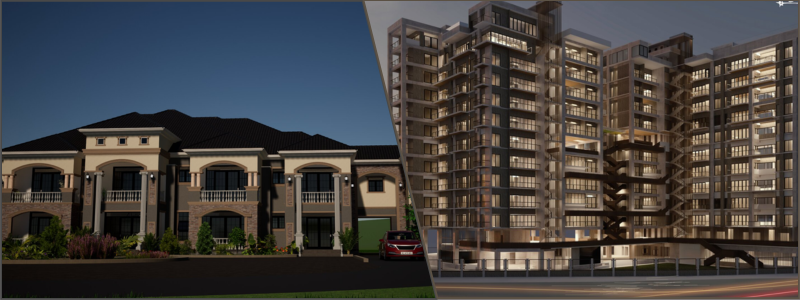
Traditional blueprints and 2D drawings usually do not give a description of the scope of the project. They are necessary for the project, but sometimes they bring ambiguity or misinterpretation of the whole project. The 3D rendering, on the other hand, gives an almost real and immersive view of the final product.
To the developer and architect, this will be able to provide an honest picture of the building or structure, the materials used, the lighting, and the environmental context. With the ability to see it in 3D, stakeholders can better decide where adjustments or improvements should be made before work is undertaken. This type of clarity greatly reduces the risk of misunderstandings and costly changes further down the process. This gives 3D floor plan design services the edge over traditional 2D.
It also enables the clients to realize what they will have in three-dimensional terms. Rather than being at the mercy of their imagination or trying to make sense of abstract lines and symbols, they can look upon it as if it existed in the real world. That enhances their confidence in the design so that they would be more confident about giving approval for the project.
Better communication between all involved parties
Communication is at the heart of any successful project. However, with architectural and development projects, the technical nature of designs typically challenges the process. Sometimes, it can be really tough for architects and developers to communicate their ideas effectively to clients, contractors, or approval authorities without using technical jargon or overly complex explanations.
The void is filled by 3D rendering. With clarity and interpretability, all stakeholders clearly understand the design with this three-dimensional rendering. For instance, architects can provide their clients with different design variants to select which best captures their preferences. Similarly, in the case of contractors, this enables them to have a better comprehension of the design when making any modifications or even noting problematic areas that might face difficulties when implemented during the construction.
The added advantage of 3D models is that they allow designers to consider alternative designs using simple material substitutions, texture substitutions, or even layout changes. This freedom accelerates decision-making and ensures that everyone is on board, thereby shortening the cycle of reapprovals and revisions. 3D modeling design services take this a step further by allowing greater flexibility while at the same time having an expert who knows and understands the specifics of a modeling project and can communicate it as well as anyone.
RELATED: How emotional design in architecture enhances mood for 3D modeling & architectural services firms
Rationalization of the regulatory approval process
Architectural projects normally require clearance by the local authorities or regulatory agencies before their construction can begin. Many of them consider intricate blueprints and designs that make sure the structure does not contravene zoning laws, safety measures, and environmental standards.
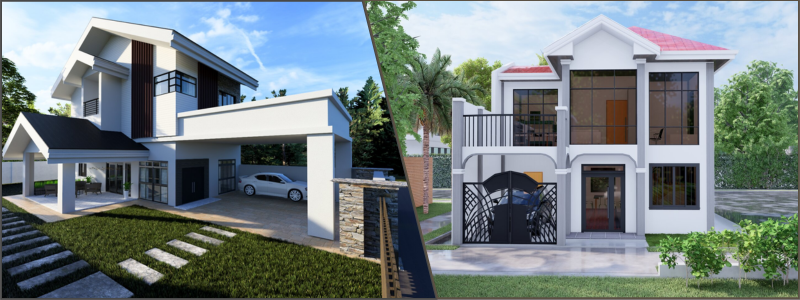
3D renderings streamline this process by providing clear, accurate visual representations that make it easier for regulatory bodies to assess the design. Rather than scrutinizing abstract 2D drawings, officials can view a model that demonstrates how the project will fit within the existing environment. This can be particularly important for projects in urban areas, where the design must be in harmony with the surrounding architecture. Architectural design and drafting firms focus particularly on regulation as it can affect the success of any given project.
The project also has regulatory agencies that can be visualized through 3D rendering, which affects sunlight exposure, view corridor, and traffic flow. In that case, such projects have been analyzed to avoid any confusion during construction and might not have caused delays since they occurred.
Reduction of changes during approval process
Change, which typically goes on after the submission, is definitely one of the contributing major contributors that cause delays in approval, of course. Such changes require even more cost and time, especially if they happen at the very end. With 3D rendering professionals, all of these possibilities are wiped off early because the client really sees the design to their depth and accuracy.
3D renderings of a proposed project allow clients and other stakeholders to identify potential problems before they are significant. Whether it is a stylistic issue, a functionality-related issue, or merely one of practicality related to accessibility, such issues may be identified early in the process and addressed quickly.
This proactive approach in the design approval reduces the chances for change during approval and saves from expensive changes later in construction. In addition, by paying for detailed 3D renderings early on, developers save themselves time and money in the long term.
Simplifying client presentations
This is often one of the most complex and subjective tasks when it comes to convincing clients to okay a design. The problem with utilizing a 2D-floor plan service or blueprint and its relation to the final output is where 3D renderings stand out as the shining solution.
It allows clients to see a 3D rendition of the design so they can use it as a guide before finalizing anything. They can walk around the different angles, zoom in on the specific features, and even walk through the space. This interactive experience will make clients feel more confident about the design and provide them with the power to make changes early on, thus making the approval process smoother and faster.
3D renderings allow clients to see the project in-depth, which helps them make choices with clarity and understanding since they are able to discern the design. This entails fewer revisions and quicker approval.
Virtual walkthroughs
The most innovative aspect of 3D rendering is the virtual walkthrough. This experience lets clients, stakeholders, and regulatory authorities interact with the proposed design by walking through a simulated environment in 3D space. With the help of virtual reality designers, viewers can walk through the building or space as if the building were already constructed.
Virtual walkthroughs are very often required in large, complex projects in which the visualizing of the flow and functionality may become cumbersome with a static image or even a conventional blueprint. Using this particular technique, virtual walk-through, clients and stakeholders get an idea of how a particular space might happen to feel in real life, making it much quicker to cut through approval processes.
Saving in cost and time
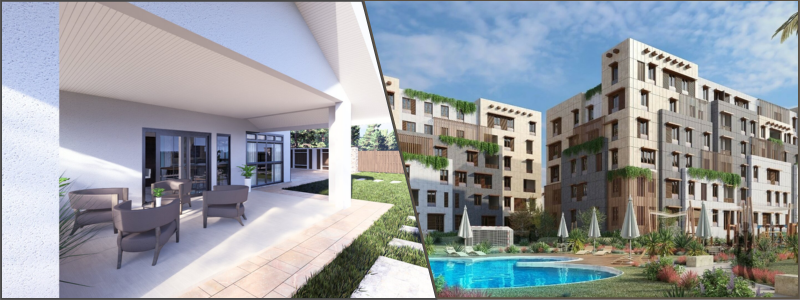
Although 3D rendering, from 3D interior rendering services up to aerial rendering, does represent an up-front investment, in fact, it pays out along the line in reduced hours and dollars through the elimination of inefficiency in approvals. The reason is that 3D provides developers and architects with clear, realistic images on the front end, so one tends to avoid misunderstandings that create costly errors in final renderings. The direct outcome benefits include quicker approvals and rework hours, for that matter, an entire process time frame.
Moreover, 3D renderings may also prevent costly delays due to the faster decision-making power that clients and other stakeholders may have. This is important in fast-moving industries, where time equals money, and projects have to be kept on track for on-time completion and budgeted execution.
A game-changer for development and architecture
An approval process is the most time-consuming and challenging part of a project in architecture and development, but now, with 3D rendering, this phase has been made faster, more efficient, and collaborative as well. It enhances communication through clear and real visualizations of designs by reducing errors and helping the developers and architects make the right decisions.
How Cad Crowd can help
From simplifying client presentations to streamlining regulatory approvals and minimizing revisions, 3D rendering is undoubtedly a game-changer. As technology continues to evolve, it’s clear that the role of 3D rendering in architectural and development projects will only continue to grow, making the approval process smoother, faster, and more effective than ever before. Here at Cad Crowd, we are an industry leader with more than 10 years of experience helping design companies. We’re more than happy to help as an industry leader in providing freelance 3D rendering services. Request a quote today.