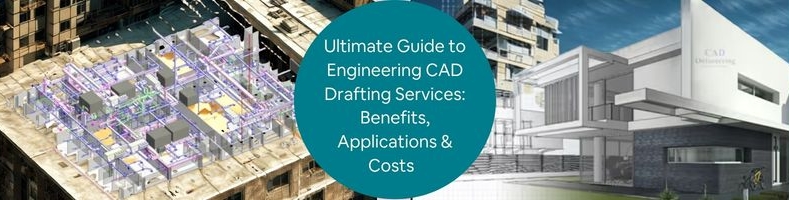
The process of building an idea into something real means a tedious number of plans and drawings. Engineering CAD drafting services make it possible to turn rough concepts into a clear digital plan that the contractors can easily follow and read. Through the utilization of advanced and specialized drafting software, it is much easier to translate and streamline multiple disciplines into one working area, encouraging efficient collaboration among the team.
This way, instead of sketches and just assumptions, systematized digital plans can help in lessening mistakes during the entire construction planning and execution stages. Some businesses and firms though, do not necessarily have a full in-house team to help them with the technical drawing. Cad Crowd can connect the businesses to experienced and professional drafters who are most suitable for the work scope, saving time and costs.
🚀 Table of contents
The evolution of engineering drafting
The shift from the traditional hand-drawn drafting to Computer-Aided Design (CAD) has been a change-maker in the engineering industry. It has not only made everything faster and a lot cleaner to see, but it has also sharpened accuracy, which is one of the most important attributes in drafting. Drafters and designers don’t just create shapes into models – they should be able to understand how the geometry fits together, the materials being used, and what’s appropriate for it. They not only draw and make sketches, but they also know and assess if the idea is really realistic and doable. CAD has made it easier for the team to collaborate, to make the idea into a reality, with a clear understanding of what needs to be done.
Precision and accuracy in technical drawings
Having professional CAD services increases accuracy in drawings and reduces common human mistakes. This means using digital and coordinate-based tools, ensuring that every line, angle, and measurement is calculated down to the tiniest detail. The designs have to be carefully studied and understood, how the model fits together, and any imitations to consider, such as manufacturing machines. This information helps in correctly drafting the model.
Civil engineering and infrastructure projects
It is common for civil engineering theory to use drafting in turning their big ideas into functional structures such as bridges, highways, factories, and even residential and commercial buildings. They use CAD to create floor plan layouts, elevations, sections, and everything that makes up the structure. It can contain how the design behaves in real life, showing its strength and lifespan. The materials are also incorporated into the drawing to accurately forecast its strong and weak points, ensuring that the structure is built realistically and safely.
Mechanical drafting efficiency
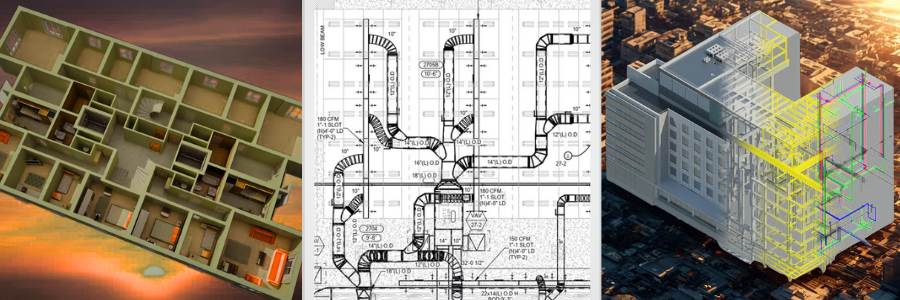
Making a mechanical layout would seem simple on paper, but it is actually one of the critical points in drafting. This is because mechanical layouts could clash with civil and architectural design and layout which may result in an even bigger problem on site. Doing this on CAD, makes it easier to check and validate if there are potential clashes. Since the drawings are digital, it can also be easily edited in case a fix is needed. For 2D plans, it can easily be overlaid with the architectural or structural plans to check if there are hits. And for 3D, a realistic walkthrough can be generated to check the on-site layout without building the project.
Electrical schematic development
Professional CAD services are also important in electrical schematic development since it lays out an organized wiring and circuitry system that is safe and easy to understand. It also included power layout and detailing to ensure that there is enough power to sustain the needs of the structure. The layout and detailing have to be carefully and accurately drawn since it can affect the safety of installers on site. It has to be designed in a way that it can be carried out without errors and is practical for usage.
Architectural integration with MEP
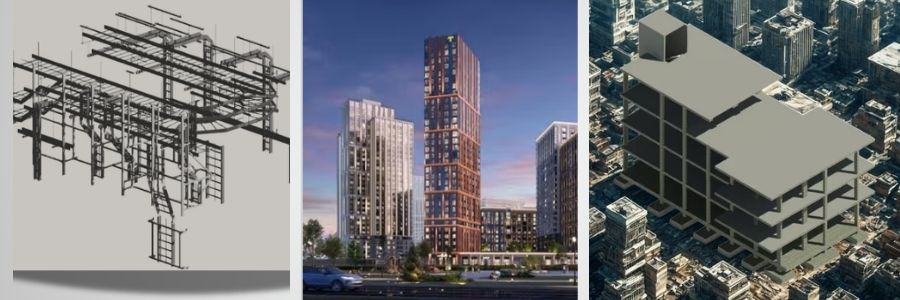
In engineering drafting, the architect works closely with the mechanical, electrical, and plumbing (MEP) systems. This is to ensure that the elements in each field don’t clash with one another. All the piping, ventilation, and wiring should all fit properly within the structure to avoid risks. To ensure that the execution is done correctly, the designers involved should fully understand and check the layouts involved to see if there are potential clashes. Not only do the technical drawings need to be checked, but the materials used and the construction methods, as one could affect the other in terms of accessibility and compatibility. Overall, it goes beyond knowing how to design but also how to work in real life safely.
Standardization and compliance
Standardization of drawings is regulated to establish a universal language in technical drawings – this is to ensure that everyone can understand the drawing globally. A high-quality drafting should follow a recognized standard such as ANSI or ISO to comply, and designers should have extensive experience in detailing skills to measurements, materials, and all things that are related to the project. It helps in establishing a consistent and ready-for-production design.
Cost reduction through virtual testing
Making a digital model can easily reduce costs by avoiding failed physical prototypes. Instead of making multiple versions of the physical model, only to redo it all over again, this can be done virtually. The only critical thing is that it has to be made accurately to present the real-life prototype, and the design and materials should be incorporated so it can show how it functions in real life. From there, if there are errors or flaws observed, it can conveniently be edited out without wasting resources. This dramatically reduces the costs incurred because of iterations and rework.
Enhancing collaboration between teams
The digital CAD files and models can be shared in real-time among different disciplines and departments and allow efficient collaboration. From there, feedback can be shared instantly, and should there be comments and necessary fixes that have to be done, it can be seen by everyone as well. This helps in monitoring the real-time progress of the team and lets them screen or point out errors if any. It also gives a deeper understanding of the project, especially for the stakeholders, since they will be able to see their vision made into reality. It also helps in the decision-making of the stakeholders.
Revisions and version control
In using CAD drafting, tracking revisions is easy, and one can ensure that the latest version is in use. Since the working file is shared among the team, they can conveniently and efficiently edit it, and it will reflect real-time. Also, the previous model versions can still be accessed and go back to if needed. The tracking of revisions is important, especially if patenting the prototype is one of the company’s goals, and also, should there be any plans to upgrade the mode, they can just check the history by accessing these files.
Sustainable design and material optimization
Advanced software doesn’t only focus on the accuracy of drawings and aids in complex designs, but also makes smarter and more sustainable decisions. This can be done by identifying the materials used in the project and computing the size, volume, and weight to know excess materials and costs incurred. From here, alternative materials can be incorporated into the design to make it more aligned with being environmentally friendly, which uses less energy but does not sacrifice quality or performance. Professional drafting not only make technical drawing look clean and visually pleasing but also ensures that it is aligned with sustainability standards.
BIM and the future of drafting
The modern times have really upped its game by upgrading the regular drafting into a Building Information Modeling, or BIM. This is a 3D model of the project, which includes all extra information like time and costs in the model. Not only can it show the exterior and interior material and composition makeup of the model, but it can also be used to know the projected timeline of when it can be completed, how much it will cost, and how it has to be built. This can only be accomplished by having a professional drafter to ensure that it reflects the accurate information provided. The designers have to be careful in adding all the information since the model will represent the project all throughout.
RELATED: Embracing BIM: The Future of Building Information Modeling for Construction Companies
The role of drafting in product development
In cases wherein drafting is used to manufacture and develop a product, it helps in understanding not only the model make-up but also how it will fit the packaging. It should be able to function not only as it is but also when exposed to the outside world. This requires a deeper understanding of the size and dimensions of the product itself, its interaction with other materials, manufacturing methods, equipment used and how it has to be handled. Knowing this makes it production-ready and intentional.
The learning curve of CAD software
An advanced tool wouldn’t be much useful if one does not know how to maximize its usage. This is critical in drafting since you can only produce great outcomes with relevant and significant knowledge and experience. Professional drafters should have great comprehension when it comes to how the lines and shapes fit together, making an accurate dimension, materials suitable for the project, and how it can be realistically made. Smart and practical decisions can be made if the drafter knows and understands the model they are designing, since it should be able to function not only digitally but in real life as well.
The influence of AI on drafting
Using Artificial intelligence or AI, is quite convenient in making the work faster and more efficient. Repetitive tasks can be taken care of by AI, so they won’t have to deal with menial tasks manually. This saves them a lot of time. Also, AI can suggest and recommend designs that can work well with the project, letting the designs have a broader and wider view of what they can do. It also gives them a chance to come up with alternatives in case needed to help produce great designs efficiently.
Patent drawing requirements
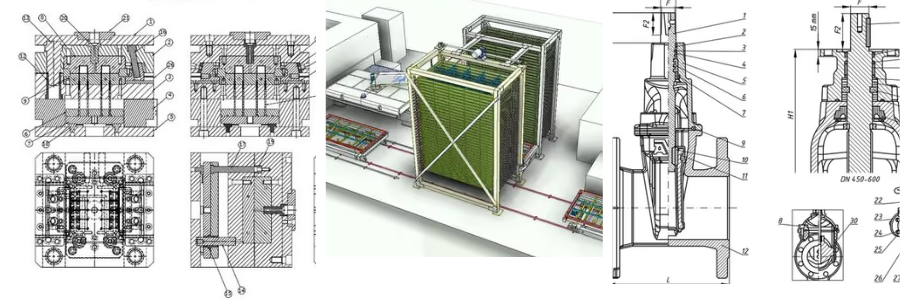
Some businesses and firms opt to secure their unique and special designs by filing a patent. They need the technical drawings as support for the patent application, ensuring that all are detailed, clear, and properly labeled so that officers can understand how the product was fit together. It should have all the drawings needed as well as the materials to be used to ensure that the design is realistic and accurate.
The intersection of art and engineering
All projects can actually look aesthetically pleasing during presentations, but not all can come out as truly functional and useful. The project should not only look good but be able to complement its target functionality. It is about the design meets the engineering, by understanding how it works and how it will be functional. It considers all the information needed to make the outcome: the design layout, the materials needed, manufacturing, and production constraints.
Enhancing manufacturing speed
Ambiguous technical drawings and designs can lead to confusion and lots of assumptions made by workers. It could also lead to rework if not addressed and spotted early. The manufacturing and production can be sped up when the drawing is easy to understand and clear. It gives the workers a clear understanding of what they’re expected to do and the outcome. It makes the workers at ease, knowing they are able to pull off the instructions smoothly. If the drawings are straightforward and direct, fewer mistakes will be made.
Technical manual illustration
Most of the time, especially for businesses producing a product, a technical instruction manual comes with the product. It has a model view and its exploded views, making it easier for everyone to see and understand how everything fits together. It shows how the parts are connected to each other and how it can be assembled and disassembled. This makes it simpler and user-friendly
The cost of in-house vs. outsourced drafting
When in need of CAD services, a business has two options: to establish an in-house team or outsource to an external professional. Both are advantageous and have their respective cost implications. An in-house means not only spending on the up-front fees but also investing in the devices and software appropriate. It also has to consider incentives, benefits, and training of the professional. If the work is only minimal and project-based, it may not be fully worth it. While the outsourced CAD Drafter is more of a pay-as-you-need. This is a much practical choice for those who only need the service for the specific project. Costs for graphs and drawings can vary greatly depending on the services you need, the scope of the project, and the preferred turnaround time.
| National Average Cost | $2,100 |
| Average Range | $1,500- $2,500 |
| Minimum Cost | $1,000 |
| Maximum Cost | $3,000 |
The national average cost to hire a drafting technician is $2,100. However, the tools utilized, the project’s complexity, the draftsman’s experience, and the total time dedicated to the project can affect the final cost significantly.
Software compatibility challenges
Not all companies use the same software, and from this, the files may not be compatible with each other. There could also be instances wherein the versions are not updated, and this may cause a problem. While the file can conveniently be converted, it may be imperfect and not fully display the actual intended design. A shape could be distorted, and worse, it could possibly be corrupted. It has to be ensured that the files are consistently compatible to increase accuracy in design.
Quality control and peer review
All works must be compliant to ensure quality control. The experienced drafters have to carefully and thoroughly check the work done by the junior members to spot early errors and reduce rework later on. This helps in catching errors in the design phase and prevents failures on-site. The experienced drafters have to check the dimensions are accurately reflected and have a consistent unit of measurements all throughout the design. It has to be ensured that the design is easy to understand and wouldn’t lead to bigger problems.
The value of experience in drafting
It is helpful to have a pair of experienced eyes in CAD drafting. It helps in understanding how things work in real life. From this, they can point out items that can sometimes be overlooked or missed. Aside from this, experienced drafters can have several inputs that are helpful to deliver a good outcome. They also give practical advice to make the work easier and save a lot of time and resources. The experienced drafter can determine the proper connection and functionality of the parts and make sure it fit together and can pass compliance.
Future trends: augmented reality and drafting
Seeing drafting not only on screen but also as real-life using AR (Augmented reality) is possible to be a norm in the near future. From it, everyone can see the digital plans layered straightforwardly and directly on top of the actual environment. From here, walls and piping interaction can be seen, and early detection is possible. This makes the construction and installation a lot easier since everyone can see how it could look in a real-life environment. This helps in a more efficient planning process before construction.
Optimizing bill of materials (BOM)
In modern CAD drafting software, Bill of Materials (BOM) can be generated. An accurate output can only be produced if the drawing is designed accurately. This makes it a lot easier, especially for stakeholders, since they can forecast the cost of the project. A bill of materials (BOM) consists of all the materials involved in the project, and from there, a budget can be prepared. Having a generated BOM also helps in knowing the right number of materials to be expected, and the possible allowances if needed.
Landscape architecture and grading
One service that can be done in CAD drafting is grading plans. In this, it shows how the ground should be shaped and sloped around the building and structures. This design layout is often used to control water flow especially during rain. This is important to ensure that the land should be raised so there would be a proper drainage system, instead of ruining the pathways.
Acoustic engineering and sound design
There are certain projects that can help in designing how sounds move inside the spaces, this includes structures such as concert halls, theaters, and offices. This is done to ensure that the sound is regulated as intended to make it clearer, balanced, and does not feel like an unwanted noise problem. To plan out, the shape and layout of the room is to be identified, and the materials to be used. Specific construction methods can realistically achieve this controlled sound in the room to make it more comfortable.
The evolution of drafting education
Engineering Education has been catching up with modern times, and now, drafting is shifting from hand-drawn sketches to CAD software. Their training is more of the utilization of a more advanced tool and methodology to produce work faster and accurately. They can now deliver complex drawings with the digital tools and explore more designs in a more efficient manner. This expands their creativity and allows them to explore more designs that best fit their expertise. The basics can be taught and learned, but a professional should be able to align it with real-word manufacturing.
Protecting data with secure workflows
One of the most useful features of digital drafting is how securely sensitive data can be handled and protected. In cases wherein the technical drawings and documents are tagged confidential or should be handled securely, there’s a reliable feature that secures logins, firewalls and encrypted file sharing. This is to ensure that the files are protected in all ways. It controls how it has to be sent, stored and accessed and helps in preventing unauthorized distribution or stealing valuable information. This is important as it could put the business’s information at risk or there would be misuse of data.
The role of drafting in mold design
CAD drafting also plays a significant role in designing for manufacturing plastic products, specifically injection molds. These are tools that shape molten plastics into cases, containers, and even device components. It is important that the professional drafters know the material attributes since in this, it requires a design internal feature, such as a cooling channel and ejection pins. These cooling channels help in controlling how fast the plastic hardens. If the drafter failed to consider this, the final product may end up weak, warped, or unusable, which is a waste of resources.
Managing project deadlines in drafting
It is important to be on track and complete deadlines to avoid delays, be it small or large complex projects. In CAD drafting, there is a project management tool that can be utilized to organize tasks, track progress, and complete deadlines. This guides the team to break down their scope or work packages and have an overview of the whole project timeline. This helps in ensuring that there would be work packages missing. It is also important to assign tasks clearly and inform the people working on it beforehand, especially those working in the same field.
Drafting for high-pressure environments
There are projects that are quite different from the others and require a different level of expertise. This includes projects of designing for extreme conditions like deep-sea exploration or space missions. It is important and critical to be accurate in measurement and computations, as it is exposed to intense stress, high pressure, and harsher conditions. The design to be built should be able to survive and withstand thousands of meters under water pressure or a vacuum condition. In this design, there is certainly and definitely no room for mistakes and failure, as it can cost lives.
Improving communication with stakeholders
One of the most helpful benefits of CAD Drafting is that it has translated complex technical drawings into an easy-to-understand visual representation, usually through a 3D model. These models help in letting the stakeholders see and understand the project instead of showing different 2D plans. It saves time in explaining it to them and gives the investors and clients confidence, even without any technical background. Having a clearer view of the project speeds up the decision-making and allows them to easily give feedback.
The cost impact of late changes
One of the biggest advantages of using CAD drafting is how it significantly reduces cost implications to the project. An error, if detected during construction or production stages, it would cost not only resources but also time. It will have a domino effect of failures and may deplete the budget. Having a visual model makes it easier for early detection and being able to fix it immediately. The designers can also explore changing materials to give options for stakeholders, all of the alterations without compromising real resources. This is why it is important to have a professional drafter to accurately detail the model so it can depict the actual project and portray its real-life features.
Final assembly and integration testing
In a production or manufacturing process, it has to be ensured that the product parts can fit together not only virtually but also in real life. And to make this work, designers have to adjust the tolerances. This is to ensure that the parts can fit despite small differences, so when the final assembly stage is done, it can pass and be ready for production. For this to work out correctly, the materials have to be checked carefully on how they fit and behave with one another, and the designers have to know the limitations in manufacturing that could affect the accuracy.
Why Cad Crowd is the ideal choice
When the project calls for specific and specialized CAD skills and experience, Cad Crowd is the perfect platform to connect businesses with experienced professionals who can handle the complex engineering work and is proven to have a deeper understanding of it. Instead of having an in-house employee where you’re not sure if it will work out or is capable of doing the project, Cad Crowd can easily find an expert suitable and tailored to the project needs. This ensures speed and faster work delivery without compromising quality. Cad Crowd helps in saving the company from further cost implications and complete projects with accuracy.
Conclusion
Now that the world has embraced modern and advanced tools, CAD drafting services are indispensable and are proven as a reliable tool to improve the quality and efficiency in projects. It turns sketch ideas into realistic, precise designs ready for real-world simulation. It translates complex drawings into a universal, easy-to-understand representation, useful not only for the internal team and workers but also for stakeholders. It can even serve as a marketing asset to help in securing funding approvals and speed up decision-making. For companies who do not have in-house experts, CAD Crowd makes it possible to acquire an expert fitted for the project needs. It finds experts who can deliver the tasks with high quality and lead the project to a smooth success. You can start the process today by getting a quote.