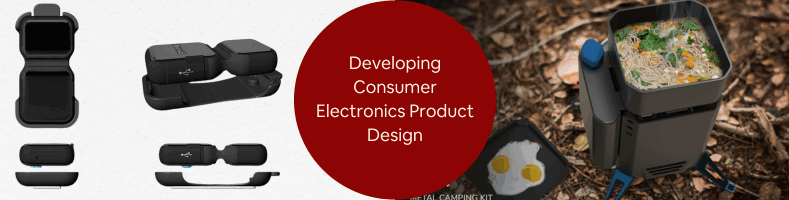
Due to advancing technology, every device and every appliance features its unique capabilities. Within your proximity, you can already identify five devices within your reach. But this goes beyond the usual things we see every day. Nowadays, we have electronic toothbrushes, electronic vehicles, robotic vacuums, etc. But of course, every good side has its downside. When you try to use a different battery for a camera, it doesn’t fit, or imagine cramming a heart rate sensor, GPS, cellular connectivity, and a day’s worth of battery life into something smaller than a traditional watch face.
It’s like playing Tetris, except the pieces are expensive, the consequences are high, and if you mess up, thousands of customers will roast you on social media.
Most of the time, this can be really overwhelming. To help you with the process and development, the leading agency for 3D professionals and experts, Cad Crowd, is here to help you. With over 102,000 pool of talents, you’ll have no hard time selecting the best team for you with an affordable budget, while still getting quality work.
Are you ready to know more about developing consumer electronics product design with 3D rendering? Let’s start.
🚀 Table of contents
- The old days were expensive and slow
- What is 3D rendering and its importance in consumer electronics
- Role of 3D rendering in consumer electronics
- How would you develop consumer electronics product design?
- Why companies are going all-in
- 2025 electronics trend
- Developing a new consumer electronics product
- Conclusion
The old days were expensive and slow
Here’s how product development used to work, and why it was such a pain. You’d have an idea for a new gadget – let’s say a fitness tracker. First, you’d sketch it out, maybe build a cardboard mockup to get a feel for the size. Then comes the expensive part: building actual prototypes.
Every single variation required its own physical prototype. Want to test three different button layouts? That’s three prototypes. Five different color schemes? Five more. Different battery sizes? You get the idea. Each one could cost anywhere from a few hundred to several thousand dollars, depending on complexity.
I remember talking to a startup founder who spent $50,000 just on prototype design services for a simple Bluetooth speaker. They went through dozens of iterations trying to get the acoustics right while keeping the size reasonable. Half of those prototypes never even got tested because they ran out of money.
Then there was the time factor. Building prototypes takes weeks. Shipping them between teams takes more time. Testing reveals problems, so you build new prototypes, which takes more weeks. Meanwhile, competitors are moving ahead, and that brilliant idea you had six months ago is starting to look less brilliant.
RELATED: The simple secret to unlocking new product innovation at design services companies
What is 3D rendering and its importance in consumer electronics
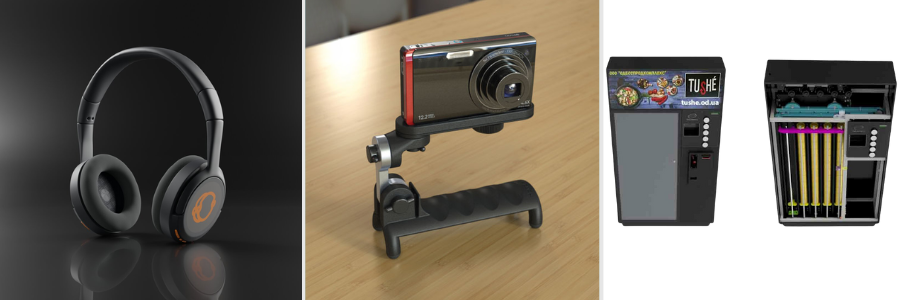
3D rendering basically lets you build incredibly detailed virtual prototypes instead of expensive physical ones. But calling it “virtual” makes it sound fake or simplified. These aren’t cartoon drawings – modern 3D renderings are so realistic that you literally can’t tell them apart from professional photographs.
A friend of mine works at a consumer electronics company, and she told me about their latest smartwatch project. Instead of building dozens of physical prototypes to test different internal layouts, they created everything digitally first. They could move components around, test different arrangements, even simulate how heat would flow through the device – all on a computer.
When they finally built their first physical prototype, it worked almost perfectly. No major surprises, no expensive redesigns, no scrambling to meet deadlines. The whole process took half the time and cost about a quarter of what it would have using traditional methods.
But here’s what really blew my mind: they were creating marketing materials before the product even existed. Professional-looking photos, 360-degree product views, and even videos showing how different features worked. All generated from 3D modeling design services.
Role of 3D rendering in consumer electronics
Last year, an automotive company needed approval from its board for a new dashboard design. Instead of building expensive physical mockups, they created photorealistic 3D renderings of three different options. Board members could see exactly how each design would look in different lighting conditions, how materials would age over time, and even how buttons would feel to press (through haptic feedback simulations).
They made their decision in a single meeting. No back-and-forth, no “let’s see another version,” no delays. The whole approval process took two weeks instead of two months.
Another example: a furniture company was developing a new line of office chairs. They needed to show potential investors how different color and material combinations would look in various office environments. Rather than producing dozens of physical samples, they used 3D visualization services to create scenes showing each chair variant in different settings – modern offices, traditional boardrooms, home workspaces, even outdoor patios.
The investors could see not just the chairs themselves, but how they’d actually look in real-world situations. It was more convincing than physical samples because they could visualize the complete picture.
How would you develop consumer electronics product design?
Creating these digital masterpieces starts with 3D modeling – basically sculpting with math instead of clay. Every surface, every curve, every tiny detail gets defined precisely. It’s tedious work that requires patience and an eye for detail.
In texturing, surfaces start looking like real materials instead of plastic computer graphics. Getting textures right is an art form. The difference between aluminum that looks fake and aluminum that looks real comes down to understanding how light behaves when it hits different surface finishes.
Lighting design services are where things get really complicated. Real-world lighting is messy and unpredictable. Light bounces off surfaces, creates reflections, and changes color based on what it hits. Good 3D artists spend years learning to recreate these effects digitally.
The actual rendering process is where powerful computers take over. Modern software can simulate incredibly complex physics – how different materials interact with light, how transparent objects distort what’s behind them, how metallic surfaces create reflections. Some renderings can take hours or even days to complete, but the results are worth it.
Why companies are going all-in
The cost savings are obvious, but they’re just the beginning. Traditional product photography requires physical samples, professional photographers, studio time, equipment rental, and extensive post-production work. For companies launching multiple product variants, these costs multiply quickly.
But the real advantage is speed. Need to change a product’s color? That’s a few hours of computer work instead of weeks of reshooting. Want to show how the product looks in different environments? Create new digital backgrounds instead of finding new locations.
The flexibility is incredible. Companies can create marketing campaigns for products that exist only as ideas. They can test market reactions to different designs before committing to manufacturing. They can even let customers customize products and see exactly what they’ll get before ordering.
I’ve seen companies use 3D rendering design services to create interactive experiences where customers can rotate products, zoom in on details, and even see exploded views showing internal components. It’s like having a showroom that fits on a website.
RELATED: How is product design different from industrial design services companies?

2025 electronics trend
The electronics device design industry never sleeps, and 2025 is turning out to be particularly interesting. Artificial intelligence is getting smarter, but it’s being adopted unevenly across different types of products. Some applications are ready for mainstream use, while others are still experimental.
Energy costs keep climbing, which is creating demand for smart home products that help people track and reduce their power usage. Companies that can make energy management simple and intuitive are finding eager customers.
TV sizes keep getting bigger, which is pushing display technology in interesting directions. What started as a quest for larger screens has led to improvements in resolution, color accuracy, and energy efficiency that benefit lots of other products.
The computer market is experiencing some interesting shake-ups due to changes in processor technology. Companies that can adapt quickly to new chip architectures are gaining significant advantages over slower competitors.
Smart home devices are getting much better at understanding their environment thanks to advances in sensor technology. The latest products can detect subtle changes in temperature, humidity, air quality, and even human behavior patterns, then respond appropriately.
Developing a new consumer electronics product
Companies that have figured this out are following more systematic approaches. Instead of jumping straight into design, they’re spending more time upfront researching markets, understanding customer needs, and identifying opportunities for genuine innovation rather than just copying what competitors are doing.
The concept development phase has become much more sophisticated. Teams can create detailed product concepts with realistic 3D visualizations services, test how components fit together, and identify potential problems before ordering expensive parts. Project timelines now account for the flexibility that 3D rendering provides. Companies can run multiple design tracks simultaneously, make rapid changes based on feedback, and compress development cycles without cutting corners on quality.
Testing has become more focused, too. Instead of discovering basic design flaws during physical testing, companies can use that time to validate performance characteristics and fine-tune user experience details. Even manufacturing benefits from better upfront design work. Production teams can review detailed 3D models to spot potential manufacturing challenges and suggest modifications that make products easier to build without compromising functionality.
RELATED: A guide to electronic product design for manufacturing with PCB design firms & engineers
Conclusion
3D rendering has transformed from a supplementary tool into a vital necessity for maintaining competitiveness. Firms that excel with these technologies can create products more swiftly, cost-effectively, and with fewer unexpected challenges. The most thriving companies will be those able to iterate rapidly, obtain valuable feedback early, and launch attractive products to market before their rivals. 3D rendering lays the groundwork for this type of fast-paced development cycle.
We’re still in the early stages of this transformation. As rendering technology continues improving and computers get more powerful, the line between digital prototypes and physical products will keep blurring. Companies that embrace this change now will have a significant advantage over those that wait. The future belongs to organizations that can move fast without breaking things – and 3D rendering is making that possible in ways we couldn’t have imagined just a few years ago.