
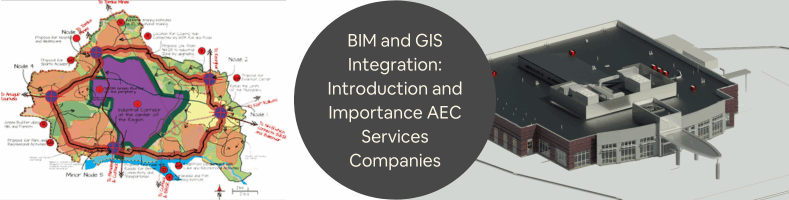
The architecture, engineering, and construction (AEC) sector is experiencing a technological revolution, and this is quite clearly reflected in the increasing number of AEC service firms on top platforms such as Cad Crowd. With AEC companies struggling to design, plan, and deliver intricate projects, the convergence of building information modeling (BIM) services and Geographic Information Systems (GIS) has become a game-changer.
Blending the benefits of both systems introduces the possibility of more precise, streamlined, and coordinated project delivery. For AEC services firms, knowing how BIM and GIS integration works—and how it affects their business—is fundamental to competitiveness in a progressively data-centric industry.
🚀 Table of contents
BIM and GIS: A quick overview
Before delving into the influence of BIM and GIS integration on the AEC industry, it’s imperative to identify what each system does and how they work as stand-alone entities.
- Building Information Modeling (BIM): Building information modeling (BIM) is a digital representation of a building’s design, construction, and operational details. This is more than just a 3D model; it includes helpful information about the design’s materials, structural qualities, budget, and schedule. Preliminary design optimization, collaboration, and simulation can take place thanks to this tool, which is useful for architects, engineers, and contractors.
- Geographic Information Systems (GIS): GIS is an application that captures, stores, manipulates, analyzes, manages, and displays geographic or spatial data. GIS allows experts to map and analyze terrain, land use, zoning regulations, weather, and other location-relevant factors, frequently essential when handling large-scale infrastructure or urban planning projects.
When integrated, GIS and BIM enable AEC firms to control both the micro-level specifics of building construction (via BIM) and the macro-level issues of geography and environmental conditions (via GIS). The combination of these systems provides an extensive toolset for planning and implementing projects in ways otherwise hard or impossible to achieve for architectural design firms.
RELATED: Architects vs. designers: What’s the difference and which should you hire for design services?
The Role of BIM and GIS Integration in AEC Services
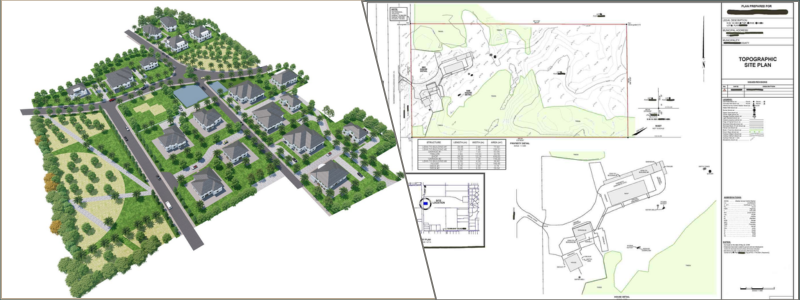
BIM and GIS integration are revolutionizing the way Architecture, Engineering, and Construction (AEC) services plan and execute projects. BIM centers on precise details of a building’s design, construction, and lifecycle, including structural and material information. GIS provides a wider geographic and environmental picture—charting terrain, infrastructure, climate, and so on.
Together, BIM and GIS present a complete picture that improves each phase of a project, from initial planning to upkeep. This combination allows AEC professionals to compare spatial and structural information at the same time, making optimal site selection, sustainability, and urban planning decisions. It leads to better collaboration between stakeholders, faster delivery schedules through data-driven processes, and less risk through early identification of problems.
Finally, BIM-GIS convergence enables companies to design more intelligently, build quicker, and operate more cost-effectively, producing projects that are not just technically excellent but also socially and environmentally responsible.
Here’s a look at how this integration enhances AEC services:
Better planning and site selection
When starting any new building project, location and site conditions take precedence. GIS facilitates AEC companies in determining the readiness of a site by offering information regarding land characteristics, environmental factors, zoning regulations, and existing infrastructure in the area. For instance, GIS may be applied to examine soil quality, flood exposure, traffic flow, or distance from utility networks. This information is critical in the determination of the most suitable location for a building or infrastructure development.
Through the integration of BIM, architects and engineering design firms are able to simulate how a proposed design would interact with the site’s geographic conditions. For example, a BIM model can simulate how a building’s foundation would perform under various soil conditions determined by GIS data. This type of simulation minimizes the chances of expensive surprises during construction and provides a more sustainable, site-suited design.
Better decision-making through visualization
The combination of BIM and GIS provides a versatile decision-making visual tool. GIS provides a topographic, spatially correct map of the project location, with BIM contributing precise 3D models of the building or structure. Merging these models, AEC firms can visualize how the building will interlink with its physical and environmental context.
For instance, architects can apply the combined models to model the effect of natural light on the building façade during the year. They can also model the air circulation or water runoff relative to the local topography. Having both building and geographic data in one place assists teams in making improved design decisions that lower energy usage, enhance user experience, and enhance the building’s resilience to environmental conditions.
RELATED: Do you know the BIM best practices for architectural design firms?
Improved interdisciplinarity collaboration
Collaboration is the lifeblood of the AEC industry. In conventional workflows, architects, engineers, and contractors tend to work in separate silos and use different systems that may or may not speak to each other. This has the potential for misunderstandings, mistakes, and delays. Introducing BIM and GIS eliminates these communication problems.
When GIS data and BIM models are combined, all stakeholders—from construction workers to civil engineers—can view and update the same real-time information. For instance, an engineer can update a BIM model according to new GIS data on local zoning laws, while an architectural design expert can make adjustments to the building design to accommodate the environmental context. The outcome is a more coordinated and integrated workflow that results in fewer changes and delays later on.
Efficient resource management
Successful resource management is key to finishing any project on schedule and within budget. Using BIM’s accurate data and GIS’s spatial context, AEC firms can enhance the management of resources, including materials, labor, and equipment, throughout the project’s life cycle.
With the help of GIS, project managers can analyze the materials’ location compared to the site location, guaranteeing that logistics are optimized. BIM, however, ensures accurate quantities and material specifications, guaranteeing correct material delivery at the correct time. This coordination eliminates waste, reduces transportation expenditure, and guarantees that construction activities operate smoothly.
Increased sustainability and environmental impact analysis
Sustainability is a key focus in contemporary architecture and construction. AEC firms are being called upon more and more to adhere to environmental standards, conserve energy, and reduce their carbon footprint. Combining GIS and BIM enables companies to address sustainability in a more comprehensive manner.
Unlike BIM, which allows for comprehensive energy modeling and simulation, GIS provides a wealth of data pertaining to environmental factors, such as climatic trends, water consumption, and energy consumption. By combining the two programs, architectural planning and design companies can simulate the possible influence of different design elements on sustainability, water usage, and energy efficiency, allowing for more comprehensive evaluations of a building’s carbon footprint. Such research can make a huge difference to the efficiency and sustainability of a building over time.
RELATED: Embracing BIM: The future of building information modeling for construction companies
Real-time monitoring and maintenance
The benefit of combining BIM and GIS doesn’t end when the construction process is finished. Once a building or infrastructure project is completed, these systems are still useful in the operation and maintenance phases. BIM can be utilized to monitor the status of building components over time, while GIS can track the environmental conditions that impact the building.
A facility management team, for instance, can keep track of when critical systems are due for repair or replacement with the help of an integrated GIS/BIM system. Building operations can be tracked in relation to external factors like weather and traffic patterns. By using this data, proactive maintenance can be implemented, resulting in cost savings and an extended building life.
The most common challenges of BIM and GIS integration
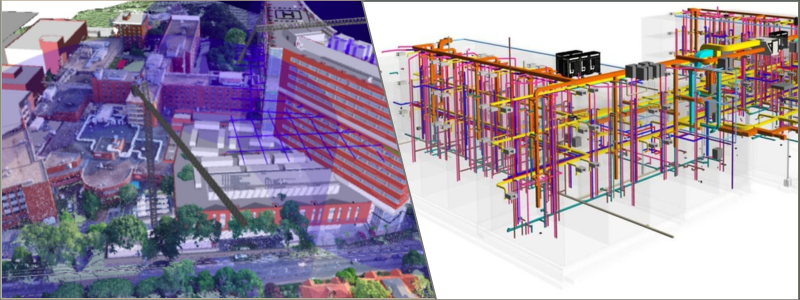
Though there are numerous advantages of the integration of BIM modeling services and GIS, there exist some challenges AEC companies need to address. The complexity involved in integrating two dissimilar systems with different data structures and formats is one of the major barriers. BIM and GIS solutions tend to be built by dissimilar software companies, and as such, compatibility issues may occur.
The other challenge is the accuracy and consistency of the data. GIS depends a great deal on geospatial data that is available in real time, which is prone to inaccuracies or obsolescence. Likewise, the BIM models will need to be constantly updated to accurately portray the state of the construction project as it is now. It will take great diligence to have both systems harmonized and updated.
Moreover, there is a need for training and expertise. AEC practitioners must be familiar with both BIM and GIS technologies to be able to take advantage of their full potential. This will involve investment in training courses and perhaps the recruitment of specialists to oversee the integration process.
Conclusion
The convergence of BIM and GIS is transforming the way AEC services firms tackle design, planning, and execution of projects. By merging the precise, model-based methodology of BIM with the spatial, context-aware insights of GIS, companies can make more informed decisions, enhance collaboration, increase sustainability, and streamline resource management. The potential for greater efficiency, cost reduction, and risk mitigation is vast, but achieving these benefits involves surmounting technical and organizational hurdles.
RELATED: Impacts of BIM design on reducing carbon footprint for architectural firms & CAD companies
Cad Crowd is here to help
For AEC companies wanting to remain competitive in today’s cutthroat world, BIM and GIS integration investment is not merely about being up to speed with industry developments; it’s an essential tactic for producing superior projects in fewer resources, achieving client expectations, and helping build a more sustainable built environment. If you think you’re ready to take this trend, Cad Crowd is where you should start looking for specialists in BIM and GIS. Get a free quote today!



