
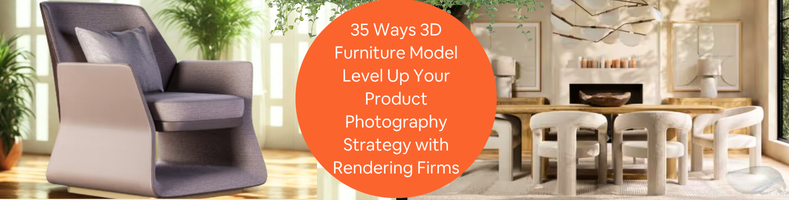
With the rapid growth of digitalization, the furniture industry must keep up with demands beyond simple photography. People wanted to see more to help them visualize how a product looks and feels in real-life spaces. Cad Crowd helps connect furniture industries with experienced freelancers who can create digital furniture models and make them marketable.
🚀 Table of contents
1. Unlimited background variations
Traditional product photography requires extensive preparation and setup. The studio matters in creating the mood or theme it has to portray. Sometimes it can be time-consuming and costly to find locations and setups that suit the desired theme.
Digitalization is a game-changer, as it allows a product to appear in different locations and setups. This freedom and flexibility allowed the designers to create different visuals that are suitable for different target markets. It also helps in keeping it all consistent in quality.
RELATED: Custom Furniture Design – How Firms Use 3D Models and 3D Rendering Services
2. Instant color and texture swaps
Capturing the color or texture variation of a fabric or wood can take longer than one can imagine. Aside from being a tedious task for the photographer, it is also costly in terms of logistics and storage. 3D modeling makes swapping colors and textures a lot easier in just a few clicks.
Doing so is more practical and efficient, since there’s no need to have a full inventory of the materials. It can be showcased on an online platform, but that doesn’t necessarily mean it has to be in storage. It simplifies the process of giving more options to the buyers without sacrificing resources.
3. Perfection in lighting control
During the traditional photo taking, good lighting is required to make a product look presentable and appealing. There are instances when finding the right angle to make the colors pop is a struggle. 3D rendering process simplifies this challenge by taking control of virtual light.
In 3D modeling, it is easier to adjust the tone and lighting of the model. It allows the designers to simulate different lighting techniques to create certain moods for the furniture. They could make it look gloomy or comfy just by tweaking light controls.
4. Effortless lifestyle staging
Setting up studios for a photoshoot requires not only good lighting and location but also several props. The time and costs required to brainstorm and prepare for the setup are taxing and expensive. 3D models are a more convenient way to pull elements from libraries to accessorize the setting.
RELATED: How to Get the Best 3D Rendering Services for Furniture Design
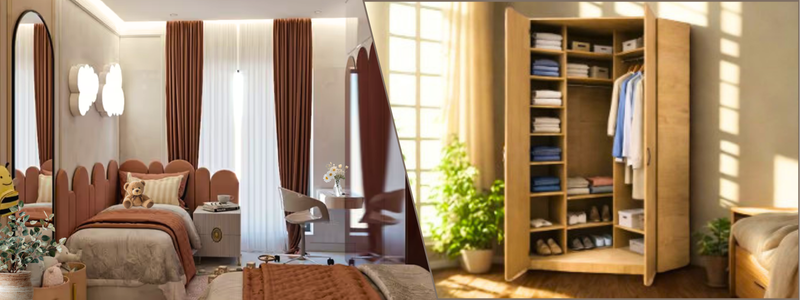
It allows the designers to create a story about how the furniture fits in the real space. For instance, the bed could be made comfy by adding soft sheets and pillows to it. It could also have some stuffed toys to make it look cute and appealing for girls or children.
5. Multi-angle viewpoints
It is hard to get a perfect shot from just a few angles. Capturing a lot of it in real life would be time-consuming and sometimes requires professional skills to make a perfect angle. In 3D modeling, once the model is created, a virtual camera can be used to orbit the model and capture multiple angles.
This captures more angles easily from any angle possible. It could be a close-up or a bird’s-eye view. It gives the buyer a complete understanding of the furniture’s dimensions and build-up. Viewing different angles of the product reduces uncertainty for buyers when they’re just browsing online.
6. Seamless integration into AR
One of the modern and advanced ways of shopping is projecting the furniture in an actual space or room. This can be done by integrating Augmented Reality or AR process. This is where 3D models serve as a base file, allowing users to project them into their spaces using portable devices.
This experience is a game-changer since it reflects how furniture fits in real space. It greatly impacts purchasing decisions since it helps in reducing hesitation. It also helps buyers to understand the design, size, and dimensions of the furniture.
RELATED: 3D Furniture Visualization and Rendering Process: How to Create High-End 3D Content
7. Cost-effective asset repurposing
One of the great differences between a photoshoot and a 3D model is cost-effectiveness. Unlike traditional photoshoots, 3D models can be reused for different purposes. For instance, it can generate a close-up or a different angle of the furniture to emphasize textures. A 360 video of a 3D model can also be done.
While traditional photos have fixed outputs, repurposing them can be limited or even impossible, as it would feel like a duplicate. 3D models offer greater flexibility, making it more cost-efficient for brands.
8. Early marketing and pre-sales
With modern digital marketing, it is possible to market-test first before committing to producing units. There’s no need to conduct a full-force production to know if the furniture can produce sales or not.
Early marketing and pre-sales are done to determine whether there are enough serious buyers to make the idea work. Just by transforming all concepts, ideas, and design layouts into realistic 3D furniture models, pre-sales can be done. This allows secure orders even before full production. This is a lot more useful for start-ups that can’t afford to fail on their product launches.
9. Seasonal updates on demand
It is common for some companies to change their themes with the seasons. It is costly and time-consuming to set up a studio suited to each season every time. 3D models simplify this by adjusting the 3D environment.
Through this, the themes can be easily altered to fit preferences. This keeps the marketing materials relevant year-round, with consistent quality. It also makes the engagement go on without being passive and redundant. The firms can just think of a holiday trend and generate it easily without having to incur much cost.
RELATED: How Can Companies Use 3D Renders To Showcase Custom Beautiful Furniture Designs?
10. Macro detail highlighting
It could be hard to capture small details on camera with simple lenses. In 3D models, showing the finest details of a furniture fabric or joinery can take less time. When the priority is showing or highlighting the fabric stitches or textures, 3D models can easily be the best choice.
It gives a view of even the most intricate details one can see. When the rendering is high-quality, the visualization can feel hyper-realistic design, leading one to think it is real. The close-ups are mostly applicable to luxurious furniture, wherein the focus is on the quality of the materials.
11. Consistent brand identity
When photographing every kind of furniture across different themes, there can be inconsistencies in editing and lighting. With this, the catalog may look uneven, which could weaken the overall presentation on a platform.
With 3D modeling, it is possible to maintain consistency with the furniture’s lighting, angles, and design style. This makes it more consistent in quality. When the products are consistent in the catalog, it looks like it was well-thought-out. It also helps maintain the brand identity when there’s consistency across the catalogs.
12. 360-degree product spins
Although a 360 view can also be captured in real life with a video, it is still different when a buyer can do it themselves. In 3D models, you can orbit to see multiple angles or perspectives. The brands can add this feature to their platforms to allow buyers to do it themselves.
RELATED: How 3D Rendering Enhances Virtual Furniture Showrooms & Shopping with Company Services
This gives customers an immersive experience and allows them to check out areas they want to check in. It helps them better understand the furniture’s geometry and size. They also zoom in to see fabric detailing or connections within the furniture.
13. Exploded view visuals
Sometimes it is helpful to show the furniture’s internal components to demonstrate its quality and durability. This can be done by adding exploded-view details. 3D furniture models can generate exploded views to reveal parts needed, like frames, layers, or any supporting structures.
It is mostly used for furniture like sofas, chairs, and mattresses where durability and quality matter the most. This kind of visual can’t be captured through a camera since it is hidden inside the structural parts and may need cutting to be seen.
14. Rapid iteration for designers
When the furniture design model is still in its early stages, it can be easily improved and developed through 3D modeling. This allows costly reworks in production. 3D models allow furniture to be seen as it looks in real life, while still allowing it to be modified.
This reduces the need to produce physical units just to reproduce another one with different adjustments. It is more practical to make a base design and iterate different versions to choose from. This is also important as part of the product development documentation process.
RELATED: 3D Furniture Visualization: How to Create Premium Furniture for your Company
15. Dynamic video content
3D furniture is important for high-end content and video advertisement since it adds realism to the space. The videos always run through furniture around homes and showcase its fit. It highlights the overall fit of every room.
Videos showcasing homes with furniture earn more engagement and help the furniture brand reach more potential buyers. Dynamic video content is possible with 3D furniture models. It creates an emotional attachment in buyers, influencing their purchase decisions.
16. Shadow and reflection realism
It is usually a struggle to find the perfect lighting and shadow in traditional photography. It could take a lot more effort and be difficult to acquire since it sometimes depends on the time and location of the shoot. This is not a struggle with 3D modeling.
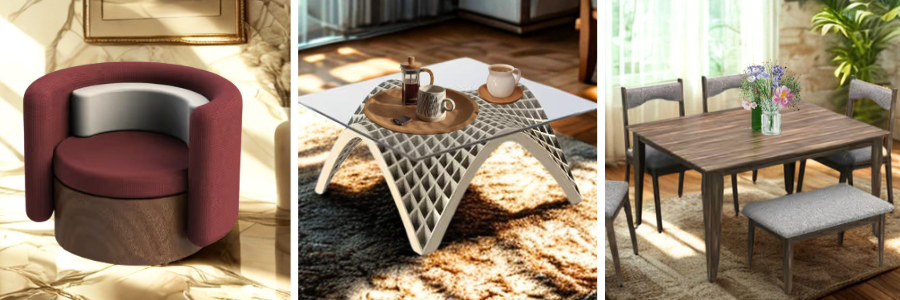
3D furniture modeling has a more controlled and calculated light and shadow to make it realistic. These can be adjusted so they fall naturally on the furniture, making it feel grounded and stable. It is also possible to add in reflections that would feel real and polished.
17. Easy dimensional overlays
Some buyers struggle to visualize the size and fit of furniture, even when the dimensions are stated. To address this, 3D models can add clear dimensional overlays and measurements to a realistic image.
RELATED: 3D Rendering Furniture vs. Photography: Which is Better For Your Furniture Company?
For instance, the customer can now visualize how the bed fits in the room, thanks to its dimensions and labels that fully describe its fit. This makes them feel more certain than measuring themselves. It lessens ambiguity and confusion in online shopping.
18. Creative camera paths
There are several limitations that can be encountered during a product shoot. It could be site or studio space constraints, or lighting setups. 3D models can make it a lot better by capturing unique angles and perspectives that are hard to achieve with cameras.
This is very useful in creative advertisements, making the content more engaging and fun. It can highlight several areas that could be overlooked in realistic shoots. It also introduces smoother transitions and cinematic movements that appeal to buyers.
19. Global collaboration opportunities
3D furniture modeling can be done remotely, and by this, the team can explore outsourcing globally to find the right talent. It offers global opportunities to work with a professional who aligns with their brand vision and style. They can make it fit the specific budget.
This flexible collaboration allows the brand to find a talent that they trust to do the work without worrying about quality. They can focus on other tasks, like the marketing process, and conduct quality checks to ensure the outputs align with the brand.
RELATED: The Workflow Process for Interior 3D Rendering at Companies & Design Firms
20. Reducing physical waste
Doing traditional shoots would require providing a lot of resources that may or may not be reused. This includes seasonal props that may become outdated after a few months. With this, a lot of waste would be generated in just one shot.
3D modeling is considered a green technology since it does not require physical resources. It transforms designs into models without physically producing them. This makes it a more sustainable strategy and an efficient way to manage marketing campaigns.
21. Accurate color matching
Capturing the exact color of the furniture during traditional shoots is a challenge due to lighting. Even after several shots, it still needs editing to make the color pop. This often leads to differences in expectations when buyers receive the product, since the color may vary in person.
3D furniture models can capture and match the exact shade of color accurately. This way, there would be consistency in the color tones of the visuals used. This would make the marketing photos look more presentable and lessen client dissatisfaction.
22. Interactive customization tools
One of the most useful features of 3D furniture models is their customization tools or configurators. This allows users to alter the furniture’s physical attributes to their liking and see what it looks like in a 3D model in real time. They can select and change the color, fabric type, size, and style from the available options.
This is a game-changer for the shopping experience for buyers, as they can personalize their furniture. The whole customization strategy allows them to explore combinations. This significantly increases buyer satisfaction and promotes high-value purchases.
RELATED: Custom Furniture Design – How Firms Use 3D Models and 3D Rendering Services
23. Hyper-realistic wood grain
It is a struggle to capture the in-depth textures detail of furniture materials, such as wood grain, in the studio. There are camera lenses that can’t capture its richness and detail. It wouldn’t be practical to invest in expensive cameras just to get the right picture, since lighting, angles, and a photographer’s skills also influence the outcome.
3D furniture modeling can use high-resolution scans of the real world and apply them. This simulates how the exact finish looks in real life without having to see the physical one. It helps customers understand the quality of the material and what it looks like in a realistic setting.
24. Eliminating post-production delays
After studio shoots, there are a lot of fixes to do before using the photos. It requires editing and removing unnecessary scratches and reflections. It would sometimes take much longer than expected, especially if there was a lot to edit. In 3D furniture modeling, it is easy to clean up and remove unwanted elements.
This helps speed up the publication of content on the platforms. The launch would be on time without compromising the quality of the visuals. It isn’t just an efficient approach but also cost-effective since it did not take many resources to produce it.
25. Virtual showrooms
One way to market furniture digitally is to have the users have an immersive experience. This can be done by letting them enter a virtual showroom and navigate through the products inside. This can be done on a computer or with a VR headset.
RELATED: How to Get the Best 3D Rendering Services for Furniture Design
Inside the showroom, the furniture can be displayed virtually. This mimics the real-life shopping experience. It allows buyers to see the furniture in a more engaging way and feel a sense of attachment to the product. Doing this reduces client dissatisfaction since they’ve already seen what it could look like in real life.
26. Dynamic depth of field
In 3D furniture models, the focus on the image can be adjusted to highlight a certain detail. It can be readjusted or replaced if needed. This makes it more convenient to draw attention to a specific hardware or joinery of the furniture.
Having to do this without the need to use special lens cameras is a more efficient approach. This reduces the time to retake a photo because the lighting did not cooperate or the camera settings need to be readjusted. Controlled focus on the product makes it look more polished and presentable in a catalog.
27. Infinite product stacking
There is so much ease in placing several pieces of furniture in one space just by 3D modeling. It did not require people to set it up and arrange it. This is one of the advantages of digital models: there’s flexibility in creating visuals that are tedious and hard to achieve in real life.
The limitations in realistic settings constrain the creativity of content. This is why the digitalized ones are more engaging since they add unique setups. Stack-ups design help customers understand how each fits with the others and visualize how it adapts in the space.
28. Perfect symmetry and alignment
It is not unusual for a physical product to contain slight imperfections, such as uneven cushions, hems, or fabric creases. It may not look bad in real life, but cameras exaggerate since it’s in high resolution. 3D furniture models make the products look perfect. It improves the overall presentation of the furniture.
RELATED: 8 Stages of the 3D Furniture Visualization Process when Hiring Rendering Services Firms
In 3D modeling, the elements are made with precision and perfect alignment. It can stay in place unless otherwise adjusted. Even with such perfection, it wouldn’t look too stiff or artificial since it can be polished to make it look real. Adding warm tones or fixing lighting can help to make it feel natural and real.
29. Simulating different times of day
3D furniture modeling can simulate different time settings by adjusting its light conditions. This can be done in several clicks. It adds dramatic appeal to the furniture and makes it look natural.
Instead of traditionally setting up a shoot at different times of the day to get the perfect shot of furniture, 3D modeling can be done. Exploration and creativity are maximized even without spending a lot of time and resources. Through this, there would be multiple selections to choose from. Not only that, but the other visuals can also be reused for some other online advertisement.
30. Recreating historic styles
When the marketing team wants furniture to be aligned with a historical or vintage theme, it can be tedious to achieve in a real-life setting. The props used may be discarded after use. 3D furniture modeling allows recreation of historical designs by decorating backgrounds and adding elements that match them.
The theme can be adjusted repeatedly without much physical effort. Several design styles can even be generated to explore the best visual. This approach helps brands provide an even more accurate context for what they’re trying to connect. It strengthens the appeal to buyers who are into that style.
RELATED: 3D Furniture Rendering Services for Companies and Firms, Cost, Rates, Pricing
31. Visualizing large-scale installations
For marketing in commercialized projects, the best practical way is through 3D modeling. It would be hard to imagine how hundreds or even thousands of chairs or tables can fit in a stadium or airport. Producing a mockup of this won’t be possible because of its massive scale.
In 3D modeling, an accurate visualization of a commercial place filled with chairs and other furniture can be done. It helps the clients to see how it fits or how many could still fill up the place. Certain arrangements can also be made to match the client’s preferences. This allows decision-makers to evaluate the overall spatial impact and efficiency.
32. Multi-functional prop integration
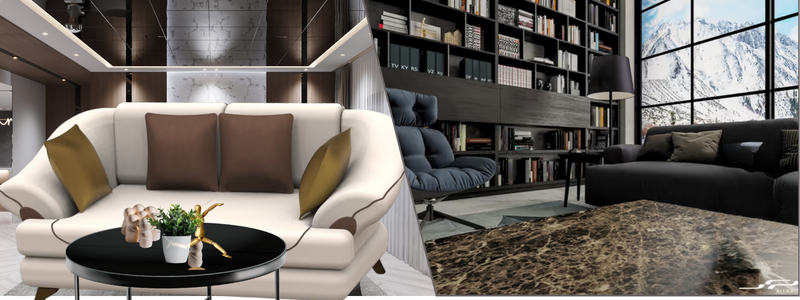
The 3D props do not just add aesthetics to the overall visualization of the furniture. It adds functionality or connection to it. For instance, books are placed on the shelves so that buyers can see their size comparisons. It gives them a sense of scale and fit.
The small details added to the visual serve a purpose and complete the overall function of the furniture. It could tell a story of a certain lifestyle attached to it, which appeals to the target market. Or it could influence a certain routine or activity. Props help the customers picture life with the furniture.
33. High-resolution print-ready assets
3D furniture renders and models are made with high resolution. It offers even better quality than standard cameras. This is why digital models appear sharp, detailed, and crisp even when printed on large billboards or displays.
Photos captured from a camera may appear pixelated or blurry when printed. This is because the resolution matters. It couldn’t produce high definition without expensive cameras. 3D models are not a practical choice. It allows flexibility in use and purpose, especially for marketing campaigns across different platforms.
34. Managing complex reflections
There are struggles with capturing mirrored surfaces in traditional shoots since there could be incidents wherein something shows in the reflection. This can be avoided by using 3D modeling. In here, there would be nothing to ruin the shot since it is all clear.
Since everything is done digitally, the models or renders appear clean and professional. The reflection is refined and controlled, enhancing the overall composition. It brings out the sleek and premium quality appeal of the furniture. It improves the overall presentation because of it.
RELATED: 3D Furniture Visualization: How to Create Premium Furniture for your Company
35. High-speed content production
When a furniture company commits to making its models digital, it can set up a virtual studio to be consistent in quality. Here, there’s no need to manually set up lighting, background and props every time a shoot is needed. The same setup can be reused to maintain consistency within a specific theme or lifestyle.
Once the virtual studio and digitalization are established, generating content is fast and efficient. It would only take time to brainstorm an idea on how they want to present the product. But the actual design and visualization process wouldn’t take long compared to traditional shoots. It’s a flexible approach that produces consistent content for different platforms.
Conclusion
Digitalization has greatly improved the way furniture brands do their marketing content. There’s a lot more flexibility and creativity that can be explored beyond traditional photoshoots. The growing trend toward 3D models can help generate content that could boost sales and profits. It helps not only the businesses to thrive in the market but also improves buyers’ satisfaction. To help you do the creative marketing campaign you’re thinking about, explore Cad Crowd to hire vetted professionals to do the 3D modeling you need.
How Cad Crowd can help
Working with the right experts makes the dream work. Having clear communication and collaboration is a step toward making a product successful. With suitable and right deliberation, communication, and support, any simple idea can be turned into a fully made product that customers will trust and be happy to buy. Contact Cad Crowd today and start bringing your ideas to life with a free quote.



