
As you all know, every New Product Development (NPD) project goes through multiple phases, from ideation and validation to production and commercialization. Any sane person would assume that ideation, the first phase of the process, occurs before anything else. Some people also refer to this earliest step as discovery or concept development. But it turns out there’s a “Phase 0,” just because we have to accept that a “good idea” cannot just come out of thin air. It has to spring up from somewhere or be born out of something, and most importantly, it can never be truly accidental. Phase 0 is often regarded as the foundation of the whole product development operation.
It captures the essence of the project and therefore affects every aspect of how progress is made. Phase 0 is more than just a roadmap or an action plan; it’s a baseline understanding of how to run the operation as a whole. If this is about driving a car, Phase 0 isn’t exactly a route or list of stops you need to make along the way. It’s a pre-driving inspection to see whether the engine runs, the oils are good, the brakes work, the tires have enough pressure, the driver actually knows how to drive, and so forth. If you find yourself hesitant to start an NPD project or bewildered by the looming complexities of it all, well then, that’s a pretty strong sign you’re at the door of Phase 0.
Because frankly, that’s what Phase 0 is all about: wrapping your head around the project to save yourself from terrible headaches to come. People like to think they can be inventors, build a product, launch it to market, and make a good profit. Now there might be some truth to that, but really, it’s the ability to handle Phase 0 that separates the amateurs from the professionals. The only certainty here is that everybody can use help, preferably from seasoned designers and engineers, to run a product development project and actually keep it on track. Even established design firms hire consultants and independent experts to provide fresh perspectives on tackling Phase 0.
You, too, may need assistance from professionals, not because Phase 0 is the most difficult thing in the world, but for the simple reason that it’s crucial for NPD that you must leave no stone unturned, see what’s underneath it through a microscope, and from every possible angle. Cad Crowd, a US-based freelancing platform focused on product development and engineering, is widely regarded as the best place to hire the most qualified professionals in the business. Backed with 15 years of experience, flexible hiring options, and an accuracy guarantee, Cad Crowd comfortably connects you with specialized talents for even the most complex product development projects.
RELATED: The Product Development Process Explained in 3 Stages
🚀 Table of contents
What Is Phase 0?
No one knows exactly what it is, but all descriptions seem to point to one very agreeable fact: it’s the preliminary research in a new product development, obviously. It takes place before concept generation, so basically, you’re making sure that the idea makes sense at all from both technical and financial viewpoints. What you have at this point is nothing more than a vague concept of a product. If you were about to launch a project right away, you’d be scrambling all over the place just to figure out how and where to start. You have no clear understanding of the problems you’re trying to solve, no specific product definition, no detailed scope of work, no design requirements, no budget estimation, and nothing.
Phase 0 aims to make “educated assumptions” about project goals, methods, milestones, costs, and activities so you can run the project in a much more focused manner. A pretty sizable portion of the work in Phase 0 revolves around the research into product design requirements. Like any good research ever done by anybody, you begin with a list of good questions. And specifically for this whole “Phase 0” exercise, here’s a glimpse of some questions you’ll be answering:
RELATED: Elevating Your Company’s Product Designs Through User-Centered Design Principles
- What problems this product is supposed to solve, and equally important, how?
- What critical functions does the product offer?
- What features should be included in addition to the critical functions?
- How do you justify the inclusion of those features?
- Who are the target users?
- What do the users need from the product?
- Does the product need to meet certain regulatory requirements?
- Do you have the capabilities to build the product?
- Do you need to hire professionals, and if so, in what specialized fields?
- How much money does it take to build the product?
Think of Phase 0 as a homework you must complete before you can take any further steps into the project. Since every product is unique, with its own strengths and weaknesses, there’s no right or wrong answer to any of those questions. That being said, all the answers together should point you to the following points:
RELATED: How 3D Modeling is Beneficial in Product Manufacturing & New Product Development Services
- Can you actually build the product? It’s a matter of technical feasibility. Perhaps you’re not the kind of person who reads Popular Science or the International Journal of Product Development, but you have the Internet at your service, so we imagine it’s not that difficult to know whether you have an executable idea or a far-fetched one. If your idea is to build a hammer made of glass, you might actually succeed. The hammer is useless as a tool, but it can be a good decoration at least. Now, if you want to build anti-gravity shoes, well then, the laws of physics are not on your side.
- Will people buy the product? Market research process tells you whether there’s going to be any demand for the product. This is where you take a trip to the real world and look into the problems people have. For example, you figure out that buyers in the home decoration market are furious because glass ornaments lack variety. Remember, you’re not yet at the point where you’re busy designing the sought-after products. You’re merely identifying a demand or a problem, and that people might actually pay good money for a solution.
RELATED: Tips for Product Design Firms: Validate New Product Ideas & Squash Launch Failures
- Can you make a profit from the product? There’s bound to be some math involved in this. You do simple calculations to estimate the production cost (including materials and shipping) and your asking price. If the production cost stands at a minimum of $20 per unit, while buyers won’t spend more than $15, it’s probably best to abandon the project altogether before it makes you go broke. But if there are still possible workarounds to further lower the production cost, keep at it.
At the end of the day, Phase 0 should give you a general guideline on how to proceed to the next steps in the NPD project. It tells you where the finish line is, what challenges lie ahead, and what you need to do to overcome them. No matter what unique product you have in mind, you want to be the first to launch it and launch well.
How important is phase 0?
The short answer is: very. Being a guideline, Phase 0 sets the boundaries of what you should and shouldn’t do. By the time the engineers and designers get to work, they’re well aware of what to achieve and will not waste their time on more brainstorming sessions. All the ideas and parameters have been set, so they’re not scrambling to experiment with anything irrelevant. And this holds significant importance in every NPD project for many reasons.
Curb your enthusiasm
If Larry David were here, he’d probably say, “Why don’t we rename Phase 0 to Phase 1, why? And start from there? Like normal people?” or something along those lines. But thankfully, he’s not here, so that’s one less thing to worry about. It’s called Phase 0 because you aren’t technically in the project yet. Think of it as taking a drive along the marathon route a week before the race. In addition to learning how many inclines you need to climb and where the potholes are, the preliminary drive helps you manage expectations for the timeline. At the very least, you have a clearer idea about how to set up the milestones, when to expect them, and what they will be. It’s not like a New Product Development project is going to finish in a week, is it?
RELATED: Speeding Up Product Development with New Product Design Services Companies
Build the right team
Now that Phase 0 gives you a good idea of the technical challenges, you have time to hunt for the right talent for the tasks. Ideally, you don’t want to start the project on your own and then bring in more players at random points later. It’s best to gather the team first, so you can get everyone on the same page early on. And who knows? Maybe the professionals can contribute ideas to improve the concept. Sometimes, you don’t know what you don’t know. Having some experts on your side from the get-go minimizes the risk of major design revisions in an ongoing project. Even if you’re running a design firm already filled with NPD professionals, it’s possible you still need to hire an additional expert or two to speed things up a bit.
Money matters
Truth be told, developing a physical product is expensive. We’re not saying that digital products like software or apps are cheap to make; it’s just that you don’t have to think about mass production or shipping. With software, if things go wrong during beta testing or the programming, you have every opportunity to rewrite the code or even start again from scratch without throwing money down the drain. Building a physical product from the ground up is quite the opposite. Fabricating a prototype alone costs money for materials and labor.
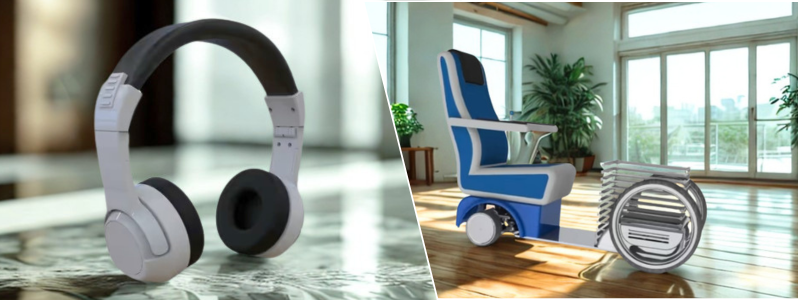
And to think that this is an iterative process and you probably have to build a dozen or more prototypes, there’s a lot at stake here. Phase 0 affords you the opportunity to take a close look at the project’s economics. You’re forced to learn about buying materials in bulk, manufacturing processes, minimum order quantities, and all the rest of it before the project kicks off. And hopefully, you’ll also discover a way to make sense of the project, financially, in the first place. There’s no guarantee that you will, but Phase 0 gives you the chance to scrutinize the money matters and plan for the best at a time when you haven’t spent too much.
RELATED: How to Save Money On New Product Design and Development Services for Company Prototypes
Lesson about supply and demand
Some people say you have to create a market for the product you sell. Despite the lack of clear signs that people actually want the product, they’ll buy it anyway once you make it available. There’s some truth to that, but likely it applies only to the really groundbreaking stuff. Take, for example, the iPhone. We didn’t know we wanted a full touchscreen smartphone until the first iPhone hit the market, and suddenly, everybody yearned to have it. For most other products, however, it’s always best to play it safe. Determine if there’s a real demand for them, and then rush to get the development started.
Demands can be misleading, too. Just because people want something, it doesn’t always mean they’ll gladly pay the amount you ask for it. Let’s say you found out during your Phase 0 research that people liked the idea of a solar-powered coffee machine. Because such an appliance requires a lot of power to work, you’ll need to engineer the circuitry and mechanism to make it much more energy efficient. As a result, you’ll have to sell it at a premium to make a small profit per unit. Will people buy this thing they said they wanted for the price? If the answer is no, ditch the idea right there. Stop the project at Phase 0 and plan for something else.
Is the product buildable at all?
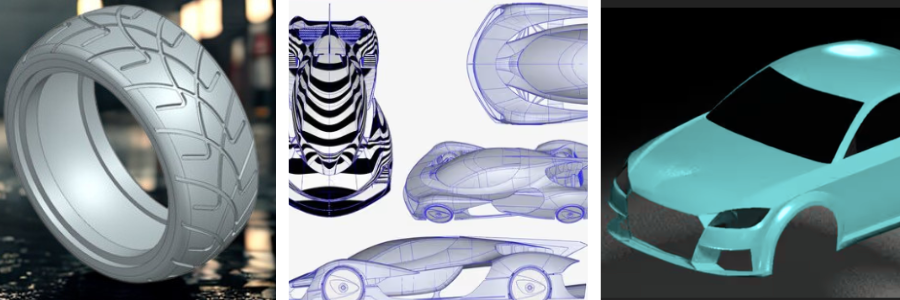
People want a lot of things, and many of them are too expensive or downright impossible to build. Flying cars? Or cars that can transform into robots? Yes to both. Hoverboard, perhaps? Definitely on demand. Printers that use coffee grounds as ink? Certainly.
RELATED: Tips to Optimize New Invention Development and Product Development for Companies
Again, demands can be misleading. Some products only exist in imagination because we don’t have the technology to build them, at least at present. In other cases, such as flying cars, the technology exists, but the final product will be outlandishly expensive. Not to mention, the driver must also be a licensed pilot to fly the vehicle. It’s true that a big part of Phase 0 is about discovering demand and finding out whether people like the idea of a product. But at the same time, Phase 0 tells you to do a reality check. Many products look good on paper, and sometimes, that should be the end of that. An exercise in hubris is not for the business-minded.
Can you take on the competitors?
There was a time when Steve Jobs believed that for Apple to win, Microsoft didn’t have to lose, or something like that. It was a long time ago, but we know now the statement hasn’t aged well. There was a time in the past when Apple was the underdog in the tech market, overshadowed by Microsoft. But it turned out that the underdog had more than enough to take its single biggest competitor. You might think your idea is completely unique, and there’s nothing like it anywhere in the world. That being said, this is highly unlikely. Chances are, some other companies have already released similar products, with varying degrees of success.
Part of Phase 0 is to conduct a teardown analysis to identify competitors. More importantly, the analysis should examine what they do well and what they do not do well. Obviously, you focus on the latter and how your product can be a better alternative. It can be as simple as pricing and the choice of materials, or as complex as features like battery life, ergonomics, and eco-friendliness.
Closing thought
This will sound pretty weird, but almost the entire point of Phase 0 is to give you a buffer against wastefulness. If you find out that the production cost is too high, demand is not as high as you expect, or that the engineering service will take too long, it’s probably best to go back to the drawing board and rethink the ideas. Thanks to the preliminary research during Phase 0, you might reveal that quitting now is better than spending time and money on something that makes little sense. Conversely, if it shows you all the good signs of market opportunity and profitability, the research tells you what to do to make it a reality.
RELATED: Tips to Optimize New Invention Development and Product Development for Companies
How Cad Crowd can help
Phase 0 can be either an ultimate “Green Flag” or “Kill Switch” depending on what you discover. However, it can only serve that function when you do it properly, with zero prejudice and an all-around objective view of the product idea. Simple as they may seem, they take a real-world NPD experience to explore every nook and cranny, leaving no stone unturned. At Cad Crowd, you’re spoiled with easy access to some of the best in the business, experts who specialize in NPD workflow from the very start of Phase 0, prototype fabrication, hardware/firmware integration, certification, all the way to product launch and commercialization. Contact us today and start bringing your ideas to life with a free quote.