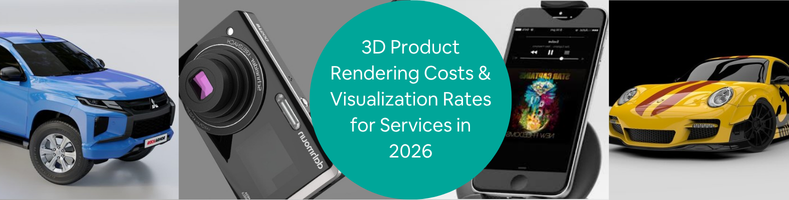
In the year 2026, eCommerce was confronted with one of the most important tools, which was also useful for digital marketing as well as virtual product services. That is the 3D product rendering process. Instead of focusing solely on traditional photography, most businesses now try the so-called CGI in order to create useful and realistic animations.
What is 3D product rendering?
3D Product Rendering is the process that creates digital product visuals with the use of CGI software including Blender, 3ds Max, Maya, KeyShot, and Unreal Engine. The artists make a digital model and render realistic images or animations. The common use of 3D product rendering designers includes Amazon listings, product launch campaigns, furniture visualization, medical product marketing, packaging presentations, as well as AR and VR experiences.
The said technology is widely accepted in so many countries across the globe. A good example of this is the launch campaigns wherein different visuals are presented to show the different views of the product without spending much on expensive photography. The product demonstration may be done physically or even virtually. There is no problem with it because presenters are trained both to demonstrate the product face-to-face or online.

How much will 3D product rendering cost in 2026?
The 3D product rendering cost in 2026 depends on multiple factors such as realism, animation, revisions, turnaround time, and the location of the studio. Some of the simple renders may cost only a little, while the premium renders or the interactive visualization can cost a lot of thousands. As time passes by, the developed markets evolve as well, most of the professional studio pricing services range between 150 dollars to 3,500 dollars. The source mainly focuses on the U.S, Canada, UK, and other high-cost developed markets, which is really helpful in benchmarking the market pricing. The industry pricing guides in 2026 provide a consistent structure on how a basic studio render should remain on the lower end, whereas the technical renders, 3D animation, and visualizations that are interactive must be significantly higher in cost.
RELATED: Rugged Product Design Strategy: How Product Development Firms Can Deliver for Startups
So, from traditional marketing to a more advanced way, 3D rendering gives a lot of opportunities for the customers to give a more personal approach with the product even virtually. Through that, the kind of shopping which is traditional may be upgraded even at the comfort of your own home. Product demonstrations also may be done online so the customers will not experience difficulty in making a better decision. Most of the professional studios price services in the following ranges in the year of 2026. These apparently apply consistently across the US and UK-focused pricing guides.
Here are the 3D product rendering costs:
1. Basic studio style render
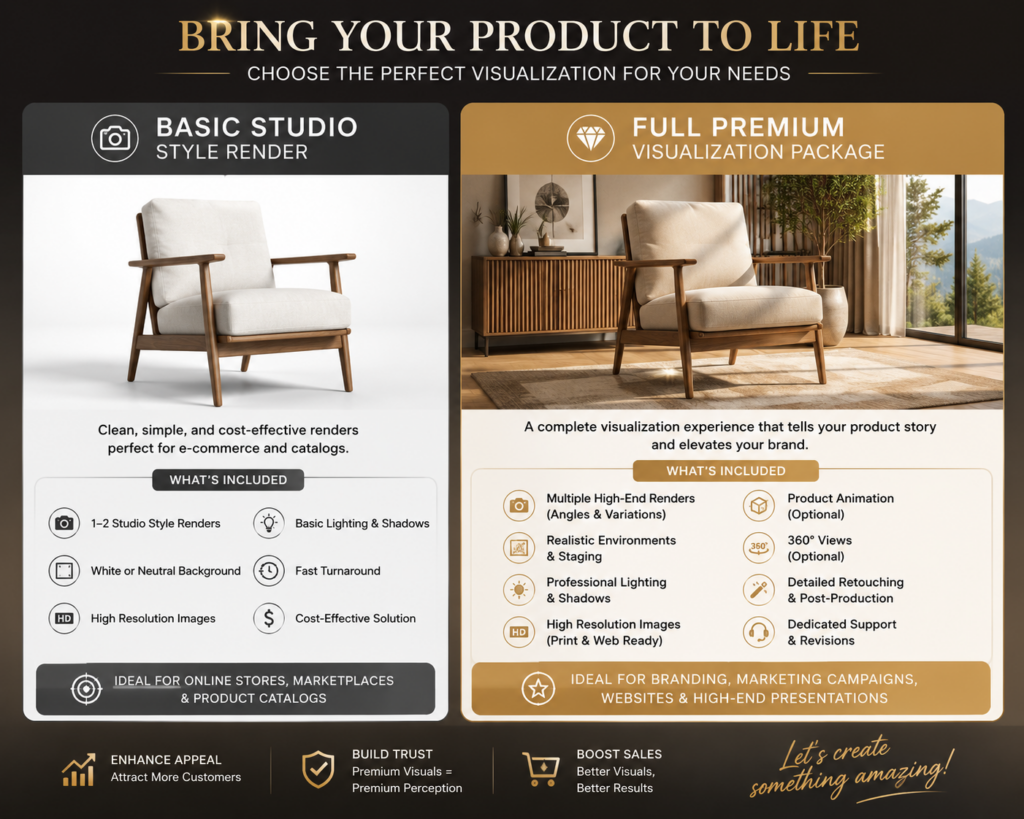
Basic Studio Style Render is one of the most common and affordable types of 3D product visualization services that can be used. This allows us to have a viewpoint on a product on a clean white, or even simple gradient background with the integration of professional lighting. The render typically focuses on the simple camera angles, shadows and reflections, and accurate product shape. The average cost in 2026 for the level of beginner or freelancers is probably $150 – $300, the mid level studio is $300 – $700, and premium photorealism lies on $700 – $1,500. The factors that affect the pricing include product complexity, resolution requirements, and the number of the render angles.
| Beginner or freelancers | $150 – $300 |
|---|---|
| Mid level studio | $300 – $700 |
| Premium Photorealism | $700 – $1,500 |
2. Lifestyle render
Lifestyle Render refers to a product that is within a realistic environment to help the customer and clients have an overview or to visualize the real-world usage. Rather than utilizing a simple or plain background, Lifestyle Render can make the product look like it is inside the room, outdoors, or in a luxury commercial scene. This is typically more expensive because the artists must create the props, have a realistic atmosphere, and include a detailed composition.
Lifestyle rendering depends on the cost and the complexity of the project. The estimated cost for the simple lifestyle scene is around $500 – $1,000, and for the mid-level realism, it costs $1,000 – $3,000, and $3,000 – $10,000 for the premium cinematic scene. This is costly since it needs a production team as well as time so that the artists can have the chance to make and create the entire environment and not just render the product.
RELATED: 3D Modeling Services: How To Boost Marketing For Lifestyle Products
| Simple Lifestyle Scene | $500 – $1,000 |
|---|---|
| Mid level Realism | $1,000 – $3,000 |
| Premium Cinematic Scene | $3,000 – $10,000 |
3. Technical/exploded render
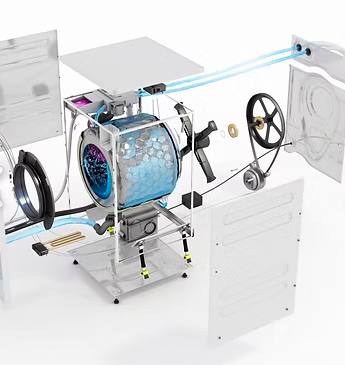
Technical or Exploded Render separates the product components to be able to showcase the internal structures, assembly systems, and engineering details. This render is typically detailed and is commonly used in the industrial design services, manufacturing, automotive marketing, medical devices, and product demonstrations. By using this render, it will be possible to explain how a product works, the various internal mechanisms, material structures, and the assembly instructions. The average cost in 2026 is that it ranges from $400 to $15,000. For the simple exploded view, it is in the range of $400–$1,000, and for mechanical products it is about $1,000–$5,000, and lastly for the industrial and mechanical systems it ranges in the price of $5,000–$15,000 or more.

| Simple Exploded View | $400 to $1,000 |
|---|---|
| Mechanical Products | $1,000–$5,000 |
| Industrial and Mechanical Systems | $5,000–$15,000 |
4. Product animation
For the product animation, the costs depend on the animation type. Such, if it uses a simple 360 spin, it ranges from $500 to $2,000, and for the short product animation it is about $2,000–$8,000, and $10,000 to $50,000 or more for when a client wants to use a commercial CGI animation. Product animation leans into having a moving 3D video, which shows the product with the use of motion, transitions, and simulations, as well as storytelling can also be applied when using this render.
RELATED: What Factors Influence 3D Animation Services Rates, Costs, and Pricing for Companies?
The animations are costly since they involve motion design, editing, sound synchronization, rendering, and modeling. These are commonly popular in the field of TV commercials, product launches, campaigns, social media ads, and many more. The common animation styles that can be seen here are the feature demonstrations of the product, the physics simulations, and the cinematic commercial animation.
| Simple 360 spin | $500 to $2,000 |
|---|---|
| Short Product Animation | $2,000–$8,000 |
| Commercial CGI Animation | $10,000–$50,000 |
5. Full premium visualization packages
Full Premium Visualization Package is a complete CGI solution which integrates the various 3D rendering services into a single large-scale project. The packages are often seen in manufacturers, automotive firms, luxury companies, and many more. In addition, the packages include the animation, 360-degree viewers, AR-ready models, and lifestyle scenes.
The pricing ranges from $3,000–$10,000 for the small business packages, and for the mid-scale brand package it is $10,000 to $50,000 and lastly for the enterprise visualization system it will cost around $50,000 to $250, 000 and above. These are pricey since the project involves a lot of 3D artists, directors, and teams that will really guide all throughout the process-making. These packages are frequently used by big firms to keep their visual marketing consistent throughout print advertisements, social media, eCommerce, websites, and augmented reality platforms.
| Small Business Packages | $3,000 – $10,000 |
|---|---|
| Mid Scale Brand Packages | $10,000 – $50,000 |
| Enterprise Visualization | $50,000 – $250, 000 |
TOP REFERENCES FOR 3D RENDERING COST
1. BIM Home Studio
BIM Home Studio is a professional pricing reference that has a 3D rendering service that is found in the U.S. market. This platform explains why the render varies when it comes to costing because of the factors that are based on realism, revisions, lighting, and the production workflow. The BIM Home Studio Pricing Guide is a great help in gaining knowledge about the visualization pricing in 2026. This platform leans on architectural visualization, and it helps businesses estimate their budgets for their projects accurately. This source is a great help as to why CGI professionals in the market charge more value and cost when compared to the low-cost outsourcing services. By utilizing this platform, the client or the user have access to the information because this source highlights the importance of realism, GPU rendering power and post-production when it comes to pricing.
RELATED: The career path of CAD engineering, salary, rates, and more

2. Fortes Vision
Fortes Vision mainly focuses on explaining how a professional rendering studio should structure their pricing, especially for the visualization projects. This is really helpful because every platform charges differently, and with this, they can have an overview of what’s the most appropriate pricing and charges are. The benefits of using this source are that it explains and gives information on the pricing transparency, which is best for being a reference for commercial visualization pricing. Fortes Vision is helpful since it discusses how the quality standards, revisions, and studio expertise affect the rendering costs in the market.

3. Alden Studios
Alden Studios is best for the product rendering specific pricing, animation pricing, and for the technical rendering categories. It breaks down the studio, lifestyle renders, product pricing and many more. This is best for the tables and market comparison. This source covers the various visualization changes and it is useful for the e-commerce and manufacturing industries. This guide is seen as a valuable article since it discusses the different rendering categories together with its cost.

4. RealSpace 3D
RealSpace 3D allows the clients to have an overview of how developed market studios should position themselves. In this source, it explains why the rendering costs could range from $200 to $10,000 or more, and such will also depend on the quality and complexity of the project. RealSpace 3D has strong professional credibility, and it might be costly and not ideal for smaller businesses. RealSpace 3D is a great help for the discussion of luxury visualization services and the enterprise grade CGI production in the market.

5. PIXREADY
PIXREADY has a specialization in ecommerce CGI, and it mainly talks on how a brand uses 3D rendering designers rather than traditional photography. In this platform, it discusses the CGI versus photography and it also covers the scalable product catalog rendering. PIXREADY is an excellent source for discussing how a CGI is turning into an ecommerce while minimizing the costs for traditional photography.
RELATED: Medical Device Design: A Guide to Service Pricing, Costs, and Rates for Companies

6. CYLIND
CYLIND mainly focuses on the field of strategic value when it comes to the 3D visualization aside from just pricing. It showcases how design creation, approvals, investor presentations, and business decision-making are all aided by rendering. This source is useful for the enterprise visualization articles, however, it is more on the technical side and is less focused on e-commerce. This is the best option to use as it talks about rendering as an investment compared to just being a visual asset.

7. Transparent House
Transparent House acts as a premium when it comes to the CGI and visualization studio. It focuses more on the high-end 3D product rendering pricing for the developed markets just like in the United States. This guide is leaning more on the photorealistic rendering services for product visualization, ecommerce CGI rendering, and animation services.Using this platform is a great help for businesses in knowing and understanding the cost structure. Also, with this you can begin the premium-quality rendering. Although it may be too expensive for startups to utilize Transparent House since it focuses more on high-end brands. This source is really important because it demonstrates how high-end studios defend their higher rendering costs by high end marketing visuals, cinematic composition, and better realism.
8. Render3DQuick
Render3DQuick can provide practical prices when it comes to giving a guide for the 3D visualization projects in 2026. It mainly talks on the common pricing structures, which is for the renderings, animations, and VR experiences. This source is a great help for businesses who tend to estimate their budget for the visualization. Through this source, it explains the details and complexities that can influence the pricing breakdown. This is a great help for the beginners who are learning visualization pricing. Render3DQuick is helpful for the discussion of the pricing of freelancers, studio, project complexity, and revision management.
9. 360 Render
360 Render mainly focuses on providing services to businesses to deeply understand why the product rendering design prices range differently. It talks about the relationship between realism, production quality and complexity. This platform mainly explains that the 360 degree product renders which may range from $500 to $3,000. The 360 render provides a strong explanation of pricing variability. This is valuable for how a quality affects pricing and the CGI replacing traditional photography.

10. ArchVisual Studio
ArchVisual Studio is a platform that offers one of the clearest pricing tables for 3D rendering services. It is made renderings such as, product rendering, lifestyle, aerial rendering services, and animation. When it comes to the product demonstration, it also has a beginner-friendly explanation to surely understand what the context really means. This platform also has a quick market comparison, and is leaning more on the architecture orientedness. By doing so, the customers’ hearts will surely be captured because architecture is more visual. People rely more on what their eyes could conceive. This matters because it allows the users and clients to have an insight into the rendering production pipelines, and understand the pricing benchmarks.
RELATED: What are Architectural Rendering Costs, Rates, and Pricing for Companies?

11. Renderly
Renderly is a platform that is based in the United Kingdom. It does offer a perspective on the 3D rendering pricing, and explains various differences in the freelancers, studios, and agencies. It also explains factors on the project complexity and has a generalized pricing. On the other hand, it is crucial to make the article less focused on the United States and more globally balanced in developed markets so that clients and individuals will have the various knowledge and perspectives on the certain field. This is true because some customers may not be fanatics of United States products, and others may love US products. If we associate Renderly with the United States, we might lose other customers.

12. Sonora BIM
Sonora BIM offers an explanation on what the drives rendering costs in the United States market. It explains the workflow, and covers the premium visualization factors. This is helpful in defining how professional studios defend higher rates and why rendering prices differ greatly in established economies.
Factors that affect 3D rendering costs
Product Complexity – A simple product is made to be easy and fast to render as it needs less 3D modeling, fewer textures, and simpler lighting, which means that it is also low cost when it comes to pricing. One factor that affects the costing in 3D rendering is the complexity of the product because it reflects how the object is seen, the quality, and a lot of factors should be considered in making a decision on how much it will be priced. Complex products tend to cost more as they require intricate detail, which takes time to build, especially in 3D. The benefit of investing in a complex product rendering is that it can help you campaign and market your product; it has its own value and quality.
Modeling Requirements – As the rendering proceeds to the next step, the product needs a 3D model. Modeling requirements do affect the costing as sometimes the models that will be used in the project are already existing, while on some projects or cases, an artist must begin from scratch to make it, which then can change in the project pricing.
Level of Realism – The level of realism talks about how lifelike and photorealistic the final render must be. Not every project needs to be on a European level of realism, some do only need a clean visual for the products. Why does realism cost more? It is because of the material accuracy that when there is a need for photorealism, it will require a realistic behavior such as metal, glass, skin-like materials, fabric. This costs more as the photorealistic rendering artists spend a lot of time refining these things.
Number of Angles – This means the number of camera views or photos that the customer requires for the same product. A single render means that it costs less than the multiple views. When a lot of views are being requested, it means that it increases the production work.
Turnaround Time – Turnaround time refers to how fast the client needs to finish the render. The cost of a project completed in two weeks differs from that of a project completed in a day. Rush jobs cost more because it needs priority scheduling, and overtime labor as the artists who are making it may work on nights or even on their day offs.
Revision Rounds – This mainly talks about how the number of changes requested right after the initial render is delivered. A limited revision applies to most of the rendering services because they align revisions with the costing, as it requires more labor and time. When the request is to have a lot of revisions, it may increase the costs. Although revisions can improve accuracy, the quality of the output, and client satisfaction, it can be expensive.
RELATED: What are Industrial Design Rates & Costs at Product Design Services Firms?
Future trends in 3D visualization
The 3D visualization industry is now advancing and growing in 2026 due to the digital commerce, immersive technologies, and real time interactive experiences. This has become the most important for the brands as they look forward in budgeting and investing in it, this helps them improve the quality of the products, which reflects to the brand they have.
1. AR Shopping – AR shopping gives opportunities for customers to place and view their 3D products in the real life environment with the use of smartphones or the AR devices before they make decisions in purchasing them. Through it, it can improve the clients confidence toward their products, increase the sales, which can allow the buyers to keep coming back because they have the knowledge towards what they are buying.
2. Metaverse Experiences – Metaverse design services require immersive virtual spaces where the customers can have the opportunity to interact with the products, and explore the branded digital environments.
3. AI-Assisted Rendering – Artificial intelligence is used in AI-assisted rendering to aid with texturing, lighting, backdrops, rendering optimization, and creative thoughts in order to accelerate 3D production.
4. Virtual Showrooms – Virtual Showrooms are the digital 3D spaces where the customers have the chance to browse, and interact with the products that are found online just like they are in the real world or in the physical store.
5. Real-Time Rendering – Real-Time Rendering lies on generating 3D visuals in an instant by utilizing advanced rendering engines. Using it makes it possible for the users to have an interaction with the products, where they can see the immediate changes made without the need of waiting for a long time.
6. WebGL Configurators – WebGL configurators makes it possible for the customers to allow customizing the products in the web browser. Such moves and changes are the changing of colors, materials, and features while instantly seeing the updates in real time.
RELATED: Photorealistic Rendering Services: Complete Price, Cost, Rates and Fees for Companies and Firms

How to reduce 3D product rendering costs and visualization rates
3D product rendering tends to be cost-effective compared to using traditional photography, yet it is still costly due to the project’s complexity, revisions, realism, and requirements. Reducing the 3D rendering costs does not imply that you are sacrificing the quality of the products, but you take measures in making a smart decision that can help reduce the unnecessary production time, labor, revision cycles and costs.
Provide existing CAD or 3D models because it will save a lot of time, and the CAD designer’s time to actually make it from scratch. If your project is in bulk, it is a must to order in bulk to reduce the costly changes that could happen later on. In addition, choose the best and right service provider. One provider that is a safe and wise decision to use is the Cad Crowd because it has vetted experts that could really help in reducing costs, while providing you the best quality. Businesses may obtain a high-quality 3D visualization on a budget by reducing extra work, revisions, and needless complexity.
How Cad Crowd can help
Being vital for eCommerce, 3D rendering is not only useful but vital in the digital world. The price for 3D product rendering varies depending on the complexity of the product, and as to whether or not it is realistic. The value of the product is also the reason why it stands out from the rest of the products. In choosing the best and appropriate product for you, the best thing to do is not primarily consider the cheapest, but the combination of good quality as well as the value of the product. If you are shopping online, consider all the discussions and negotiations shared during the product demonstration. Surely, you will definitely choose a good product. Contact Cad Crowd for a free quote.