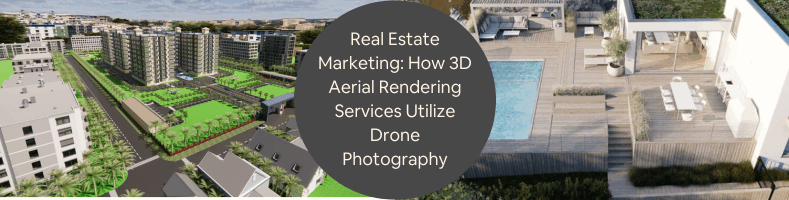
Drone photography is undoubtedly the newest and hottest game-changer in real estate marketing, offering an exceptional one-of-a-kind view and approach that remains unbeatable by traditional photography.
It offers an innovative and groundbreaking means of showcasing properties, providing a more detailed understanding of a property’s features, size, and location, as well as its surrounding and nearby environment. This helps boost customer engagement and ultimately pushes the decision matter towards closing a sale and taking your marketing efforts to the next level.
But the thing is, your skills would not improve by just pressing buttons on a remote control. Having the cool, up-to-date, and latest equipment and camera tools does not suffice to make up for the actual skills needed to pull off what is needed to satisfy your clients. Drone photography calls for meticulous planning and careful consideration of various factors so that you can capture enticing images that can pique your client’s interest and encourage enticing engagements.
This short guide talks about how 3D aerial rendering services utilize drone photography for real estate marketing purposes:
Limitations and challenges of traditional photography for real estate
For the longest time, real estate professionals have been using traditional photography to achieve various purposes, such as the following:
- Capture before and after photos to document real estate construction sites.
- Create marketing materials such as business cards, site signage, flyers, and brochures
- Identify leaks, cracks, and other possible problems for maintenance and inspection purposes
- Provide references of both the site and its nearby surroundings for renovation projects
While there is no doubt that traditional photography has always been a big help, it continues to have several notable limitations, such as:
Accessibility concerns
Physical obstacles might hamper traditional photography, as they can prevent or even make it impossible for the photographer to get near the subject. For example, it can be tricky to capture photos of exterior walls and other inaccessible landscapes for crack or leak inspections.
Issues with automation
Traditional photography requires a high level of skill to make manual adjustments like ISO, speed, shutter, and aperture. It also means the photographer must capture and process numerous images to reach the desired result.
Inability to capture bigger structures
It’s challenging to capture bigger structures like bridges and skyscrapers in just one frame using conventional photography.
Low light limitations
Low-light situations might pose another difficulty in traditional photography. They can make it hard to capture well-lit and clear images. The images might also lack detail in spots of high contrast, like shadows or bright skies.
Resolution problems
The resolution of traditional photography might be more limited than newer technologies, resulting in lower-quality images once enlarged or printed. It can also make it hard to produce large-scale prints or capture finer details in more complex scenes for architectural design firms.
Restricted perspectives
Traditional photography is also usually limited to perspectives on the ground level, making it hard to capture images of structures or buildings from the preferred angle.
Drone photography and its role in the real estate industry
Now more than ever, drone photography is extensively used in the real estate industry for an extensive variety of purposes that remain unparalleled by traditional photography. Some good examples include:
- Visualization and marketing: Drone photography offers a dynamic and unique perspective for more 3D options.
- Progress follow-up: Use drone photography to document the entire project and have an immersive communication with stakeholders.
- Safety: Cut down risks of injuries without needing personal access to dangerous areas.
- Site inspections: Pinpoint cracks, leaks, and other potential problems in hard-to-reach spots.
- Surveying: Capture more topographical data and develop 3D terrain models for bigger land areas.
All in all, drone photography offers a long list of benefits, such as improved accuracy, efficiency, and safety, which can then help improve project management, communication, and visualization.
The plight of drone photography
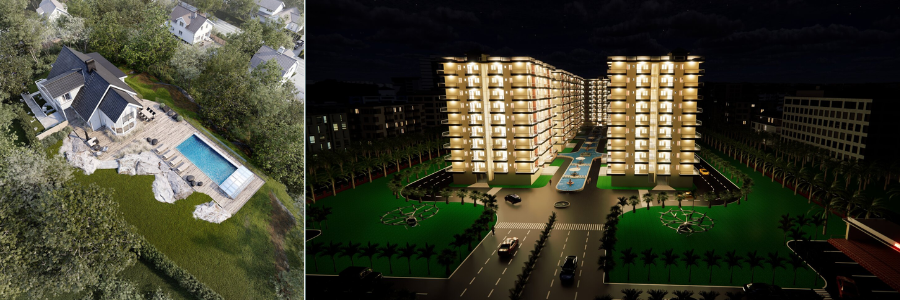
Context transforms artistic renders into photorealistic visuals that accurately portray buildings and structures. What seems to be trivial details, like the warmth of interior lights in nighttime renders, can significantly impact how a potential investor or client perceives an image.
In line with this and in the never-ending attempt to enhance the accuracy of 3D renders while boosting the value they offer, more and more 3D aerial rendering services are now harnessing the power of readily available UAV or Unmanned Aerial Vehicle platforms, more popularly called drones, to gain a more distinct vantage point of spans of land intended to be developed soon.
Back in the day, capturing aerial images of a place was only possible from helicopters or planes, both of which are associated with hefty rental price tags. Drones fitted with similar capabilities are now available for a cheaper cost, making aerial photography an easier and more affordable option.
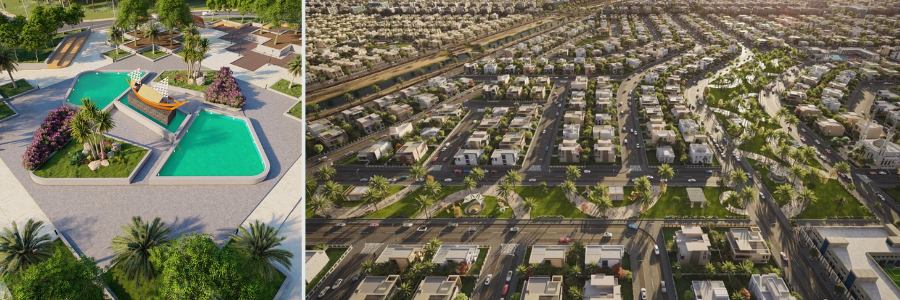
In addition to capturing standard images or videos, drones also give 3D aerial rendering services access to software that lets them create accurate topographical maps of areas that will be developed soon, to add a whole new level of accuracy and context to the rendering.
Photogrammetry, or the science of using photographs to make measurements, is not a novel technique. The truth is that it has already been adapted for different applications, such as aerial photogrammetry by architectural design and rafting services.
With this particular application, the camera is mounted below a drone, helicopter, or plane and pointed at the ground. During numerous passes, several images of the area are taken, and these are processed using aerial photogrammetry software to determine the area’s topography. This data will be output in various formats according to the user’s specific needs.
There are numerous benefits associated with aerial photogrammetry, regardless of the applications.
For starters, drone photogrammetry can capture data in unsafe or difficult places for surveyors to reach, such as places with harsh weather conditions and difficult-to-navigate terrain. It helps reduce the risk of injuries.
Drones equipped with high-res cameras can also capture detailed and sharp photos. Enabling higher-end features also allows the equipment to provide extremely precise survey results.
RELATED: How to determine the quality of architectural 3D renderings with design services companies firms
How to use drone images to create 3D models
The best 3D aerial rendering services are experts in using drone images to create 3D models by 3D modeling experts. These professionals follow several steps to convert drone images into 3D maps or models.
These steps may include, but are not limited to the following:
- Choose a drone with a high-quality camera: The accuracy and clarity of 3D models and maps will greatly depend on the quality of the images that the drone has captured during its flight.
- Set up GCPs: GCPs, or Ground Control Points, are black-and-white points placed on the ground surrounding the survey site to function as reference points for the drone pilot. The pilot will easily identify the area that will be captured in the field according to the GCPs shown during the drone’s operation, which helps significantly reduce the risk of errors during the survey.
- Get the camera and drone ready: Before the device takes off, it’s important to conduct a complete check and inspect everything again. The drone must have enough juice in its battery and sufficient storage space in the memory card. The camera aperture, shutter speed, and angle should also be set properly.
- Stay updated with the weather report: Jeopardizing the equipment is the last thing you’d want to happen, so see to it that you will conduct the drone photography session during a sunny day. Avoid cloudy and rainy days. It’s also highly recommended and important to pick a time of day when there is good light, often around noontime.
- Process the data with an appropriate 3D drone modeling software: 3D aerial rendering services use photogrammetry software to process the captured drone photos into 3D models. If they are not very skilled at processing the drone data themselves, they also sometimes outsource this stage of the process to a freelancer. Professional freelancers are more than capable of handling drone data and guaranteeing that the results will meet the project’s requirements and needs.
3D rendering services often perform several things to improve the accuracy of 3D models developed using drone images.
For one, they ensure that the aerial images will have an overlap of 60% to 70%, which here includes both the frontal overlap and lateral overlap. The recommended overlap for drone 3D mapping is to ensure that the triangulation process is more accurate by tracking similar points between the images.
Another thing they do is to ensure that the drone captures more details of the landscapes at various altitudes and angles so that there are more available data points. They also try to have the drone fly at much lower altitudes to capture clearer images.
RELATED: 12 important hiring tips for 3D rendering freelancers & 3D modeling service companies
How Cad Crowd can help
Search for trustworthy 3D aerial rendering services that know how to harness the potential of drone photography here at Cad Crowd. Contact us today, and let us make your work simpler!