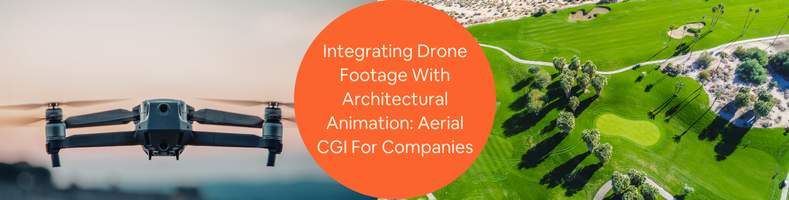
How do you integrate drone footage with 3D architectural animation? Today’s industries are going through significant changes and developments, and the architectural sector is no exception. With all the different options for marketing and the numerous technological advances, setting your company apart from the rest doesn’t come easily. By harnessing the power of modern innovations, you can attract more new clients and potential buyers to help your company grow and succeed.
One of these must-have innovations is aerial CGI. Aerial CGI is a form of digital art that shows a property from a distance, which is also the reason why it is often called bird’ s-eye view rendering. Aerial renderings are a great way to use top-notch images to bring your presentations to life and make yourself stand out from the competition.
If you’re considering 3D aerial rendering services for an upcoming project but aren’t sure whether it’s the right fit, you’ve come to the right place. In this article, we’ll explore the benefits of integrating drone footage with 3D architectural animation—and why aerial CGI is a game-changer for companies. And if you need professional help turning your drone footage into breathtaking 3D renderings, Cad Crowd is a great place to find expert freelancers who can bring your vision to life. Let’s dive in!
🚀 Table of contents
What is aerial CGI?
An aerial CGI, also part of 3D architectural rendering services, offers a view of commercial or residential spaces on grander scales. When creating aerial view shots of an architectural property, photographers set the camera angle at a high altitude, precisely at 45 to 60 degrees. This resembles a zoomed-out image. A 3D architectural aerial rendering is just the same. The main difference here is that when creating aerial CGI, the artist uses technology to create visually realistic representations of what a building or site looks like from a bird ’s-eye view.
Architectural renderings of this type can come in handy in creating realistic maps of the site where a future project will take place to ensure that the clients will get an idea of its appearance from afar. Clients can use aerial CGI as a map of future buildings, project details, and the surrounding terrains. These images also provide highly detailed characteristics that might not be shown in traditional side, rear, and front elevations. But these are just some of the many benefits of aerial CGI.
RELATED: The future of drones: What are drones used for now, and where are they going
Who needs aerial CGI?
Architectural aerial CGI services, including 3D modeling services, are often used in property and real estate marketing, but their applications are not limited to these two
As far as these two industries are concerned, aerial CGI allows the viewing of massive land, buildings, or properties that are planned to be developed or built on. Aerial CGI showcases the visual impact of the surroundings of the property, including the features, surrounding lots and buildings, terrain, landscape, roads, parking lots, and more.
It’s not a secret that ground-level shots usually fail to capture the details, true beauty, and grand scale of a commercial structure of a home, unlike a bird’s-eye view. Photos captured from the ground alone can never appropriately and justifiably display the size of a massive house, an entire building, or a scene on a vast expanse of land.
Aerial CGI can also come in handy for showing the available land for development projects. Investors and companies that plan to build houses, commercial developments, offices, schools, playgrounds, resorts, stadiums, and other buildings on vacant land should know their exact dimensions before making their plans. They also have to familiarize the environment surrounding the intended area for the project.
Real estate developers can take advantage of aerial CGI as well. It can show potential customers or clients the planned building’s actual size. It can also be used for tracking the progress of a certain project throughout its development. It means that aerial CGI is suitable for those who work on properties to encourage investors, architects, developers, agents, customers, advertisers, marketers, and other stakeholders.
Benefits of aerial CGI
Integrating 3D architectural animation and drone footage to create high-quality aerial CGI offers a wide range of benefits, including the following:
- It improves the chances of making more sales
Aerial CGI can be very appealing and enticing to the eye. For instance, if your company is planning to present a new community-type project to potential developers, investors, and buyers, using drone footage and 3D architectural animation services is the best and easiest way to capture their interest and showcase your novel idea. The ability to envision yourself in a particular neighborhood can make a big difference in whether a purchase will take place or not. The use of aerial CGI on banners and billboards can make it more likely for a sale to happen, as it gives customers a sense of security and trust. They will get a good idea of how a new neighborhood is going to look after the completion of its development and construction.
- It serves multiple purposes
Aerial CGI is multi-purpose. You can use this to create stunning presentations, locate terrain irregularities and errors, and map out the terrain. It functions as the landscape’s actual scale map.
- It’s quick and easy
Speed is a must in any type of project, so you can change the game if you deliver quality results as fast as you can. Aerial CGI allows clients to market properties early on, even when the site is not yet fully completed.
- It cuts down errors
Aerial CGI is an excellent way to improve the overall quality of the final result, as it gives a good glimpse of what requires fixing or improvement. It allows you to locate irregularities quickly and address them accordingly to impress your clients further.
How to create compelling 3D architectural aerial CGI
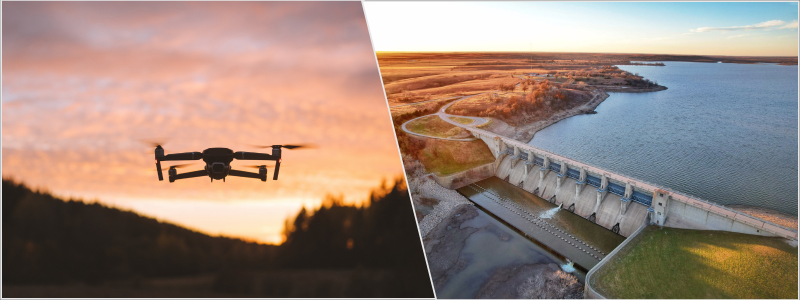
RELATED: 3D architectural animation services develop drone footage for architectural projects
Different vital aspects should be taken into consideration to create a stunning aerial CGI, from choosing the correct angle to coming up with a visual narrative. It also involves making sure that proper lighting is used, as well as expertly using textures and colors, and adding contextual details.
Aerial perspective
In 3D rendering, aerial CGI involves the simulation of the effects of the atmosphere on the objects in a 3D scene, especially with the nearby landscape receding into the distance. These are invaluable techniques in 3D architectural aerial CGI. Some promising approaches here include rendering items in the background with less detail and lighter color to replicate the real-world effect of the objects that appear bluer and less distinct as they get much farther away because of atmospheric scattering. This kind of effect can give the scene more realism and depth to improve the perception of scale and distance. By combining these techniques with CAD drafting services, architectural presentations become highly detailed and realistic from every perspective.
Framing and composition
Framing and composition play an important role in aerial rendering as they make significant contributions to the visual effectiveness and impact of the final image. These techniques are essential in aerial CGI as they guide the eye of the viewer, tell a unique visual story, emphasize the features of the design, improve the aesthetic appeal, portray the scale correctly, facilitate client communication, contribute to effective branding and marketing, and engage the viewer. Here are some of the principal rules in framing and composition:
| Balance | Visual elements should be distributed harmoniously, either asymmetrically or symmetrically, for overall equilibrium. |
| Golden ratio | This mathematical concept can be applied to create balanced and aesthetically pleasing compositions. |
| Leading lines | Linear elements can be used to guide the viewer’s gaze toward the focal point to create visual flow and depth. |
| Rule of thirds | The image can be divided into a 3×3 grid, with the critical elements placed along the intersections or gridlines for balance. |
| Symmetry | Come up with a mirror image effect for order and formality in the composition. |
RELATED: Freelance aerospace engineering services, cost, rates, and pricing for companies
Add natural elements
Aerial CGI gains exceptional visual appeal and realism when integrated with natural elements like vegetation, bodies of water, and trees. This infusion goes beyond aesthetics alone as it also significantly contributes to the overall contextual understanding and narrative of the architectural project. This is important for two crucial reasons: contextual realism and perspective and scale. The inclusion of natural elements places the architectural project in its real-world context, giving viewers a sense of relatability and size. Vegetation and trees help simulate the environment around the project, making the rendering more connected to the landscape and more believable at the same time. They also serve as visual references for scale so viewers can accurately gauge the size of spaces and structures. Water bodies like rivers and ponds add depth to the scene, enhancing perspective and increasing the immersive appeal of the rendering. When combined with BIM modeling services, these natural elements can be planned and integrated meticulously to create a highly lifelike and detailed final presentation.
Texturing and lighting
Texturing and lighting are essential for successful aerial CGI because of their significant effect on the final visual appeal, realism, and quality of the renderings. Well-executed texturing and lighting can spell the difference between a 3D rendering that resonates with emotions and captivates the eye and a 3D rendering that is poorly made.
Lighting conditions can also set the ambiance and mood of the scene. Various lighting setups can evoke different emotions, from cozy and warm to eerie and cold, to influence the perception of the viewer. 3D design experts often choose to set natural lighting for their aerial CGI projects with the help of a physical daylight system or image-based lighting. Textures also play a role in the atmosphere as they add details that may suggest certain materials like wood, glass, or metal, and even imperfections and dust that further improve the sense of realism.
RELATED: High-rise 3D rendering designs: CGI for an architectural company’s presentations
How Cad Crowd can help
Aerial CGI has evolved into a powerful storytelling tool for architects, real estate professionals, and developers alike. By blending realistic atmospheric effects, meticulously integrated natural elements, and well-crafted structures, these visuals help convey both the aesthetic and practical aspects of a project. From enticing investors to giving communities a crystal-clear perspective of upcoming developments, aerial CGI opens new dimensions in architectural presentations and marketing.
If you’re looking to leverage the full potential of aerial CGI for your own projects, Cad Crowd is here to help. Our global network of skilled professionals can deliver high-quality visualizations tailored to your unique needs. Simply reach out and let us connect you with the right expert to bring your vision to life. Contact Cad Crowd today and get a free quote.