
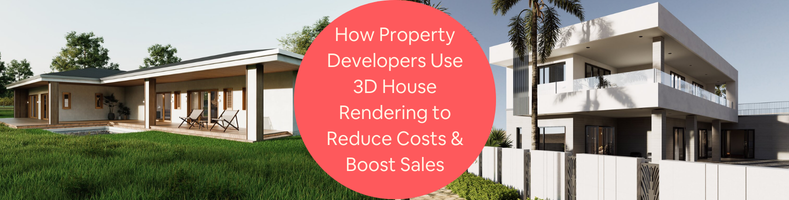
3D house rendering services can easily bridge the gap between the concept and reality; it was able to mirror the life and functionality that the creators want to convey. Property development is considered as high stakes business. This is because there are a lot of risks faced not only during the pre-construction but also up to the turnover. In every decision, from the building layout to material selection, it would have an impact on time and cost.
3D house rendering services are introduced as they can translate the technical drawings into realistic models.
To ensure the delivery of the service is of premium quality, hiring a vetted 3D artist or designer is needed. Cad Crowd connects businesses with experienced and vetted professionals who specialize in creating high-quality and photorealistic renderings. Collaborating with the right team reduces rework and overhead costs since the approach and results are carefully tailored to the project’s needs.
🚀 Table of contents
Visualizing the design: Turning blueprints into detailed reality
Even an overlooked small mistake can lead to expensive delay or rework. While the traditional blueprints are the usual and common reference to visualize the building, it sometimes fails to fully deliver and convey the functionality of the building.
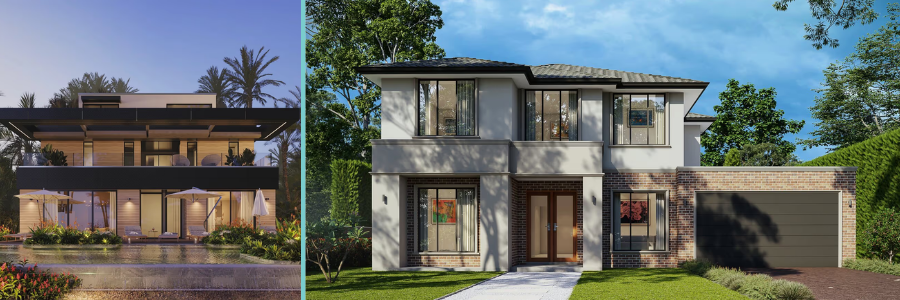
In 3D rendering design services, developers will transform the blueprints into something that can show details of the building, making it easier for stakeholders to see if the outcome is aligned with their vision. From the floor layout to lighting, material finishes, and even the furniture placements, 3D rendering can give life to the drawings.
RELATED: Turning concepts into stunning 3D renderings with architectural visualization at your services firm
Strengthening marketing and investor confidence
While rendering is a great help for the planning stage to visualize the project, it can also aid marketing. This serves as a tool to give investors and buyers a preview of the property. This gives confidence to the investors and prospective buyers.
With this, there’s confidence in pre-selling properties as there’s already an expected outcome. The technical precision and visual clarity enhance the project outcome and prevent further redesign.
Spotting potential risks early
One of the advantages of having a 3D render model is how it can show clashes and errors that could be a possible risk during construction. Not being able to detect this at the early stage could be costly, so it is best to be able to identify these risks during the design stage. Having virtual walkthroughs lets the stakeholders visualize the property from any angle. From this, the layout can be scrutinized. Room proportions would be judged as sufficient or cramped in real life. Some spaces in drawing seem enough, but could be awkward in reality.
Using lighting and structural checks to avoid conflicts
Lighting design services are what make the visuals look real, and this could also be crucial to the project. Having the ability to simulate natural and artificial lighting, at different times of the day, renders would be able to point out good window placement and if there’s a need for adjustment to the orientation for better comfort and for energy efficiency. One clash that can be detected in the rendering process is its structural elements. There could be discrepancies and conflicts that can be seen on the walkthrough, or that can be observed as non-compliant. Seeing all of this will make developers make the necessary adjustments for a more efficient resolution.
Facilitating team collaboration
During the rendering process, there is a strategic collaboration between architects. Engineers and contractors. These professionals would contribute to how the model is set to be in 3D, referencing the original blueprint. This prevents miscommunication. This way, there is clarity with the developing project on how it will be visualized. Since material finishes are photorealistic in 3D, it is much easier to select the most appropriate one. Designers would be able to see if the finishes are suitable, and they can be quantified at this point as well.
Supporting documentation and design iterations
In some cases, where regulatory approvals are to be provided and processed, there may be a need for visual documentation. 3D rendering can aid in that by presenting a realistic and detailed model, which can accelerate approval and prevent rejection. In 3D, designers and developers are able to explore different design variations. They can compare the same model with a different material finish or an exterior style. All these iterations can be done even without compromising the real project. This is just to weigh preferences and suitability for the project.
Saving costs before construction
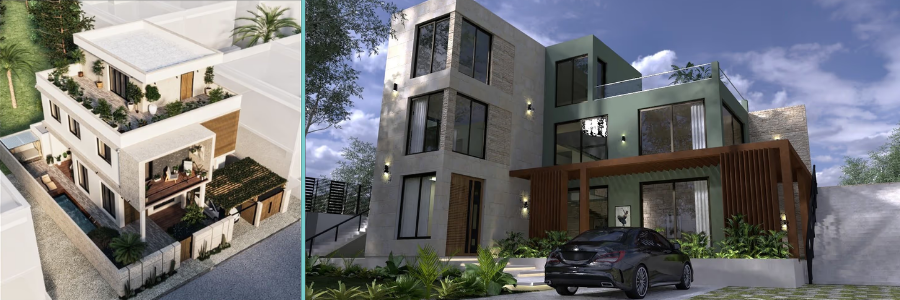
Resolving issues even before the construction stage is said to result in a saving of approximately 15-20%. This includes optimization of labor hours and minimizing delays. Cost reworks are definitely avoided, and a lot of effort will not be put into waste. There are other details that can be checked, even the small ones, which can add appeal to the project. For instance, minor adjustments like altering balcony dimensions or adding moulding to the façade can either be permanently added to the model or not, as they can still be removed. This prevents having rework on the actual site.
Using 3D rendering as a risk management tool
3D rendering is a risk management tool that can help identify problem areas that would likely be a costly rework in the future for architectural design firms. This prevents disputes with the consumers or contractors. Being proactive in this stage can protect the budget and the timeline.
Clear internal communication for project success
To ensure the success of the project, there should be effective communication within the internal team. Not being able to deliver the right message would lead to misunderstandings that could impact time and costs.
3D renders transform and translate blueprints into photorealistic visuals. With this, stakeholders, with or without technical knowledge, can easily understand and visualize the model. They’d be able to cross-check different layouts, finishes, lighting, and spatial relationships. This is a great help to collaborate efficiently since they’d be able to share their ideas and input towards the project in a visual way.
Building investor confidence
Investors look at the project with its potential and return on investment. One of the ways for them to visualize the project’s worth is by seeing the realistic model. This makes them confident with the design and pushes through with the funding approval.
Empowering buyers and contractors
Buyers also benefit from having a transparent perspective of the property. It allows them to relate, feel, and experience the space and visualize what it’s like to live there. It gives them a picture of the property’s ambiance and reduces hesitation during pre-selling. Contractors can refer to renderings when undergoing construction. This gives them proper alignment of what the finishes would be like or what details are expected to be seen. This will reduce assumptions and misunderstandings of the blueprint details.
RELATED: 6 types of residential design & CAD services for companies
Enhancing marketing and reducing risks
The marketing team uses 3D renders to sell out the property. It is often included in their brochures, sites, and social media. This is because buyers and investors tend to incline their decision on what they see. High-quality perspectives attract attention and pique interest even during pre-selling. Interactive 3D visualization services allow proactive thinking and benefit not only developers but also the buyers, as they bring transparency and clarity. Potential risks and issues could be avoided even before construction, and flexibility in material selection can lead to reduced costs.
The impact of material and design choices
Material and design make up the visuals and exterior build-up of the project. And these two have a great impact on the cost implications. Selecting the wrong type of material or finish could result in an even costlier correction during the construction phase.
Exploring and testing materials virtually
3D rendering allows exploration and testing of any material or finish type virtually. This is to see and compare which ones are more preferred, or how the surface or texture looks in a different lighting, without all the actual expense of materials and samples. This also prevents rework with reapplication or changing of material or finish.
Optimizing interior layout and design flexibility
Aside from the exterior, the interior layout could also be optimized. Placement of the furniture and cabinetry could be explored to ensure functional space and reduce awkward and cramped areas. This can give a pleasing visual for a walkthrough, making the viewers visualize what it is like to live there.
Giving the building luxurious or premium materials could be experimented with without spending money, as it can be optimized in the render as well. Customized cabinetry or wardrobes can be incorporated into it to check if it’s compatible, or a manufactured one can fit. It saves time from the back-and-forth trial of millwork placement.
Reducing waste and ensuring professional accuracy
Experimentation virtually limits the wastage of materials. These adjustments save a lot of time, effort, and money and help avoid unnecessary material usage. Through this, developers have the opportunity to explore different options without financial risks. In Cad Crowd, CAD freelancers are vetted to deliver accurate and photorealistic renders tailored to each project. It is ensured that the output reflects the intended and its functionality is aligned with their vision. Having a reliable professional to do the job reduces risks and rework.
Building buyer and investor confidence through visuals
Securing investment and maintaining cash flow are critical for developing a property. To ensure that this can be secured, having a photorealistic 3D render can help the developers. This serves as a helpful marketing tool to see a realistic representation of the property. It gives confidence to the buyers and investors and highlights its functionality and features.
Making a high-quality visual can be useful not only for giving a walkthrough but also for usage across marketing channels such as brochures, websites, and other social media platforms. Once buyers see these, they will engage even more and be attracted to it.
RELATED: Understanding architectural fees for design companies and freelance design costs for your firm
Highlighting unique selling points and immersive experiences
In doing renders, it portrays and highlights the unique selling points of the property. It could be about the exterior rendering design services, or its premium materials, the ambiance, the open spaces, scenic views, or some smart home features. Highlighting these details can aid developers in positioning the property in the competitive market.
Animated walkthroughs have a huge impact by providing a firsthand feel and experience of the property. It plays with the feelings of the buyers as they can virtually explore each room, feel the ambiance, and relate to the way of life there.
Interactive features and concept testing before construction
There are also interactive features that let clients explore the finishes, materials, and even the furniture placement. Lighting could also be adjusted to match their preferred tone. Having the freedom to control such settings builds momentum and excitement, making them want to commit early.
Renders also allow testing of concepts to provide to buyers. Options can be given with different shading or exterior style, to help determine which is more preferred or has more appeal with the buyers before construction.
Accelerating pre-sales, feedback, and investment decisions
Pre-selling can secure cash flow and investment if supported by 3D renders. There are faster reservations and buyers engaging even more. Feedback from buyers and investors could also be taken, so necessary adjustments can be made, making an overall increase in efficiency. Investors would be happy to see 3D renders as they’d have a good view of the property’s potential. It can accelerate their decision-making towards funding approval. It makes them see clearly how this property will thrive in the market.
Professional support for marketing-focused renders
Cad Crowd has a great talent pool of professionals that can deliver renders based on curated marketing needs, be it high-resolution or virtual staging for architecture services. All content needed as deliverables is reviewed and translated, aligned with the client’s intent and preferences. By adding 3D renders in the pre-selling stage as support, developers can have confidence in securing investments and maintaining cash flow. Since visuals can appeal to more target leads and engage buyers and investors.
Creating strong first impressions online
Every search for a property starts online. Finding the right property starts with exploring the best ones in the virtual marketplace. The judgment usually begins with the photos provided. Some platforms have an interactive virtual tour, which allows viewers to navigate the rooms and check out the exterior and interior layout of the building without the need to visit in person. This is a helpful feature, especially for buyers who don’t have much time or are overseas.
Interactive customization and buyer engagement
The built-in interactive tools let buyers adjust their preferred finish type and change the placement of furniture. They can customize and enhance layouts depending on their style and preferences, which makes them eager to commit. Visual appeal is important, especially to improve website management. These platforms are a lot more visited by buyers who are actively looking for properties. Ensuring that the renders provided are of high quality increases the chances of getting more inquiries and pre-sales.
Streamlining sales and gathering real-time feedback
Having sites with visuals can save a lot of time since the target market and leads will be filtered. The developers and sales team can focus on those who are serious buyers and wouldn’t have to do unnecessary site visits. The interactive models also permit receiving real-time feedback, which means there would be a proactive approach of adjusting based on buyers’ or stakeholders’ preferences.
Adding 3D renders to online platforms gives access to the public, increasing engagement and visibility. It boosts sales and helps in securing funding from investors.
A cost-effective alternative to physical show units
Physical show units or model units are costly. The construction costs would include the furnishing, labor, and even the ongoing maintenance. Although having a show unit is really appealing and helps feel the ambiance of a unit, when there’s a budget limitation, it may be a struggle. 3D rendering design experts are a practical solution and alternative. It can still allow buyers to experience the realistic walkthrough of the property, being able to see what finishes are to be expected and the furniture arrangements. It gives all the experience even without stepping into the physical model.
Flexible updates without additional construction costs
Virtual models are also easy to update, so they can be changed into other layouts and test other colors. It can add or remove some furniture or fully rearrange it. All this can be done without the cost implication of every change, and it does not waste any resources once the viewing is done. Allowing multiple options without the construction of multiple model units secures a lot of savings for the project. This flexibility reduces unnecessary expenses and could save a lot of space, time, and effort. This is also a sustainable solution, especially in urban areas with limited spaces for showrooms.
Investor accessibility and long-term value
This approach can be appealing to investors, as there would be no need for travel to see the property, especially if they’re too far from the area. Having the feel and experience virtually can make them see and visualize the potential of the property. These digital models are not put into waste as it can still be reused for future campaigns. It can also be utilized if there’s an expansion planning or a renovation. The models can be updated once more to display the new outcome, making it a good asset for long-term value.
Convenience and hybrid visualization solutions
Nowadays, buyers value convenience and comfort. Allowing a chance to explore a home without the need to travel can make them enjoy it instead of being tired from all that exploration. It makes them ease up and focus on what they want in their homes.
One other option is having a hybrid approach in which developers use augmented reality in tandem with 3D renders. This means overlaying virtual furniture and material finishes in actual rooms. In this case, you can see the actual spacing and placement with limited flexibility. This approach reduces the need for extra changes every time there’s a change in furnishings.
Enhancing buyer experience through virtual customization
Buyers enjoy the sense of control over how the homes look, and a 3D render can give them that freedom to experiment with the finish touches and furniture. This makes it easier for them to decide what they want before construction and the eventual interior design services.
With the interactive features, there is a touch of personalization, which makes buyers have an emotional connection with the property. Since they have set preferences, there is a reduced risk of dissatisfaction. It would be less likely for them to request a material change or a color change since it has already been set during the first stages.
These are all possible in Cad Crowd, as it has freelancers who can create these interactive models. Professionals from Cad Crowd make sure that the outcomes are visually appealing and are aligned with the design intent.
Reducing resource waste through 3D rendering
Now that most businesses are prioritizing sustainability, 3D rendering is an approach suitable for planning while minimizing wastage of resources. In the construction of physical and model units, a lot of resources will be used. And, if there’s a need for a change, furthermore, resources will be added. In 3D rendering, there is a huge cut in all of these, which can dramatically reduce waste.
Testing sustainability features virtually
Testing and allowing for sustainable features are also possible in 3D renders, like lighting simulations for a more optimized sunlight, or even lighting design services for indoor utility. It can also adjust energy consumption with the altering features to improve its sustainability performance. Cad Crowd allows connecting to vetted professionals who are sure to understand the technicalities of delivering a sustainable approach tailored to every project.
Spotting issues early in large-scale projects
In large-scale projects, there are multiple challenges the project can face. As this includes a great number of units, there would be numerous contractors involved. A 3D render can aid in mitigating the risks the project may face. In 3D rendering, design issues and conflicts can be seen and spotted early. The developers can alter and adjust accordingly without the need to disrupt timelines.
Supporting marketing and consistent project visualization
Investors would have confidence in the professionalism of the stakeholders if they were able to deliver the visualization of every project detail. Ensuring there is transparency can strengthen the relationship and aid in securing funding approvals.
To maintain the cash flow, marketing campaigns can make use of the 3D models to showcase the phases and the future ones as well. It helps capture the interests of the buyers and increases pre-sales. The vetted professional freelancers from Cad crowd can deliver high quality render to ensure all phases are consistent and can accurately represent the project development, aligned and curated with the intent.
RELATED: 3 steps to hiring a reliable architecture firm & freelance services architects
Cutting costs through digital marketing
The traditional way of reaching buyers and clients could be costly and time-consuming. Building show units, producing brochures, and distributing them is taxing and uses a lot of resources. CAD design services are a more cost-effective approach. It reduces cost implications and can be reused across social media platforms and email campaigns. It can reach more buyers who are actively searching.
Expanding reach and improving engagement
This alternative minimizes reliance and dependence on physical resources. Maintenance costs can be minimized as well since there is no physical unit to take care of. As it reaches more buyers and serious ones, it provides higher engagement. They give inquiries and feedback, which makes the developers update the model proactively according to the masses’ preferences. The vetted freelancers in Cad Crowd can assist marketing with digital assets that reduce cost implications, while ensuring professional-grade visuals fitted for the campaigns.
Boosting buyer satisfaction after move-in
There is more than the pre-sales benefit of utilizing 3D rendering. It goes beyond that. It builds the reputation of the developer. After moving in, there would be a greater satisfaction in finally feeling what you have visualized. There are already expectations set before construction, and having it materialized into an actual home makes it more dramatically satisfying.
Reducing complaints and strengthening developer reputation
With these, there would be less negative feedback since they already know what it looks like; they just have to compare. There would be fewer revisions or requests for changes. This now reduces the post-sale complaints. Their feedback can be spread and reach a lot more buyers, and the reputation of the developer will improve even more. It can contribute to an even higher level of pre-sale success for upcoming projects.
RELATED: How to determine the quality of architectural 3D renderings with design services companies firms
Showcasing innovation and customer-centric approach
Integrating 3D rendering in the project shows innovation and flexibility to adapt to the technology, while being customer-centric, ensuring project goals align with client satisfaction for architectural presentation services.
Conclusion
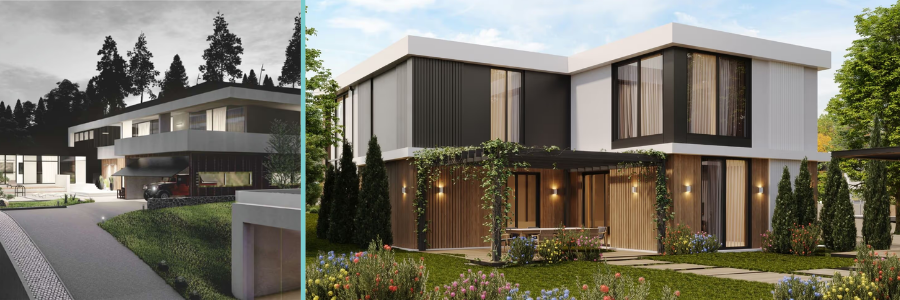
It is no wonder that 3D rendering services are being encouraged nowadays, as the world is adapting to an even more innovative approach. It promotes sustainability and environmental performance by drastically minimizing reliance on materials and resources.
It allows effective collaboration among stakeholders and allows buyers to practice healthy feedback and be involved. It enhances the way it can be delivered as an outcome.
3D rendering is a risk mitigation tool that aids in defining potential issues a project can face and addresses them early on. It is also a digital asset that supports marketing campaigns to boost pre-sales and secure funding approvals.
Professional freelancers on platforms like Cad Crowd offers high quality 3D rendering. The deliverable is set to be curated for each project, ensuring it is accurate, realistic, and marketing-ready.
Check out Cad Crowd now to connect with professional freelancers who can team up with you to deliver the project to success through 3D rendering, a digital asset that mitigates risks and optimizes design. Make developing efficient, strategic, and sustainable with Cad Crowd. Request a quote today.



