Design rates do not only mean hours rendered by a freelance CAD designer. In 2026, the approach to calculating rates is more structured and established. Aside from hours rendered, it also considers the project’s complexity and the expected deliverables. It is important to know what output is expected to achieve an accurate rate. A freelancer’s rate also depends on their technical expertise and experience. Choosing the right freelancer is not mostly about finding the lowest rate but rather finding someone who fits the specialty needed for the task. Cad Crowd can assist in matching businesses with vetted freelancers tailored for their project needs.
Overview: Estimated rates for the US freelance CAD market 2026
| Service / Specialization | Junior Rate | Mid-Level Rate | Senior/Specialist Rate |
| 2D AutoCAD Drafting | $45-$65/hr | $55-$80/hr | $70-$95/hr |
| Mechanical CAD (SOLIDWORKS/Inventor) | $55-$75/hr | $70-$110/hr | $110-$160/hr |
| Architectural CAD / BIM (Revit) | $55-$75/hr | $70-$105/hr | $90-$135/hr |
| Structural Drafting | $55-$75/hr | $65-$95/hr | $85-$115/hr |
| Civil Engineering CAD (Civil 3D) | $55-$75/hr | $70-$100/hr | $90-$120/hr |
| Oil & Gas / P&ID Drafting | $65-$85/hr | $80-$110/hr | $100-$130/hr |
| Electrical / Instrumentation CAD | $60-$80/hr | $75-$105/hr | $95-$125/hr |
| Product Design CAD | $65-$85/hr | $80-$120/hr | $110-$160/hr |
| Aerospace CAD (CATIA / NX) | $80-$100/hr | $100-$140/hr | $140-$200/hr |
| Medical Device CAD | $75-$95/hr | $90-$125/hr | $120-$150/hr |
| Additive Manufacturing Design | $60-$80/hr | $75-$110/hr | $100-$130/hr |
| Scan-to-CAD / Reverse Engineering | $65-$85/hr | $80-$110/hr | $100-$135/hr |
| 3D Visualization / Rendering | $55-$75/hr | $70-$110/hr | $100-$140/hr |
What drives freelance CAD rates in 2026
Experience and seniority
One of the most impactful drivers of freelance rates is their level of experience in the field. An entry-level junior CAD designer will naturally charge less than those with more years of experience. The rate is not just about their tenure; it is more about the skills and experience they have developed throughout the years. Naturally, an experienced CAD specialist is expected to be more accurate and efficient in their work, which makes them a reliable candidate for critical projects.
RELATED: Pros & Cons of AI for 3D Modeling Services and Your Cost Savings at Companies in 2026
Specialization and domain expertise
Freelancers’ rate also depends on specialization. Not all have the same level of technical knowledge, so some clients pay more to find a specialist suited to their project. For instance, CAD specialists are way more expensive than general CAD drafters because of the differences in software knowledge. Uncommon skills such as GD&T and tolerance analysis are also paid more because of their advanced understanding of the software, standards, and workflows.
Software proficiency and tool stack
One determinant of rate is the software a freelancer uses. It depends on how advanced or specialized the software is. For instance, AucoCAD freelancers who use AutoCAD can charge a standard range since it’s commonly used for drafting work. Freelancers who work with SOLIDWORKS can charge more since it is a niche platform for detailed mechanical design and product development. One reason freelancers charge high rates for their niche is that they have paid for the software and invested time in training and practice.
Project complexity and deliverable type
Project complexity is one of the factors that affect costs and rates. A simple task such as converting a hand-drawn sketch into a 2D model may require less time and expertise, so it can cost less. On the other hand, tasks like creating a full 3D BIM model with clash detection may require not only drafting but also problem-solving and technical expertise. This will take more time to produce and naturally increase the rate of work. Simple drafting and drawing would mean less time spent on rendering, while a complex one could take longer to complete. Just by this, it can be seen how it affects the rate of buildup.
Turnaround time and rush premiums
Project deadlines and duration directly impact the rate of work. Once the standard timeline is set, 3D freelancers can balance their schedules and manage their work more effectively. However, if the project requires urgency and needs to be completed within the day or in 72 hours, a rush fee can be charged. A standard charge is around 25-50%, a common practice across multiple industries. The additional rush fees are justified by the pressure and effort a freelancer has to endure to meet the deadline.
RELATED: How CAD and BIM Services Improve Public Facility Design for Architectural Projects
Fixed-fee vs. hourly pricing
In 2026, many pricing structures are being explored for freelance work. The most common structures are hourly billing and fixed-fee project pricing. The pricing structure depends on how clear the scope or deliverable is. Hourly pricing is more suited for projects that are still developing. This means the design is not yet final or that changes are anticipated. Hourly billing covers the entire design process and offers flexibility. Fixed-fee pricing is more suited for projects with defined scopes and deliverables. This way, the freelancer can offer package deals and improve efficiency.
Geographic location of the freelancer
Location also matters in pricing. Freelancers who reside in countries such as the United States, the United Kingdom, Canada, and Australia generally charge higher rates due to higher living costs, operating expenses, and taxes. Typically, they charge $55-$160 per hour, depending on their expertise. Most of the lower rates are associated with offshore outsourcing markets. While offshore freelancers have lower rates, the risks lie in communication practices, time zones, and quality expectations.
Platform fees and marketplace markups
When a CAD designer is hired through a platform, the rates are not exactly the amount a freelancer gets. This is because most platforms charge a service fee or commission of 10-20%. Often, freelancers increase their rates to offset the deduction. This impacts the final cost of the work services. Some platforms add their markup for services such as vetting, management, and communication support. Knowing these helps clients understand how the rate is built up and determine if the added cost is worthwhile.
Rates by CAD service type
2D CAD drafting (AutoCAD)
One of the most common and affordable CAD services is 2D CAD drafting through AutoCAD. Since AutoCAD is a widely known software, even entry-level drafters can competitively charge their rates. This ranges from $ 45-$85 per hour depending on their experience and project complexity. Some use fixed per-sheet pricing, which ranges from $ 150 to $ 400 per sheet. This depends on the details and revisions. This pricing structure is more accurate in determining the total project cost. When the project requires continuous support for a certain timeline, the rate could be project-based. This ranges from $ 50 to $ 70 per hour.
RELATED: Pros and Cons of Digital Concept Designs in 2D CAD Design Services for Companies: Complete Breakdown
3D Mechanical CAD Modeling (SOLIDWORKS / Inventor / Creo)
One of the most in-demand services is 3D mechanical CAD modeling. This is also considered a high-paying service in 2026. It is mostly used for product design and development. Most software used is SOLIDWORKS, PTC Creo, and Autodesk Inventor. For this kind of service, freelancers charge $65-$120 per hour. The rate could increase depending on the required technical skills, such as GD&T.
Architectural CAD and BIM (Revit)
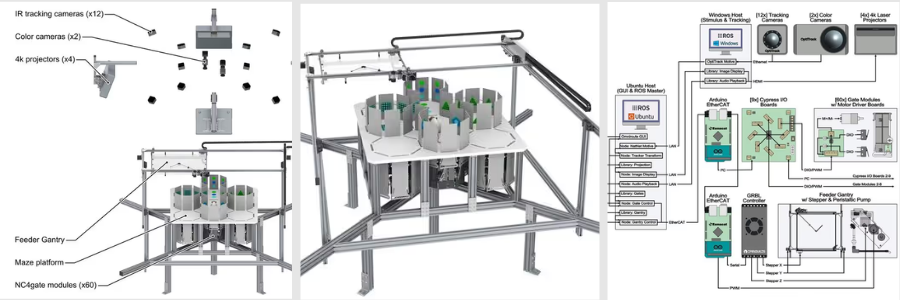
CAD and BIM services cover a wider range of deliverables, including 2D drawings to full 3D building models. These are mostly used for design development and construction documentation. For Revit and BIM services, freelancers can charge $65-$110 per hour, depending on their experience and project complexity. Since architectural projects could vary in scope, the pricing is leaning towards fixed fees rather than hourly charging. There are instances in which the rates may be higher, especially when the project requires specialist-level expertise.
Structural CAD and drafting
Structural CAD drafting is a more technical drawing. It is used in construction and infrastructure projects to produce structural designs. This includes the foundation plan, framing layout, structural connection, and details, as well as shop drawings. In US Markets, freelancers specializing in this service can charge between $60 and $105 per hour, depending on experience and project complexity. Steel shop drawings are considered to be a more specialized subset of the service of structural drawing since it requires a deeper understanding of strict standards such as the American Institute of Steel Construction (AISC. With this, a higher rate of $75-$115 per hour is generally charged.
Civil engineering CAD (Site plans, grading, utilities)
Civil engineering CAD work covers infrastructure-related drawings, including site development plans, grading and drainage layouts, and utility networks. Most of the time, US-based freelancers use Autodesk Civil 3D for civil engineering modeling and documentation. They can charge $65- $110 per hour, depending on experience and project complexity. It can increase depending on deeper technical expertise backgrounds. Civil CAD projects are mostly driven by permit deadlines. This means that jurisdiction requirements could impact pricing because the submittals would have to meet strict regulatory standards. This could opt for fixed-fee pricing, which generally ranges from $800 to $2,500 for a standard residential project.
RELATED: Civil Engineering Consulting Services Cost, Rates, and Pricing for Companies
Oil and gas / P&ID drafting
Oil and gas CAD deliverables are considered specialized and high-paying niches in the CAD market. This is because it requires strong technical knowledge of industry standards, such as ANSI/ISA codes, as well as other specifications and engineering practices. Most of the projects here are complex and have to comply with strict requirements. Because of this, freelancers charge around $75-$130 per hour in the US market. The rate could be higher, especially when freelancers use tools like Autodesk Plant 3D or CADWorx.
Electrical and instrumentation CAD
Electrical CAD work covers technical drawings, including lighting and power layout, power distribution plans, panel schedules, and single-line diagrams. The deliverables are primarily for industrial, commercial, and infrastructure projects. The 2026 rates for this service range from $65 to $115 per hour, depending on complexity. Electrcal engineering freelancers with more specialized instrumentation experience often charge higher rates of $80-$125 per hour. This is mainly because of the technical precision and compliance requirements involved in delivering the design output.
Product design CAD (consumer and industrial products)
In product design and development, technical 3D modeling is combined with industrial design analysis. This means that the design is more than creating a functional design unit. It should also consider ergonomics, manufacturability, material selection, and user experience. This would require a more experienced approach and expertise to develop an efficient design. US-based freelancers typically charge $75-$140 per hour for this, and high-end services range from $100-$160 per hour.
Aerospace and defense CAD (CATIA / NX)
One of the highest-paying sectors in the 2026 CAD market is aerospace engineering services and defense CAD. This field has a strong focus on advanced engineering platforms such as CATIA and Siemens NX. This field prioritizes precision and large-scale assembly capabilities. The tools used in this industry require extensive training and are often used in highly regulated environments. Because of this, freelancers charge around $90-$160 per hour. And if there’s an additional requirement needed, such as a security clearance, the rates could increase to $150-$200 per hour.
RELATED: Freelance Aerospace Engineering Services, Cost, Rates, and Pricing for Companies
Medical device CAD
One of the most detail-intensive and regulated fields is medical device CAD. This focuses on producing design components for surgical tools, diagnostic equipment, and any other medical-related device designers. Because of the industry it serves, it must meet strict regulatory and quality standards. A deeper, more comprehensive understanding of FDA requirements, such as SO 13485 quality management systems, design control processes, and documentation, is required. Precision also matters, so freelancers in this field often use GD&T and SOLIDWORKS. Freelancers often charge around $85-$150 per hour.
3D Printing / additive manufacturing design
In product design and development, 3D printing services or additive manufacturing, CAD is used to design parts or components. This requires more technical knowledge, as designers would have to consider how each part will be built. Designers would have to do more than just design, but also understand performance efficiency and topology optimization. Because of this, additive manufacturing is considered a specialized subset of mechanical CAD. Freelancers in this niche charge around $65-$120 per hour.
Scan-to-CAD and reverse engineering
Scan-to-CAD and reverse engineering comprise processes of converting physical objects, 3D scanned data, or manual measurements into an editable CAD. This is considered a specialized modeling since the designer would have to rebuild geometry and design intent based on the existing parts. A high level of technical skill is required to generate the expected output. US freelancers can charge $75-$130 per hour for this engineering service, with rates increasing for added complexity. The size of the scanned file can also influence the pricing since it would require more time and effort to convert it into a parametric model.
Rates by deliverable type
Single part 3D model
One of the most common freelancing CAD services is a single-part 3D model. This is about turning sketches or drawings into a full 3D component that can be used for manufacturing, rendering, or assembly design. In US markets, simple mechanical parts like bolts, fillets, or chamfers could cost around $150-$400 as a fixed fee. More advanced 3D modeling designs with intricate detail or design as well as high tolerance can cost $400-$1,200 or more, depending on complexity.
RELATED: Top 43 Homeware Design Companies and Services for New Product Design, and 3D Modeling
Mechanical assembly with BOM
A mechanical assembly project consists of modeling multiple parts and components into one functional or complete system, including a bill of materials. This is a more detailed work since all components have to properly align, connect, and function as one. In the US market, a small assembly with 5 to 15 components (BOM included) may cost $800-$2,500 as a fixed fee. For larger assemblies with 20 to 50 components, the cost could range from $2,500 to $6,000 or more, depending on complexity.
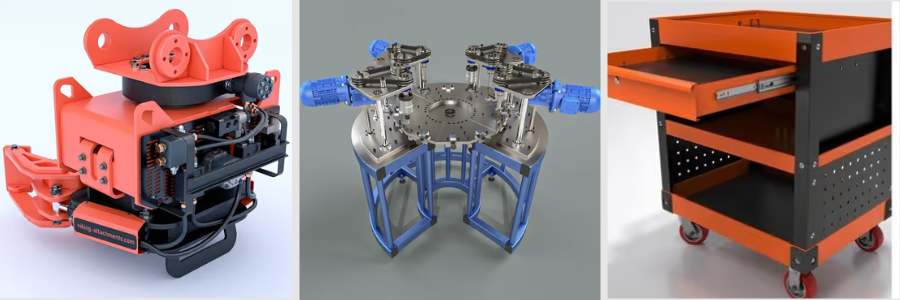
Full drawing package (part + assembly + detail drawings)
Providing a full set of CAD drawings is one of the most common deliverables requested by clients. This typically includes 3D assembly models, part models, and detailed component drawings. BOM can also be included. In the US market, the drawing package for a simple product with 5-10 components costs $2,000-$5,000. While for a more complex assembly with 15-30 components, it would cost $4,000-$10,000. The pricing could also be influenced by strict engineering or compliance standards such as ASME Y14.5 GD&T formatting and ITAR-controlled documentation. Any other additional setup of work can be a factor in the price increase.
BIM model (Revit)
BIM modeling service pricing is influenced by several factors such as building size, level of detail, and model usage. It’s not just about the geometry but also coordinated building data, which provides overall support in design, construction and workflows. A basic Revit model for a simple residential project usually costs $1,500-$4,000. An advanced BUM deliverable such as LOD 350 commercial building mode, including full coordination of architectural, structural, and MEP systems, can cost $8,000-$25,000. Pricing may increase depending on the complexity of the project.
Photorealistic 3D render
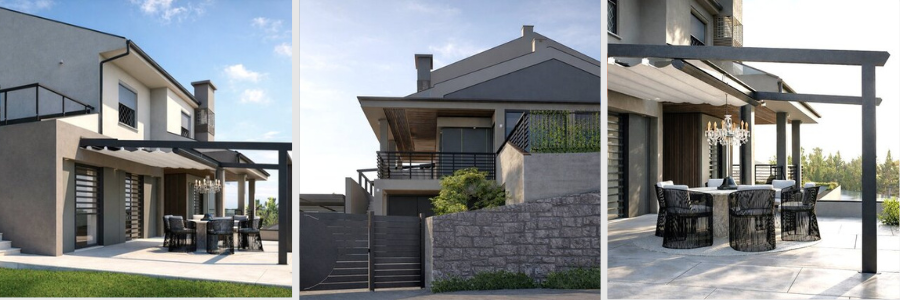
Another common deliverable is a photorealistic render. This is commonly used for marketing, product presentation, architectural visualization, and client approvals. This is about making a realistic image of the model, reflecting accurate material, lighting, reflection, shadows, and other environmental details. A photorealistic render is usually priced per image or as part of a render package. A single render with a clean background costs around $200-$600 per image. A different rate applies to architectural rendering due to added scene complexity. An architectural exterior render of a residential building could cost $400-$1,200 per image.
RELATED: Photorealistic Rendering Services: Complete Price, Cost, Rates and Fees for Companies and Firms
Architectural animation / walkthrough
Architectural animations and walkthroughs are considered advanced 3D visualization services that are used to showcase buildings and interior spaces. The animations and walkthroughs are mostly used in marketing and client presentations. It helps the viewers to experience the space realistically. A professionally made 60-90 second architectural fly-through animation could range from $1,500-$5,000. The pricing includes not just the animation service but also the process of 3D modeling, detailed environment set-up, lighting, and camera path animation. It also includes rendering thousands of video frames as well as post-production editing.
Technical illustration and exploded view
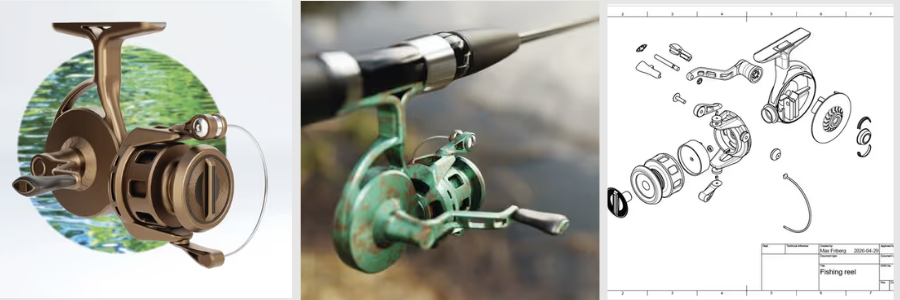
Technical illustrations are specialized visuals. It is used to explain how a product or a unit is assembled or fits together. It is mostly presented in exploded assembly views, annotated isometric drawings, or instruction-manual drawings. The drawings are mostly used as manuals, training materials, catalogs, and marketing presentations. Doing this could typically cost $65-$120 per hour, and often through SOLIDWORKS, STEP, or another 3D CAD platform. This type of deliverable is not just about proficiency in drafting or software; the freelancer should also have the ability to communicate through the drawings. It should provide a level of understanding that’s easy to read for non-technical viewers.
Virtual reality / interactive 3D
Virtual reality, or VR, and interactive 3D visualization are considered specialized works. These deliverables are becoming more popular in 2026 for product design and client presentations. Instead of showcasing static models, more interactive visuals can be accessed by the viewers. This work is beyond basic CAD or rendering. It includes extra work and optimization. This output costs around $500-$2,000 more than the base 3D model itself. A more advanced experience, such as walkthroughs with interactive hotspots or interaction features, would range from $3,000-$10,000 depending on complexity and the size of the environment.
Rate benchmarks by seniority
Junior CAD drafter (1–3 years experience)
Hiring a junior CAD drafter is one of the most budget-friendly options in the freelancing market. They may typically have one to three years of experience and charge $45-$65 per hour. Their strong suit is for well-defined drafting work such as producing simple 2D plans and 3D models. The projects they can do are more focused on drafting accuracy rather than engineering decision-making. Junior drafters are expected not to be able to handle complex engineering interpretations since they still have limited experience. A fixed fee for a basic residential project made by junior drafters may cost $400-$800. The overall success of the project relies on how well and clearly the project brief is written.
RELATED: Drafting Firms: Steps to Always Choose Great Outsourced Drafting Services
Mid-level CAD designer (3–7 years experience)
For mid-level CAD designers with 3-7 years of experience, their charge per hour is $65-$100. Their experience is more balanced and cost-effective, considering they have a wide range of professional CAD projects combined with technical skills, efficiency, and technical design judgment. They are capable of handling even partially complex projects and interpretation. They typically don’t need supervision and guidance and have enough domain of technical knowledge to adapt to client needs. A mid-level designer can produce a full product assembly or full-package drawings, including a BOM.
Senior CAD specialist (7+ years, domain expert)
A senior CAD specialist generally charges $100-$160 per hour. They mostly have 7+ years of experience and are in highly specialized fields. Their niche could vary, such as aerospace, medical devices, and advanced industrial design. At this level, they are not just hired to draw or build up drawings; they are contributing technical insight and knowledge to the project. They help in improving the overall design quality, manufacturability, and design outcome. With this, their rate could reach $150-$200 per hour.
These specialists are known for producing deliverables with minimal to no revisions. This is because they can anticipate possible issues and raise them early. The risks of project failure are low. Hiring senior specialists is more about investing in higher reliability and faster output.
How Cad Crowd can assist
US rates for freelancing work may look varying on the surface, but in reality, they follow a clear and predictable pattern. It is important to understand the drivers behind pricing. The factors involved play a role in determining the suitable option for the project. Understanding how the factors affect the project can help in predicting the final cost of the project and prevent further ambiguity.
The most cost-effective approach is to align the project’s budget and outcomes to the freelancer’s skills with the actual project needs. Every project has a suitable matching pricing structure, and it can only be efficient when you understand which freelancer is fit for you. Cad Crowd helps in matching clients with vetted freelancers, giving access to experienced talents tailored for their project needs. Contact us for a free quote.