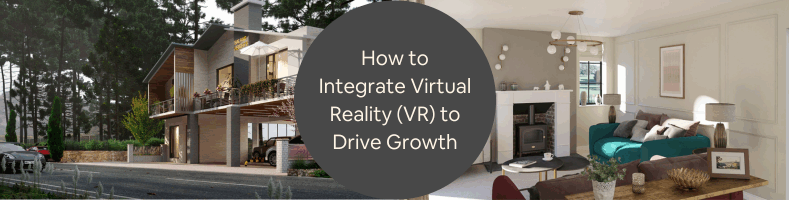
Perhaps real estate is one of the fields that has always been an adopter of new technologies to serve its clients and market better. With this improvement in the evolving digital landscape, sophisticated tools will become even more prevalent, and nowadays, many relevant tools have emerged in Virtual Reality (VR) and 3D virtual staging. These technologies open a real opportunity for real estate firms to provide more engagement, realism, and a convincing property experience for prospects, so subsequently, generate growth and business success.
Cad Crowd is the leading freelance marketplace to find the best virtual reality and architectural designers in the world. This article explains exactly how incorporating VR into your company’s 3D virtual staging services can enhance the buying experience, improve customer engagement, and contribute to long-term growth. Whether you’re a small real estate agency or a large firm, adopting VR can put you ahead of others in the industry and attract more buyers to your listings.
🚀 Table of contents
What is 3D virtual staging?
The term virtual staging refers to the process of virtually furnishing and decorating an empty or sparsely furnished property so buyers can envision how much space is available for them. Virtual furniture, decoration, and accessories are used in property photos with the help of 3D software to create a realistic and attractive image of the home. It is an increasingly popular alternative tool in real estate marketing, especially virtual staging, since it has proved to be inexpensive, flexible, and visually attractive compared to other traditional staging methods.
3D virtual staging services allow real estate agents to present beautifully crafted and customized visuals of their listing without the pains and associated expensive logistics of physical staging. In what ways, though, might Virtual Reality further improve this process and potentially fuel growth for real estate companies?

RELATED: Full guide: Commercial architectural 3D rendering services for companies & firms
How VR enhances 3D virtual staging in real estate
3D architectural virtual reality services are a game-changer with 3D virtual staging services. Traditionally, 3D virtual staging allows potential buyers to stroll through an interactive, lifelike 3D environment, making it from static images to an exciting experience. From being passive to active viewers, this would bring a flood of advantages for real estate firms to enhance engagement and conversion rates.
Competitive advantage
As real estate competes in the field of technology, much better positioning against such rival firms is always ideal. Of course, VR-based virtual staging will give your real estate firm an edge over your competitors, especially from the traditional staging and 2D imagery approach. This means standing out through immersive VR experiences, showing your business at the forefront of real estate marketing technology. This not only attracts more buyers but also increases your market visibility and enhances your brand reputation.
Global reach
One of the most significant advantages of applying VR to an architectural design firm is that it will help you extend it to very long distances for buyers. The real estate market is, by and large, global, and nearly all buyers wish to have an overseas investment in a property. With the help of VR-enabled virtual staging and tours, you’ll be reaching a much larger audience-people all across the globe.
This becomes especially crucial in the post-pandemic world today; international travel remains limited, or a buyer is too busy to make a trip for viewings. With VR, potential buyers can look around from anywhere, at any time, and are more likely to attract high-quality leads.
Immersive buyer experience
Prospective buyers will experience a virtual world that emulates a realistic feeling of visiting the property. One can go through every room, rotate details, and zoom in on areas. Buyers can even change the perspective or even the layout of a given space. Such immersion cannot be seen in traditional 3D virtual staging.
With the ability to “walk through” a property virtually, which gives buyers a much more intimate understanding of the layout, size, and flow of a given space, it really creates more of an emotional connection to the property, more and more now the main factor in driving purchasing decisions, similar to 3D rendering services.
Better marketing and sales tools
VR is the perfect tool to create more compelling marketing materials beyond the traditional listings: high-quality virtual tours, VR-enabled advertisements, and much more interactive property showcases. You will engage prospective buyers in ways that are just impossible with traditional photos and videos. VR is a great tool for differentiating property listings, driving more attention to your offerings, and adding that storytelling dimension to your marketing.
Additionally, VR allows for tracking user interactions, which can provide valuable insights into the customer’s behavior by analyzing how buyers interact with virtual properties – such as the areas they focus on or how long they spend in certain rooms – you can tailor your marketing strategy to better align with their interests and needs. This data-driven approach can lead to more efficient marketing efforts and higher conversion rates.
RELATED: Ultimate guide in choosing freelance structural engineer for companies and firms
Increased buyer confidence
Homebuyers aiming to acquire their dream home want to be assured that they are making a good choice. They are concerned with knowing everything there is to know about a property before actually spending their money. Virtual tours, fueled by VR, allow for a 360-degree view of a house through 3D 360-degree panorama services, thus making it affordable for potential buyers to see every part of the house without having to physically be there. And then this experience helps build trust, giving them a clear, complete picture of the property.
Therefore, virtual reality can boost buyer confidence through engagement and involvement in the process of inspecting how the houses are presented. It is possible to see a number of properties during one sitting, and make direct comparison of layout and design, as well as pay attention to specific details such as room dimensions, lighting, or finishes. The more knowledgeable and confident a buyer is, the more likely they are to take the next step in the purchasing process.
Personalization and customization
One of the strengths of VR integration when it comes to virtual staging is that one could definitely personalize it for the individual buyer. Since every buyer is unique with different tastes, preferences, or even lifestyle needs, they can visualize how the property could fit their unique style by allowing them to interact with the space in VR. They may alter the colors of the walls, change some furniture pieces, or even simply change some decorative elements to see how well it fits in that area.
This is a level of personalization more likely to elicit an emotional connection on the part of the buyer. They’re no longer looking at some generic, staged home done by 3D design services; instead, they can imagine living in that space and how it reflects their personal vision. The more personalized the experience, the more a buyer will be driven to make a decision about moving forward with a purchase.
Time and cost efficiency
Integrating VR into your virtual staging solutions is the most cost-effective way of delivering an enhanced experience without the high costs of physical staging, as this conventional form may require renting furniture, hiring decorators, and even hiring professional photographers, all very expensive operations. Virtual reality, on the other hand, enables you to stage properties digitally and offer clients infinite opportunities for virtual tours at a fraction of the price.
There is also time saving. Using VR, you don’t have to schedule multiple in-person showings or wait for furniture to arrive. You can make adjustments to the virtual staging almost on the spot. Flexibility makes your business much more efficient than before, but it also improves the experience for clients who prefer convenience and flexibility more and more.

RELATED: Overcoming errors in outsourcing with architectural drafting services firms
How to integrate VR in your real estate firm’s services
Of course, integrating VR into your 3D virtual staging services requires the right strategy and the right technology; here’s where to start:
- Choose an appropriate VR technology: Choose a suitable VR software or platform that easily fits your available tools. As it is widely understood, most VR solutions are created to integrate well with 3D modeling software from which virtual staging designs may be imported into VR environments. Consider a platform that is easy to use, has quality visuals, and allows for an interactive experience for users.
- VR headset investment: Largely depends on your business model. In some cases, it may require you to buy headsets just to show clients, or you can prepare web-based virtual reality tours accessible from the client’s smartphone or computer.
- Train your team properly: Train your team on how to use VR tools and virtual staging software. These 3D virtual reality design professionals must be fast and agile in creating and modifying virtual tours, adjusting the experience as clients desire, and guiding clients to expert recommendations.
- Market VR services: After integrating VR into your virtual staging services, make sure to market it properly. Emphasize in marketing literature, website, and social media campaigns how this is actually an immersive experience, made much more convenient, and allows greater personalization.
- Seek client feedback: Ask your clients for their feedback if they have experienced your VR services. This will give you the ability to get improvements in your offerings, fix issues, and ensure your services are fulfilling their needs.
Wrap up
The adoption of VR by 3D virtual staging services is one of the high-power moves to make growth look out for in the real estate industry. It can give an immersive, cost-effective, and personalized experience that can better boost engagement, increase confidence, and expand the market.
In this recent era of total competitiveness, the use of VR technology will make your business company become highly competitive in comparison and attract more buyers, which will make it stand out from the competition.
Investment in VR and virtual staging services fits into the nowadays rising trend of technological innovations in real estate; it future-proofs the business in the ever-changing marketplace.
RELATED: Challenges and unique requirements of California building design for architectural services firms
How Cad Crowd can help
The key to growth lies in staying ahead of trends, and VR offers an exciting opportunity for transformative change in how your firm approaches marketing and selling properties. Cad Crowd will make sure you’ll stay on top of this trend as the best freelance marketplace for finding vetted architectural, product, and interior design experts. Request a quote today.