3D


surface-spoon


Software Used: SolidWorks
Techniques: Lofts, Sweeps, Boundary Surfaces, Fillet Management
1. Project Overview
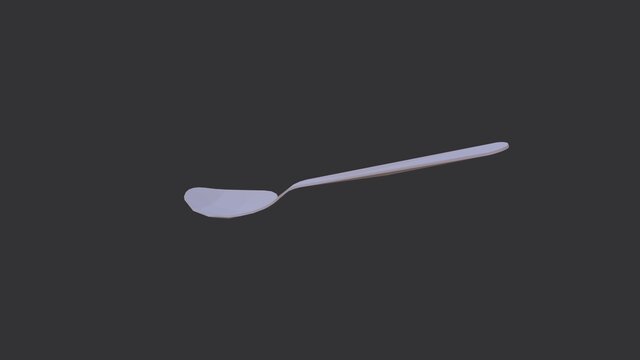
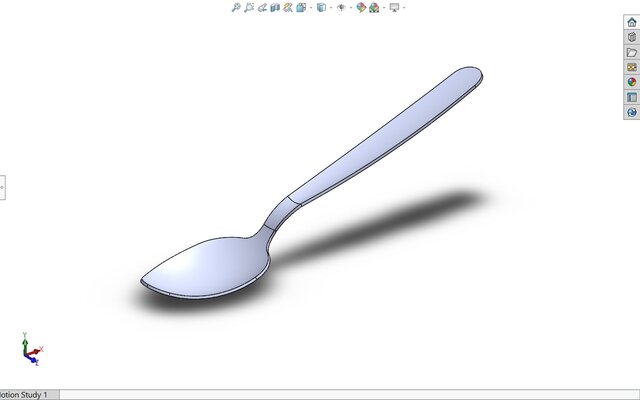
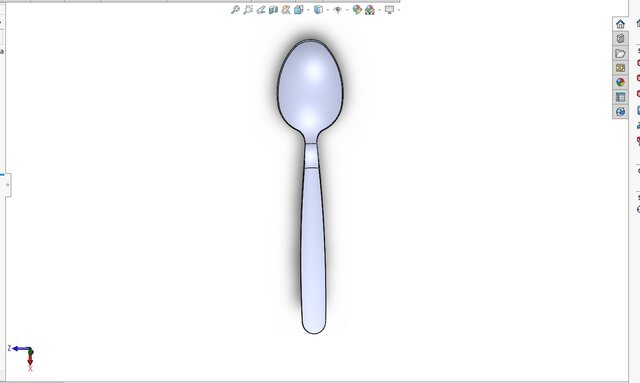
This project involved the conceptualization and 3D modeling of a contemporary stainless steel spoon. The goal was to balance aesthetic elegance with ergonomic functionality, ensuring a comfortable grip while maintaining a sleek, modern profile.
2. Design & Technical Execution
Instead of basic extrusions, I utilized advanced modeling techniques to achieve the fluid transitions between the handle and the bowl:
Complex Surfacing: Employed Boundary Surfaces and Lofts with guide curves to create the organic, curvature-continuous (C2) transitions required for a premium feel.
Sketch Control: Used fully defined 3D sketches to ensure parametric stability, allowing for quick adjustments to the bowl depth and handle thickness.
Ergonomics: Focused on the weight distribution and "pinch point" geometry where the thumb rests, ensuring the design is as functional as it is visual.
Draft Analysis: Performed a draft analysis to ensure the part is manufacturable via traditional forging or injection molding processes.
3. Key Features
High-Polished Finish: Defined material properties to simulate 18/10 stainless steel.
Curvature Continuity: Minimized "zebra stripe" distortions to ensure a seamless reflection across the entire body.
Parametric Design: Built with a clean feature tree, allowing for easy scaling into a full cutlery set (forks, knives, etc.).
Files (3)
License:
CC - Attribution
Learn more
Published